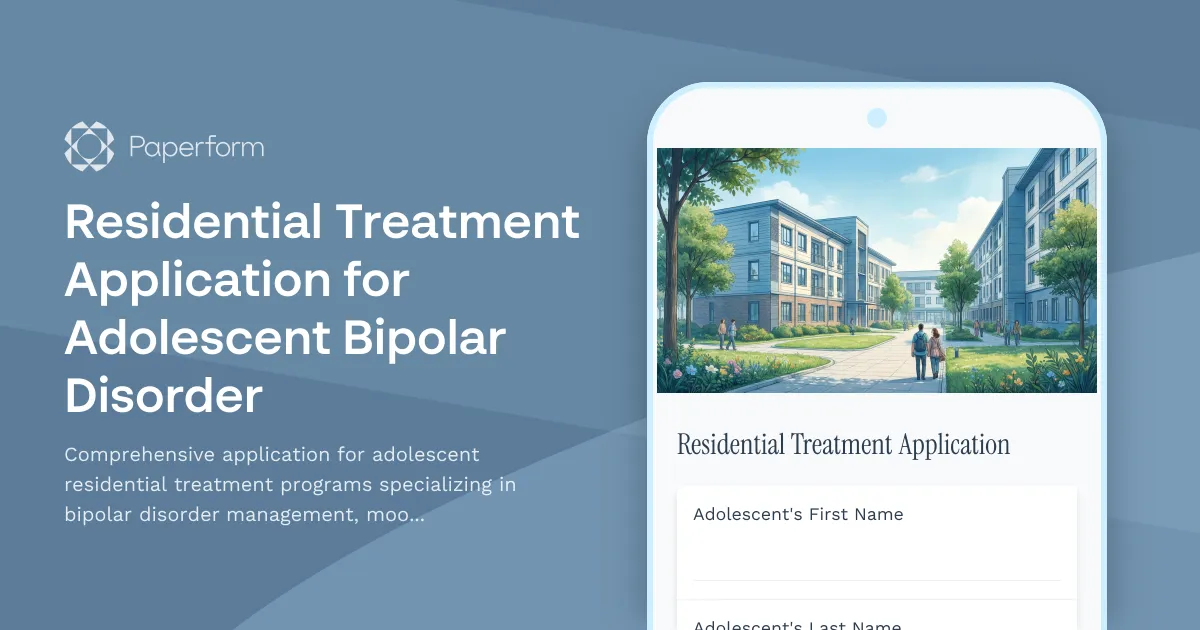
Residential Treatment Application for Adolescent Bipolar Disorder
Finding the right residential treatment program for an adolescent with bipolar disorder is a critical decision for families. This comprehensive application template is designed for mental health facilities, residential treatment centers, and specialized adolescent psychiatric programs that provide intensive support for young people managing bipolar disorder.
Why This Template Works for Behavioral Health Programs
Residential treatment centers need detailed information to properly assess whether a program is the right fit for an adolescent's specific needs. This form collects essential clinical information about mood patterns, medication history, circadian rhythm disruptions, and family support systems—all critical factors in successful bipolar disorder management for teens.
The template is structured to gather both clinical and practical information efficiently, helping intake coordinators, psychiatrists, and treatment teams make informed placement decisions while reducing the back-and-forth communication that often delays access to care.
Supporting Evidence-Based Treatment Approaches
Modern residential treatment for adolescent bipolar disorder focuses on several key therapeutic areas, and this application reflects those priorities:
Mood Tracking & Pattern Recognition: The form includes detailed questions about mood episode frequency, duration, and triggers, helping clinicians understand the adolescent's baseline presentation and identify patterns that will inform treatment planning.
Medication Management: Comprehensive medication history, including past trials, current regimens, side effects, and compliance challenges, gives the treatment team critical context for pharmacological interventions.
Circadian Rhythm Stabilization: Questions about sleep patterns, sleep-wake consistency, and response to sleep hygiene interventions recognize the crucial role of circadian rhythm regulation in bipolar disorder management—a cornerstone of many evidence-based treatment protocols.
Designed for Mental Health Professionals
This template serves psychiatrists, licensed therapists, psychiatric nurse practitioners, intake coordinators, and residential treatment administrators who work specifically with adolescent populations experiencing mood disorders. The questions are clinically appropriate and align with standard psychiatric assessment frameworks while remaining accessible to families completing the application.
Healthcare providers, school counselors, and pediatricians who refer adolescents to residential treatment will find this form captures the comprehensive information needed to facilitate smooth transitions and appropriate placement decisions.
Streamlining the Admissions Process
Traditional mental health intake processes often involve multiple phone calls, faxed forms, and email exchanges that delay urgent care. By collecting clinical history, insurance information, emergency contacts, and treatment goals in one comprehensive digital form, residential programs can:
- Accelerate intake timelines when families are in crisis and need rapid access to care
- Reduce administrative burden on clinical staff who would otherwise gather this information across multiple touchpoints
- Improve treatment matching by having complete information upfront to determine program fit
- Create seamless handoffs between intake staff and clinical teams with structured, complete data
Integration with Treatment Workflows
Once submitted, this application can integrate seamlessly with electronic health records (EHR), case management systems, and clinical documentation platforms. Using Stepper (stepper.io), residential treatment centers can automate follow-up workflows such as:
- Routing applications to clinical review committees based on severity or specific symptoms
- Triggering insurance verification processes automatically
- Scheduling intake interviews and assessments with appropriate clinical staff
- Sending family education materials about the program and what to expect
- Creating initial treatment planning documents pre-populated with application data
For programs that require family consent forms, treatment agreements, or HIPAA authorizations before admission, Papersign (papersign.com) can transform submissions into legally binding eSignature documents, keeping all paperwork connected to the original application for complete audit trails.
HIPAA Considerations and Data Security
While Paperform is not HIPAA compliant and should not be used by covered entities for protected health information without additional safeguards, many residential treatment programs use it for initial inquiry and pre-screening before transitioning to HIPAA-compliant systems for formal clinical documentation. Always consult with your organization's compliance team to ensure proper handling of sensitive health information.
For behavioral health organizations requiring full HIPAA compliance, this template can serve as a blueprint for implementation within compliant platforms, or as a pre-application screening tool before formal clinical intake begins.
Building Trust with Families in Crisis
Families seeking residential treatment for adolescents with bipolar disorder are often in crisis, navigating complex emotions, financial stress, and urgent safety concerns. A well-designed, compassionate application form demonstrates that your program is organized, professional, and ready to provide the specialized care their child needs.
By clearly explaining what information you need and why, offering conditional logic to show only relevant questions, and providing a seamless digital experience, you reduce the friction and anxiety families experience during this vulnerable time.
Trusted by Mental Health Professionals Nationwide
Paperform is used by over 500,000 teams worldwide, including healthcare providers, educational institutions, and nonprofit organizations. While not HIPAA compliant for protected health information, Paperform is SOC 2 Type II certified and offers robust security features including data encryption, secure form submissions, and detailed access controls.
For residential treatment centers, group practices, and behavioral health networks managing multiple programs, Paperform's Agency+ plan allows you to manage different locations or treatment tracks under one account while maintaining separate forms, branding, and data segregation.
Whether you're a psychiatric residential treatment facility, a therapeutic boarding school with a specialized bipolar program, or an adolescent mental health center offering intensive outpatient and residential options, this template provides a professional, clinically sound foundation for collecting the information you need to make appropriate treatment decisions and support families through the admissions process.
More templates like this
Therapeutic Residential Program Application for Children
Application form for a trauma-informed residential program specializing in trauma-focused CBT, somatic therapy, and attachment repair for children who have experienced complex trauma.
Animal-Assisted Therapy Certification Scholarship Application
A comprehensive scholarship application for aspiring animal-assisted therapy practitioners seeking certification funding, including therapy animal handling experience, special populations interest, and professional recommendations.
Animal-Assisted Therapy Handler Program Application
Apply to become a certified animal-assisted therapy handler. This comprehensive application collects information about your animal partner, therapy experience, specialization preferences, and training requirements.
Crisis Intervention Specialist Training Application
Apply for crisis intervention specialist training with this comprehensive application form that collects mental health credentials, de-escalation experience, trauma exposure history, and availability information.
Drama Therapy Certification Program Application
Apply for accredited drama therapy certification training. Professional program for aspiring drama therapists covering theatrical arts, clinical skills, and supervised practice requirements.
Infant and Early Childhood Mental Health Graduate Scholarship Application
A comprehensive scholarship application for graduate students pursuing specialization in infant and early childhood mental health, with emphasis on attachment theory, parent-infant therapy, and developmental trauma.
Infant Mental Health Specialist Program Application
Comprehensive application for infant mental health specialist training and endorsement, covering early childhood credentials, attachment theory expertise, and reflective practice commitment.

Peer Support Specialist Training Application
A comprehensive application form for individuals with lived mental health experience seeking to become certified peer support specialists through training and certification.
Residential Addiction Treatment Application
A comprehensive application form for residential addiction treatment programs that assesses substance use history, withdrawal management needs, and co-occurring mental health conditions.
Residential PTSD Treatment Application
A compassionate intake application for individuals seeking residential treatment for PTSD, including trauma assessment, trigger identification, and therapy readiness evaluation.
Residential Therapeutic Program Application for Children with Reactive Attachment Disorder
Application form for families seeking placement in a therapeutic residential program designed for children with reactive attachment disorder, featuring attachment-focused interventions and specialized parenting support.
Residential Treatment Application for Attachment Disorders
A comprehensive application form for families seeking residential treatment placement for children with attachment disorders, including trauma history assessment and therapeutic parenting evaluation.