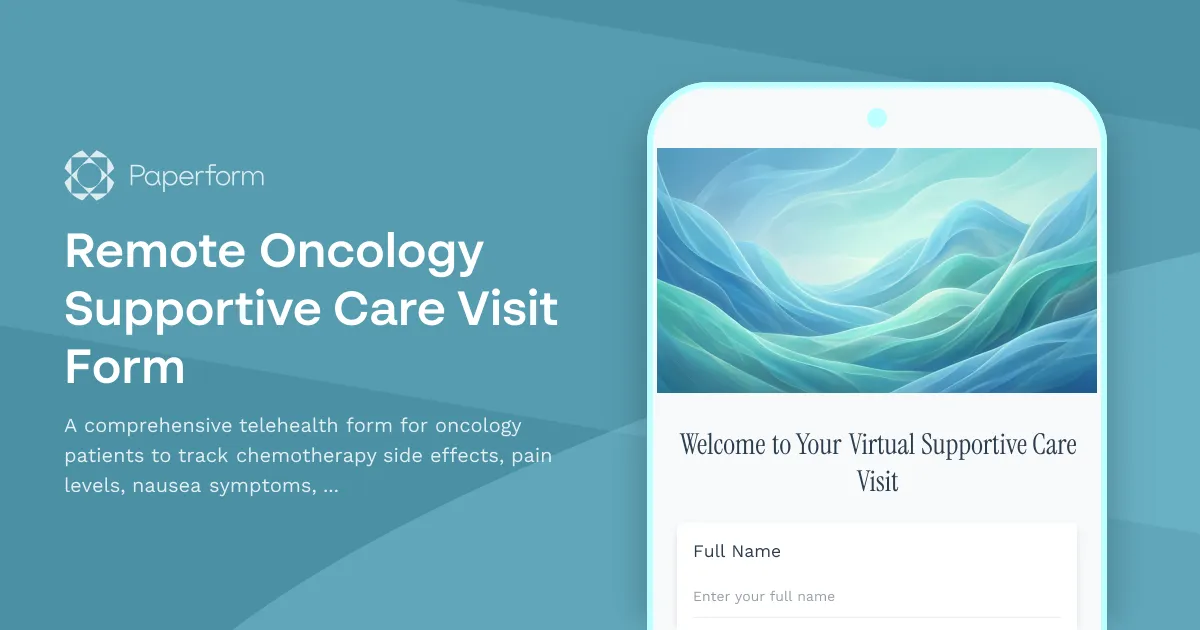
Compassionate Virtual Oncology Care for Cancer Patients
Managing cancer treatment is challenging enough without the added burden of frequent in-person clinic visits. This Remote Oncology Supportive Care Visit Form is designed specifically for healthcare providers offering telehealth services to oncology patients undergoing chemotherapy and other cancer treatments.
Comprehensive Symptom Tracking for Better Care
This template helps oncology teams monitor critical health indicators between treatments, including detailed chemotherapy side effects, pain intensity scales, nausea and vomiting patterns, fatigue levels, and emotional wellbeing. The structured format ensures no symptoms are overlooked while giving patients a clear way to communicate their experience.
For busy oncology practices, virtual supportive care visits improve patient access while maintaining quality oversight. Patients can complete this form before their telehealth appointment, giving clinicians valuable context to prepare personalized care recommendations.
Who Benefits from This Template
This form is ideal for:
- Oncology clinics providing remote monitoring and supportive care services
- Cancer centers expanding telehealth access for patients undergoing active treatment
- Palliative care teams coordinating symptom management for cancer patients
- Home health agencies supporting oncology patients between clinic visits
- Telemedicine platforms specializing in cancer care coordination
Streamline Care Coordination with Automation
Pair this form with Stepper to automatically triage submissions based on symptom severity, send urgent alerts to on-call providers when patients report concerning side effects, update electronic health records, and schedule follow-up appointments. Stepper's workflows ensure critical patient information reaches the right care team member at the right time.
Paperform's telehealth forms work seamlessly with major healthcare platforms, maintaining HIPAA-aware practices while delivering the compassionate, accessible care cancer patients deserve. Whether you're managing a single practitioner or coordinating across a cancer center, this template provides the foundation for effective remote oncology supportive care.
Note: While Paperform offers robust security features including SOC 2 Type II compliance, it is not a HIPAA-compliant solution. Healthcare providers should ensure their telehealth workflows meet all applicable regulatory requirements.



More templates like this
Medication Refill Request with Adherence Analysis
A comprehensive prescription refill form that tracks medication adherence patterns, identifies potential barriers, and enables proactive care team interventions to improve patient outcomes.
Remote ALS Monitoring & Functional Assessment Form
A comprehensive telehealth form for monitoring ALS progression, assessing functional status, respiratory function, nutritional needs, and assistive technology requirements for remote patient care.
Remote Celiac Disease Follow-Up Form
A comprehensive telehealth form for celiac disease patients to track gluten-free diet adherence, assess nutritional deficiencies, monitor bone health, and schedule dietitian consultations.
Remote Dermatology Consultation Form
A comprehensive telehealth intake form for virtual dermatology appointments with skin condition photo uploads, symptom tracking, treatment history, and insurance pre-authorization.
Remote Palliative Care Consultation Form
A comprehensive telehealth form for remote palliative care consultations, including symptom assessment, quality of life evaluation, advance directive collection, and family meeting coordination.
Remote Transplant Follow-Up Form
A comprehensive telehealth form for monitoring transplant patients remotely, tracking immunosuppression levels, screening for rejection symptoms, infection surveillance, and medication adherence between clinic visits.
Telehealth Consultation Request Form
A comprehensive telehealth intake form to collect patient information, symptoms, medical history, and schedule virtual consultations efficiently.
Virtual Allergy & Immunology Intake Form
Comprehensive telehealth intake form for allergy and immunology consultations, including allergen tracking, medication prescriptions, treatment consent, and emergency planning for virtual patient care.
Virtual Antiphospholipid Syndrome Management Form
A comprehensive telehealth form for managing antiphospholipid syndrome (APS), tracking thrombosis history, pregnancy losses, anticoagulation therapy, and coordinating high-risk obstetric care.
Virtual Chronic Urticaria Management Form
A comprehensive telehealth form for managing chronic urticaria (hives) with trigger tracking, antihistamine escalation protocols, omalizumab eligibility screening, and autoimmune workup assessment.
Virtual Multiple Sclerosis Relapse Assessment Form
A comprehensive telehealth form for MS patients to report potential relapses, document neurological symptoms, upload diagnostic imaging, and provide consent for steroid treatment during virtual consultations.
Virtual Urgent Care Triage Form
A comprehensive telehealth triage form for virtual urgent care visits that assesses symptom severity, collects vital signs, and determines appropriate care pathways.