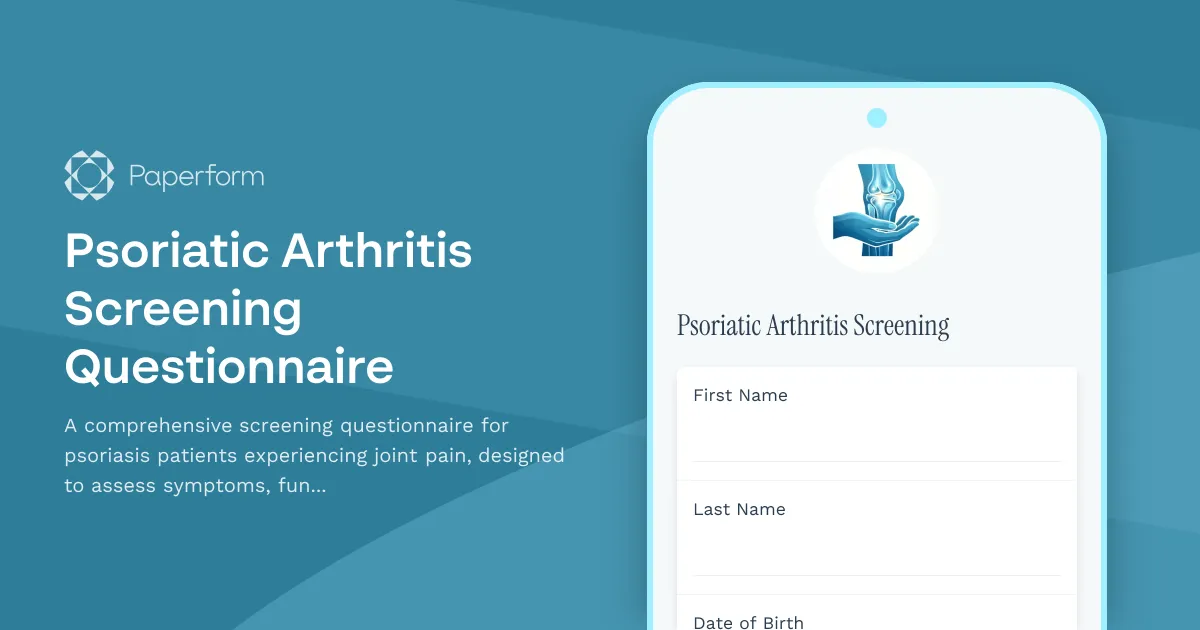
Psoriatic Arthritis Screening Made Simple
Psoriatic arthritis (PsA) affects up to 30% of people living with psoriasis, yet early detection remains challenging. This Psoriatic Arthritis Screening Questionnaire helps healthcare providers identify patients who may benefit from rheumatology referral and early intervention.
Who This Template Is For
This screening tool is designed for dermatology clinics, rheumatology practices, primary care physicians, and healthcare systems that treat psoriasis patients. Whether you're a dermatologist monitoring your psoriasis patients for joint involvement, a rheumatologist streamlining referrals, or a nurse practitioner conducting comprehensive assessments, this template provides a structured approach to PsA screening.
What Makes This Template Effective
The questionnaire covers all critical assessment areas: joint pain patterns, nail changes (a key predictor of PsA), functional limitations, morning stiffness, family history, and quality of life impact. Built with conditional logic, the form intelligently routes patients based on their responses, ensuring those with concerning symptoms receive appropriate follow-up recommendations.
Streamline Your Workflow with Paperform
With Paperform, you can customize this template to match your practice's protocols and branding. The form captures detailed patient information while remaining easy to complete, and responses automatically flow into your preferred systems through native integrations or Stepper workflows.
Use Stepper to automatically trigger actions based on screening results—flag high-risk patients in your EMR, send referral requests to rheumatology, schedule follow-up appointments, or notify care coordinators when urgent review is needed. You can also collect eSignatures through Papersign for consent forms or referral acknowledgments, keeping your entire workflow connected and compliant.
This template helps you identify psoriatic arthritis earlier, improve patient outcomes, and create a seamless bridge between dermatology and rheumatology care—all without adding administrative burden to your team.



More templates like this

Autoimmune Disease Symptom Tracker
A comprehensive pre-visit symptom assessment form for tracking autoimmune disease symptoms, identifying flare patterns, and monitoring medication side effects across multiple organ systems.
Chronic Disease Self-Management Assessment
A comprehensive assessment form for patients managing chronic conditions, featuring goal-setting exercises, barrier identification, and personalized care plan agreements to support better health outcomes.
Chronic Idiopathic Urticaria Assessment & Hives Diary
A comprehensive assessment form for chronic hives with symptom tracking, trigger identification, autoimmune screening, and specialist referral recommendations.
Chronic Urticaria Assessment Form
A comprehensive chronic urticaria assessment form for tracking hives frequency, identifying triggers, monitoring antihistamine response, and facilitating allergist consultations for effective treatment planning.
Diabetes Risk Assessment Form
A comprehensive diabetes risk assessment tool that evaluates family history, lifestyle factors, and BMI to identify high-risk patients and provide appropriate referral pathways.

Heart Failure Screening Questionnaire
Comprehensive heart failure screening form with dyspnea assessment, edema tracking, BNP lab ordering capabilities, and automated cardiology referral criteria for early detection and intervention.
Hematology Bleeding Disorder Screening Form
A comprehensive pre-visit assessment form for screening potential bleeding disorders, including bruising patterns, family history, and menstrual bleeding evaluation.
Multiple Sclerosis Risk Assessment Form
Comprehensive MS risk assessment questionnaire evaluating neurological symptoms, visual changes, fatigue levels, and offering convenient neurology consultation scheduling.
Pelvic Organ Prolapse Screening Questionnaire
A comprehensive screening questionnaire to assess pelvic organ prolapse symptoms, severity levels, and quality of life impact to guide treatment recommendations and urogynecology consultations.
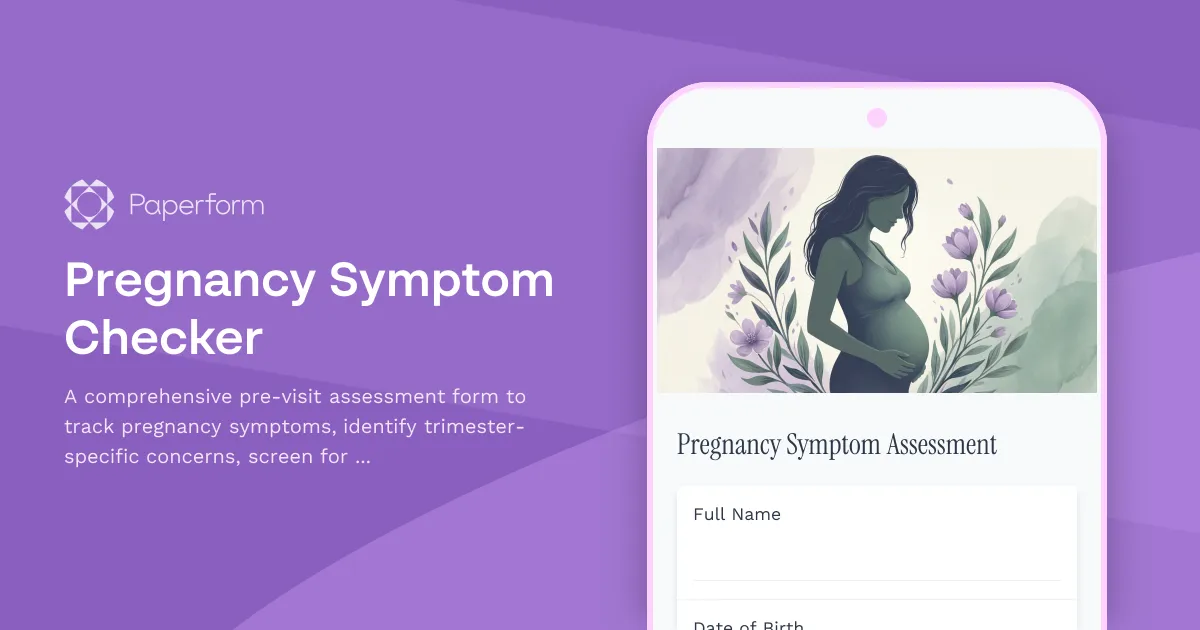
Pregnancy Symptom Checker
A comprehensive pre-visit assessment form to track pregnancy symptoms, identify trimester-specific concerns, screen for high-risk factors, and flag emergency warning signs requiring immediate medical attention.

Raynaud's Phenomenon Screening Questionnaire
A comprehensive screening tool for Raynaud's phenomenon that documents color changes, identifies triggers, assesses underlying conditions, and determines the need for rheumatology consultation.
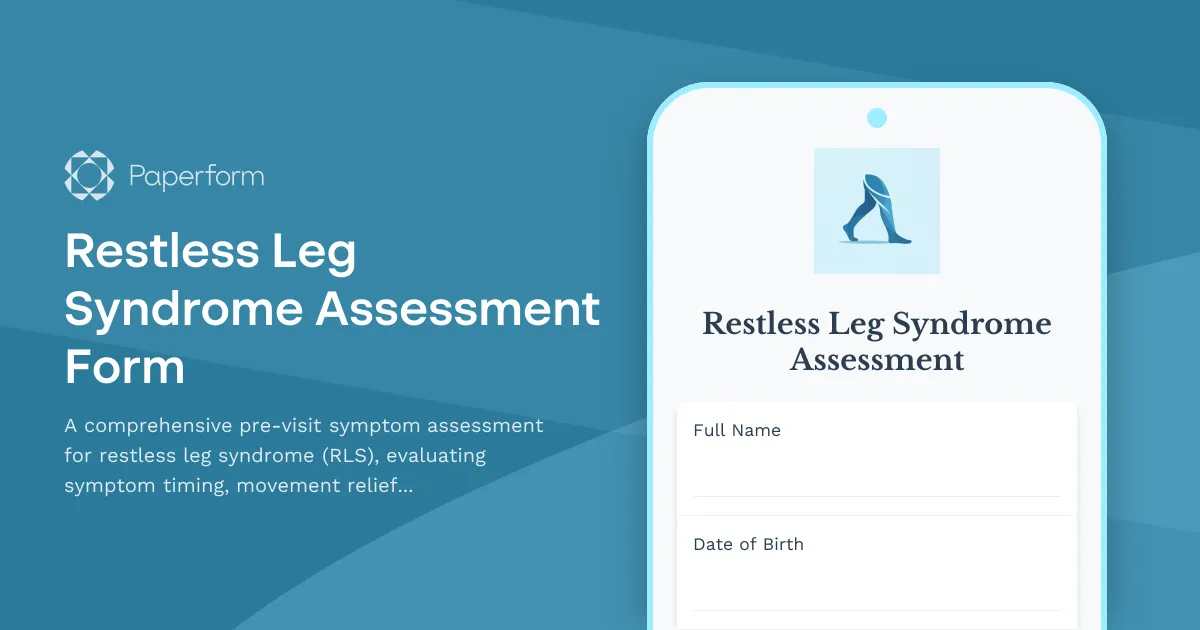
Restless Leg Syndrome Assessment Form
A comprehensive pre-visit symptom assessment for restless leg syndrome (RLS), evaluating symptom timing, movement relief patterns, and sleep disruption severity to help healthcare providers make informed diagnoses.