Preventive Conservation Monitoring Equipment Feedback Form
Managing a museum, archive, or cultural heritage collection requires vigilant environmental monitoring to protect irreplaceable artifacts. This Preventive Conservation Monitoring Equipment Feedback Form helps collections managers systematically evaluate monitoring systems—from climate sensors to pest detection equipment—ensuring they meet the specialized needs of conservation environments.
Why This Template Matters for Collections Management
Preventive conservation is the foundation of modern collections care, and the right monitoring equipment can mean the difference between early intervention and catastrophic loss. This template guides you through critical evaluation criteria including early detection sensitivity, false alarm reduction, staff training ease, and disaster response integration—the key factors that determine whether monitoring equipment truly protects your collection or creates operational burden.
Built for Museums, Archives, and Heritage Institutions
Whether you manage natural history specimens, fine art collections, historical archives, or archaeological materials, this form captures the specialized feedback needed to make informed equipment decisions. It's designed for:
- Museum collections managers evaluating climate monitoring systems
- Archivists assessing environmental sensors for temperature and humidity control
- Conservators testing pest detection and integrated pest management (IPM) tools
- Facilities managers at cultural institutions implementing disaster preparedness protocols
- Heritage site managers protecting collections in historic buildings
Comprehensive Equipment Evaluation Framework
The form systematically covers:
- Detection sensitivity and accuracy for temperature, humidity, light, pests, water leaks, and other conservation threats
- False alarm rates and their impact on staff response and alert fatigue
- Staff training requirements and ease of system adoption across diverse teams
- Disaster response integration with emergency protocols and institutional preparedness plans
- System reliability, maintenance needs, and long-term sustainability
Streamline Your Equipment Selection with Paperform
Built on Paperform's flexible platform, this template can be customized to match your institution's specific conservation priorities and equipment evaluation criteria. Conditional logic reveals relevant follow-up questions based on equipment type, while multi-page layout keeps the comprehensive assessment organized and manageable.
Use Stepper to automatically route feedback to conservation teams, purchasing departments, or vendor management workflows. When evaluation leads to procurement, trigger approval processes, generate comparison reports, or update equipment inventories—all without manual data entry.
The form's professional design reflects the serious nature of collections stewardship while remaining accessible to staff members with varying levels of technical expertise. This ensures you gather actionable insights from everyone who interacts with monitoring equipment, from conservation specialists to security personnel who respond to alerts.
Protect Your Collection with Better Equipment Decisions
Smart preventive conservation starts with the right tools. This feedback form transforms equipment evaluation from ad-hoc impressions into systematic, comparable data that supports confident decision-making. When collections care is your mission, every monitoring system must earn its place—and this template helps you set the standard.



More templates like this
Cultural Heritage Digitization Equipment Request Form
A comprehensive form for museum registrars to request and document digitization equipment for cultural heritage collections, ensuring archival quality standards and grant funding compliance.
Digital Preservation Software Archivist Evaluation Form
A comprehensive evaluation form for archivists to assess digital preservation software performance, covering format migration success, metadata compliance, long-term accessibility, and audit trail documentation capabilities.
Book Restoration Service Quality Evaluation Form
A comprehensive evaluation form for assessing book restoration services, including binding repair, page cleaning, and cover restoration quality.
Community Archive Grant Final Report Form
A comprehensive final report form for community archive grants, documenting historical materials preserved, oral histories collected, digitization efforts, and public access provisions.
Museum Environmental Control System Conservator Feedback Form
Professional evaluation form for museum conservators to assess environmental control systems, covering humidity stability, air filtration, energy efficiency, and emergency response capabilities for collection protection.
Rare Book Conservation Materials Evaluation Form
A specialized form for archivists and conservators to document and evaluate conservation materials for rare books, ensuring acid-free composition, longevity standards, reversibility, and museum-grade compliance.
Art Gallery Climate Control Equipment Purchase Request
A specialized purchase request form for art galleries seeking climate control equipment, with comprehensive artwork preservation requirements, exhibition space specifications, and insurance policy compliance documentation.

Library Program Participant Feedback Form
Gather valuable feedback from library program participants about program quality, staff helpfulness, and resource availability to improve your library services.
Rare Book Library Special Collections Visitor Form
A comprehensive visitor registration form for rare book libraries and special collections, including white glove handling training, climate-controlled reading room protocols, and manuscript care requirements.
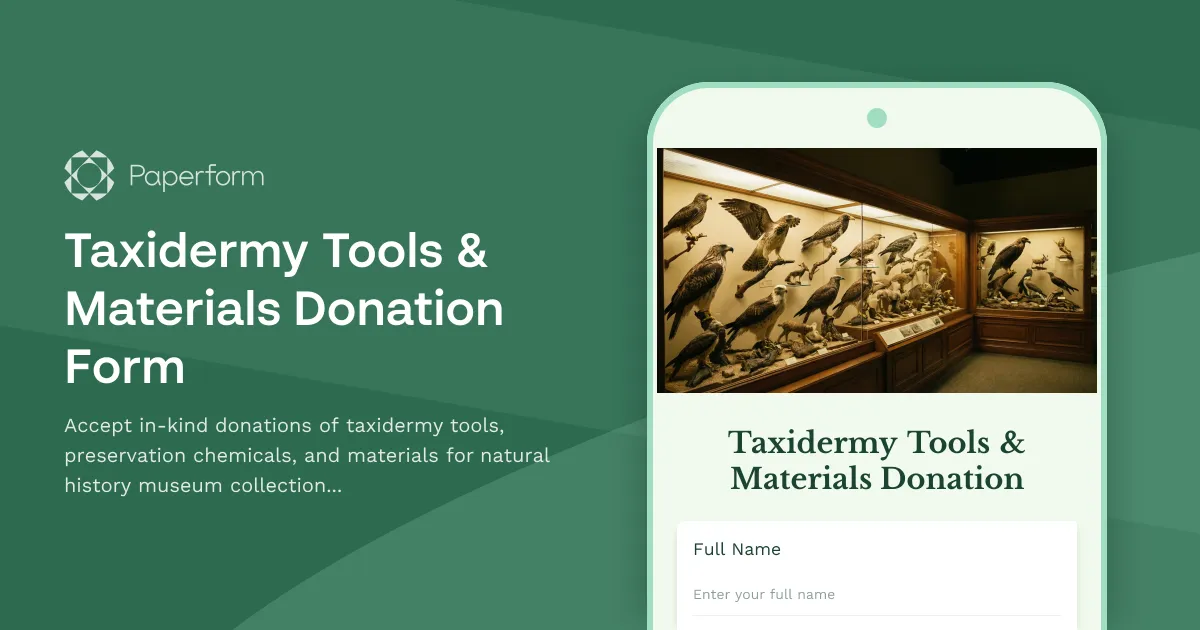
Taxidermy Tools & Materials Donation Form
Accept in-kind donations of taxidermy tools, preservation chemicals, and materials for natural history museum collections and wildlife education displays.

Archaeological Conservation Chemical Specialist Form
A specialized form for archaeological conservation specialists to assess artifact material compatibility, excavation site stability, and documentation requirements for publication-quality preservation.
Architecture Preservation Fieldwork Catering Request
Coordinate catering for architecture preservation teams conducting field surveys at historic sites, including remote location delivery and celebration planning for designation milestones.