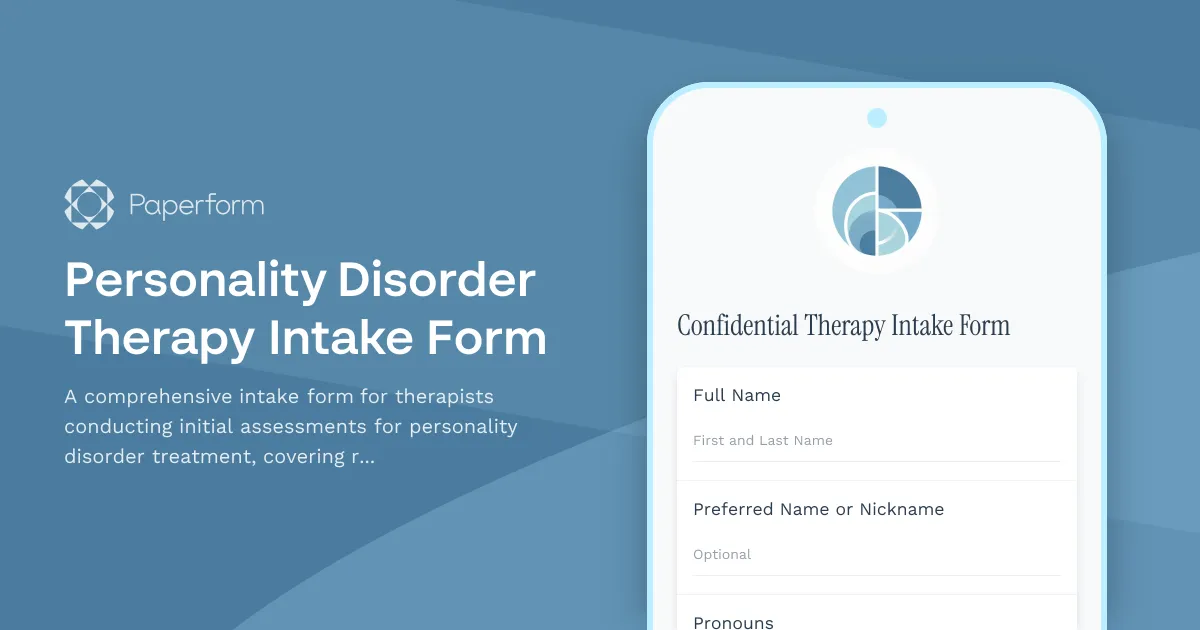
Personality Disorder Therapy Intake Form Template
Finding the right therapeutic support for personality disorders requires a thorough understanding of each client's unique experiences, challenges, and treatment needs. This Personality Disorder Therapy Intake Form template helps mental health professionals, counselors, and therapists gather comprehensive information during the initial assessment process, enabling more informed treatment planning and better therapeutic outcomes.
Streamline Your Clinical Intake Process
For therapists specializing in personality disorders, DBT practitioners, psychologists, and counseling centers, conducting a thorough intake assessment is essential—but it doesn't have to be time-consuming or administratively heavy. This Paperform template transforms the intake process into a secure, professional experience that clients can complete before their first session, giving you more time to focus on clinical work rather than paperwork.
The form captures essential information across key domains: relationship patterns and interpersonal difficulties, emotional dysregulation and coping strategies, identity confusion and self-concept issues, self-harm history and risk assessment, trauma background, and current symptoms. By gathering this information in advance, you can arrive at the first session prepared with a preliminary understanding of the client's presentation and treatment needs.
Built for Clinical Precision and Client Comfort
This template balances clinical thoroughness with sensitivity to the vulnerable nature of disclosure. Questions are structured using conditional logic—clients only see follow-up questions relevant to their responses, reducing form fatigue and creating a more personalized experience. The compassionate tone throughout acknowledges the difficulty of sharing personal information while maintaining the professional standards required for clinical documentation.
Fields include validated inputs for contact information, insurance details, emergency contacts, and referral sources, alongside clinical assessment questions about symptom presentation, functional impairment, previous treatment history, and current support systems. The form also includes crisis resources and safety information, ensuring clients have immediate access to support if needed while completing the intake.
Secure, Compliant, and Connected to Your Workflow
While Paperform is not HIPAA compliant and this form should not be used for protected health information in the United States, it can be valuable for initial inquiries, scheduling, and non-PHI intake information in jurisdictions where applicable. For practices requiring full HIPAA compliance, consider using this template as a pre-screening tool before formal clinical intake, or consult with your compliance team about appropriate use cases.
The form integrates seamlessly with practice management software, CRMs like HubSpot, scheduling tools, and Google Sheets or Airtable for centralized record-keeping. You can automatically send customized confirmation emails with next steps, appointment details, and preparatory materials, reducing no-shows and helping clients feel more prepared for their first session.
Using Stepper, you can automate your entire intake workflow: when a new client submits the form, automatically create their record in your practice management system, send welcome materials and informed consent documents via Papersign for electronic signature, schedule their initial assessment, and notify your clinical team. This automation reduces administrative burden and ensures no client falls through the cracks during the critical intake phase.
Designed for Mental Health Professionals
This template is specifically designed for:
- Therapists and psychologists specializing in personality disorders, DBT, schema therapy, or psychodynamic approaches
- Counseling centers and group practices seeking to standardize their intake process across providers
- Mental health clinics offering specialized personality disorder treatment programs
- Private practitioners building their intake workflow from the ground up
- Psychiatric hospitals and intensive outpatient programs conducting comprehensive assessments
The form can be fully customized to reflect your therapeutic approach, whether you practice DBT, mentalization-based therapy, transference-focused psychotherapy, or other modalities. Adjust questions to match your assessment needs, add screening tools or standardized measures, include insurance verification fields, or embed video content explaining your treatment approach.
Professional Design That Builds Trust
First impressions matter in therapy. This form uses a clean, calming design with a professional color palette that conveys expertise while remaining approachable. The multi-page layout breaks the intake into manageable sections, preventing overwhelm and improving completion rates. Progress indicators help clients understand how much remains, while the mobile-responsive design ensures a seamless experience whether they're completing it on their phone, tablet, or computer.
You can customize the theme to match your practice branding, add your logo, include photos of your office or team, and personalize the success message to welcome new clients warmly while providing clear next steps. The form can be embedded directly into your website or shared via a custom domain that reinforces your professional identity.
Save Time, Improve Care
Mental health professionals using structured intake forms report significant time savings—up to 30 minutes per client—by having comprehensive information ready before the first session. This efficiency doesn't just benefit your schedule; it benefits clients by allowing you to move more quickly into therapeutic work rather than spending the entire first session on administrative questions.
The data collected can be exported for treatment planning, insurance documentation, or clinical notes, and the form's calculation features can automatically score screening tools or generate preliminary diagnostic considerations based on symptom patterns described.
Get Started in Minutes
With Paperform's intuitive editor, you can launch your customized personality disorder intake form today. Start with this evidence-informed template, adjust questions to match your clinical practice, set up your integrations and automations, and share the form with new clients immediately. Whether you're a solo practitioner or part of a larger organization, this template scales with your needs.
Trusted by mental health professionals worldwide, this template helps you create a professional, thorough, and compassionate intake experience that sets the foundation for effective therapeutic work. Start using Paperform today to streamline your practice operations while maintaining the clinical rigor and personal touch your clients deserve.



More templates like this
Burn Survivor Counseling Intake Form
A compassionate intake form for burn survivors seeking mental health support, covering injury details, physical recovery, emotional challenges, and treatment goals.
Medical Equipment Dependence Mental Health Intake Form
A specialized mental health intake form for clients who rely on medical equipment, addressing device dependence, lifestyle impact, body image concerns, and technology-related anxiety.

Military Chaplain Moral Injury & Spiritual Crisis Intake Form
A compassionate intake form for military chaplains experiencing moral injury, spiritual crisis, compassion fatigue, and faith struggles from bearing witness to trauma in service.
Psychogenic Non-Epileptic Seizures (PNES) Therapy Intake Form
Comprehensive intake form for mental health professionals specializing in PNES treatment, collecting seizure history, medical testing results, trauma background, and neurological consultation information.
Stroke Rehabilitation Counseling Intake Form
A comprehensive intake form for stroke survivors beginning counseling to support emotional recovery, cognitive changes, and family adjustment during rehabilitation.
Acceptance and Commitment Therapy (ACT) Intake Form
Comprehensive ACT therapy intake form with psychological flexibility assessment, values clarification exercises, and committed action planning to help therapists understand client needs and therapeutic goals.
Addiction Recovery Therapy Intake Form
A comprehensive intake form for addiction recovery counselors to gather essential information about new clients, including substance use history, previous sobriety attempts, support network, and recovery goals.
Borderline Personality Disorder Assessment Form
A comprehensive clinical assessment tool for screening borderline personality disorder symptoms, including emotion dysregulation, relationship patterns, and behavioral indicators.
Child & Adolescent Mental Health Intake Form
A comprehensive mental health intake form for children and adolescents, collecting developmental history, school performance, family dynamics, and behavioral concerns to support effective treatment planning.
Chronic Nausea & Hyperemesis Mental Health Intake Form
A specialized mental health intake form for patients experiencing chronic nausea and hyperemesis, assessing symptom severity, nutritional status, medical history, and quality of life impact.
Cognitive Behavioral Therapy Intake Form
A comprehensive CBT intake form with depression screening, anxiety assessment, and therapy goals to help mental health professionals understand new clients and establish treatment plans.
Combat Stress Reaction Therapy Intake Form
A specialized intake form for mental health professionals working with military personnel experiencing combat stress reactions. Captures deployment details, critical incidents, acute symptoms, and unit support information.