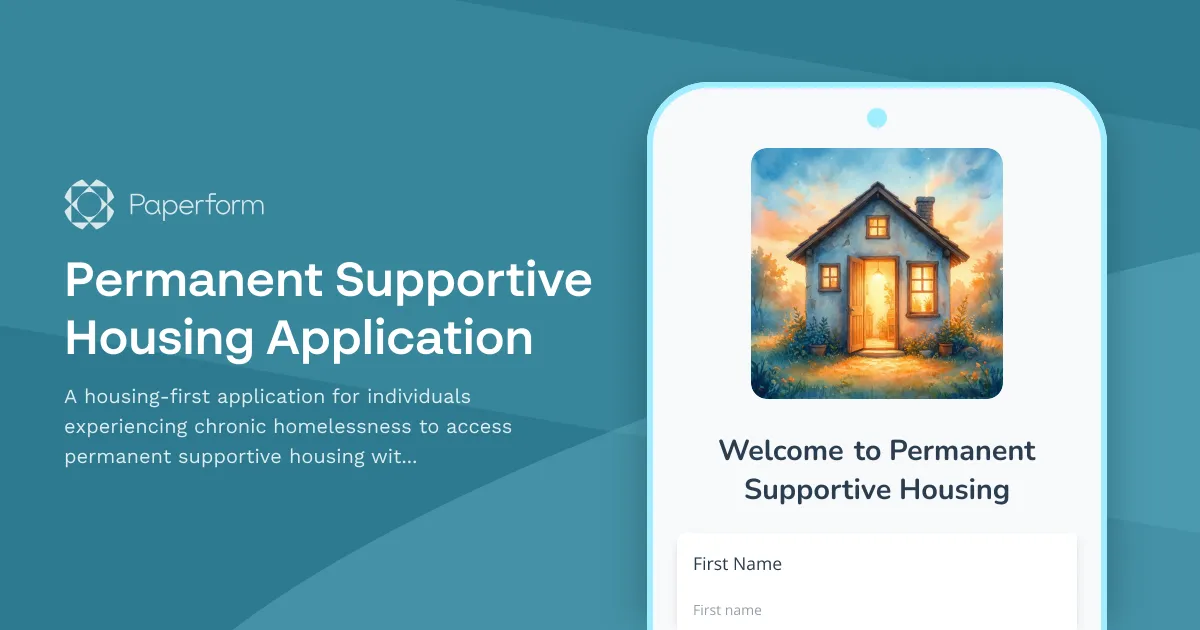
Permanent Supportive Housing Application: Breaking the Cycle of Chronic Homelessness
Permanent supportive housing (PSH) represents one of the most effective interventions for individuals experiencing chronic homelessness. This permanent supportive housing application template is designed specifically for housing providers, nonprofit organizations, government agencies, and social service organizations implementing a housing-first philosophy—prioritizing immediate access to safe housing with no preconditions, coupled with comprehensive wrap-around services.
The Housing-First Philosophy in Practice
Traditional homeless services often require individuals to "earn" housing by achieving sobriety, completing treatment programs, or meeting other prerequisites. The housing-first model flips this approach, recognizing that stable housing is the foundation upon which all other aspects of recovery and stability can be built. This application template embodies that philosophy by:
- Eliminating barriers to entry: No sobriety requirements, treatment mandates, or service participation prerequisites
- Focusing on immediate need: Assessing current housing status and urgency rather than past behaviors
- Centering dignity and choice: Treating applicants as partners in their own housing journey
- Connecting to wrap-around services: Offering—not requiring—comprehensive support services
Who This Template Serves
This form template is ideal for:
- Homeless service providers operating permanent supportive housing programs
- Nonprofit organizations working with chronically homeless populations
- Community mental health centers providing integrated housing and clinical services
- Veterans' service organizations supporting formerly homeless veterans
- Public housing authorities administering PSH voucher programs
- Continuum of Care (CoC) agencies coordinating regional homeless services
- Faith-based organizations running housing ministries and compassionate services
Whether you're a case manager in a drop-in center, a housing navigator at a shelter, or a program director at a social service agency, this template helps you collect the information needed to connect individuals with permanent supportive housing quickly and respectfully.
What Makes This Application Different
This isn't a standard rental application asking for credit scores, employment history, and landlord references—criteria that exclude those who need supportive housing most. Instead, this template focuses on:
- Vulnerability assessment: Understanding the complexity of needs without judgment
- Service preferences: Learning what support would be most helpful (not required)
- Housing history: Understanding patterns without creating barriers
- Health and safety: Identifying urgent needs for appropriate placement
- Consent and authorization: Ensuring proper permissions for coordinated care
The application uses conditional logic to adapt questions based on individual circumstances, keeping the form respectful and relevant while collecting comprehensive information for case managers.
Streamlining Your Housing-First Program with Paperform
Paperform makes it easy for service providers to implement a truly accessible, trauma-informed application process:
Mobile-first accessibility: Individuals can complete applications on smartphones at libraries, shelters, or service centers—no computer required.
Conditional logic: Questions adapt based on previous answers, showing only relevant follow-ups and avoiding unnecessary or potentially triggering questions.
Multiple submission methods: Accept applications in person on tablets, via shared links, embedded on your website, or through outreach workers in the field.
Secure data handling: SOC 2 Type II compliance and encrypted data storage protect sensitive personal information, meeting HIPAA-adjacent privacy standards for social services.
Automated workflows: Connect applications to your case management system, coordinated entry database, or HMIS (Homeless Management Information System) through integrations with tools like Salesforce, Airtable, or via Stepper (stepper.io) workflows that automatically route applications to housing navigators, trigger follow-up tasks, and keep your team coordinated.
Connecting Housing to Wrap-Around Services
The true power of permanent supportive housing lies in the comprehensive services that help individuals maintain housing stability. This template collects information about service needs and preferences including:
- Mental health and substance use support
- Medical care and medication management
- Benefits enrollment (SSI, SSDI, SNAP, Medicaid)
- Employment and education services
- Life skills and financial literacy
- Social connection and community building
By collecting this information upfront, case managers can begin coordinating services immediately upon housing placement, setting individuals up for long-term success.
Compliance with Coordinated Entry and HUD Requirements
Many permanent supportive housing programs operate within federally-funded Continuum of Care systems that require standardized coordinated entry processes. This template can be customized to include:
- VI-SPDAT or other vulnerability assessment tools
- HUD data elements required for HMIS reporting
- Fair Housing Act compliance questions
- Documentation of chronic homelessness criteria
- Prioritization factors for your CoC's written standards
The form's flexibility means you can adapt it to your specific funding requirements while maintaining the housing-first approach.
Building Trust Through Trauma-Informed Design
Every element of this application is designed with trauma-informed principles in mind:
- Clear, compassionate language: No jargon, judgment, or bureaucratic coldness
- Optional questions: Many fields are not required, allowing individuals to share what feels safe
- Purpose transparency: Explanations of why information is needed and how it will be used
- Control and agency: Applicants choose which services they're interested in, with no obligations
This approach recognizes that the application process itself is part of the healing journey—an opportunity to demonstrate that this time, things will be different.
From Application to Housing: Automating Next Steps
Once an application is submitted, Paperform helps your team move quickly:
Automated notifications: Alert housing navigators immediately when new applications arrive, with priority flagging for highest-vulnerability applicants.
Integrated workflows: Use Stepper to automatically create case files in your CMS, schedule intake appointments, assign case managers, and trigger document collection processes.
Communication sequences: Send confirmation emails with next steps, resource information, and contact details—keeping applicants informed and engaged.
Reporting and analytics: Track application volume, demographics, service needs, and housing placement rates to demonstrate impact to funders and improve your program.
Why Paperform for Homeless Services
Over 500,000 organizations trust Paperform to handle sensitive, mission-critical forms. For homeless services providers specifically:
- No-code customization: Social workers and program staff can update forms without IT support
- Budget-friendly: Predictable pricing that respects nonprofit budgets
- Quick deployment: Launch your application in hours, not weeks
- Accessible design: WCAG-friendly forms that work for individuals with varying abilities
- Reliable and secure: Enterprise-grade infrastructure that never loses an application
Permanent supportive housing has the power to end chronic homelessness one person at a time. With Paperform, you can ensure that the very first step—the application process—reflects the dignity, respect, and hope that your program offers. Create a streamlined, compassionate pathway from homelessness to home, and let technology handle the logistics so you can focus on what matters most: changing lives.
Start with this template and customize it to match your program's specific requirements, local resources, and organizational branding. Your community's most vulnerable neighbors deserve housing, support, and a chance to thrive—and it all begins with an application process that says "yes" instead of creating more barriers.

More templates like this
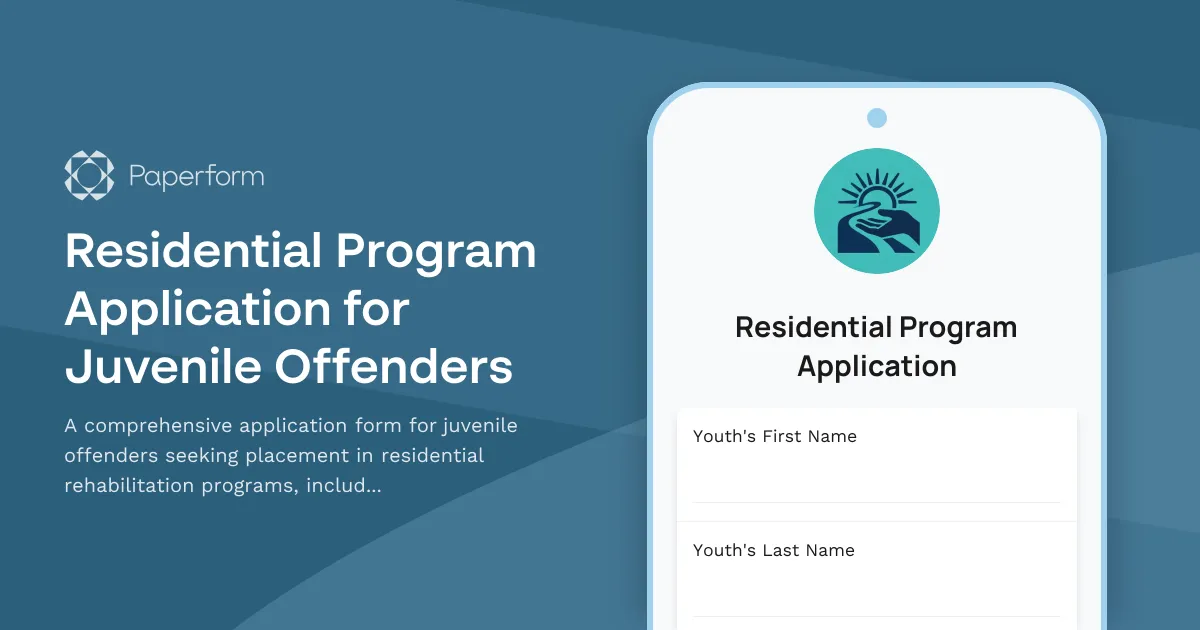
Residential Program Application for Juvenile Offenders
A comprehensive application form for juvenile offenders seeking placement in residential rehabilitation programs, including court commitment orders, educational assessments, and reintegration planning.
Foster Care Youth Independent Living Housing Application
A comprehensive housing application designed for foster care youth transitioning to independent living, including skills assessment, educational support, and mentor matching to ensure successful housing placement and ongoing support.
Halfway House Application for Reentry Programs
A comprehensive application form for halfway house placement in reentry programs, collecting applicant information, parole officer details, employment status, and program requirements for successful community reintegration.
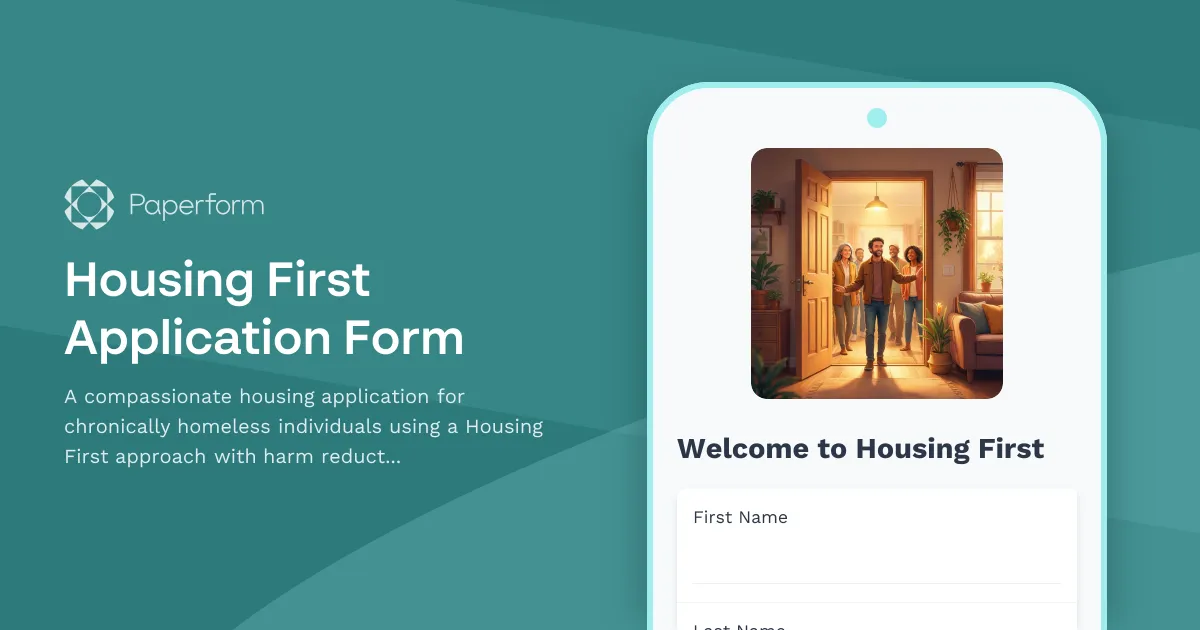
Housing First Application Form
A compassionate housing application for chronically homeless individuals using a Housing First approach with harm reduction principles and no sobriety requirements.
Housing Stability Program Application for Reentry Services
A comprehensive application form for formerly incarcerated individuals seeking housing assistance, employment support, and reentry services designed to prevent recidivism and promote successful community reintegration.
Supervised Independent Living Application for Young Adults
A comprehensive application form for young adults transitioning from foster care to supervised independent living, including housing assessment, life skills evaluation, and mentor matching.
Transitional Housing Application
A comprehensive application for individuals seeking transitional housing through homeless services programs, including case manager referral information and social services coordination.
Women's Shelter Intake Application
A compassionate intake form for women's shelters to collect essential information, assess safety needs, document children's details, and provide support for survivors of domestic violence.
Court-Ordered Treatment Housing Application
A comprehensive housing application for individuals in court-ordered treatment programs, including legal mandate documentation, compliance monitoring consent, and probation officer verification.
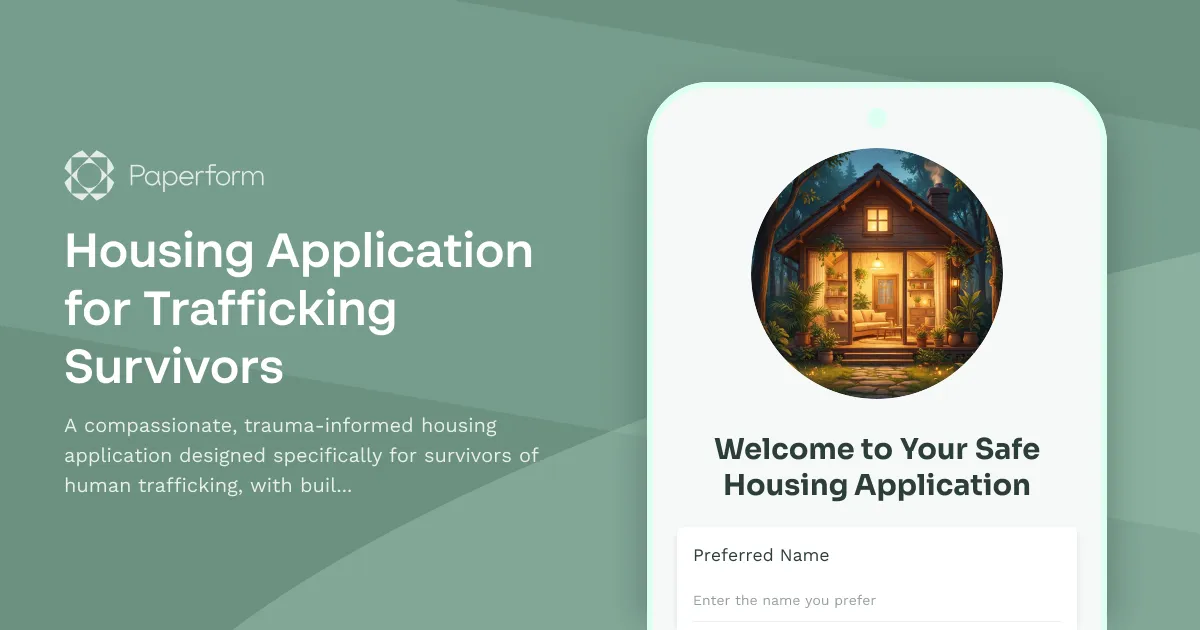
Housing Application for Trafficking Survivors
A compassionate, trauma-informed housing application designed specifically for survivors of human trafficking, with built-in safety planning and legal advocacy coordination.
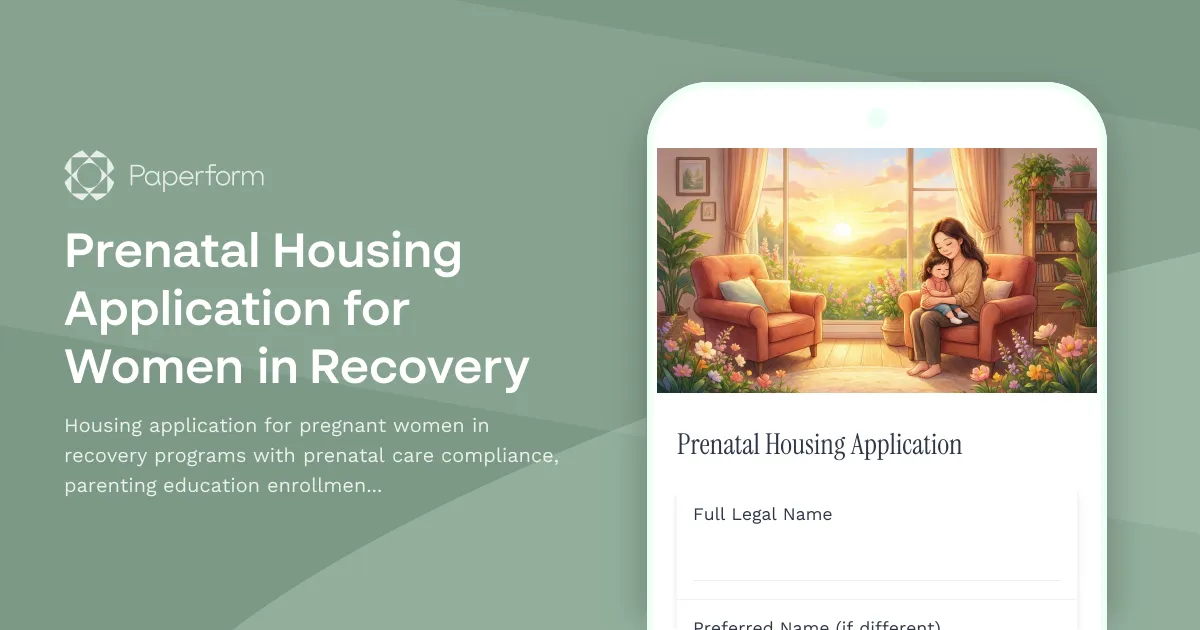
Prenatal Housing Application for Women in Recovery
Housing application for pregnant women in recovery programs with prenatal care compliance, parenting education enrollment, and infant care planning.
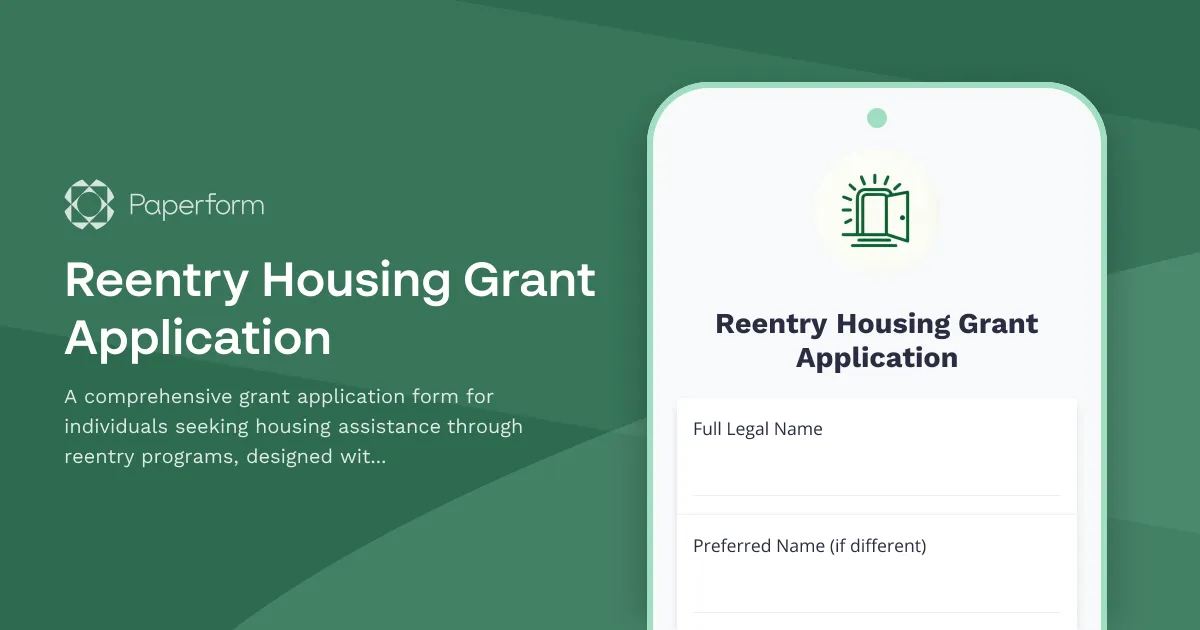
Reentry Housing Grant Application
A comprehensive grant application form for individuals seeking housing assistance through reentry programs, designed with a housing-first approach and coordinated supportive services.