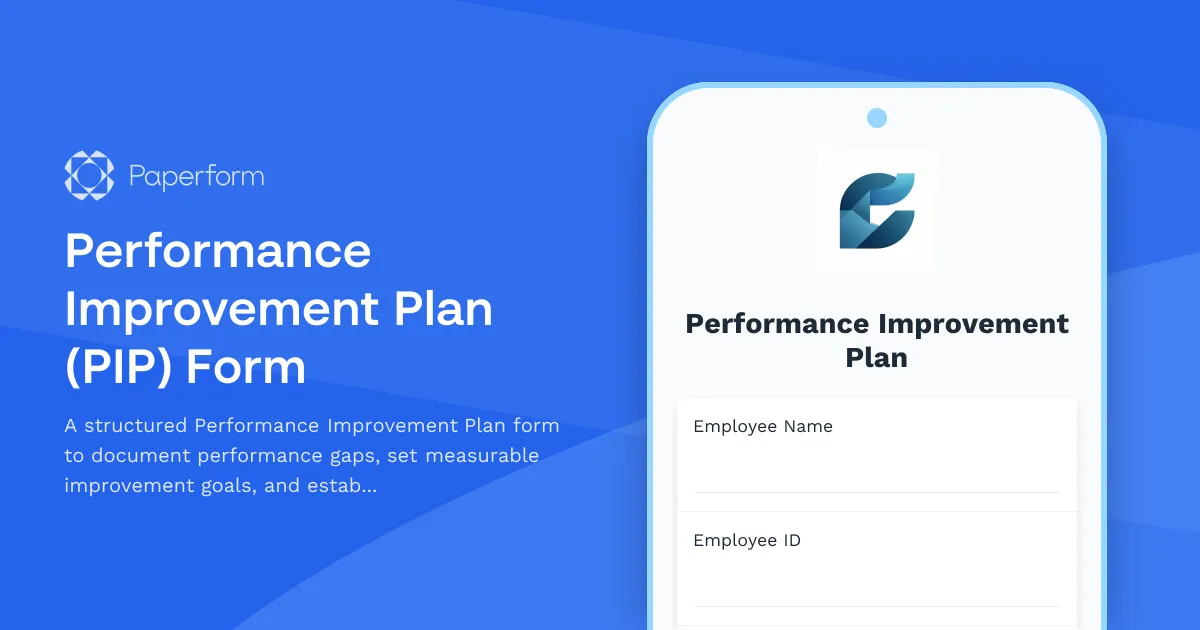
A Performance Improvement Plan (PIP) is a critical HR tool for supporting employees who aren't meeting performance expectations. This comprehensive PIP form template helps managers and HR professionals document specific performance gaps, establish measurable improvement goals, and create clear timelines for progress reviews.
Why use Paperform for Performance Improvement Plans?
Paperform makes it easy to create professional, on-brand PIP documentation that feels supportive rather than punitive. The doc-style editor lets you structure the form exactly how you need it—combining clear headings, explanatory text, and form fields that guide managers through the process step by step.
Built for HR workflows
This template includes sections for employee and manager information, detailed performance gap documentation, SMART improvement goals with specific metrics, support resources, and scheduled review milestones. Conditional logic ensures the form adapts based on the type of performance issues being addressed.
Once submitted, you can use Stepper to automate your PIP workflow—routing the form to HR for review, scheduling follow-up meetings automatically, sending reminder emails before reassessment dates, and creating tasks in your project management system to track progress. All submissions are securely stored and can be exported for employee records.
Professional and compliant documentation
With SOC 2 Type II compliance and robust security features, Paperform ensures sensitive performance documentation is handled appropriately. Use roles and permissions to control who can access PIP forms, and leverage custom confirmation pages to provide employees with resources and next steps after the meeting.
Whether you're an HR manager at a growing SMB or part of a larger people operations team, this Performance Improvement Plan template provides the structure you need to support employee development while maintaining clear documentation for compliance purposes.
More templates like this
9-Box Talent Review Form
A comprehensive talent assessment form for succession planning that evaluates employee performance and potential using the 9-box grid methodology, with development action planning.
Career Pathing Specialist Performance Appraisal
A comprehensive appraisal form for career pathing specialists that evaluates employee mobility rates, skills gap analysis quality, development plan effectiveness, and internal promotion success.
Employee Self-Assessment Form
A comprehensive self-assessment form for annual performance reviews that helps employees document achievements, reflect on strengths and development areas, and articulate career goals.
Executive Coach Appraisal & Leadership Development Outcomes
A comprehensive form to evaluate executive coaching effectiveness through 360-degree feedback, leadership development outcomes, client satisfaction metrics, and sustained behavior change assessment.
Individual Development Plan (IDP) Form
A comprehensive career development form for employees to document career goals, identify skill gaps, and create actionable development plans with training recommendations.
Mentorship Program Coordinator Performance Review
Comprehensive performance evaluation form for mentorship program coordinators, measuring match quality, completion rates, participant satisfaction, and career development impact.
Mid-Year Performance Check-In Form
A comprehensive mid-year review form for tracking goal progress, identifying obstacles, and assessing resource needs to support employee development and performance.
Bookkeeper Competency Assessment
A comprehensive bookkeeper performance evaluation form that measures accuracy of records, reporting timeliness, software proficiency, and reconciliation effectiveness for effective career development.
Company Succession Planning and Talent Pipeline Survey
Assess leadership readiness, identify high-potential talent, and evaluate career development opportunities. Gain insights into succession planning effectiveness and talent pipeline strength.
Employee Burnout Screening Quiz
A comprehensive diagnostic quiz for HR teams to assess employee stress levels, workload balance, and burnout risk factors with actionable intervention recommendations.
Employee Committee Assignment Equity Grievance Form
Submit a formal grievance regarding committee assignment equity, visibility opportunities, leadership development access, and selection transparency in the workplace.
Employee Cross-Departmental Project Opportunity Grievance Form
A formal form for employees to raise concerns about limited access to cross-departmental projects, skill development opportunities, and internal mobility pathways within the organization.