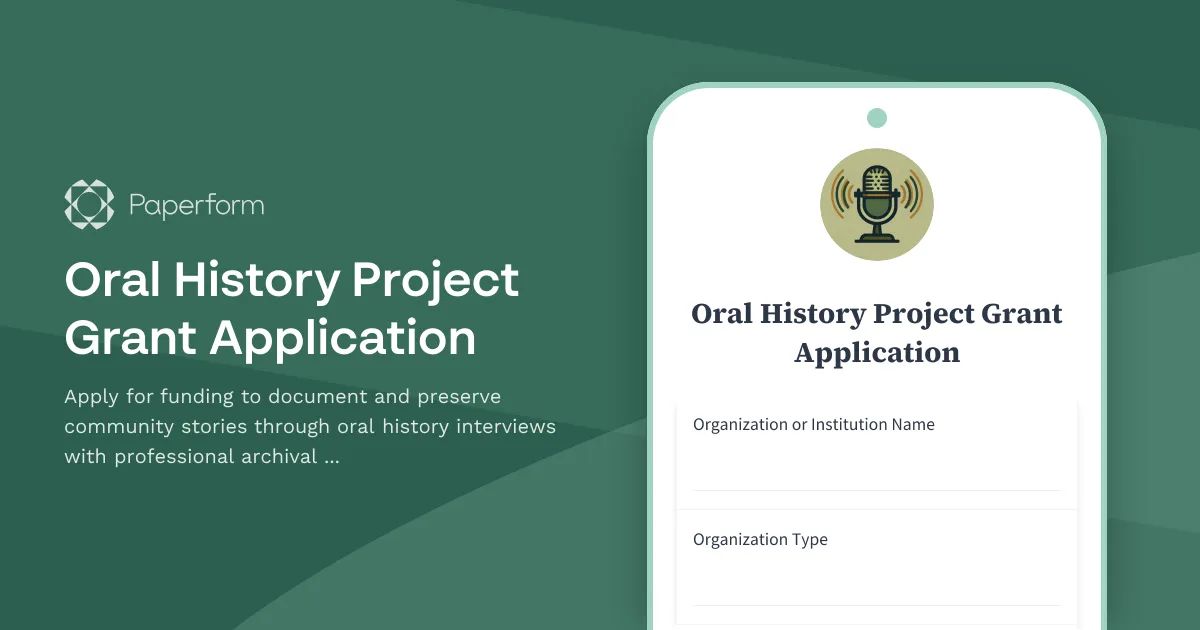
Preserve Community Stories with Oral History Grant Funding
Oral history projects play a vital role in documenting lived experiences, preserving cultural heritage, and ensuring that diverse voices are captured for future generations. Whether you're a nonprofit organization, educational institution, museum, library, or community group, securing grant funding is often essential to bringing these important projects to life.
This Oral History Project Grant Application template is designed to help organizations and researchers submit comprehensive, professional funding proposals that demonstrate methodological rigor, ethical community engagement, and a clear plan for preservation and public access.
Why Oral History Grants Matter
Oral history projects require significant resources—recording equipment, trained interviewers, transcription services, archival storage, and community outreach. Grant funding enables organizations to:
- Document underrepresented communities and marginalized voices
- Preserve historical events and cultural traditions before they're lost
- Create educational resources for researchers, students, and the public
- Build community connections through collaborative storytelling
- Establish accessible digital archives that serve future generations
This template guides applicants through every critical component of a successful grant proposal, from project scope and interview methodology to archival standards and community consent protocols.
What Makes This Template Different
Unlike generic grant applications, this form is specifically tailored to oral history work. It addresses the unique requirements that funders look for in oral history proposals:
Interview Methodology & Standards: The form prompts applicants to detail their interview approach, including question design, interviewer training, recording protocols, and ethical considerations. This demonstrates professionalism and ensures projects meet established oral history best practices.
Archival & Preservation Planning: Funders want to know how interviews will be preserved for the long term. This template collects information about metadata standards, storage formats, backup procedures, and compliance with archival guidelines from organizations like the Oral History Association.
Community Consent & Ethics: Ethical oral history work requires informed consent, cultural sensitivity, and community ownership. The application includes dedicated sections for consent protocols, privacy protections, and how the project will honor participant agency and cultural protocols.
Public Access & Impact: The form asks applicants to outline their plans for making oral histories accessible—whether through digital archives, exhibitions, educational programs, or online platforms—while balancing accessibility with participant privacy wishes.
Streamline the Grant Process with Paperform
Creating this oral history grant application with Paperform means you can build a professional, branded form that reflects the seriousness and cultural sensitivity of your work. The doc-style editor lets you add context, guidelines, and supporting information inline, helping applicants understand exactly what reviewers are looking for.
Conditional logic can show or hide questions based on project type—for example, asking about tribal consultation protocols only when working with Indigenous communities, or requesting additional details about translation services for multilingual projects.
File uploads let applicants attach supporting documents like letters of support from community partners, sample interview protocols, CVs of project staff, or drafts of consent forms—all organized in one submission.
Once applications are submitted, Paperform's native integrations and Stepper workflows can automatically route submissions to review committees, notify applicants of receipt, and trigger follow-up communications. You can even connect submissions to Airtable or Google Sheets to build a grant review dashboard where committee members can score and discuss proposals collaboratively.
Who This Template Is For
This template is ideal for:
- Nonprofit organizations and cultural heritage groups seeking project funding
- Museums and historical societies documenting local or regional history
- Libraries and archives building oral history collections
- Universities and research institutions conducting community-based research
- Grant-making foundations that need a standardized application for oral history funding
- Tribal organizations and Indigenous groups preserving cultural knowledge and languages
- Community organizers capturing stories of social movements, immigration, or neighborhood change
Customize and Automate Your Review Process
While this template includes all the essential sections for a thorough oral history grant application, it's fully customizable to match your specific funding priorities or organizational requirements. Add questions about diversity, equity, and inclusion commitments, request detailed budgets with line-item breakdowns, or include fields for collaborative partnerships and co-applicant information.
If you're a funder reviewing multiple applications, connect your form to Stepper (stepper.io) to automatically score submissions, send applications to different reviewers based on project focus area, update your grants management database, and trigger email notifications at each stage of the review process—all without manual data entry.
For organizations submitting applications, Paperform's autosave feature means you won't lose progress, and applicants can return to partially completed forms. You can also use calculated fields to automatically tally budget totals or track word counts, ensuring proposals stay within funder guidelines.
Built for Trust and Compliance
Grant applications often contain sensitive information about communities, vulnerable populations, and cultural practices. Paperform is SOC 2 Type II compliant and GDPR-ready, giving both funders and applicants confidence that data is handled securely. Forms can be password-protected, submissions can be encrypted, and you have full control over who can access application data.
Whether you're preserving the oral histories of Holocaust survivors, documenting immigrant experiences, capturing Indigenous language and traditions, or recording the stories of LGBTQ+ elders, this template provides a professional, respectful framework for applying for the funding you need to do this critical work.
Get Started Today
Oral history projects create lasting legacies. With this grant application template, you can focus less on administrative logistics and more on the meaningful work of listening, recording, and preserving the voices that matter. Build your application form with Paperform today and take the first step toward funding your next oral history project.
More templates like this

Cultural Heritage Preservation Grant Application
Apply for grant funding to preserve, digitize, and make accessible important cultural heritage materials and artifacts through professional conservation methods.
Aquaponics & Urban Farming Scholarship Application
A specialized scholarship application for students pursuing aquaponics, controlled environment agriculture, and urban farming initiatives with a focus on sustainable food systems.
Community Archive Volunteer Application
A comprehensive application for volunteers interested in preserving community history through oral history recording, document preservation, and collective memory stewardship.
Indigenous Cultural Preservation Grant Application
Apply for funding to support Indigenous language revitalization, traditional knowledge documentation, elder involvement, and youth engagement programs in your community.
Indigenous Language Technology Grant Application
Apply for funding to develop technology solutions that preserve and revitalize Indigenous languages through speech recognition, translation tools, digital dictionaries, and mobile learning applications.
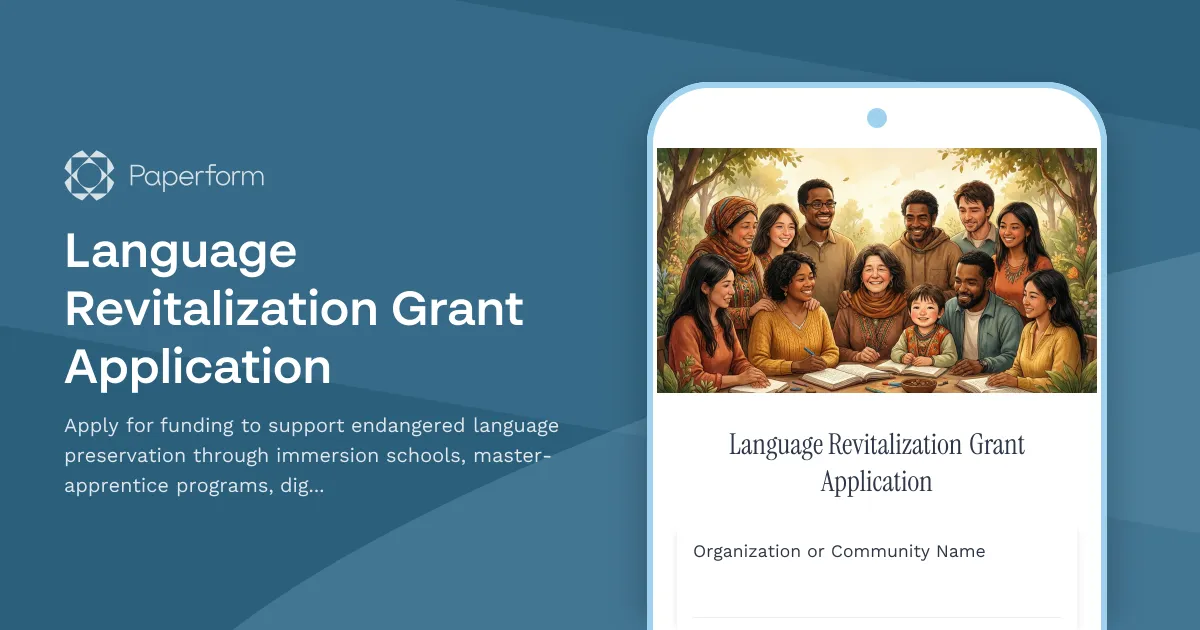
Language Revitalization Grant Application
Apply for funding to support endangered language preservation through immersion schools, master-apprentice programs, digital resources, and intergenerational transmission initiatives.
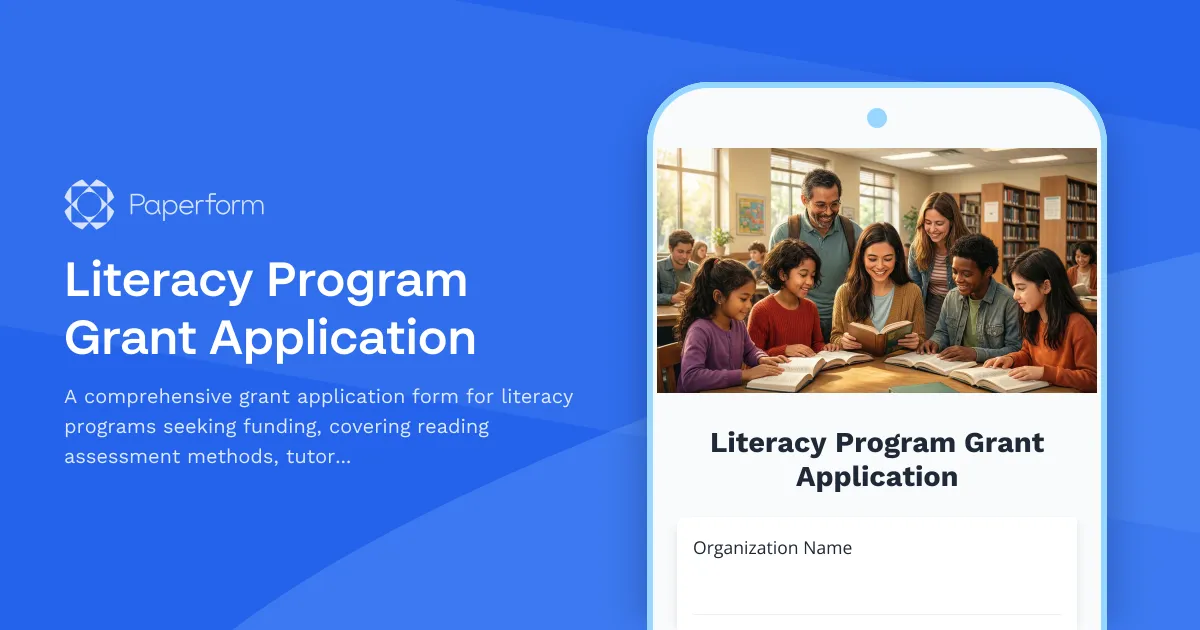
Literacy Program Grant Application
A comprehensive grant application form for literacy programs seeking funding, covering reading assessment methods, tutor training, library partnerships, and multilingual support initiatives.
Media Literacy Grant Application Form
Apply for funding to develop and implement media literacy programs with curriculum frameworks, educator training, misinformation detection tools, and digital citizenship components.
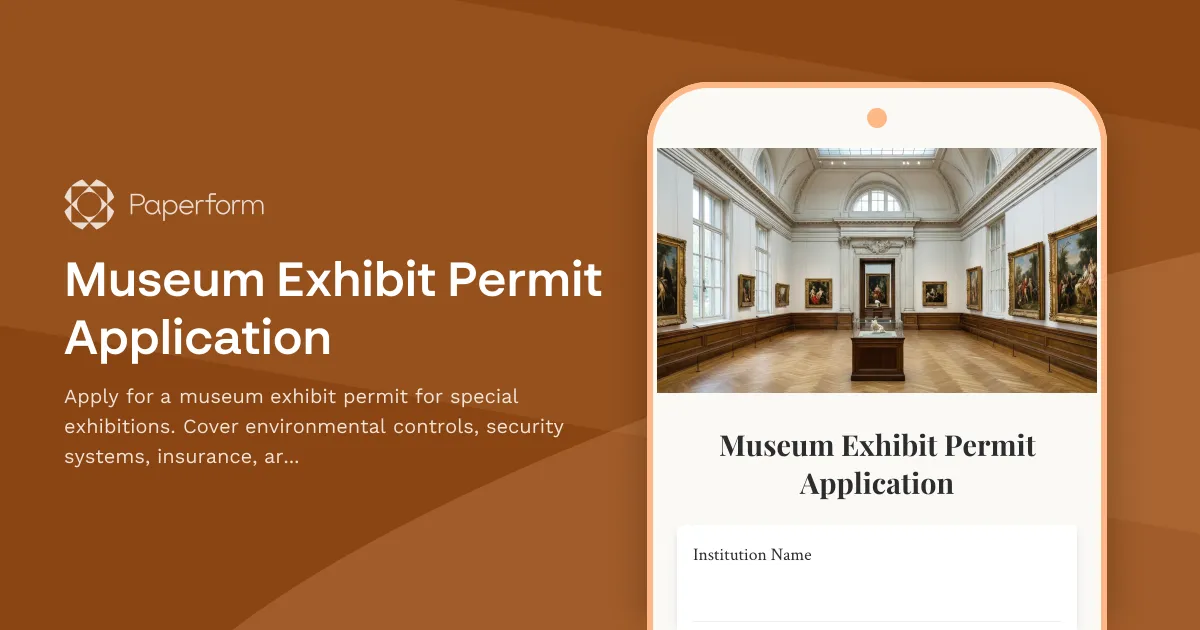
Museum Exhibit Permit Application
Apply for a museum exhibit permit for special exhibitions. Cover environmental controls, security systems, insurance, artifact handling protocols, and educational programming requirements.
Paleontology Graduate Scholarship Application
A comprehensive scholarship application for graduate students pursuing paleontology research, covering fossil excavation experience, comparative anatomy expertise, and specialization areas.
Participatory Research Grant Application
A comprehensive grant application form for participatory research projects that prioritize community engagement, co-investigator partnerships, data sovereignty, and equitable knowledge sharing.
Rare Book Conservator Application
A specialized application form for rare book conservator positions, capturing preservation credentials, restoration skills, and technical expertise in archival conservation.