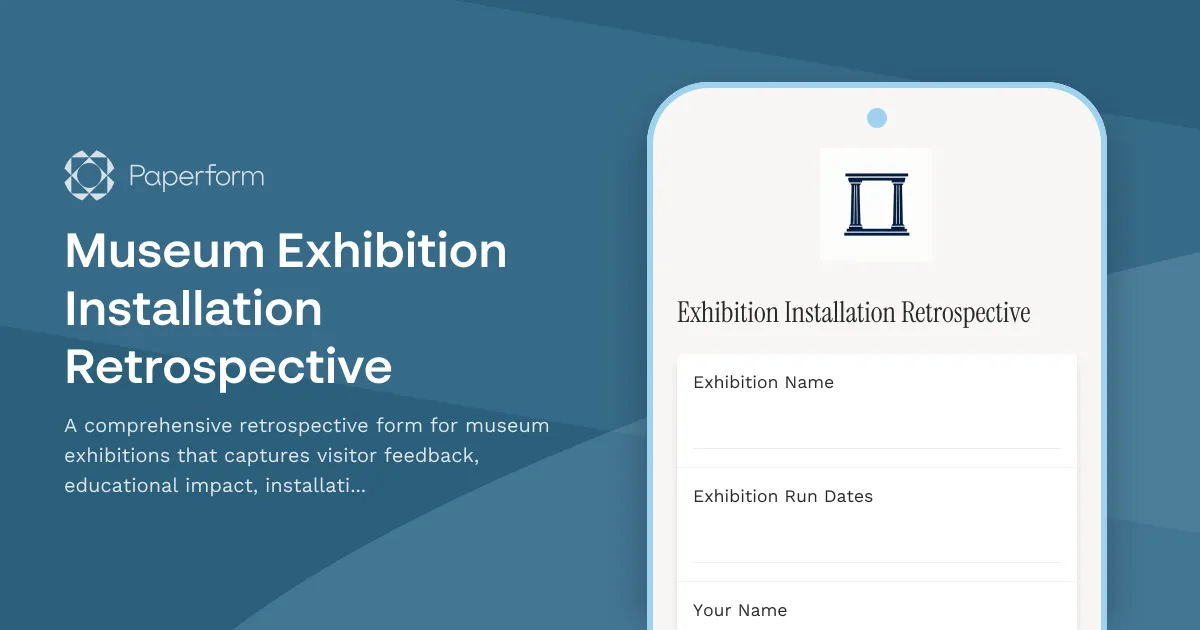
Museums and cultural institutions invest significant time, budget, and creative energy into each exhibition installation. Whether you're showcasing contemporary art, natural history, or interactive science displays, a thorough museum exhibition installation retrospective is essential for continuous improvement and institutional learning.
This Museum Exhibition Installation Retrospective template helps curators, exhibition designers, education teams, and operations staff capture lessons learned across every phase—from concept and design through installation, public engagement, and deinstallation. By gathering structured feedback on visitor response, educational outcomes, timeline accuracy, and team collaboration, you can identify what worked well and what to adjust for your next exhibition.
Built for museums, galleries, and cultural institutions, this retrospective form is perfect for art museums, science centers, history museums, children's museums, botanical gardens with exhibition spaces, and heritage sites. It supports both permanent collection rotations and special traveling exhibitions, with sections tailored to the unique challenges of museum environments—including conservation considerations, accessibility standards, and educational programming.
The form captures quantitative data (visitor numbers, timeline variance, budget performance) alongside qualitative insights (team reflections, visitor comments, educational effectiveness). Use conditional logic to tailor questions based on exhibition type, and leverage Paperform's AI Insights to synthesize large volumes of feedback into actionable themes for your next curatorial meeting.
Once submitted, this retrospective can trigger follow-up workflows using Stepper—automatically routing insights to relevant department heads, updating project management tools like Asana or Monday, notifying stakeholders, and creating a lessons-learned archive in Notion or SharePoint. Integration with Google Sheets or Airtable lets you build a living database of exhibition performance over time.
Whether you're a small community gallery or a major metropolitan museum, this template helps you document what made your exhibition successful and where there's room to grow—ensuring every installation builds on the lessons of the last.
More templates like this
Museum Visitor Experience Survey
Gather detailed feedback from museum visitors about their experience, including exhibit quality, staff interactions, and facility accessibility to continuously improve your museum's offerings.
Alumni Networking Mixer Feedback Form
Gather feedback from alumni on networking events, career connections, mentorship opportunities, and engagement with university updates and fundraising initiatives.
Art Gallery Visitor Satisfaction Survey
Gather valuable feedback on exhibits, curation, staff service, and events to enhance your gallery's visitor experience and programming quality.
Children's Museum Exhibit Development Milestone Sign-Off
A comprehensive milestone approval form for children's museum exhibit development, covering interactive installation testing, safety verification, educational alignment, and curator sign-off.
Cultural Heritage Digitization Equipment Request Form
A comprehensive form for museum registrars to request and document digitization equipment for cultural heritage collections, ensuring archival quality standards and grant funding compliance.
Environmental Sustainability Initiative Post-Mortem Form
A comprehensive retrospective form for evaluating sustainability initiatives, measuring carbon reduction, cost savings, stakeholder engagement, and capturing lessons learned for future green projects.
Film Festival Attendee Experience Survey
Gather comprehensive feedback from film festival attendees on movie selection, venue experience, scheduling, Q&A sessions, and ticketing to improve future events.
Library Fundraising Event Feedback Form
Gather valuable feedback from attendees of your library fundraising event, including program impact, donation experience, volunteer interest, and facility tour quality to improve future events.
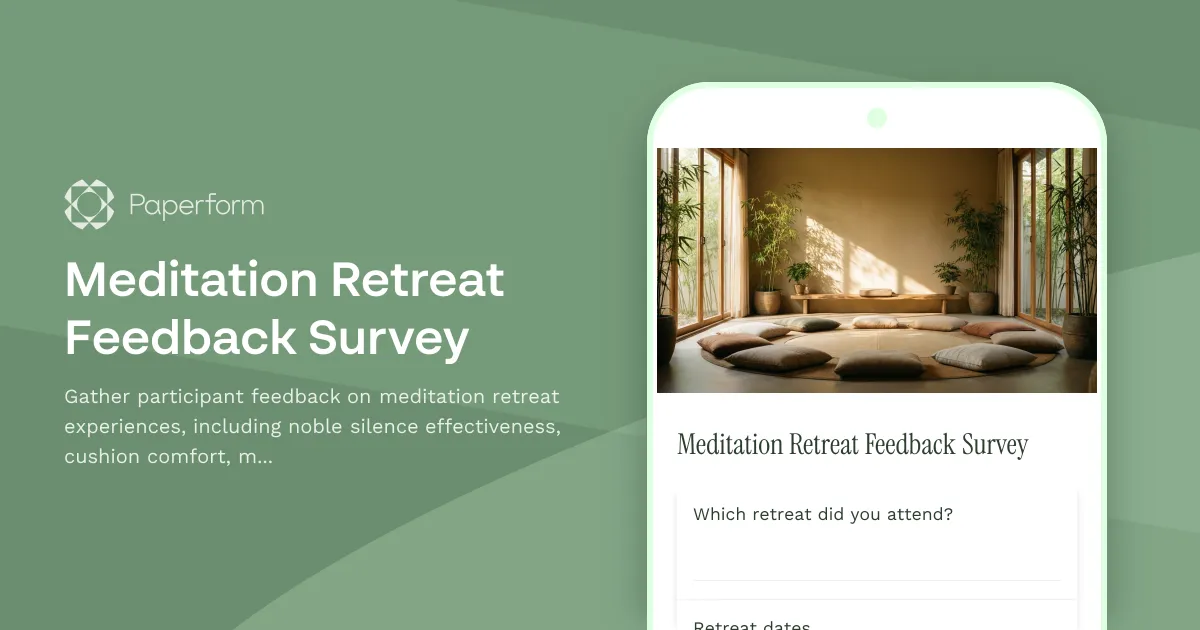
Meditation Retreat Feedback Survey
Gather participant feedback on meditation retreat experiences, including noble silence effectiveness, cushion comfort, meal quality, and spiritual growth outcomes.
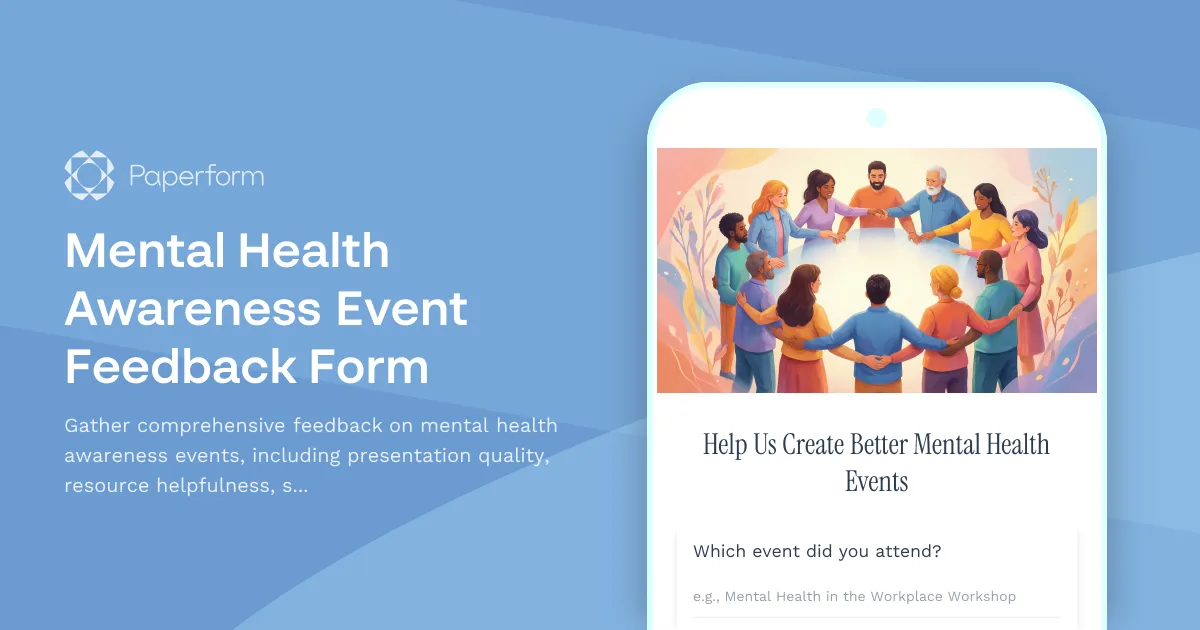
Mental Health Awareness Event Feedback Form
Gather comprehensive feedback on mental health awareness events, including presentation quality, resource helpfulness, speaker credibility, stigma reduction impact, and support network value.
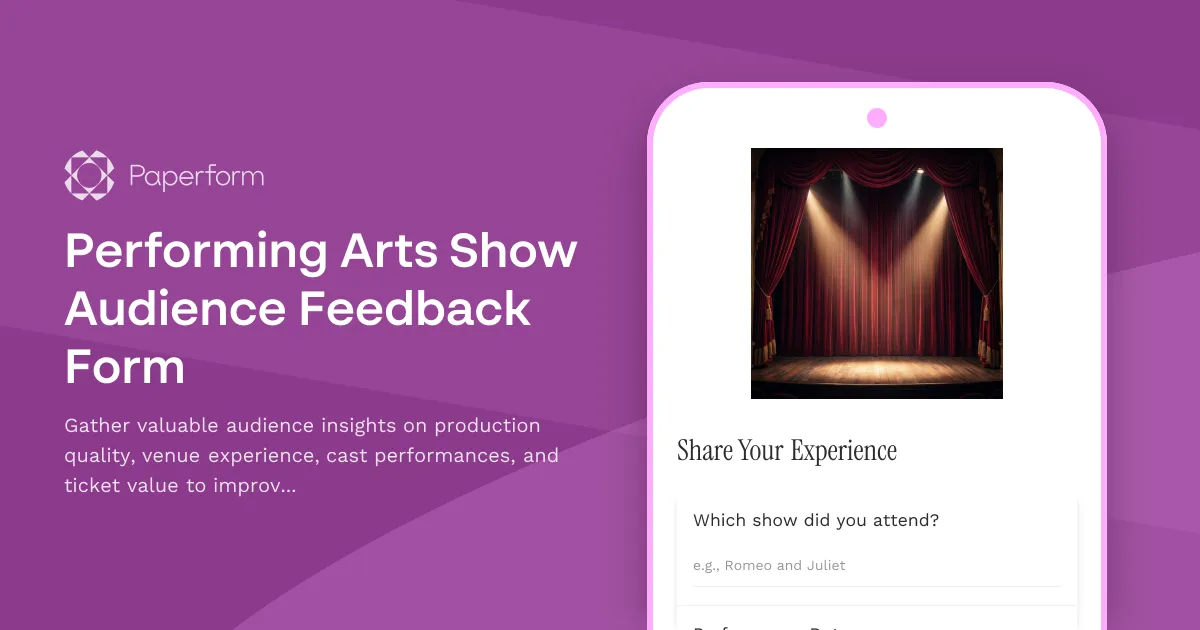
Performing Arts Show Audience Feedback Form
Gather valuable audience insights on production quality, venue experience, cast performances, and ticket value to improve future shows and productions.
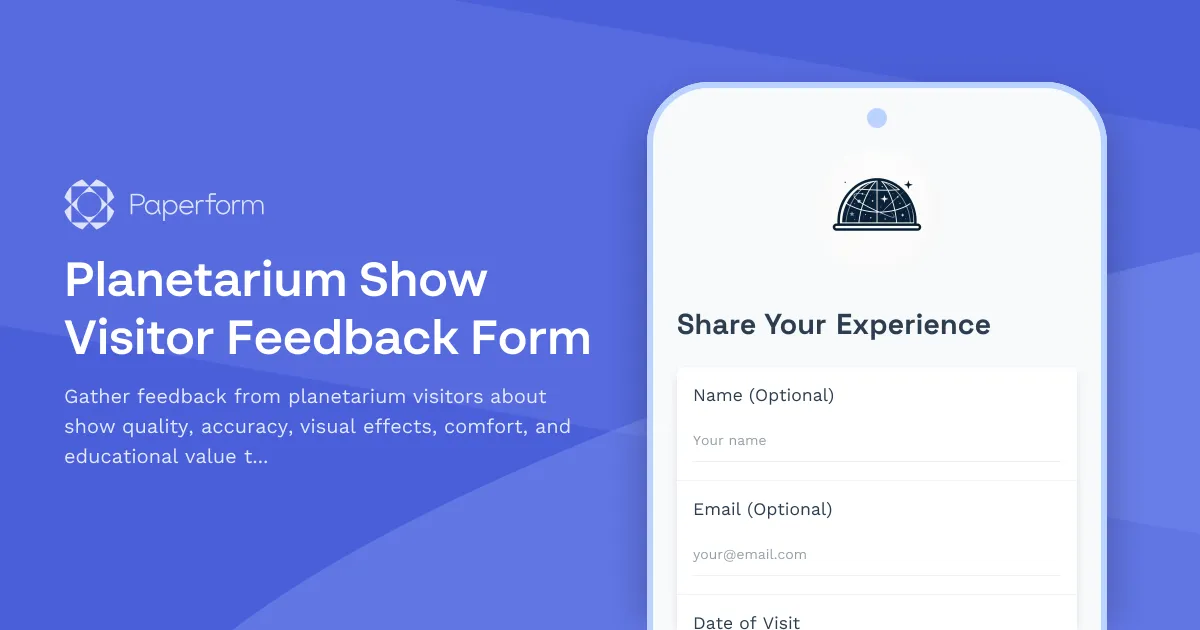
Planetarium Show Visitor Feedback Form
Gather feedback from planetarium visitors about show quality, accuracy, visual effects, comfort, and educational value to continuously improve your space theater experience.