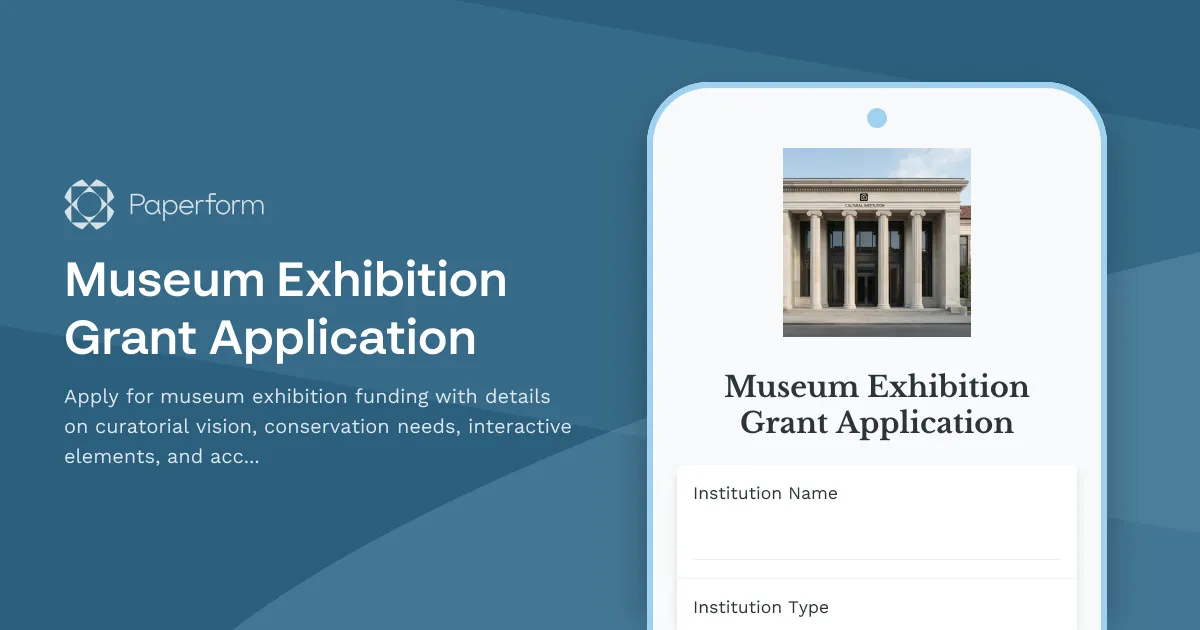
Secure Funding for Your Next Museum Exhibition
Planning a compelling museum exhibition requires more than just passion and vision—it requires funding. Our Museum Exhibition Grant Application template helps museums, galleries, cultural institutions, and independent curators present professional, comprehensive grant applications that demonstrate curatorial excellence, conservation awareness, audience engagement strategies, and commitment to accessibility.
Whether you're a small community museum seeking to spotlight local history, a contemporary art gallery planning an innovative installation, or a natural history museum developing an educational exhibition, this template guides applicants through every essential component funders want to see.
Why Choose This Museum Grant Application Template?
Grant applications in the cultural sector demand detail, clarity, and professionalism. This Paperform template streamlines the process by organizing your application into clear sections that address:
- Institutional information and track record to establish credibility
- Curatorial statements that articulate artistic and educational vision
- Collection and conservation needs for artifact preservation
- Interactive and educational elements that enhance visitor engagement
- Accessibility features ensuring exhibitions serve all community members
- Budget breakdowns and justifications demonstrating fiscal responsibility
- Project timelines showing realistic planning and execution
By using a structured, professional form, you demonstrate organizational capacity while saving time on application formatting—letting you focus on the substance of your exhibition proposal.
Built for Museums, Galleries & Cultural Organizations
This template is specifically designed for:
- Museum directors and curators applying for exhibition development grants from foundations, government agencies, and private donors
- Gallery coordinators seeking funding for special exhibitions and artist showcases
- Cultural heritage organizations preserving and presenting community history
- Independent curators developing traveling exhibitions or pop-up installations
- Education departments creating interactive learning experiences within exhibitions
- Conservation professionals identifying funding for artifact preservation within exhibition contexts
The form captures not just what you want to display, but how you'll engage audiences, preserve cultural materials, and ensure your exhibition serves the broadest possible community.
Key Features That Strengthen Your Grant Application
Comprehensive Curatorial Vision Section
Articulate your exhibition's theme, narrative arc, and cultural significance. Explain how your exhibition connects to broader scholarly conversations, community needs, or artistic movements. Grant reviewers want to understand not just what you'll display, but why it matters now.
Artifact & Conservation Planning
Detail the specific objects, artworks, or specimens you'll feature, along with their conservation status and any preservation work required. This demonstrates you understand the responsibilities of collection stewardship and have factored conservation costs into your planning.
Interactive & Educational Elements
Describe hands-on activities, digital interactives, guided experiences, workshops, or programs that will enhance visitor engagement. Funders increasingly value exhibitions that offer participatory experiences beyond passive viewing.
Accessibility & Inclusion Features
Outline how your exhibition will serve visitors with disabilities, language barriers, or other access needs. This includes physical accessibility, sensory accommodations, multilingual materials, and programming for diverse audiences.
Budget & Timeline Transparency
Break down your funding request with clear line items and realistic timelines. This shows grant committees you've done thorough planning and can execute the project responsibly.
How Paperform Enhances Your Grant Process
Professional presentation matters. With Paperform's design flexibility, your grant application looks polished and on-brand, reflecting the quality of your institution and proposed exhibition.
Conditional logic guides applicants. If your grant program serves different institution types or project scales, you can show relevant questions based on earlier answers—keeping the form focused and reducing applicant confusion.
File uploads make it easy to submit supporting materials like letters of support, conservation assessments, preliminary exhibition designs, or institutional documentation—all kept organized in one submission.
Auto-calculations can help applicants see how their budget components add up in real time, reducing errors and incomplete financial requests.
Email notifications and confirmations immediately reassure applicants their proposal was received, and keep your grants team informed of new submissions.
Streamline Post-Submission Workflows with Stepper
Once grant applications come in, your review process begins. Stepper, Paperform's AI-native workflow automation tool, can help you:
- Route applications to review committees based on project type, funding amount, or institution category
- Create evaluation scorecards that get distributed to multiple reviewers
- Track review status and send reminders to committee members
- Trigger approval workflows for promising applications that need director sign-off
- Update applicants automatically as their proposal moves through review stages
- Sync funded projects into project management tools or financial systems
By connecting Paperform submissions to Stepper workflows, your grants program runs smoothly from application through award and reporting—without manual email chains or lost spreadsheets.
Trusted by Cultural Institutions Worldwide
Museums, galleries, and cultural organizations around the globe trust Paperform to handle sensitive grant applications because of:
- SOC 2 Type II compliance ensuring data security for applicant information
- Custom domains and branding so your grant portal matches your institution's identity
- Data residency controls keeping information in appropriate geographic regions
- Roles and permissions allowing grants staff appropriate access without exposing sensitive data
- GDPR compliance respecting applicant privacy and data protection rights
Your applicants can trust that their intellectual property, institutional data, and project details are handled with appropriate security and professionalism.
Beyond Grant Applications: Forms for Every Museum Function
Once you've streamlined your grant applications with Paperform, consider how forms can help other museum operations:
- Exhibition feedback surveys to understand visitor experience
- School group booking forms for educational programs
- Volunteer and docent applications
- Membership registration and renewal
- Event RSVPs for exhibition openings and donor receptions
- Loan requests for traveling exhibitions
- Photography and filming permits for institutional spaces
- Collection donation intake forms
Paperform becomes the flexible foundation for countless museum workflows—letting your team spend less time on administrative tasks and more time on your mission of education, preservation, and public engagement.
Start Building Your Exhibition Grant Application Today
Whether you're applying to the National Endowment for the Arts, a local community foundation, or a private family fund, this Museum Exhibition Grant Application template gives you a professional, comprehensive framework that demonstrates your institution's capacity and your exhibition's potential impact.
With Paperform's intuitive editor, you can customize this template to match your specific program requirements, add your institution's branding, and launch your grant cycle in minutes rather than hours. Then let automation handle the administrative work while you focus on bringing extraordinary exhibitions to your community.
Ready to streamline your museum grant program? Start with this template and discover how Paperform transforms cultural funding applications from paperwork burden into strategic opportunity.
More templates like this
Artist Residency Application Form
A comprehensive application form for artist residency programs. Collect artist statements, project proposals, portfolio images, budget requirements, and timeline details for creative residencies and fellowship programs.

Cultural Heritage Preservation Grant Application
Apply for grant funding to preserve, digitize, and make accessible important cultural heritage materials and artifacts through professional conservation methods.
Oral History Project Grant Application
Apply for funding to document and preserve community stories through oral history interviews with professional archival standards and public access platforms.
Civic Engagement Grant Application
Apply for funding to support civic engagement initiatives including voter registration, community organizing, civic education, and language access programs in your community.
Community Archive Volunteer Application
A comprehensive application for volunteers interested in preserving community history through oral history recording, document preservation, and collective memory stewardship.
Creative Writing Grant Application
A comprehensive grant application form for writers seeking funding for creative writing projects, including manuscript submission, publication history, and residency preferences.
Cultural Exchange Grant Application Form
Comprehensive grant application for cultural exchange programs with program itinerary, participant selection, visa assistance, safety protocols, and reciprocal visit planning.
Dance & Performing Arts Grant Application
A comprehensive grant application form for dance and performing arts projects, capturing project details, choreographer credentials, venue requirements, and audience development plans.
Digital Literacy Grant Application
Apply for funding to support digital literacy programs, technology access initiatives, and community training. Perfect for nonprofits, libraries, schools, and community organizations seeking grants for bridging the digital divide.
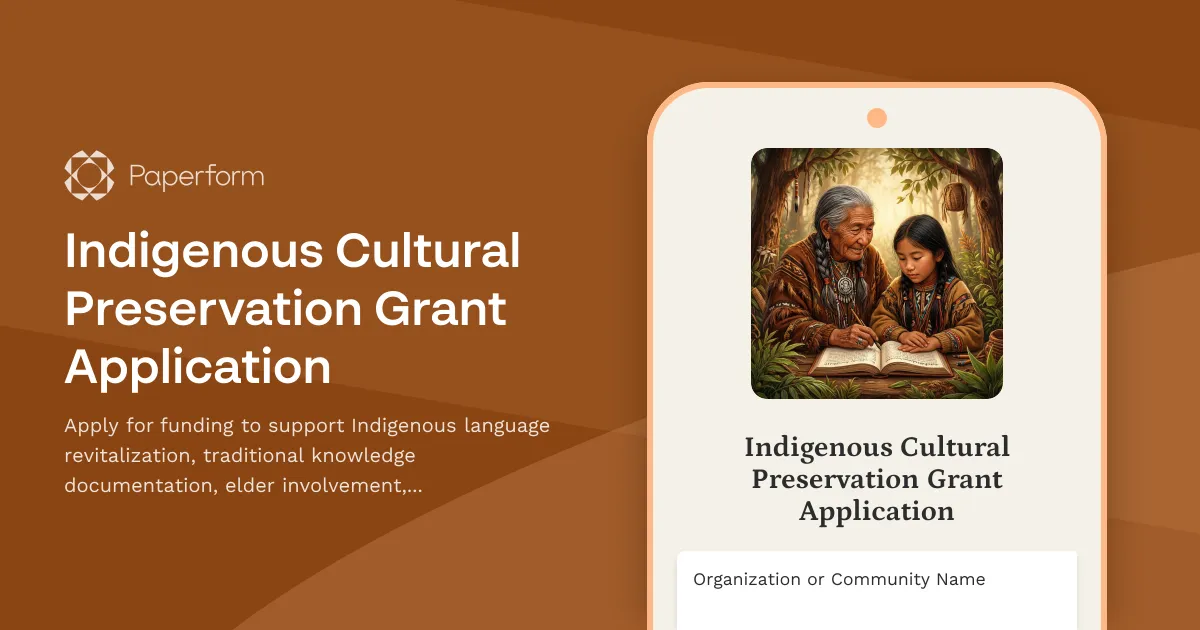
Indigenous Cultural Preservation Grant Application
Apply for funding to support Indigenous language revitalization, traditional knowledge documentation, elder involvement, and youth engagement programs in your community.
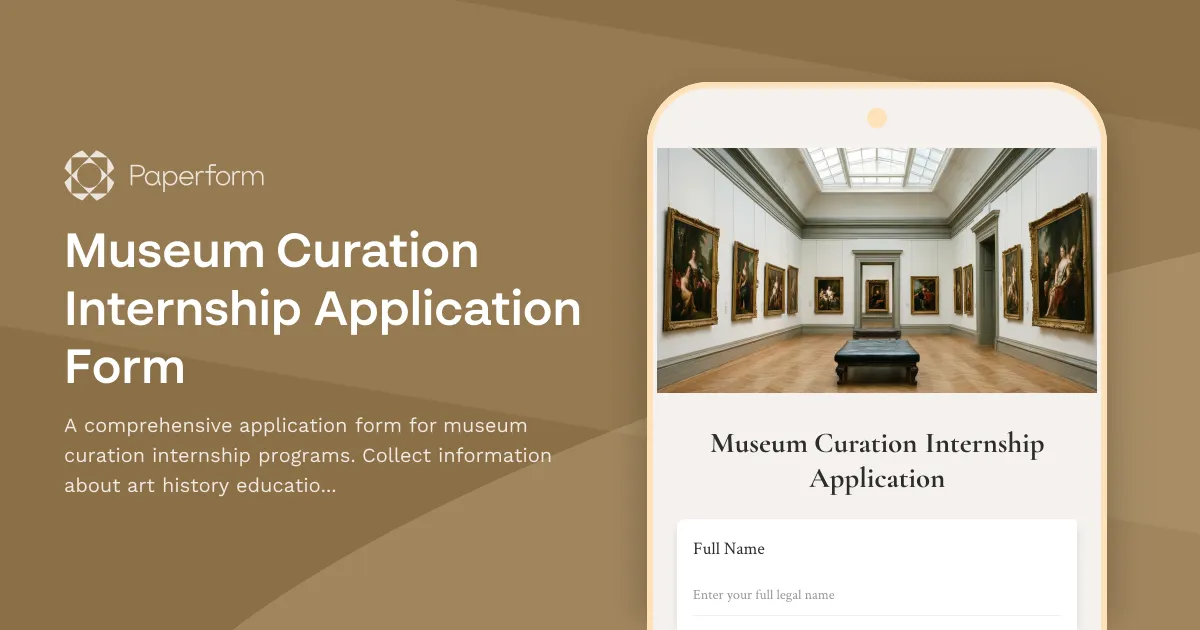
Museum Curation Internship Application Form
A comprehensive application form for museum curation internship programs. Collect information about art history education, exhibition experience, collection interests, and academic references from aspiring curators.
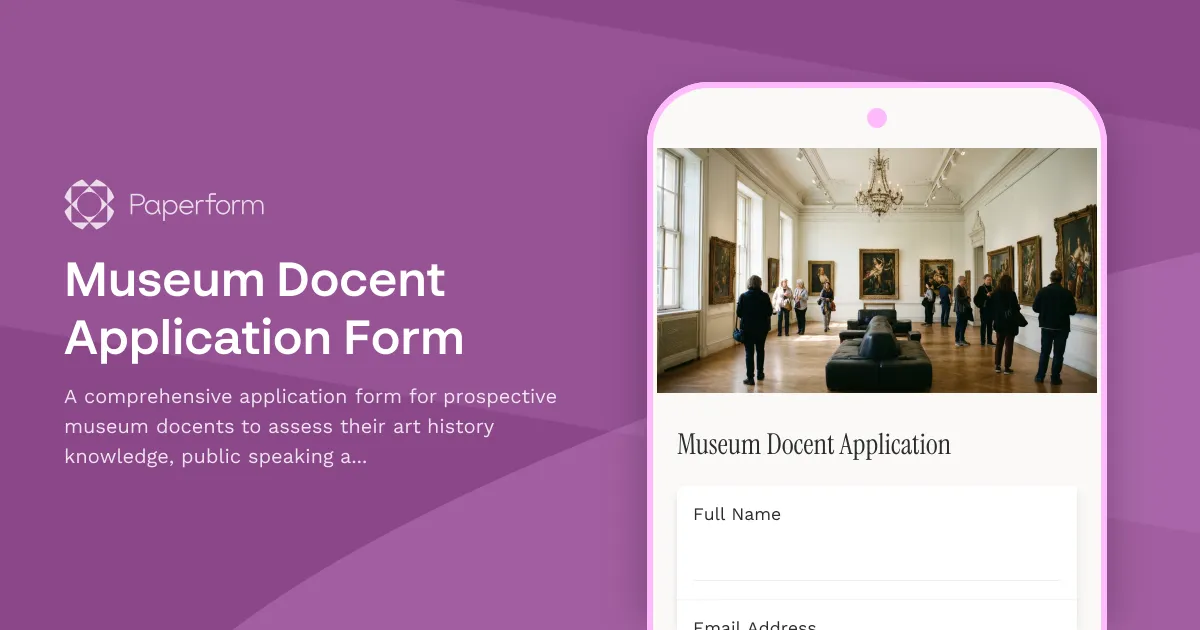
Museum Docent Application Form
A comprehensive application form for prospective museum docents to assess their art history knowledge, public speaking abilities, language skills, and availability for volunteer tour guide positions.