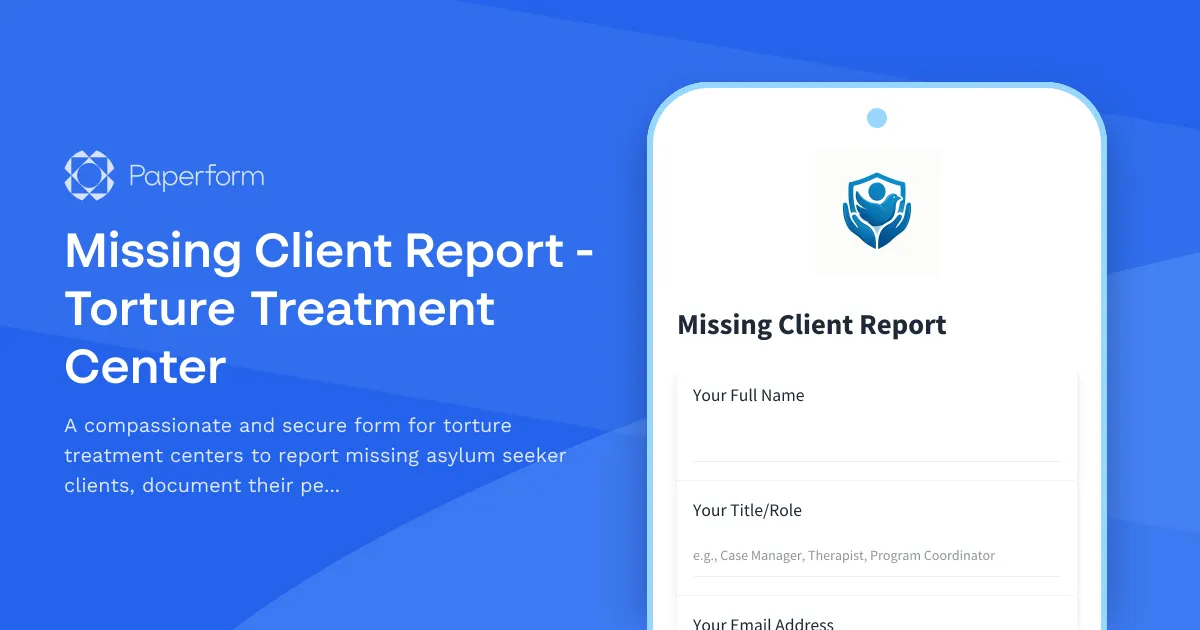
Secure Missing Client Reporting for Torture Treatment Centers
When an asylum seeker client with a persecution history goes missing, every moment matters. This Missing Client Report form is specifically designed for torture treatment centers, refugee health programs, and asylum support organizations to quickly and securely document critical information and coordinate immediate response efforts.
Why This Template Works for Trauma-Informed Organizations
Torture treatment centers work with some of the most vulnerable populations—survivors of persecution, torture, and human rights violations who are navigating complex asylum processes. When a client goes missing, staff need to act quickly while maintaining trauma-informed practices and client confidentiality.
This Paperform template enables your organization to:
- Document critical client information including persecution history, country of origin, and known threats
- Capture legal case status and immigration court dates that could be at risk
- Coordinate immediate notifications to trauma therapists, immigration attorneys, and case managers
- Record last known location and circumstances surrounding the disappearance
- Maintain HIPAA-adjacent security with password protection and secure data handling
- Trigger automated workflows to notify multiple stakeholders simultaneously
Streamline Crisis Response with Automation
When you integrate this form with Stepper, Paperform's AI-native workflow builder, you can automate the entire crisis response protocol:
- Instantly notify the client's immigration attorney and trauma therapist via email or SMS
- Create urgent case files in your case management system
- Alert supervisors and crisis response team members
- Generate summary reports for law enforcement if needed
- Update client records across multiple systems
- Log all response actions with timestamps for documentation
This automation ensures no critical step is missed during a high-stress situation, while your staff focuses on coordinated search efforts and client safety.
Built for Healthcare, Refugee Services, and Legal Aid Organizations
Whether you're operating a torture rehabilitation program, asylum seeker support center, refugee mental health clinic, or immigration legal services organization, this template provides the structure and sensitivity required for missing person reports involving vulnerable populations.
The form balances the urgency of crisis response with the privacy protections and trauma-informed language your clients deserve. All information is collected in a single, secure location and can be easily shared with authorized parties while maintaining strict confidentiality.
Trusted by organizations serving trauma survivors worldwide, Paperform is SOC 2 Type II certified and provides the enterprise-grade security and compliance features that healthcare and legal service providers require—all while remaining accessible and easy to use for non-technical staff members.
Start with this template and customize it to match your organization's specific protocols, notification procedures, and documentation requirements.



More templates like this
Domestic Violence Shelter Missing Resident Safety Alert
A secure form to report when a shelter resident is missing, including threat assessment, restraining order information, safe contact protocols, and law enforcement coordination for victim safety.
Child Advocacy Center Missing Child Victim Witness Report
A comprehensive intake form for child advocacy centers to document missing child cases, schedule forensic interviews, track protective custody status, and coordinate with law enforcement and court proceedings.
Mental Health Crisis Team Missing Client High-Risk Report
A comprehensive form for mental health crisis teams to report missing high-risk clients with suicide assessment, medication history, known locations, and emergency response protocols.
Corrections Mental Health Diversion Program Referral Form
Refer individuals with mental illness from the criminal justice system to community-based treatment programs as an alternative to incarceration.
Homeless Shelter Missing Client Welfare Check Form
Report missing shelter clients and request wellness checks with detailed information on last known whereabouts, health concerns, and case management contacts to coordinate outreach efforts.
Homeless Veteran Welfare Check & Outreach Report
A comprehensive form for reporting missing chronically homeless veterans with service-connected disabilities to facilitate coordinated outreach efforts between street medicine teams, VA homeless coordinators, and community support services.
Immigration Detention Medical Unit Missing Detainee Report
A comprehensive form for reporting missing detainees with urgent medical needs from immigration detention facilities, enabling rapid coordination with ICE health services and humanitarian organizations.
International Refugee Missing Person Report with Trauma Support
A sensitive, trauma-informed form for reporting missing refugee individuals with histories of torture or trauma, including interpreter needs and specialized care coordination.
Mental Health Parity Violation Whistleblower Form
Confidential reporting form for mental health parity violations with automated routing to state insurance departments and patient advocacy resources.
Anonymous Suicide Contagion Response Protocol & Postvention Reporting Form
A confidential form for reporting gaps in suicide contagion response protocols and postvention practices. Help improve community safety coordination and mental health crisis response procedures.
Anonymous Therapeutic Foster Care Licensing Violation Report
A confidential form for reporting foster care licensing violations, safety concerns, and welfare issues affecting children in therapeutic foster care placements.
Behavioral Health Crisis Center Patient Elopement Report
A comprehensive elopement report form for behavioral health facilities to document missing patients, assess risk factors, and coordinate immediate response efforts with mobile crisis teams.