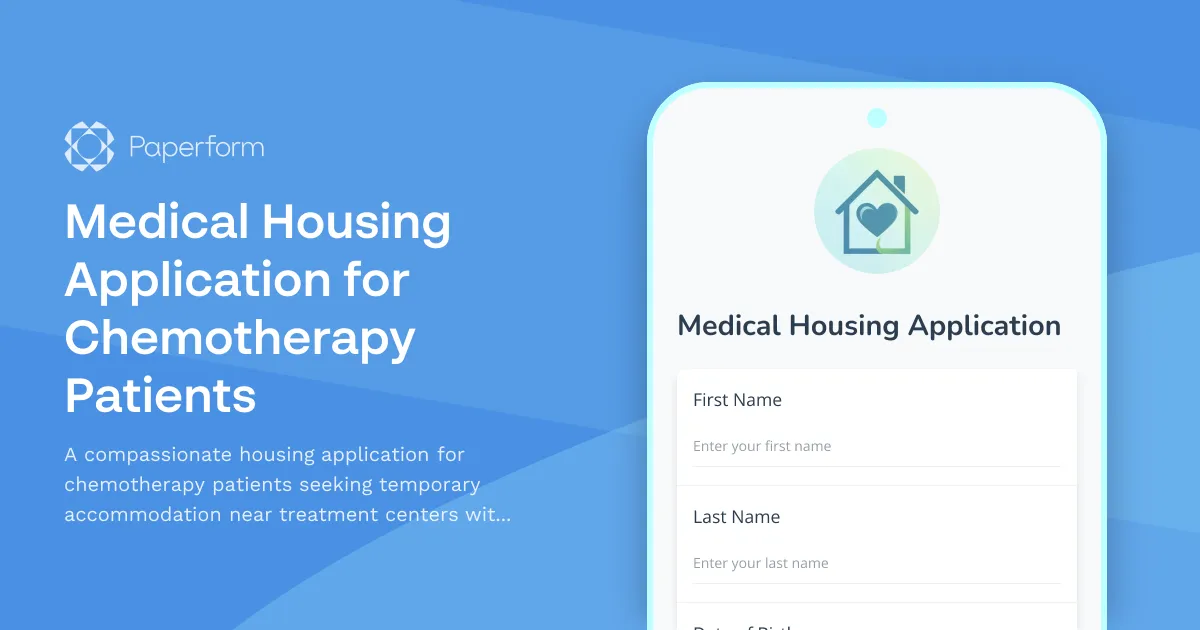
Supportive Housing Application for Chemotherapy Patients
Finding safe, accessible housing near your treatment center shouldn't add stress during chemotherapy. This medical housing application form helps healthcare facilities, cancer support organizations, and specialized housing providers connect patients with accommodations designed specifically for their needs during treatment.
Why specialized housing matters during chemotherapy
Chemotherapy patients face unique challenges that standard rental applications don't address. Proximity to treatment centers reduces travel fatigue, accessible bathrooms prevent falls during periods of weakness, dedicated medical equipment storage keeps oxygen tanks and IV poles secure, and caregiver accommodation ensures loved ones can provide essential support throughout the journey.
This thoughtfully designed application captures all the critical information housing coordinators need while treating applicants with dignity and compassion during a vulnerable time.
What makes this form different
Unlike generic rental applications, this template addresses the specific needs of chemotherapy patients:
- Treatment-centered logistics: Captures treatment facility location, schedule frequency, expected duration, and mobility requirements to match patients with appropriately located and equipped housing
- Medical accommodation needs: Documents requirements for accessible bathrooms, medical equipment storage, oxygen supply compatibility, and emergency access
- Caregiver arrangements: Collects information about family members or professional caregivers who will be staying with the patient, including their relationship and support role
- Financial assistance tracking: Includes fields for insurance coverage, hospital social work support, and charitable foundation assistance that may be available
- Compassionate communication: Uses respectful, person-first language throughout, acknowledging the emotional weight of the application process
Perfect for healthcare support organizations
This form serves multiple organizations in the cancer care ecosystem:
Cancer treatment centers can use this to coordinate their patient housing programs, ensuring out-of-town patients have safe accommodation during intensive treatment cycles. Hospital social workers can pre-fill portions of the form to streamline the process for exhausted patients.
Nonprofit housing providers like Hope Lodge, Ronald McDonald House for adults, and cancer-specific accommodation charities can standardize their intake process while gathering the clinical and logistical information needed for appropriate room assignments.
Property managers who specialize in medical housing can screen for compatibility with their accessible units, medical equipment policies, and proximity to specific treatment facilities, creating better matches from the start.
Healthcare foundations and social work departments can use submission data to identify gaps in housing availability, advocate for more medical housing resources, and track outcomes for grant reporting.
Streamlined workflow with Paperform automation
Paperform transforms this sensitive application process into a smooth, dignified experience. The doc-style editor lets you customize language to match your organization's voice while maintaining medical accuracy. Conditional logic shows only relevant questions—patients staying alone won't see caregiver accommodation questions, and those with mobility aids automatically see expanded accessibility questions.
Integrate seamlessly with your care coordination tools. Connect to your CRM or case management system via Stepper workflows to automatically notify housing coordinators when applications arrive, route urgent requests (patients starting treatment within 7 days) differently than advance bookings, and trigger confirmation emails with next steps and contact information.
Collect supporting documents securely. File upload fields let patients submit physician letters, treatment schedules, and insurance documentation in one submission rather than scattering them across emails. Everything stays organized in one secure record.
Speed approvals with Papersign. Once housing is approved, send lease agreements or occupancy agreements for eSignature through Papersign, keeping the entire process—from application through signed agreement—connected and trackable without printing, scanning, or mailing paperwork.
Features that respect patient dignity
The form uses accessible design principles with large, readable text and clear section headings that reduce cognitive load for patients experiencing "chemo brain." Optional fields recognize that not everyone has complete information during a crisis, and the success page can include immediate resources like emergency contacts, directions to the facility, and move-in preparation checklists.
With Paperform's calculation engine, you can build eligibility scoring based on distance from treatment center, accessibility requirements match, and urgency level—helping housing coordinators prioritize the most critical cases first.
Trusted compliance and security for medical data
While Paperform is not HIPAA compliant, this form is designed for housing coordination data rather than protected health information (PHI). Organizations can use it to collect accommodation needs, treatment schedules, and general medical requirements without capturing diagnostic codes or detailed medical records that would require HIPAA compliance.
Paperform's SOC 2 Type II compliance and enterprise-grade security features protect sensitive patient information with encryption, access controls, and audit trails that meet the standards expected by healthcare organizations and their patients.
Supporting patients when it matters most
Housing stability during cancer treatment isn't a luxury—it's a fundamental need that directly impacts treatment adherence, recovery outcomes, and quality of life. By streamlining the application process with a compassionate, comprehensive form, your organization reduces administrative burden on both patients and coordinators, creating more time for what truly matters: healing and human connection.
Start with this template and customize it to match your specific housing program, whether you operate a single apartment building near a cancer center or coordinate a network of volunteer host homes across a region. With Paperform's flexibility, you can adapt every question, theme, and workflow to serve your community's unique needs.



More templates like this
Accessible Housing Application for Adults with Autism Spectrum Disorder
A comprehensive, inclusive housing application designed specifically for adults with autism spectrum disorder, covering sensory needs, routine preferences, and communication support requirements.
ALS-Accessible Housing Application
A compassionate housing application designed specifically for adults living with ALS, featuring adaptive technology accommodations, caregiver space requirements, and optional support planning resources.
Accessible Housing Application for Adults with Fibromyalgia
A specialized housing application designed for adults with fibromyalgia seeking low-stimulation living environments with access to pain management and rheumatology care.
Accessible Housing Application for Adults with Spinal Cord Injury
A comprehensive accessible housing application designed for adults with spinal cord injuries, featuring wheelchair accessibility requirements, adaptive equipment needs, and personal care assistance coordination.
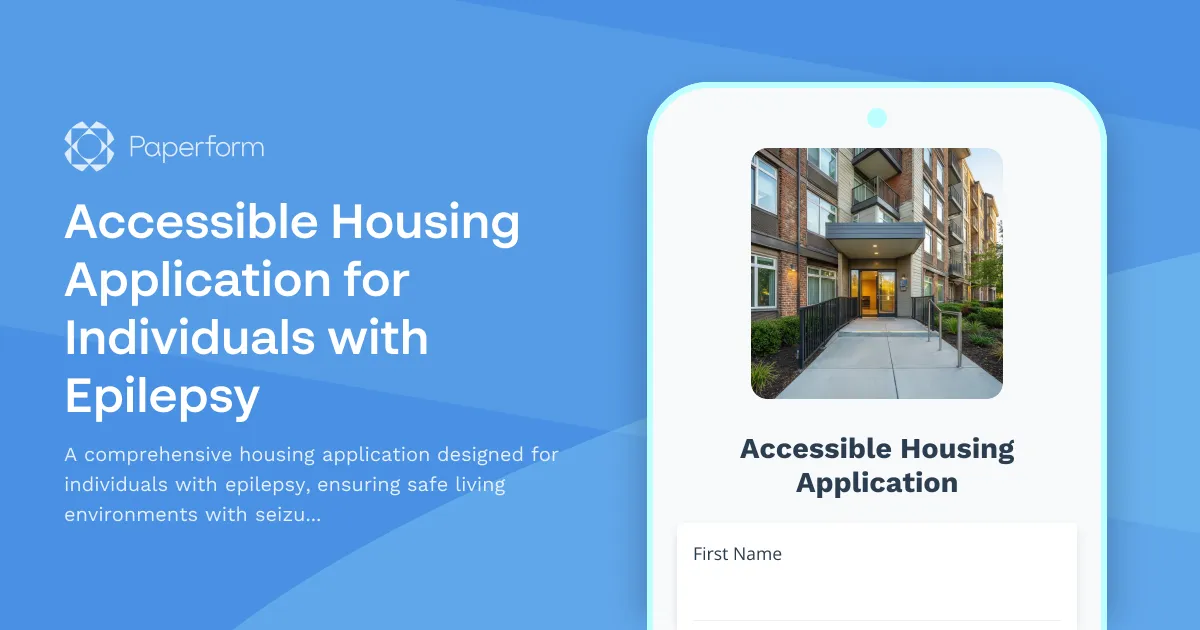
Accessible Housing Application for Individuals with Epilepsy
A comprehensive housing application designed for individuals with epilepsy, ensuring safe living environments with seizure-safety features, secure medication storage, and accessible transportation to medical appointments.
Accessible Housing Application for Individuals with Lupus
A specialized rental application for individuals with lupus, designed to assess accommodation needs including sun exposure protection, fatigue management, and proximity to rheumatology care.
Accessible Housing Modification Application
A comprehensive application for accessible housing modifications, including occupational therapist evaluations, contractor approvals, and funding coordination.
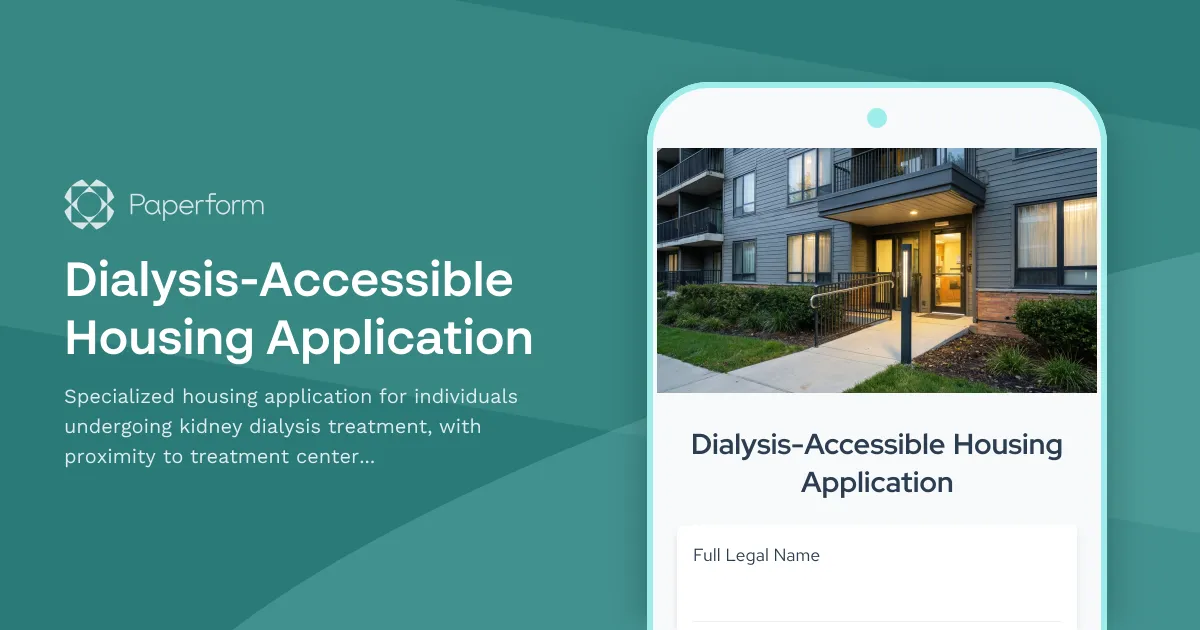
Dialysis-Accessible Housing Application
Specialized housing application for individuals undergoing kidney dialysis treatment, with proximity to treatment centers, flexible lease terms, and health-focused amenities.
Housing Application for Individuals with IBD
A specialized housing application for individuals with inflammatory bowel disease, featuring accessibility requirements, dietary accommodations, and proximity to medical facilities.
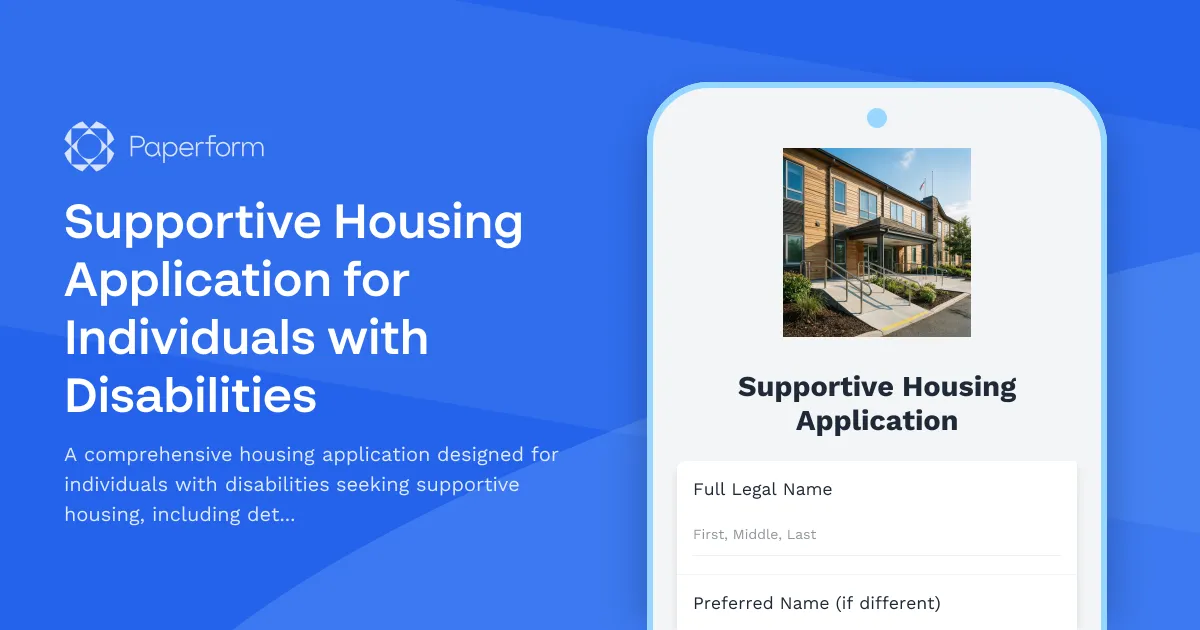
Supportive Housing Application for Individuals with Disabilities
A comprehensive housing application designed for individuals with disabilities seeking supportive housing, including detailed accessibility requirements and care coordination information.
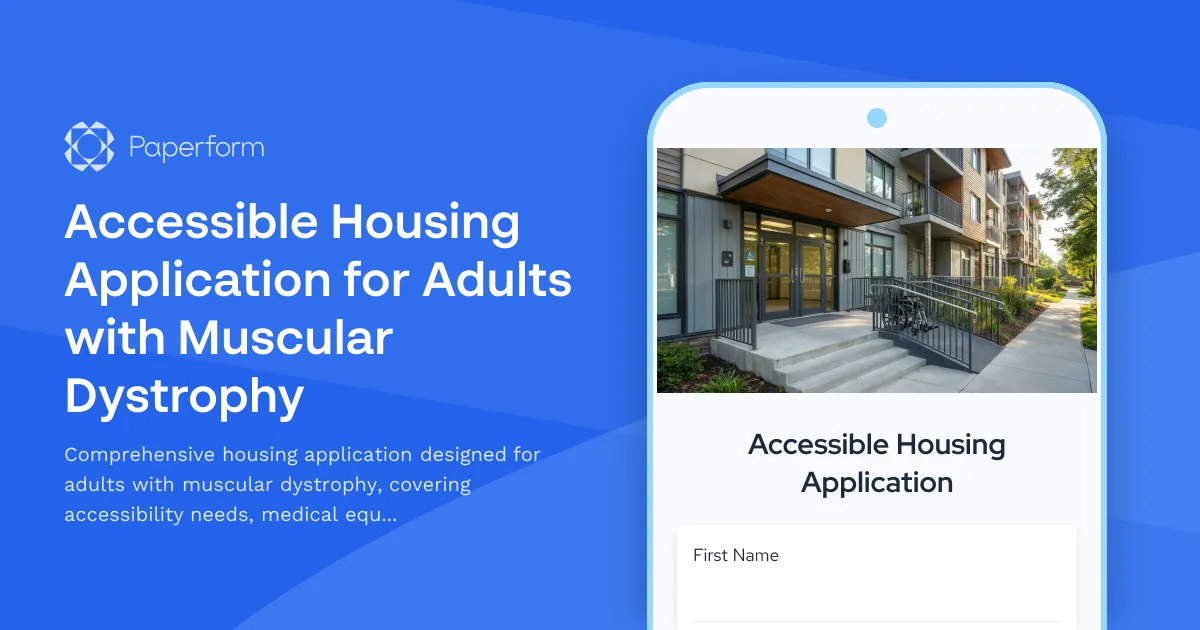
Accessible Housing Application for Adults with Muscular Dystrophy
Comprehensive housing application designed for adults with muscular dystrophy, covering accessibility needs, medical equipment requirements, progressive disease planning, and care coordination.
Accessible Housing Application for Adults with Myasthenia Gravis
Specialized housing application for individuals with myasthenia gravis, featuring accessibility assessments, energy conservation needs, medication management support, and healthcare proximity requirements.