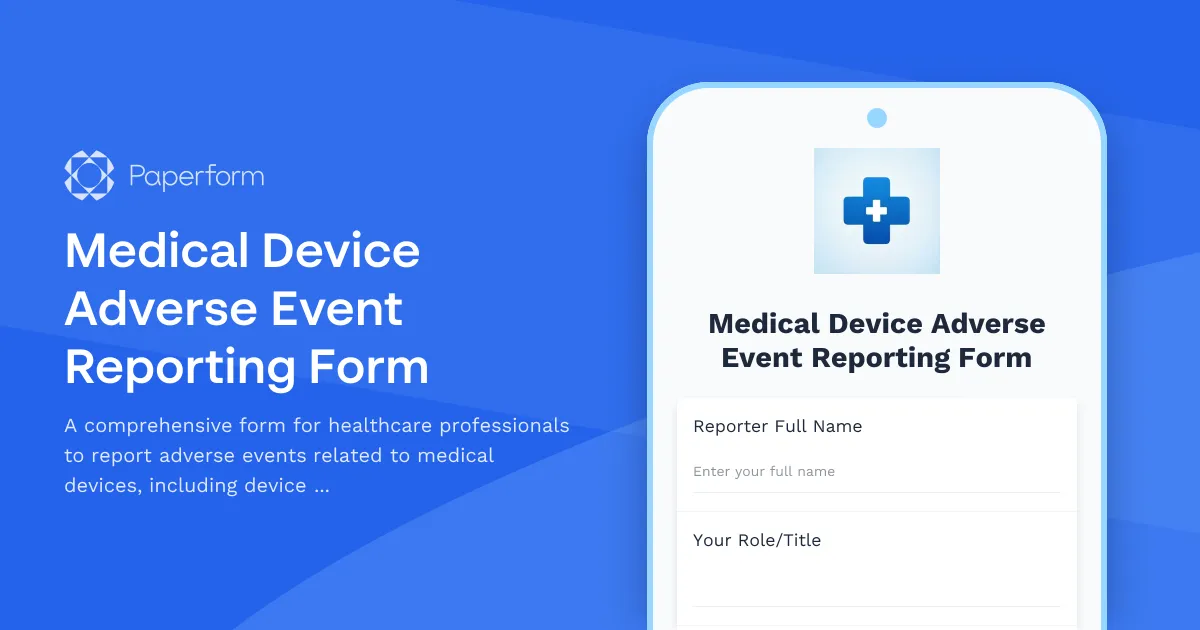
Medical device adverse event reporting is a critical component of patient safety and regulatory compliance in healthcare settings. This Medical Device Adverse Event Reporting Form provides healthcare professionals with a structured, efficient way to document and report complications, malfunctions, or unexpected outcomes related to medical devices.
Whether you're a hospital administrator, clinical staff member, or quality assurance professional, accurate adverse event reporting helps identify device safety issues, protect future patients, and fulfill regulatory obligations to bodies like the FDA. This form streamlines the entire reporting process by capturing essential details about the device, the event, the patient impact, and necessary follow-up actions.
Key features of this template include:
- Comprehensive device identification and tracking fields
- Structured event description with severity classification
- Patient impact assessment and clinical outcome documentation
- Manufacturer and regulatory notification tracking
- Reporter contact information for follow-up inquiries
- Conditional logic to capture relevant details based on event type
Built on Paperform's flexible platform, this template can be customized to match your facility's specific reporting protocols while maintaining compliance with regulatory requirements. The form's professional design ensures that critical information is never missed, and submissions can be automatically routed to your quality assurance team, risk management department, or directly to device manufacturers.
Streamline post-submission workflows with Stepper
Once an adverse event report is submitted, time is of the essence. Connect this form to Stepper to automatically trigger your incident response protocol: notify the quality assurance team, create a case file in your safety management system, send preliminary notifications to manufacturers, and schedule follow-up reviews—all without manual handoffs. Stepper's AI-native automation ensures that serious events receive immediate attention while routine reports follow your standard review process.
This template is designed for hospitals, clinics, medical device companies, and healthcare facilities that need to maintain rigorous safety reporting standards. With Paperform's SOC 2 Type II compliance and robust security features, your sensitive adverse event data remains protected throughout the reporting and investigation process.



More templates like this
Clinical Documentation Improvement Query Response Form
A professional CDI query response form for physicians to provide clarifications on clinical documentation, assess coding impact, and attest to accuracy for improved medical records.
Endocrinology New Patient Registration Form
A comprehensive new patient registration form for endocrinology practices, capturing diabetes management history, thyroid symptoms, hormone replacement therapy tracking, and essential patient information.
Healthcare Bundled Payment Initiative Enrollment Form
Streamline enrollment in bundled payment programs with comprehensive episode definitions, cost targets, and quality performance standards tracking.
Healthcare Coalition Emergency Preparedness Registration Form
Comprehensive registration form for healthcare organizations joining emergency preparedness coalitions, capturing resource inventories, surge capacity capabilities, and mutual aid commitments for coordinated disaster response.
Healthcare Emergency Operations Center Activation Checklist
A comprehensive checklist form for activating healthcare emergency operations centers during critical incidents. Streamlines incident classification, resource coordination, and communication protocols.
Healthcare Facility Complaint Form
A comprehensive form for documenting patient and visitor complaints at healthcare facilities, capturing incident details, staff involved, and determining if regulatory reporting is required.
Medical Staff Burnout Intervention Program Registration
A comprehensive registration form for healthcare professionals enrolling in a burnout intervention program, featuring workload analysis, workflow assessment, and wellness resource needs evaluation.
Medical Staff Disaster Privileges Verification Form
Verify credentials, licenses, and liability coverage for medical staff requesting disaster privileges during emergency situations.
Medical Staff Proctoring Completion Verification Form
A comprehensive form for documenting proctoring completion, assessing competency levels, reviewing case volumes, and making privilege expansion recommendations for medical staff members.
Medical Staff Professionalism Remediation Plan
A structured form for documenting professionalism concerns, establishing behavioral expectations, defining monitoring periods, and outlining consequences for medical staff requiring performance improvement.
Patient-Centered Medical Home Enrollment Form
A comprehensive enrollment form for patient-centered medical homes that establishes care team assignments, access preferences, and personalized care plan development for new patients.
Cancer Genetic Testing Consent Form
A comprehensive consent form for patients considering cancer genetic testing, covering hereditary syndromes, test limitations, family notification implications, and informed consent requirements.