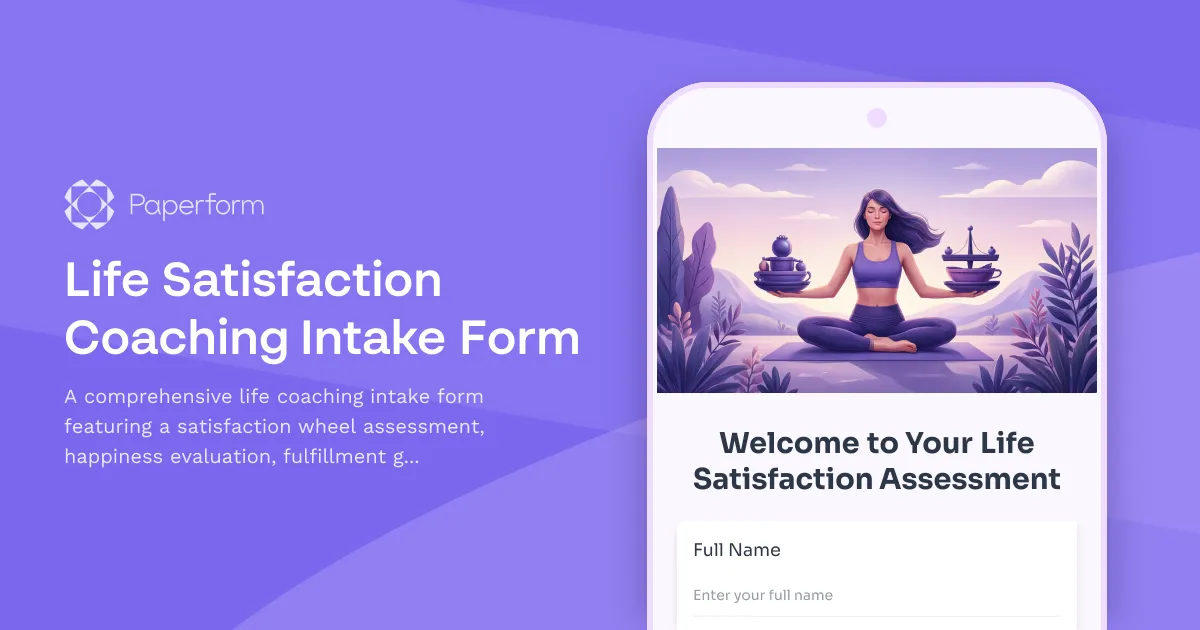
Transform Your Life Coaching Practice with a Comprehensive Intake Assessment
Starting a coaching relationship on the right foot is everything. This Life Satisfaction Coaching Intake Form gives life coaches, wellness practitioners, and personal development professionals a structured way to understand where clients are today—and where they want to be tomorrow.
Why This Life Coaching Intake Form Works
Traditional intake forms ask basic contact information and maybe a few surface-level questions. This template goes deeper. It's built around the proven Life Satisfaction Wheel framework, helping you map out your client's current happiness, fulfillment and quality of life across all major life domains. You'll identify gaps, understand what brings them joy, and collaboratively set meaningful goals—all before your first real session.
For life coaches, business coaches, health coaches and career consultants, this form serves as both a diagnostic tool and a conversation starter. It helps clients reflect on their lives in a structured way, while giving you the insights you need to tailor your coaching approach from day one.
Who This Template Is For
This intake form is perfect for:
- Life coaches helping clients achieve balance, purpose and fulfillment
- Business coaches exploring work-life integration and personal satisfaction
- Health and wellness coaches addressing holistic wellbeing beyond fitness
- Career coaches understanding how professional goals connect to life satisfaction
- Therapists and counselors conducting initial assessments (non-clinical)
- Coaching agencies onboarding new clients with consistency and professionalism
What's Inside the Form
The template includes:
- Personal background and contact details to understand your client's current situation
- Life Satisfaction Wheel assessment rating happiness across 8 key life areas (career, relationships, health, finances, personal growth, fun, environment, purpose)
- Happiness and fulfillment evaluation using proven assessment questions
- Fulfillment gap analysis identifying where clients feel most stuck or unfulfilled
- Joy and energy inventory discovering what activities and experiences light them up
- Life quality goals defining what success looks like in 3, 6 and 12 months
- Coaching expectations and commitment ensuring alignment from the start
How Paperform Makes Life Coaching Easier
This isn't just a form—it's the foundation of your coaching practice. With Paperform's doc-style editor, you can customize every question to match your coaching philosophy and brand voice. Add your logo, adjust the language, include video introductions, or embed resources that help clients prepare for their first session.
Conditional logic lets you show follow-up questions based on how clients rate different life areas. If someone rates their career satisfaction as low, you can automatically ask deeper questions about work stress, career goals or job satisfaction. This creates a personalized experience that feels like a conversation, not an interrogation.
Automate Your Coaching Workflow
Once a client submits their intake form, Stepper (stepper.io) can automatically:
- Send their responses to your CRM or client management system
- Create a personalized welcome email with next steps and scheduling links
- Generate a summary report for your coaching files
- Trigger a calendar invite for their first session
- Update your project management tool with the new client profile
No more manual data entry or copy-pasting between tools. Everything flows seamlessly from form submission to your first coaching call.
Book Sessions and Collect Payment
Add Paperform's appointment scheduling field to let clients book their first session right after completing the intake. Connect your calendar, set your availability, and let the form handle the coordination. You can also add a payment field to collect intake fees, session deposits or coaching package purchases upfront—Stripe, PayPal and Square are all supported.
For coaches who use contracts or coaching agreements, integrate Papersign (papersign.com) to send your client agreement for eSignature immediately after intake. Keep everything connected, compliant and organized in one workflow.
Privacy and Trust Matter
Life coaching intake forms collect sensitive, personal information. Your clients need to trust that their responses are secure. Paperform is SOC 2 Type II compliant with enterprise-grade security, GDPR-ready data controls, and the option to store data in your preferred region. You can even add SSL encryption to custom domains for extra peace of mind.
Built for Solo Coaches and Growing Practices
Whether you're a solo practitioner or managing a team of coaches, this template scales with you. Use Paperform's roles and permissions to let different coaches access their own client intake forms, or set up a shared library of forms for your entire practice. Agency+ plans let you manage multiple coaching brands or specializations under one roof—perfect for coaches who serve different niches.
Get Started in Minutes
This template is ready to use right out of the box, but it's also 100% customizable. Adjust the Life Satisfaction Wheel categories to match your coaching framework. Add your intake fee. Include pre-session resources or guided meditation links. Make it yours.
Paperform gives you the flexibility to create forms that look, feel and work like an extension of your coaching practice—not another generic online form. Join the thousands of coaches, consultants and wellness professionals who use Paperform to streamline client onboarding and start every coaching relationship with clarity and confidence.



More templates like this
Inner Critic Coaching Intake Form
A compassionate intake form for coaches working with clients on inner critic work, self-criticism patterns, negative self-talk, and cultivating self-compassion and inner peace.
Self-Compassion Coaching Intake Form
A comprehensive intake form for self-compassion coaches to understand clients' self-criticism patterns, perfectionism tendencies, inner dialogue, comparison habits, and personal kindness goals.
Self-Esteem Coaching Intake Form
A comprehensive intake form for self-esteem coaches to assess clients' confidence levels, identify insecurity triggers, understand comparison habits, and establish self-love goals for a personalized coaching journey.
Authentic Living Coaching Intake Form
A compassionate intake form for authentic living coaching that explores the masks we wear, people-pleasing patterns, and helps clients identify their path to genuine self-expression.
Confidence Coaching Intake Form
A comprehensive intake form for confidence coaches to assess clients' self-esteem, identify limiting beliefs, understand past experiences, and establish empowerment goals for their coaching journey.
Post-Divorce Rebuilding Coaching Intake Form
A compassionate intake form for coaches supporting clients through post-divorce healing, identity rediscovery, co-parenting navigation, and building a fulfilling new chapter.
Decision-Making Coaching Intake Form
A comprehensive intake form for decision-making coaches to understand their clients' current dilemmas, decision patterns, and clarity goals.
Emotional Intelligence Coaching Intake Form
A comprehensive intake form for emotional intelligence coaching that assesses EQ levels, identifies triggers and patterns, and establishes coaching goals for personal and professional growth.
Executive Coaching & Therapy Intake Form
A comprehensive intake form for executive coaching and therapy clients addressing high-performance stress, imposter syndrome, work-life balance, and leadership development.
Imposter Syndrome Coaching Intake Form
A comprehensive intake form designed for coaches working with clients experiencing imposter syndrome. Captures achievement history, self-doubt patterns, comparison habits, validation needs, and confidence-building goals to create an effective coaching plan.

New Year's Resolution Coaching Intake Form
A comprehensive coaching intake form designed to help clients assess their New Year's goals, identify obstacles, choose accountability preferences, and select the right program tier to achieve their resolutions.
Assertive Communication Coaching Intake Form
A comprehensive intake form for communication coaches to assess clients' communication styles, identify challenges with difficult conversations, and establish goals for developing assertiveness and authentic expression.