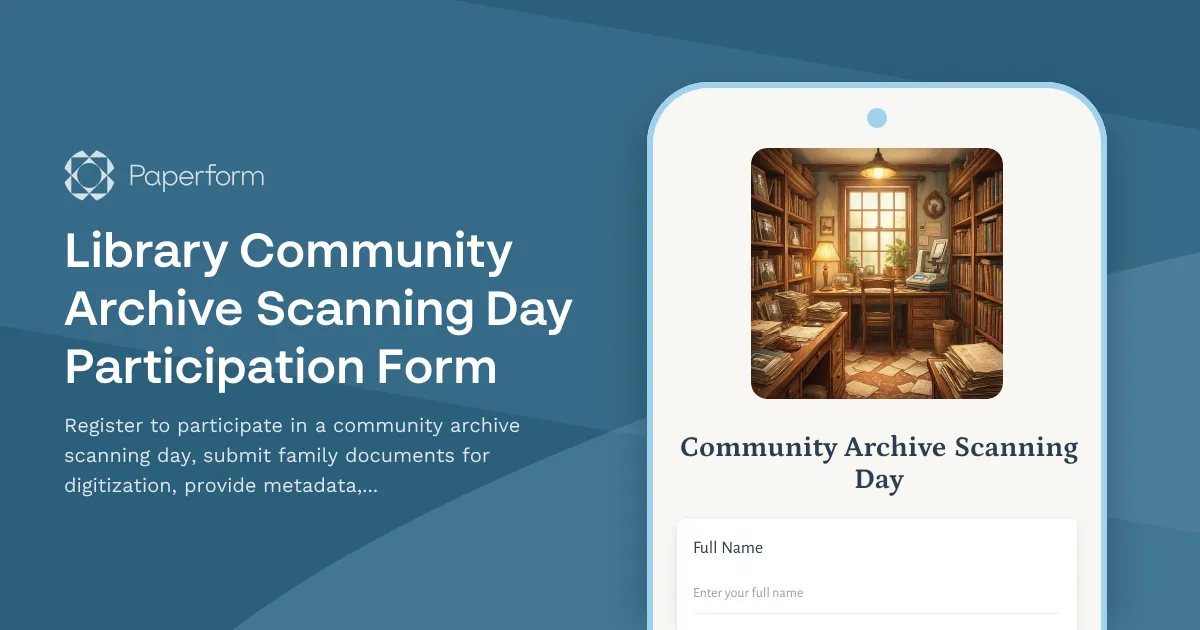
Preserve Your Family's Story with Our Community Archive Scanning Day
Libraries are more than repositories of books—they're guardians of community memory and local history. Our Library Community Archive Scanning Day Participation Form makes it simple to register for digitization events, submit precious family documents for preservation, collect essential metadata, and ensure you retain full copyright while sharing your heritage with future generations.
Built for Libraries Connecting Communities to Their History
Whether you're a public library organizing local history initiatives, an academic institution building regional collections, or a historical society hosting scanning events, this Paperform template helps you manage every aspect of community archive days. From participant registration and document intake to metadata collection and copyright agreements, everything happens in one beautifully designed, easy-to-use form.
Instead of managing paper sign-up sheets, email threads, and manual spreadsheets, you'll capture all participant information, document details, historical context, and legal permissions in a structured format that integrates directly with your digital asset management system, cataloging software, or project management tools.
Why This Form Works for Archive Scanning Events
Community archive days require careful coordination between enthusiastic participants and preservation best practices. This form template balances accessibility for community members of all technical abilities with the professional metadata standards archivists need to create meaningful, searchable collections.
Registration and planning: Participants register their interest, select time slots, and indicate how many documents they plan to bring—helping you staff appropriately and manage scanning equipment.
Document information capture: Detailed fields collect the essential metadata that transforms isolated images into meaningful historical records: dates, locations, people, events, and family connections that provide crucial context.
Copyright clarity: Clear, respectful language explains how copyright works for family documents while securing the permissions you need to preserve, display, and share digitized materials within appropriate boundaries.
Family history preservation: By making participation welcoming and straightforward, your library becomes the bridge connecting personal family heritage with broader community history, ensuring these stories aren't lost to time.
Paperform Features That Make Archive Days Run Smoothly
This template uses conditional logic to adapt the form based on document types—photographs require different metadata than letters, diaries need different handling than maps. Participants only see the questions relevant to their specific materials, keeping the experience focused and efficient.
File upload fields let participants submit reference images or documentation before the event, while appointment scheduling (or time slot selection via dropdown) ensures steady flow throughout the day without bottlenecks at scanning stations.
Calculation fields can track cumulative scanning time estimates based on document quantities, helping participants understand realistic expectations and enabling better queue management on event day.
Clear success pages confirm registration and provide pre-event instructions: how to prepare fragile documents, what information to research beforehand, what to expect during scanning, and how they'll access their digital copies afterward.
Connect Your Archive Workflow with Stepper and Integrations
After participants submit, connect this form to your existing workflows using Stepper, Paperform's AI-native workflow automation. Automatically send confirmation emails with customized pre-event instructions, add registrants to your library's event management system, create calendar holds for scanning appointments, and trigger reminder sequences as the event approaches.
When the event occurs, Stepper can route submitted metadata to your digital asset management platform, create catalog records in your library management system, update project tracking boards, and even trigger specialized workflows for materials requiring conservation assessment or additional research.
Integration with Google Sheets or Airtable means your entire team—librarians, volunteers, archivists, and digitization specialists—can access participant information, track progress, and coordinate follow-up from a centralized, automatically updated database.
Designed for Community Engagement and Professional Standards
This form speaks to community members in warm, inclusive language that honors the emotional significance of family heirlooms while maintaining the professional metadata standards libraries require. It's approachable enough for elderly residents sharing century-old photographs and structured enough for serious genealogists contributing extensively documented collections.
The form's document-style editor means you can easily add welcome messages from your library director, embed photos from previous scanning days, include video tutorials on preparing documents, and customize the tone to match your library's unique community voice.
With Paperform's theming options, match your library's brand colors, fonts, and visual identity so the form feels like a natural extension of your website and existing digital presence. Whether embedded on your events page or shared via social media and community newsletters, it looks professional and trustworthy.
Built for Libraries, Historical Societies, and Cultural Organizations
This template is ideal for:
- Public libraries organizing local history days, community heritage projects, and digitization events
- Academic libraries building special collections with community contributions and regional materials
- Historical societies preserving neighborhood stories, family histories, and local documentation
- Genealogical societies coordinating scanning days and building shared research collections
- Cultural centers documenting immigrant experiences, diaspora histories, and underrepresented narratives
- Municipal archives engaging residents in preserving civic memory and local government history
Security and Privacy for Sensitive Materials
Family documents often contain deeply personal information. Paperform is SOC 2 Type II compliant and GDPR-ready, ensuring participant data and document information are protected with enterprise-grade security. You can confidently collect sensitive family histories knowing the platform meets rigorous data protection standards.
Role-based access controls mean only authorized staff and volunteers see sensitive participant information, while integrations with secure digital asset management systems keep digitized materials protected throughout their lifecycle.
Get Your Community Archive Day Started in Minutes
With Paperform's template library, you don't need technical skills or weeks of planning to launch professional community archive programs. This form is ready to customize with your library's specific details, branding, and event logistics—then share immediately via your website, email campaigns, or social media channels.
Over 500,000 teams worldwide trust Paperform for forms that work as hard as they do. Libraries and cultural organizations choose Paperform because it combines the polish and functionality of expensive software with the simplicity and flexibility small teams need.
Whether you're running your first scanning day or coordinating an ongoing digitization program, this template helps you welcome community participation, preserve precious memories, and build meaningful historical collections that serve researchers and community members for generations to come.
Start preserving your community's history with Paperform today.
More templates like this
Library Community Archive Contribution Form
A comprehensive form for community members to contribute local history materials to library archives, including digitization consent and detailed metadata collection.
Rare Book Viewing Appointment Request Form
Schedule appointments to view rare books and special collections with conservation guidelines, handling requirements, and photography permissions.
Youth Oral History Project Parental Consent Form
A comprehensive parental consent form for youth oral history projects, covering interview techniques, recording equipment, transcription processes, and archive contributions.
Indigenous Language Preservation Recording Session Application
A comprehensive application form for scheduling indigenous language recording sessions with elder speakers, managing cultural protocols, and arranging transcription services for library preservation initiatives.
Rare Book Conservator Skills Assessment
A comprehensive skills test evaluating competency in paper repair, binding restoration, and environmental control for rare book conservation professionals.
Rare Book Library Special Collections Visitor Form
A comprehensive visitor registration form for rare book libraries and special collections, including white glove handling training, climate-controlled reading room protocols, and manuscript care requirements.
Library Historical Photograph Identification Form
A crowdsourcing form for community members to help identify people, places, and dates in historical photographs from library archives.
Bilingual Story Time Volunteer Application
A volunteer application form for library bilingual story time programs that collects language skills, cultural storytelling experience, and availability information.
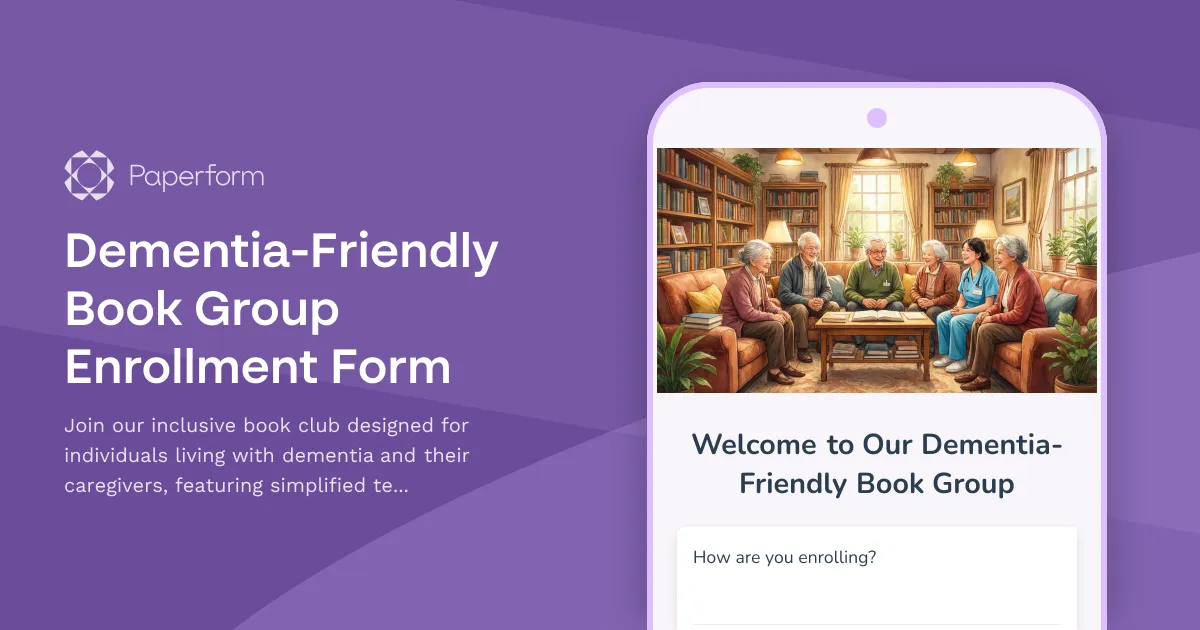
Dementia-Friendly Book Group Enrollment Form
Join our inclusive book club designed for individuals living with dementia and their caregivers, featuring simplified texts and meaningful discussions in a supportive environment.
ESL Program Enrollment & Placement Form
Enroll students in your library's English as a Second Language program with built-in proficiency assessment and automated class level placement.
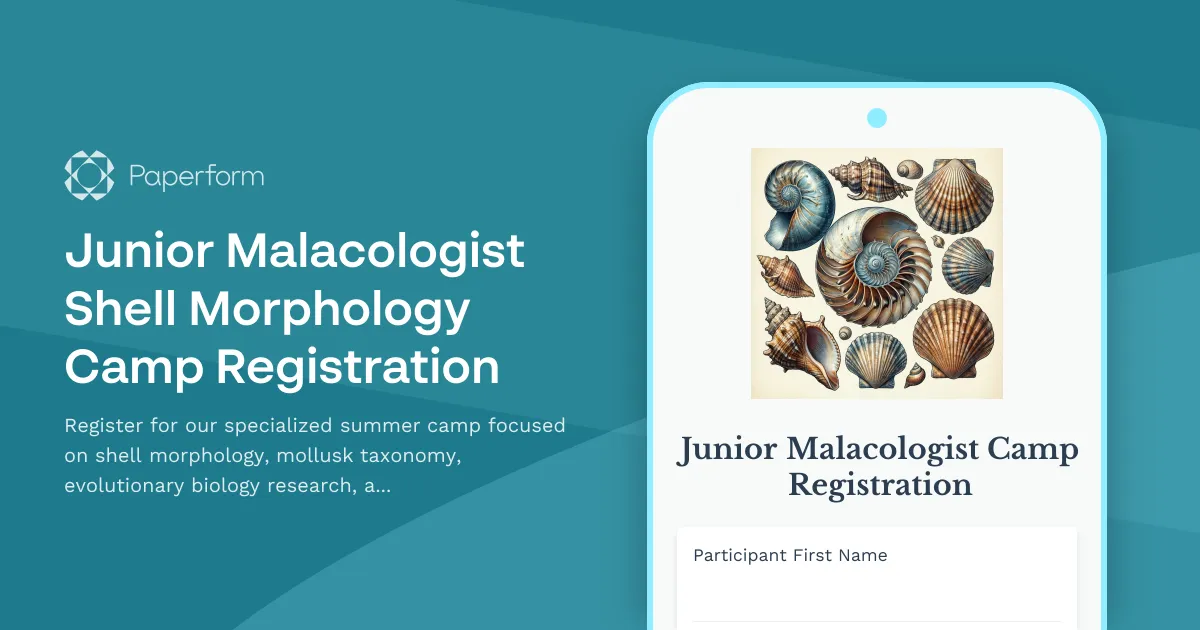
Junior Malacologist Shell Morphology Camp Registration
Register for our specialized summer camp focused on shell morphology, mollusk taxonomy, evolutionary biology research, and museum specimen curation for aspiring young malacologists.
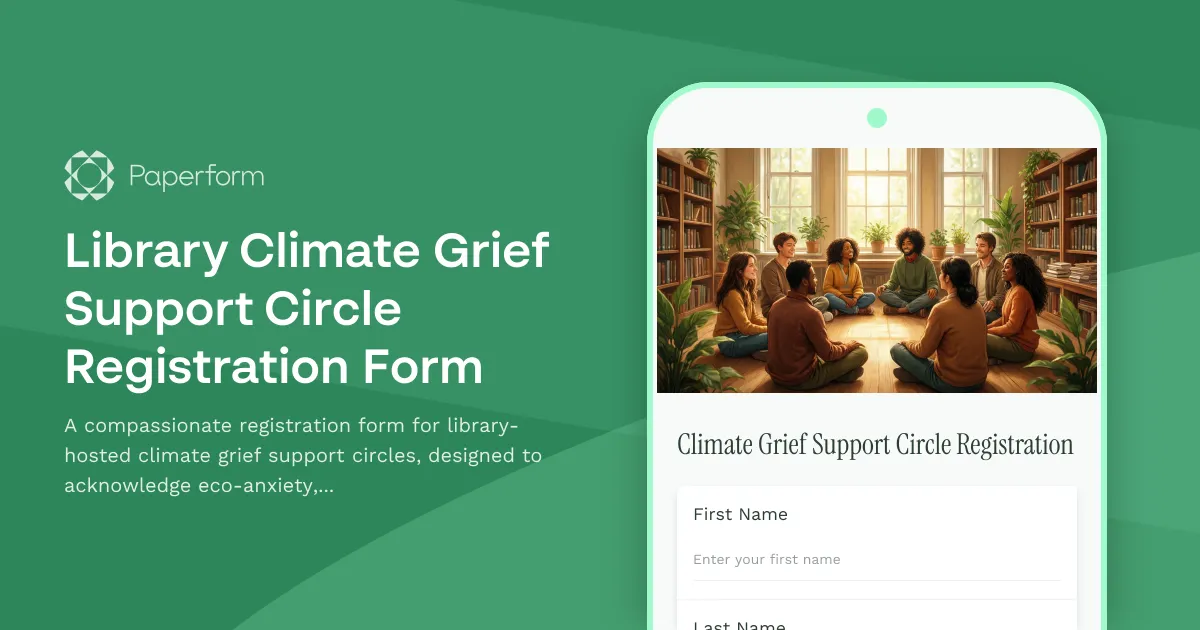
Library Climate Grief Support Circle Registration Form
A compassionate registration form for library-hosted climate grief support circles, designed to acknowledge eco-anxiety, facilitate peer support, and connect participants with mental health resources and collective action opportunities.