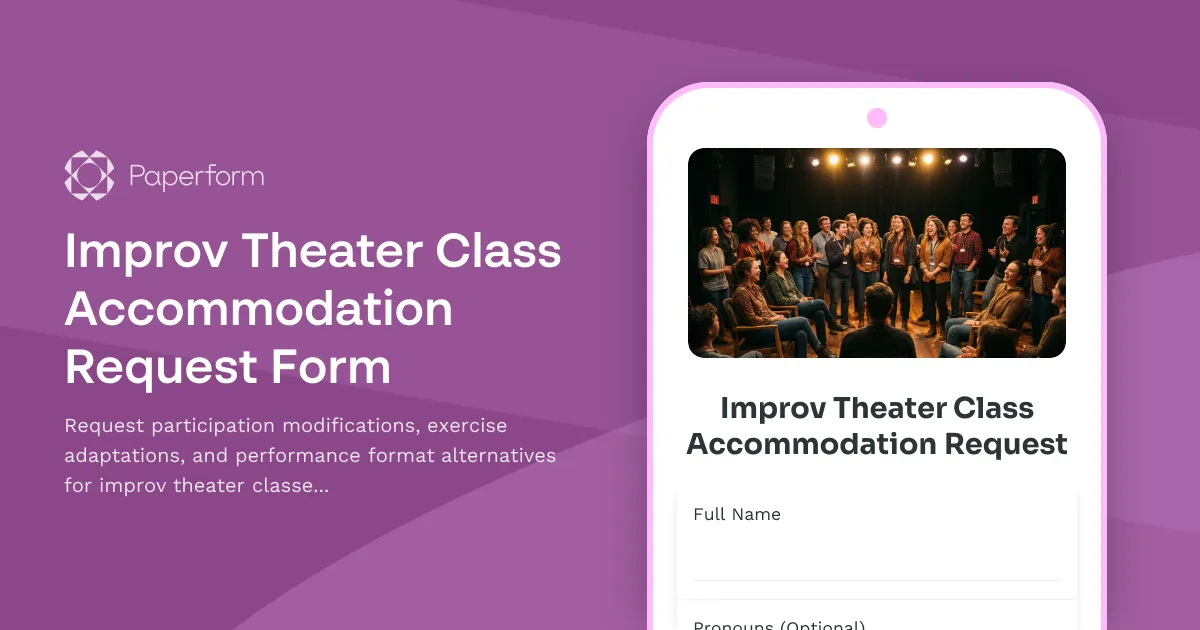
Making Improv Theater Accessible for Everyone
Improv theater is all about spontaneity, creativity, and collaboration—but for many students with disabilities or accessibility needs, traditional class formats can create unnecessary barriers. Whether it's physical exercises that require mobility, vocal warm-ups that assume certain abilities, or performance formats that don't account for sensory sensitivities, these challenges shouldn't prevent anyone from experiencing the joy of improvisational performance.
This Improv Theater Class Accommodation Request Form template helps theater schools, community centers, performing arts organizations, and independent instructors create a welcoming, accessible learning environment for all students. By collecting detailed information about individual needs and preferences, instructors can proactively adapt exercises, modify participation formats, and offer performance alternatives that keep the spirit of improv alive while honoring each student's unique circumstances.
Why Accessibility Matters in Improv Education
Improv theater has incredible therapeutic, social, and creative benefits. It builds confidence, improves communication skills, strengthens community bonds, and offers a judgment-free space for self-expression. These benefits should be available to everyone, regardless of physical ability, neurodivergence, sensory processing differences, or other accessibility needs.
Using Paperform to handle accommodation requests means you can:
- Collect detailed, specific information about what students need to fully participate
- Maintain confidentiality while ensuring instructors have the information they need
- Create a judgment-free intake process that normalizes accommodation requests
- Document accommodations systematically for consistent implementation across sessions
- Show your commitment to inclusive, accessible arts education
Common Accommodation Categories in Improv Classes
This template addresses the most common accommodation needs in improv theater education:
Physical Modifications
Many traditional improv warm-ups involve physical movement—jumping, running, mirroring exercises, or standing for extended periods. Students with mobility differences, chronic pain conditions, or physical disabilities may need alternatives like seated exercises, modified movements, or alternate participation formats.
Sensory Accommodations
Improv classes can be sensorially intense—loud group exercises, close physical proximity, bright stage lights, or overwhelming energy levels. Students with sensory processing differences, autism, or anxiety may benefit from quieter participation options, advance notice of high-energy activities, or permission to step away when needed.
Communication Adaptations
Not all students communicate verbally or process language in the same way. Some may need ASL interpretation, extra processing time, written prompts instead of verbal cues, or alternative ways to contribute to scenes that don't rely solely on quick verbal responses.
Performance Format Alternatives
Traditional improv shows can be intimidating—performing in front of an audience, thinking on your feet under pressure, or participating in high-stakes scenes. Offering alternatives like recorded performances, smaller audience settings, or non-performing participation roles ensures everyone can showcase their learning.
Cognitive and Processing Accommodations
Some students may need written instructions, extra time to process prompts, predictable class structures, or accommodations for memory, attention, or executive functioning differences.
How This Template Works
The form collects essential information in a structured, respectful way:
- Student information and emergency contacts for proper documentation
- Specific accommodation requests across all relevant categories
- Detailed descriptions of what would help the student participate fully
- Communication preferences for discussing accommodations with instructors
- Optional documentation if needed for specific programs or funding
- Consent and acknowledgment of the collaborative accommodation process
The conditional logic built into this template ensures students only see questions relevant to their needs, making the process faster and less overwhelming.
Building an Inclusive Improv Community
Accessibility in improv isn't just about checking boxes—it's about genuinely welcoming diverse bodies, minds, and communication styles into the art form. When instructors receive clear, detailed accommodation requests, they can:
- Prepare modified exercises in advance rather than improvising solutions on the spot
- Train teaching assistants or support staff on specific student needs
- Arrange physical spaces to be more accessible
- Communicate proactively with students about upcoming activities
- Create a culture where accommodation is normalized and celebrated
Enhance Your Workflow with Paperform + Stepper
This accommodation request form is just the starting point. Once a student submits their request, you can use Stepper, Paperform's AI-native workflow builder, to automate what happens next:
- Notify the lead instructor immediately when a new accommodation request is submitted
- Create a private student profile in your CRM or student management system with accommodation details
- Schedule a follow-up conversation with the student to discuss their needs in detail
- Update class rosters with accommodation notes visible only to relevant instructors
- Send confirmation emails acknowledging receipt and outlining next steps
- Generate accommodation plans that can be reviewed and signed by both parties
- Set reminders to check in with students throughout the course about whether accommodations are working
With Stepper, you turn a static form into an intelligent, responsive system that ensures no accommodation request falls through the cracks.
Who This Template Is For
This form template is designed for:
- Improv theater schools and academies offering classes for students of all abilities
- Community theater programs committed to accessibility and inclusion
- Performing arts centers with improv programming for diverse populations
- Independent improv instructors teaching private or group classes
- Universities and colleges with drama or performance studies departments
- Therapeutic improv programs working with specific populations
- Youth theaters serving students with diverse learning needs
- Corporate improv trainers facilitating workshops for diverse teams
Customization and Flexibility
While this template covers the most common accommodation categories, every program is different. You can easily customize this form to:
- Add questions specific to your teaching methodology or performance style
- Include fields for insurance or medical documentation if required by your organization
- Integrate with your existing student registration system
- Add payment fields if accommodation services have associated costs
- Include questions about previous improv experience to contextualize requests
- Offer multiple language options for non-English-speaking students
Paperform's intuitive editor makes these changes simple, even if you're not technically inclined.
Privacy, Compliance, and Trust
Accommodation requests often involve sensitive medical, psychological, or personal information. Paperform is SOC 2 Type II compliant and GDPR-ready, meaning your students' information is stored securely and handled with the highest privacy standards. You can configure who on your team has access to accommodation requests, ensuring confidentiality is maintained while still providing instructors with the information they need.
For organizations serving students in educational settings, these security features help maintain compliance with student privacy regulations while building trust with your community.
The Bottom Line
Improv theater should be for everyone. By proactively requesting and implementing accommodations, you're not just complying with accessibility regulations—you're expanding the art form itself, inviting new perspectives and experiences that make every class richer and more creative.
This Improv Theater Class Accommodation Request Form template, built on Paperform's flexible platform, helps you gather the information you need to make that vision a reality. Combined with Paperform's payment processing, scheduling features, and Stepper workflow automation, you have everything you need to run an inclusive, accessible improv program that truly welcomes all students.
Start with this template, customize it to your program's needs, and watch your improv community grow in diversity, creativity, and joy.



More templates like this
Falconry Experience Accommodation Request Form
Request accessibility accommodations for falconry experiences, including equipment modifications, instruction format alternatives, and bird handling adaptations to ensure an inclusive and safe experience for all participants.
Ink Making Workshop Accommodation Request Form
Request accessibility accommodations for ink making workshops including workspace modifications, material handling assistance, and alternative instruction methods to ensure an inclusive creative experience.
Juggling Class Accommodation Request Form
A comprehensive form for requesting disability and accessibility accommodations in juggling classes, including equipment modifications, practice space adjustments, and instruction format preferences.
Kite Flying Lesson Accommodation Request Form
Request accessibility accommodations for kite flying lessons, including equipment modifications, instruction format alternatives, and field accessibility support to ensure an inclusive experience for all participants.
Museum Accessibility Accommodation Request Form
Request accessibility accommodations for your museum visit, including guided tour modifications, tactile exhibits, assistive listening devices, and other services to ensure an inclusive cultural experience.
Nalbinding Workshop Accommodation Request Form
A comprehensive accommodation request form for nalbinding workshops, allowing participants to request needle modifications, material handling assistance, and alternative instruction methods to ensure an accessible learning experience.
Planetarium Show Accommodation Request Form
Request accessibility accommodations for planetarium shows including seating, audio descriptions, and sensory-friendly showtimes. Ensure an inclusive and comfortable experience for all visitors.
Printmaking Workshop Accommodation Request Form
Request accessibility accommodations for printmaking workshops, including press modifications, tool adaptations, and customized instruction formats to ensure inclusive creative learning.
Rug Hooking Workshop Accommodation Request Form
Request accessibility accommodations for rug hooking workshops, including frame modifications, adaptive tools, and alternative instruction methods to ensure all participants can fully engage in the craft.
Scrimshaw Workshop Accommodation Request Form
A comprehensive form for scrimshaw workshop participants to request disability and accessibility accommodations, including tool modifications, workspace adjustments, and preferred instruction formats.

Terrarium Building Workshop Accommodation Request Form
Request disability and accessibility accommodations for your terrarium building workshop experience, including workspace modifications, material handling assistance, and instruction format preferences.
Ukiyo-e Printmaking Workshop Accommodation Request Form
Request accessibility accommodations for a traditional Japanese woodblock printmaking workshop, including press modifications, carving tool adaptations, and customized instruction formats.