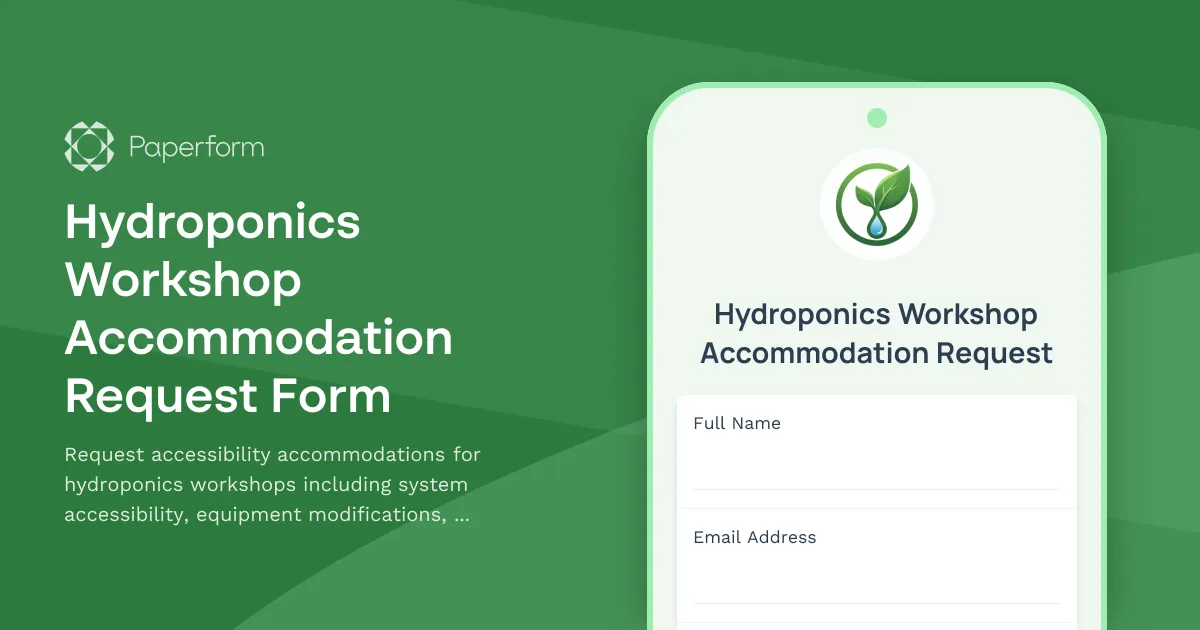
Create an Accessible Hydroponics Workshop Experience with Paperform
Running inclusive hydroponics workshops means ensuring every participant can fully engage with hands-on growing systems, technical equipment, and instructional materials—regardless of physical, sensory, or learning differences. This Hydroponics Workshop Accommodation Request Form helps educators, urban agriculture programs, and community gardens collect detailed accessibility needs upfront, so you can modify equipment, adjust instruction formats, and prepare adaptive solutions before participants arrive.
Why Hydroponics Workshops Need Dedicated Accommodation Forms
Hydroponics workshops involve unique accessibility challenges: participants work with elevated growing systems, navigate greenhouse or grow-room environments, handle nutrient solutions and pH testing equipment, and follow multi-step technical instructions. Unlike classroom-based learning, hydroponics education requires physical interaction with systems at various heights, fine motor skills for transplanting and maintenance, and the ability to read digital monitors or interpret visual cues from plants.
A structured accommodation request form allows you to:
- Gather specific accessibility needs related to mobility, vision, hearing, dexterity, and learning preferences before the workshop begins
- Plan equipment modifications such as adjustable-height tables, accessible pathways, tactile labeling, or adaptive tools
- Prepare alternative instruction formats including large-print handouts, audio descriptions, visual aids, or one-on-one demonstrations
- Create a welcoming environment where participants feel comfortable requesting the support they need to succeed
Who Benefits from This Template
This form is designed for:
- Urban agriculture educators running community hydroponics classes and certification programs
- Botanical gardens and science centers offering hands-on growing workshops for diverse audiences
- Agricultural extension programs providing accessible training for aspiring growers with disabilities
- Community colleges and vocational schools teaching hydroponics as part of sustainable agriculture curricula
- Nonprofit organizations focused on food justice, employment training, or therapeutic horticulture
- Commercial growing operations hosting tours and educational sessions for school groups or community members
Whether you're teaching vertical farming techniques, nutrient film systems, or deep water culture, this template helps you deliver an inclusive learning experience tailored to each participant's needs.
Key Accommodations Covered in This Template
The form walks participants through accommodation categories specific to hydroponics education:
Physical Accessibility: Mobility considerations for navigating grow spaces, standing for extended periods, or reaching elevated systems. Participants can request wheelchair-accessible pathways, seating options, adjustable workstations, or assistance with physical tasks like lifting grow trays or moving equipment.
Visual Accommodations: Support for low vision or blindness, including large-print materials, high-contrast signage, tactile markers on equipment, verbal descriptions of visual demonstrations, or assistance reading digital monitors and pH meters.
Hearing Accommodations: Options for participants who are deaf or hard of hearing, such as sign language interpreters, live captioning for video content, visual demonstration emphasis, written instructions, or front-row seating for lip-reading.
Dexterity and Fine Motor Support: Modifications for tasks requiring precise hand movements—transplanting seedlings, adjusting valves, measuring nutrients—with options for adaptive tools, pre-prepared materials, or partner assistance.
Learning and Cognitive Support: Instruction format preferences including step-by-step written guides, visual flowcharts, hands-on practice time, one-on-one instruction, or the ability to record sessions for review.
Sensory and Environmental Needs: Accommodations related to lighting (bright grow lights can be overwhelming), temperature, noise levels from pumps and fans, or chemical sensitivities to nutrients and cleaning solutions.
How Paperform Makes Accommodation Coordination Seamless
Building accessible workshops requires coordination across instructors, facilities teams, and support staff. Paperform's features make this process smooth and professional:
Conditional logic shows relevant follow-up questions based on accommodation types selected—if someone requests mobility support, they'll see options for wheelchair access, seating, and pathway needs without wading through unrelated questions.
File upload fields let participants submit supporting documentation, medical notes, or specific equipment photos that help you understand their needs more clearly.
Calculation and routing logic can help prioritize accommodation requests based on workshop date, flag requests that need advance preparation (like ordering specialty equipment), or route urgent needs to accessibility coordinators.
Confirmation emails immediately acknowledge requests and set expectations for response timelines, creating trust and transparency in the process.
Streamline Follow-Up with Stepper Workflows
Once accommodation requests arrive, Paperform integrates with Stepper (stepper.io) to automate your follow-up workflow:
- Route requests to the appropriate staff (instructor, facilities manager, disability services coordinator)
- Create task lists for equipment modifications, material preparation, or interpreter booking
- Send personalized confirmation emails detailing which accommodations will be provided
- Update participant rosters with accommodation flags so instructors arrive prepared
- Schedule pre-workshop consultations for complex or multi-faceted requests
By connecting Paperform to your project management tools, calendars, or CRM via Stepper, you ensure no accommodation request falls through the cracks.
Building Trust and Compliance Through Inclusive Design
Providing accessible hydroponics education isn't just good practice—it's often required under the Americans with Disabilities Act (ADA) for public programs, and it's central to creating equitable access to sustainable agriculture careers and food-growing skills.
This template demonstrates your commitment to inclusion by:
- Asking, not assuming: Giving participants agency to describe their needs in their own words
- Offering choices: Presenting multiple accommodation options so participants can select what works best for them
- Maintaining confidentiality: Collecting sensitive information securely with Paperform's SOC 2 Type II compliance and data protection controls
- Following up thoughtfully: Using automated workflows to respond quickly and professionally
Customizing the Template for Your Program
This form is designed to be flexible for various hydroponics education settings:
- Adjust accommodation options to match your specific workshop format (e.g., greenhouse vs. indoor grow room, one-day intensive vs. multi-week course)
- Add fields for dietary needs if your workshop includes meals or refreshments
- Include transportation questions for programs offering shuttles or coordinating accessible parking
- Tailor instruction format options to your teaching style—some programs emphasize video content, others focus on hands-on practice
- Embed the form directly on your workshop registration page or send it as a follow-up to confirmed participants
Why Choose Paperform for Accessibility Forms
Paperform itself is built with accessibility in mind—forms are screen-reader friendly, keyboard navigable, and designed to meet WCAG standards. This means participants using assistive technology can complete your accommodation request form independently, reinforcing your commitment to inclusion at every touchpoint.
Plus, Paperform's analytics and reporting help you track accommodation trends across workshops, identify common requests, and make proactive improvements to your program's baseline accessibility—like installing permanent ramps, purchasing a set of adaptive tools, or creating standard large-print materials.
Whether you're teaching school groups, training future farmers, or running therapeutic horticulture sessions, this template helps you create hydroponics workshops where everyone can dig in, learn, and grow.
Ready to make your hydroponics education more inclusive? Customize this template, embed it on your registration page, and start gathering the information you need to create truly accessible learning experiences.
More templates like this
Urban Farming Workshop Accommodation Request Form
Request accessibility accommodations for urban farming workshops, including plot access modifications, adaptive gardening tools, and participation format adjustments to ensure an inclusive learning experience.
Xeriscape Design Workshop Accommodation Request Form
Request accessibility accommodations for xeriscape design workshops, including site visit modifications, material handling assistance, and instruction format preferences to ensure full participation.
Foraging Tour Accommodation Request Form
Request accessibility accommodations for foraging tours including terrain navigation assistance, plant identification method modifications, and alternative instruction formats to ensure an inclusive outdoor learning experience.
Juggling Class Accommodation Request Form
A comprehensive form for requesting disability and accessibility accommodations in juggling classes, including equipment modifications, practice space adjustments, and instruction format preferences.
Kite Flying Lesson Accommodation Request Form
Request accessibility accommodations for kite flying lessons, including equipment modifications, instruction format alternatives, and field accessibility support to ensure an inclusive experience for all participants.
Mosaic Art Class Accommodation Request Form
Request accessibility accommodations for mosaic art classes including workspace modifications, material handling assistance, and alternative instruction methods.
Nalbinding Workshop Accommodation Request Form
A comprehensive accommodation request form for nalbinding workshops, allowing participants to request needle modifications, material handling assistance, and alternative instruction methods to ensure an accessible learning experience.
Origami Class Accommodation Request Form
A welcoming form for students to request accessibility accommodations for origami classes, including paper handling modifications, folding technique adaptations, and alternative instruction methods.
Painting Class Accommodation Request Form
Request accessibility accommodations for painting classes, including material adaptations, instructional modifications, and workspace accessibility needs.
Pyrography Workshop Accommodation Request Form
Request accessibility accommodations for pyrography workshops including tool modifications, workspace adjustments, and alternative instruction methods to ensure an inclusive creative experience.
Robotics Workshop Accommodation Request Form
Request accessibility accommodations for robotics workshops, including equipment modifications, programming interface adjustments, and alternative instruction formats to ensure an inclusive learning experience.
Scrimshaw Workshop Accommodation Request Form
A comprehensive form for scrimshaw workshop participants to request disability and accessibility accommodations, including tool modifications, workspace adjustments, and preferred instruction formats.