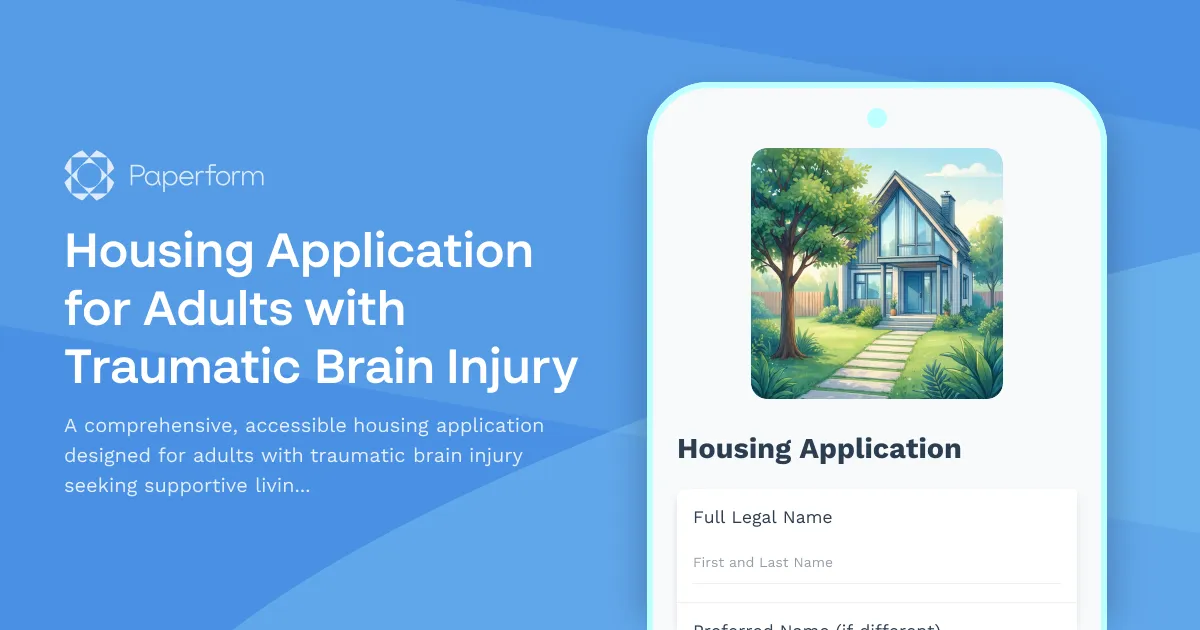
Housing Application for Adults with Traumatic Brain Injury: Accessible, Supportive & Compassionate
Finding suitable housing after a traumatic brain injury (TBI) can be overwhelming—especially when you need more than just four walls. You need a living environment that understands cognitive rehabilitation, provides memory aids, and supports your journey toward community reintegration. This Housing Application for Adults with Traumatic Brain Injury template makes the application process clearer, more accessible, and less stressful for applicants, families, and care coordinators.
Built with Paperform, this template transforms what could be a complicated, confusing form into a warm, step-by-step experience that respects the unique needs of TBI survivors. Whether you're a supportive housing provider, rehabilitation center, nonprofit organization, or specialized residential facility, this form helps you gather the right information while treating applicants with dignity and care.
Why This Template Works for TBI Housing Programs
Traditional housing applications weren't designed with cognitive challenges in mind. Long walls of text, confusing questions, and inaccessible formats can create unnecessary barriers for people with memory difficulties, processing delays, or attention challenges. This template takes a different approach:
Clear, Plain Language: Every question is written in simple, direct language. Instructions are broken into small steps, and medical or technical terms are explained in everyday words that make sense.
Logical Flow & Visual Clarity: Questions are organized into clear sections—personal information, injury history, support needs, residential preferences—so applicants (and their support people) always know where they are in the process.
Memory & Cognitive Supports: The form can be saved and returned to later, reducing pressure to complete everything in one sitting. Visual spacing, headings, and optional descriptions guide applicants through each section without cognitive overload.
Emergency Contact & Care Team Information: Dedicated fields capture emergency contacts, case managers, medical providers, and family members—ensuring the housing team has a complete picture of the applicant's support network.
Adaptive & Inclusive: Questions account for varying levels of independence, from those who need 24/7 support to those ready for semi-independent living with occasional check-ins. Conditional logic can show or hide sections based on support level, keeping the form relevant and not overwhelming.
Perfect for Specialized Housing Providers & Support Organizations
This template is ideal for:
- Supportive housing programs offering TBI-specific accommodations and on-site rehabilitation services
- Nonprofit organizations providing transitional or permanent housing for brain injury survivors
- Assisted living facilities with specialized cognitive rehabilitation and memory care
- Community reintegration programs helping TBI survivors transition from hospitals or rehabilitation centers back into independent or semi-independent living
- Care coordinators and social workers helping clients apply for appropriate housing options
Collecting the Right Information Without Overwhelming Applicants
The form captures essential details across several thoughtfully designed sections:
Applicant Information: Name, contact details, date of birth, and emergency contacts—all presented in a clear, accessible format.
Injury & Medical Background: Information about the traumatic brain injury (date of injury, cause, severity), current cognitive and physical challenges, and ongoing medical or therapeutic support. These fields are optional where appropriate, recognizing that not everyone has complete records or memory of their injury.
Current Living Situation: Where the applicant currently lives, level of support they receive, and why they're seeking new housing—helping you understand their immediate needs and urgency.
Support & Care Needs: Daily living assistance requirements (medication management, meal preparation, personal care, mobility support), cognitive rehabilitation needs (memory aids, scheduling support, therapy access), and behavioral or emotional support needs.
Housing Preferences & Goals: What type of housing environment the applicant is looking for (private room, shared space, proximity to family or services), accessibility requirements, and personal goals for community reintegration.
Financial Information: Income sources (disability benefits, family support, employment), ability to contribute to rent or program fees, and any financial assistance programs the applicant is enrolled in.
References & Support Team: Contact information for case managers, social workers, therapists, medical providers, and family members who can provide additional context or participate in care planning.
Flexible, Conditional & Easy to Customize
Paperform's conditional logic means you can show follow-up questions only when they're relevant. For example, if someone indicates they need 24/7 supervision, the form can ask about specific behavioral or safety concerns. If they're ready for semi-independent living, it can focus on transportation access and community resources instead.
You can also adjust the form to match your program's specific model—whether that's short-term transitional housing, long-term supportive living, or rehabilitation-focused residential care. Add or remove sections, change question wording to match your organization's voice, and customize success messages to provide reassurance and next steps.
Streamlined Workflow with Stepper & Integrations
Once an application is submitted, Stepper (Paperform's AI-native workflow builder at stepper.io) can take over the operational heavy lifting:
- Automatically send confirmation emails to applicants and their emergency contacts
- Notify intake coordinators, case managers, and housing staff immediately
- Create records in your CRM, Airtable, or case management system
- Route applications to the right team based on support level or urgency
- Schedule intake interviews or home assessments without manual back-and-forth
- Send reminders to applicants or families if additional documentation is needed
This means your team spends less time on administrative tasks and more time on what matters: providing compassionate, high-quality support to people rebuilding their lives after brain injury.
Why Paperform for TBI Housing Applications?
Paperform is purpose-built for organizations that care deeply about user experience, accessibility, and operational efficiency. The doc-style editor makes it easy for non-technical staff to create, update, and manage the form without waiting on developers. The platform's clean, distraction-free design reduces cognitive load, and the ability to embed the form on your website or send it as a standalone link gives applicants flexibility in how they access and complete it.
With SOC 2 Type II compliance and GDPR readiness, Paperform ensures that sensitive medical and personal information is handled securely—critical when working with vulnerable populations. And because Paperform scales with your organization, you can use the same platform for applications, intake assessments, family surveys, volunteer sign-ups, and donation forms, keeping everything under one roof.
Who This Template Is For
This form is designed for:
- Housing coordinators and intake specialists at TBI-focused residential programs
- Social workers and care managers supporting clients in finding appropriate housing
- Nonprofit directors running supportive or transitional housing for brain injury survivors
- Occupational therapists and rehabilitation specialists involved in community reintegration planning
- Family advocates helping loved ones navigate housing options after TBI
Get Started in Minutes
With Paperform's template library, you don't need to start from scratch. Customize the questions, branding, and flow to match your program's needs, connect your favorite tools via Stepper or native integrations, and publish your form in minutes. You'll have a professional, accessible housing application that respects the dignity and complexity of every applicant's journey—while giving your team the structure and automation to manage applications efficiently and compassionately.
Whether you're serving five applicants a year or fifty, this template helps you meet people where they are, gather the information you need, and move toward housing solutions that truly support recovery, independence, and community connection.

More templates like this
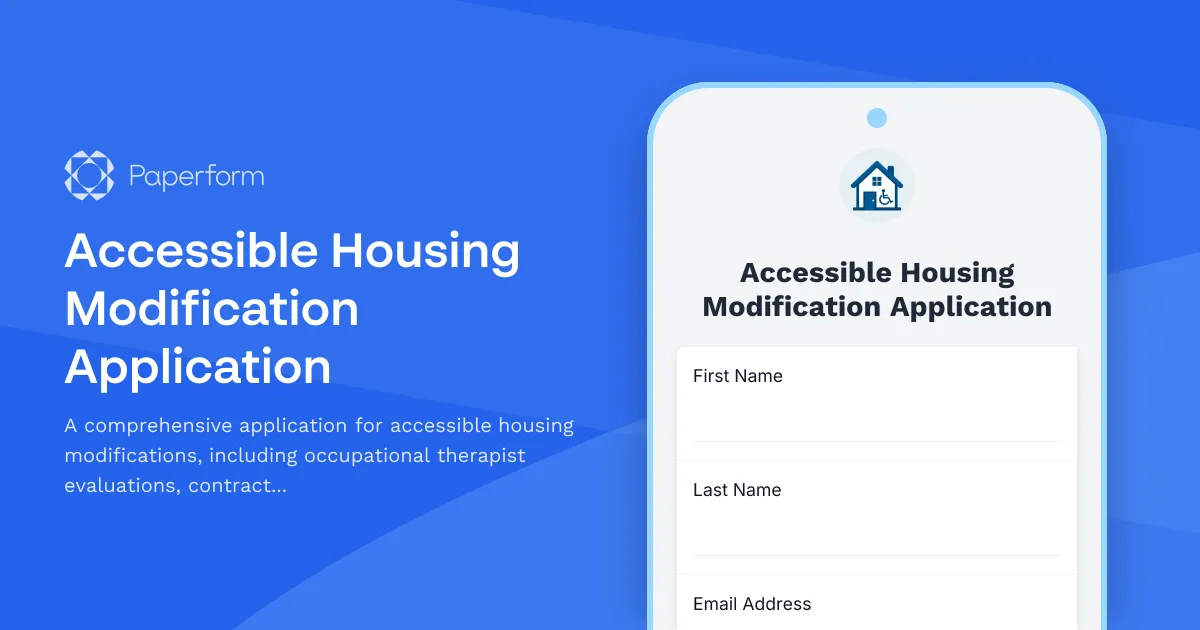
Accessible Housing Modification Application
A comprehensive application for accessible housing modifications, including occupational therapist evaluations, contractor approvals, and funding coordination.
Hospice Volunteer Application Form
A comprehensive application for hospice volunteers including emotional readiness assessment, grief counseling training interest, and availability for patient and family visits.
Accessible Housing Application for Adults with Muscular Dystrophy
Comprehensive housing application designed for adults with muscular dystrophy, covering accessibility needs, medical equipment requirements, progressive disease planning, and care coordination.
Accessible Housing Application for Adults with Spinal Cord Injury
A comprehensive accessible housing application designed for adults with spinal cord injuries, featuring wheelchair accessibility requirements, adaptive equipment needs, and personal care assistance coordination.
ALS-Accessible Housing Application
A compassionate housing application designed specifically for adults living with ALS, featuring adaptive technology accommodations, caregiver space requirements, and optional support planning resources.
Cancer Survivor Housing Application - Follow-Up Care & Support Services
A compassionate housing application designed specifically for cancer survivors seeking accommodation near treatment facilities, with built-in support for fatigue management, emotional wellness, and survivorship care coordination.
Group Home Application for Developmental Disabilities
A comprehensive application form for individuals with developmental disabilities seeking placement in a group home, including guardian information, behavioral support needs, and medication management details.
Prenatal Housing Application for Women in Recovery
Housing application for pregnant women in recovery programs with prenatal care compliance, parenting education enrollment, and infant care planning.
Residential Addiction Treatment Application
A comprehensive application form for residential addiction treatment programs that assesses substance use history, withdrawal management needs, and co-occurring mental health conditions.
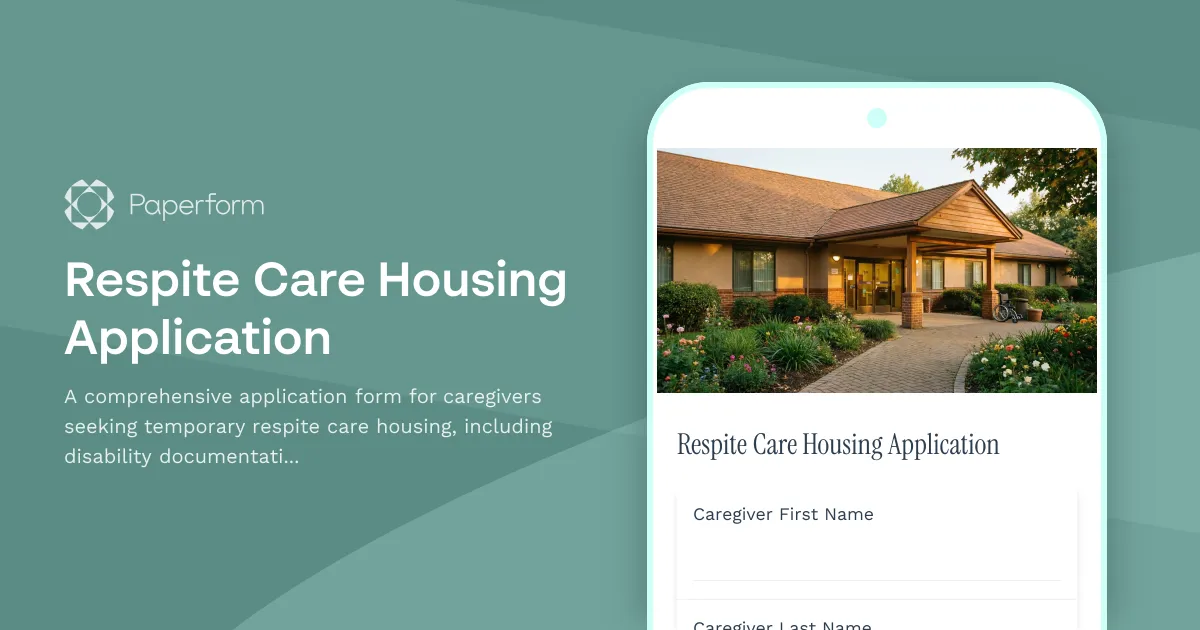
Respite Care Housing Application
A comprehensive application form for caregivers seeking temporary respite care housing, including disability documentation, care plans, and placement duration requirements.
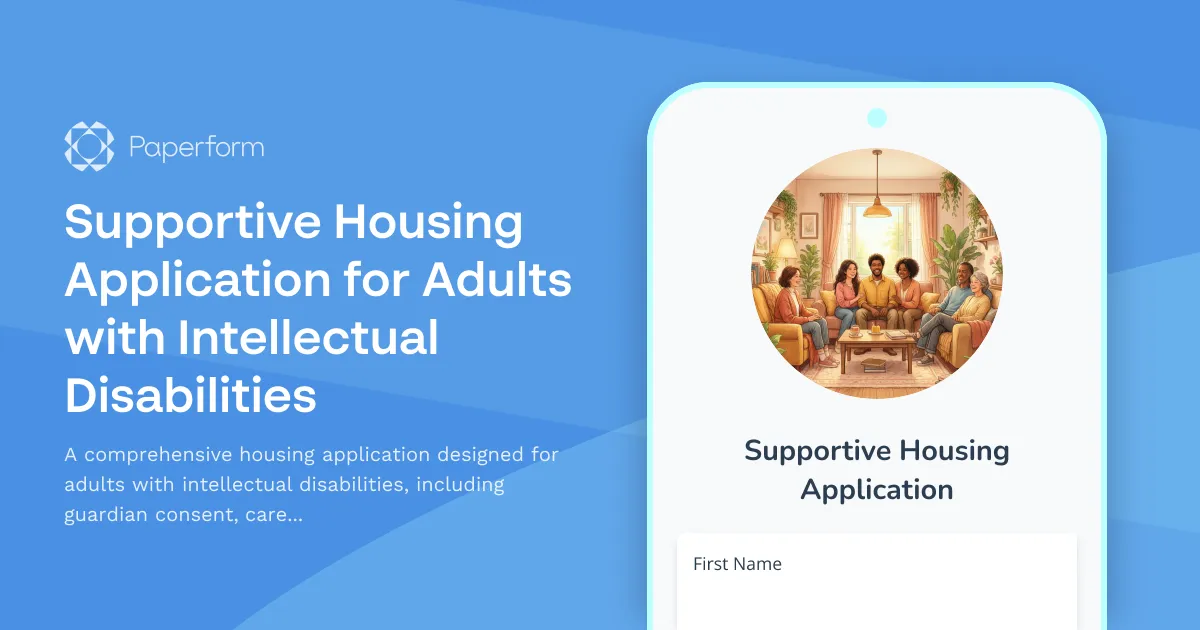
Supportive Housing Application for Adults with Intellectual Disabilities
A comprehensive housing application designed for adults with intellectual disabilities, including guardian consent, care coordination, medical oversight, and day program integration.
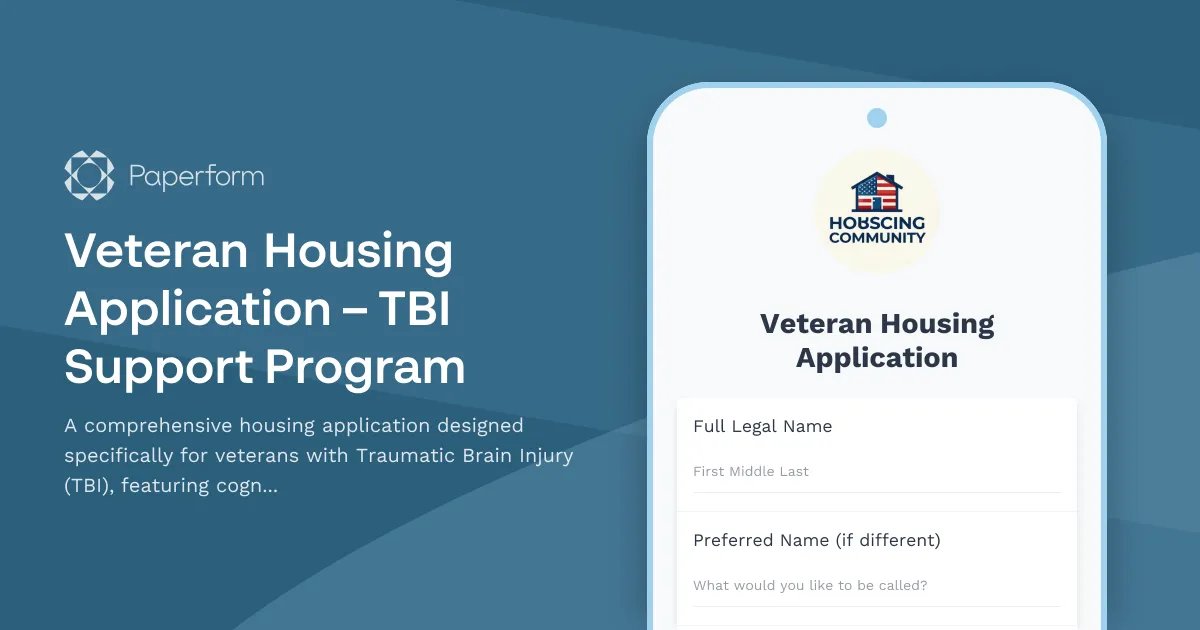
Veteran Housing Application – TBI Support Program
A comprehensive housing application designed specifically for veterans with Traumatic Brain Injury (TBI), featuring cognitive support accommodations, structured living environments, and seamless VA healthcare coordination.