A strong patient safety culture is the foundation of quality healthcare delivery. This Hospital Patient Safety Culture Survey template helps healthcare organizations systematically assess how staff perceive safety practices, leadership commitment, error reporting systems, and cross-unit collaboration.
Designed for hospitals, clinics, and healthcare facilities of all sizes, this survey captures honest feedback from frontline staff, nurses, physicians, and administrators about the real safety climate in your organization. Questions cover critical dimensions including comfort with reporting errors and near-misses, perceptions of leadership's commitment to safety, teamwork and communication across units, and responsiveness to safety improvement suggestions.
Why Paperform for healthcare surveys?
Healthcare organizations need survey tools that are secure, professional, and easy for busy staff to complete. Paperform's GDPR and SOC 2 Type II compliance ensures sensitive staff feedback is protected, while the intuitive design means higher completion rates from time-strapped healthcare workers.
With Paperform's conditional logic, you can tailor follow-up questions based on roles or departments, ensuring relevant insights from every staff member. The built-in AI Insights feature automatically analyzes responses to identify patterns, safety concerns, and opportunities for improvement—turning hundreds of individual responses into actionable intelligence for quality committees and leadership teams.
Results can flow directly into Google Sheets, Airtable, or your quality management system via native integrations. For organizations managing ongoing safety initiatives, connect this survey to Stepper workflows that automatically route concerning responses to the right safety officer, trigger follow-up communications, or update your safety dashboard in real-time.
Whether you're preparing for accreditation, responding to a sentinel event, or building a proactive safety improvement program, this template provides the structure to gather meaningful data while respecting the time constraints of healthcare professionals.



More templates like this
Accountable Care Organization Patient Attribution Survey
A comprehensive survey to assess patient understanding of ACO membership, primary care provider assignment, care coordination processes, and quality metrics for improved healthcare delivery.
Advanced Access Scheduling Patient Survey
Measure patient satisfaction with same-day appointment availability, scheduling ease, wait times, and provider continuity to improve your advanced access scheduling system.
Clinical Laboratory Outreach Program Survey
Evaluate laboratory outreach services including specimen collection convenience, courier timeliness, test result accuracy, and provider integration quality to improve healthcare delivery.
Healthcare Quality Improvement Patient Advisory Council Survey
A comprehensive survey designed to evaluate patient engagement effectiveness, feedback implementation transparency, co-design participation value, and shared decision-making support within healthcare quality improvement advisory councils.
Healthcare Value-Based Payment Patient Survey
A comprehensive patient survey designed to measure satisfaction with value-based care models, cost transparency, quality measure awareness, and perceived improvements in healthcare outcomes.
Hospital Medical Interpreter Service Quality Survey
Evaluate the quality of medical interpretation services with questions on interpretation accuracy, cultural competency, communication effectiveness, and scheduling convenience to improve patient care.
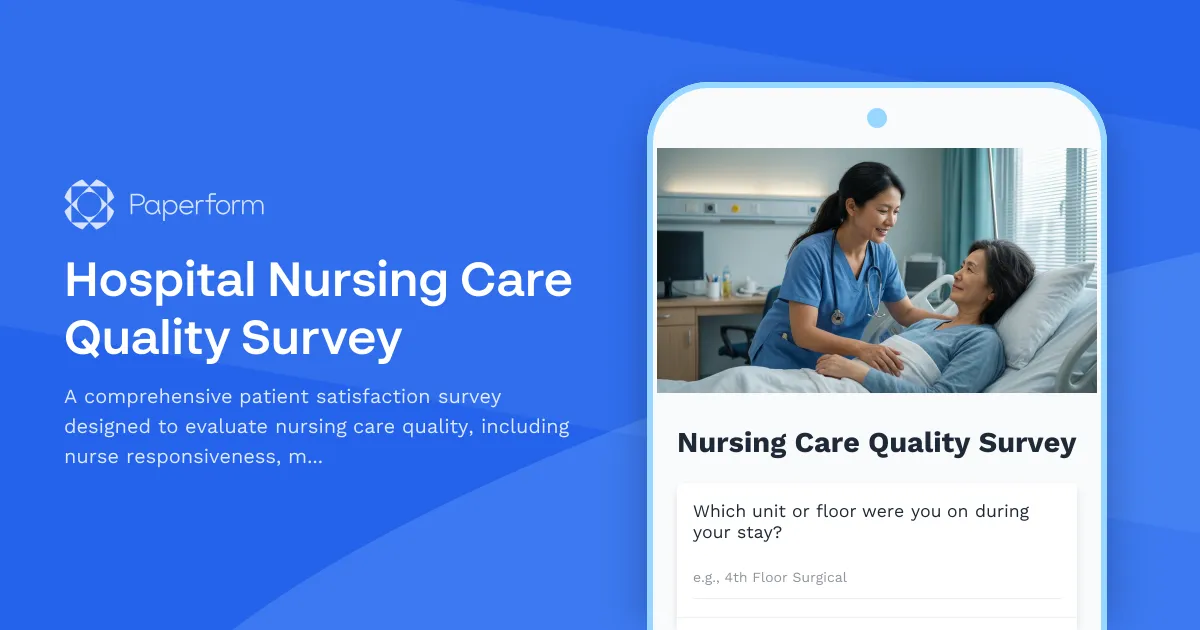
Hospital Nursing Care Quality Survey
A comprehensive patient satisfaction survey designed to evaluate nursing care quality, including nurse responsiveness, medication communication, bedside manner, and pain management effectiveness.
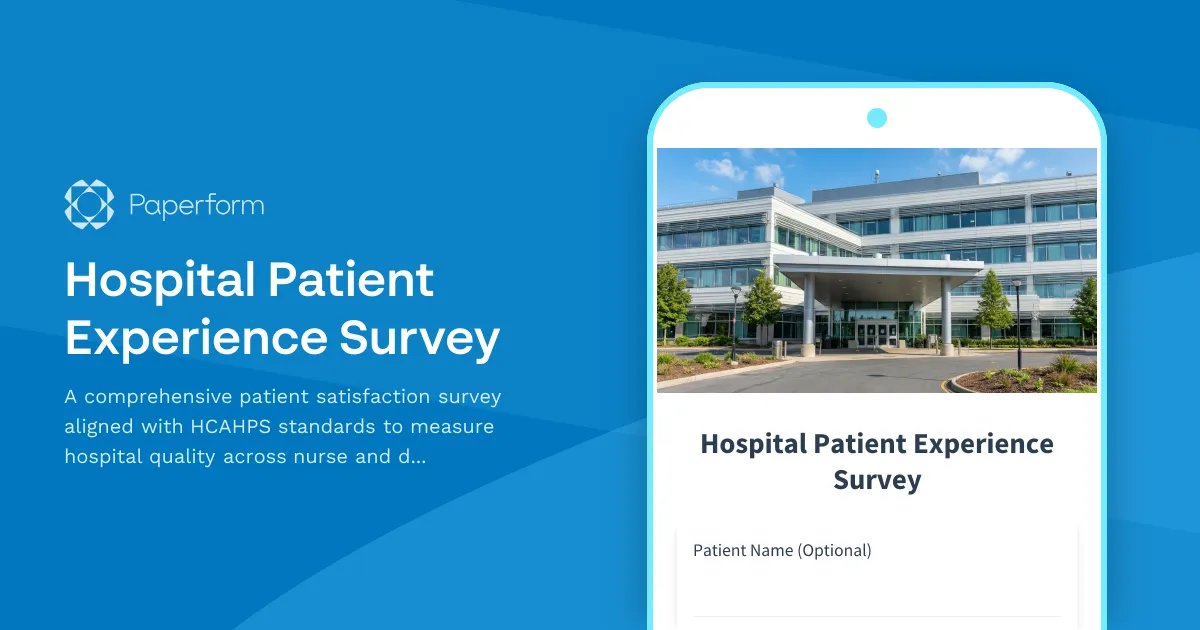
Hospital Patient Experience Survey
A comprehensive patient satisfaction survey aligned with HCAHPS standards to measure hospital quality across nurse and doctor communication, environment, pain management, medications, discharge, and overall experience.
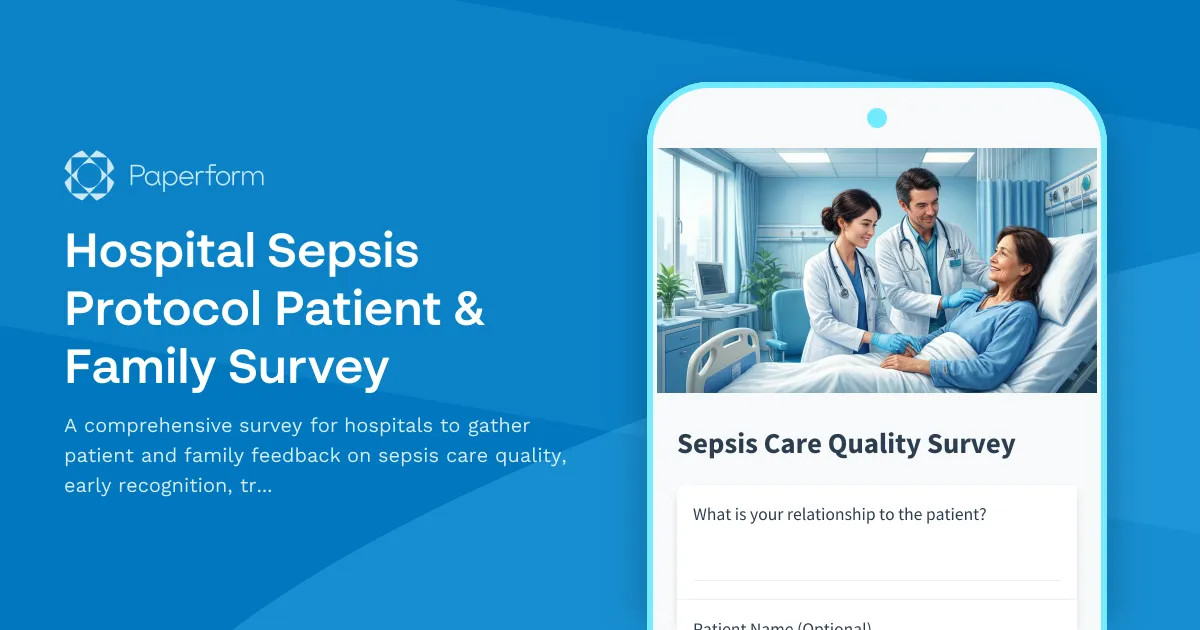
Hospital Sepsis Protocol Patient & Family Survey
A comprehensive survey for hospitals to gather patient and family feedback on sepsis care quality, early recognition, treatment timeliness, and recovery support while educating respondents on sepsis warning signs.
Medical Incident Patient Experience Survey
A comprehensive survey for healthcare organizations to gather patient feedback on medical incident disclosure, communication, and resolution processes to improve patient safety and care quality.
Medical Practice Panel Management Survey
A comprehensive patient survey designed to support population health initiatives, verify chronic disease registry data, identify care gaps, and assess patient awareness of preventive care services.
Medical Staff Peer Review Survey
Evaluate the effectiveness of peer review processes, credentialing fairness, competency assessments, and quality improvement programs within your medical staff structure.