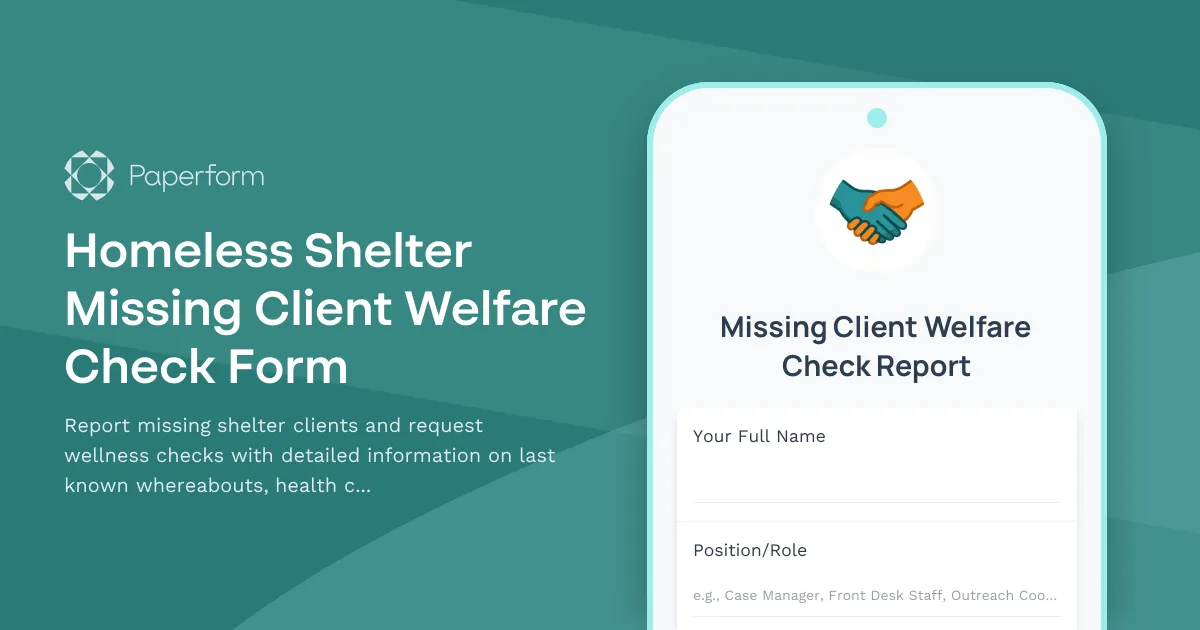
When a client experiencing homelessness goes missing from your shelter, every detail matters. This Missing Client Welfare Check Form helps homeless shelters, transitional housing programs, and outreach organizations quickly gather and share critical information to locate vulnerable individuals and ensure their safety.
Designed specifically for shelter staff, case managers, and outreach coordinators, this template streamlines the reporting process by capturing last known whereabouts, urgent health concerns, medication needs, mental health status, and behavioral patterns that might help locate the client. The form automatically alerts street outreach teams and relevant case managers, creating a coordinated response that can save lives.
Why Paperform for shelter welfare checks
Paperform makes it easy to create mobile-friendly forms that shelter staff can fill out quickly from any device—whether they're at the front desk, in the field, or working remotely. With conditional logic, the form adapts based on health urgency and risk factors, ensuring the right information reaches the right responders.
Connect your form to Stepper (stepper.io) to automatically notify street outreach teams via SMS or email, update case management systems, create urgent task assignments, and log reports in your CRM or Google Sheets—all without manual data entry. This means faster response times and better coordination across your housing and outreach network.
For organizations serving vulnerable populations, Paperform's secure, SOC 2 Type II compliant platform ensures sensitive health and personal information is protected while remaining accessible to authorized team members. Whether you're a small emergency shelter or a large continuum of care network, this template helps you act fast when clients need you most.



More templates like this
Homeless Veteran Welfare Check & Outreach Report
A comprehensive form for reporting missing chronically homeless veterans with service-connected disabilities to facilitate coordinated outreach efforts between street medicine teams, VA homeless coordinators, and community support services.
International Refugee Missing Person Report with Trauma Support
A sensitive, trauma-informed form for reporting missing refugee individuals with histories of torture or trauma, including interpreter needs and specialized care coordination.
Mental Health Crisis Team Missing Client High-Risk Report
A comprehensive form for mental health crisis teams to report missing high-risk clients with suicide assessment, medication history, known locations, and emergency response protocols.
Domestic Violence Shelter Missing Resident Safety Alert
A secure form to report when a shelter resident is missing, including threat assessment, restraining order information, safe contact protocols, and law enforcement coordination for victim safety.
Missing Client Report - Torture Treatment Center
A compassionate and secure form for torture treatment centers to report missing asylum seeker clients, document their persecution history, legal case details, and coordinate urgent notifications with trauma therapists and immigration attorneys.
Supervised Independent Living Missing Youth Report
A comprehensive missing youth report form for supervised independent living programs, designed to capture vital information about missing youth with disabilities, assess vulnerability factors, and coordinate with case managers and support staff.
Foster Care Missing Youth Report Form
A comprehensive form for reporting missing foster youth and initiating emergency welfare protocols. Captures placement history, school information, biological family contacts, and agency details to support swift recovery efforts.
Immigration Detention Medical Unit Missing Detainee Report
A comprehensive form for reporting missing detainees with urgent medical needs from immigration detention facilities, enabling rapid coordination with ICE health services and humanitarian organizations.

Missing Senior Report & Wellness Check Form
A community center form for reporting missing seniors from meal programs, tracking attendance patterns, mobility needs, and coordinating welfare checks for vulnerable adults.
Tribal Elder Missing Person Report
A culturally-sensitive form for reporting missing tribal elders, documenting traditional medicine needs, notifying tribal council, and mobilizing community search efforts.
Adult Protective Services Missing Vulnerable Adult Report
Report a missing vulnerable adult with suspected abuse or neglect. This comprehensive APS intake form collects critical information about the missing person, their cognitive status, abuse allegations, and perpetrator details.
Anonymous Supported Employment Evidence-Based Practice Violation Report
Confidential reporting form for evidence-based practice violations in supported employment programs, with sections for vocational rehabilitation coordination issues and client outcome concerns.