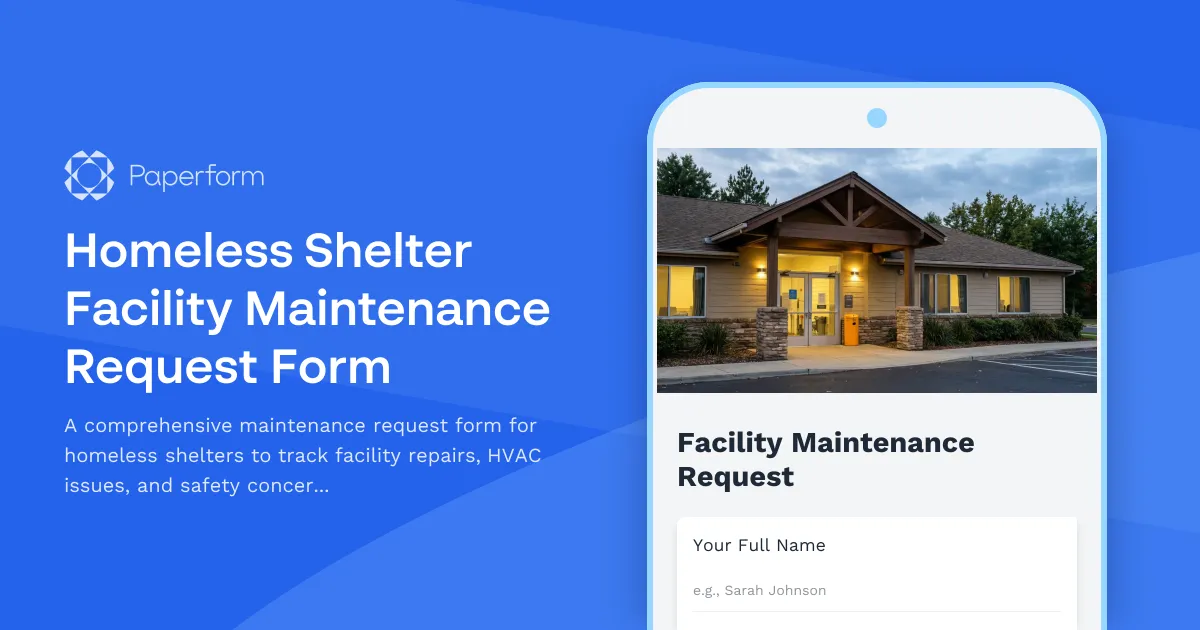
Homeless Shelter Facility Maintenance Request Form
Managing a homeless shelter means juggling critical maintenance needs with the safety and wellbeing of your most vulnerable residents. When an HVAC system fails in winter, a plumbing issue affects restrooms, or a safety hazard emerges, you need a streamlined way to log, prioritize, and resolve these issues—fast.
This Homeless Shelter Facility Maintenance Request Form is purpose-built for shelter directors, housing coordinators, case managers, and facilities staff who need to track maintenance issues while considering their impact on bed availability, resident safety, and emergency service coordination.
Why Homeless Shelters Need Specialized Maintenance Forms
Unlike typical commercial facilities, homeless shelters face unique operational challenges:
Resident Safety is Paramount: A broken lock, non-functioning smoke detector, or heating failure isn't just an inconvenience—it can put vulnerable individuals at serious risk. This form helps you flag safety-critical issues immediately and route them for urgent attention.
Bed Availability Impact: When a dormitory area, sleeping pod, or entire wing needs to be closed for repairs, it directly affects how many people you can shelter each night. The form captures this impact so you can coordinate with overflow facilities or emergency housing partners.
24/7 Operations: Shelters don't close for repairs. This form allows staff on any shift to report issues and provides visibility into maintenance status for day staff, night staff, case managers, and facility coordinators.
Compliance and Funding: Many shelters operate under strict health, safety, and building code requirements tied to government funding or grants. Having a clear maintenance tracking system helps you demonstrate compliance, document response times, and maintain audit trails.
How This Form Works
The form guides staff through a structured reporting process:
Reporter Information: Capture who is submitting the request (staff name, role, contact info) so maintenance coordinators can follow up with questions.
Issue Classification: Categorize the problem (HVAC, plumbing, electrical, safety hazard, structural, etc.) and indicate urgency level—from routine maintenance to life-threatening emergencies.
Location Details: Pinpoint exactly where the issue is located (dormitory, common area, kitchen, restrooms, office, exterior) so repair teams know where to go.
Issue Description: Provide detailed information about the problem, when it was first noticed, and whether it's affecting residents or operations.
Safety and Impact Assessment: Indicate if the issue creates a safety hazard, affects resident accessibility, or impacts bed availability. This helps prioritize responses appropriately.
Photo Documentation: Upload images of the problem to help maintenance teams assess severity and bring the right tools on the first visit.
Emergency Coordination: For critical issues, capture whether emergency services have been contacted and if temporary accommodations are needed.
Streamline Operations with Paperform and Stepper
This form is built on Paperform, the flexible form builder trusted by nonprofits, social services organizations, and facilities management teams for mission-critical workflows.
With Paperform's conditional logic, the form automatically adapts based on issue severity. Report a life-threatening emergency, and additional fields appear for emergency service coordination. Flag a bed availability impact, and you're prompted for details on how many residents are affected.
Connect this form to Stepper (stepper.io), Paperform's AI-native workflow automation tool, to create an end-to-end maintenance management system:
Automatic Routing: Send routine requests to your facilities team via email or Slack, while emergency issues trigger immediate SMS alerts to on-call staff and shelter directors.
Work Order Creation: Automatically create work orders in your property management system, Google Sheets, or Airtable with all details pre-populated.
Status Updates: Set up workflows that notify the reporter when maintenance work begins, is completed, or requires follow-up.
Coordination with Partners: For issues requiring external contractors (HVAC specialists, electricians, plumbers), automatically send request details and photos to vendor partners.
Bed Availability Updates: When repairs affect bed counts, automatically notify intake coordinators, 211 hotlines, or partner shelters about temporary capacity changes.
Compliance Documentation: Log all requests and resolutions in a central database for inspection readiness, grant reporting, and continuous improvement.
Built for the Unique Needs of Shelter Operations
This form recognizes the realities of shelter environments:
Accessible Language: Clear, jargon-free questions that any staff member—regardless of technical expertise—can complete quickly.
Mobile-First Design: Night staff can report issues from their phones while doing rounds, without needing to return to an office computer.
Resident-Centered Approach: Fields that specifically consider how maintenance issues affect residents with disabilities, mental health conditions, or medical needs.
Trauma-Informed Design: Options to report issues that could be triggering or distressing to residents (broken windows creating security concerns, lighting failures affecting safety, etc.) so they're handled with appropriate sensitivity.
Who Benefits from This Form?
Shelter Directors and Coordinators: Gain real-time visibility into facility condition, maintenance backlogs, and safety concerns across your site.
Facilities and Maintenance Staff: Receive clear, detailed work requests with photos and location information, reducing confusion and repeat visits.
Case Managers and Direct Service Staff: Quickly report issues that affect the residents they serve, knowing requests won't get lost in email chains or forgotten shift notes.
Volunteers and Relief Staff: Provide a straightforward way for temporary staff to report problems without needing to understand complex internal systems.
Compliance Officers: Maintain thorough documentation of facility issues and response times for inspections, audits, and funding reports.
Beyond Just Forms: A Complete Shelter Management Ecosystem
While this maintenance request form is powerful on its own, it's even more valuable as part of a broader Paperform-powered shelter management system. Consider adding:
- Resident Intake Forms to streamline admissions and collect critical health and safety information
- Volunteer Sign-Up and Shift Scheduling Forms to coordinate your workforce
- Donation Request Forms to track in-kind contributions and needed supplies
- Incident Report Forms to document safety events separately from maintenance issues
- Feedback Forms to gather resident input on shelter services and conditions
Paperform's SOC 2 Type II compliance, secure data handling, and role-based permissions mean you can trust the platform with sensitive operational data while maintaining resident privacy.
Get Started in Minutes
This template is ready to use immediately—just customize location names, staff roles, and maintenance categories to match your shelter's specific layout and operations. The intuitive editor lets you add custom questions, adjust priority levels, or incorporate your organization's branding without any technical skills.
Whether you run an emergency overnight shelter, a transitional housing program, or a day resource center, this form helps you maintain safe, functional facilities that support the dignity and wellbeing of the people you serve.
Trusted by social services organizations nationwide, this template represents best practices in facilities management for vulnerable populations. Start protecting your residents and your facility with better maintenance tracking today.



More templates like this
Emergency Shelter Facility Maintenance Request Form
Report urgent facility issues at emergency shelters affecting resident safety, occupancy, and vulnerable populations. Coordinate repairs with social services to maintain safe housing conditions.
Job Training Program Desk Booking & Intake Form
Streamline workspace reservations, participant intake, and employer partnership coordination for job training programs with this comprehensive booking and case management form.
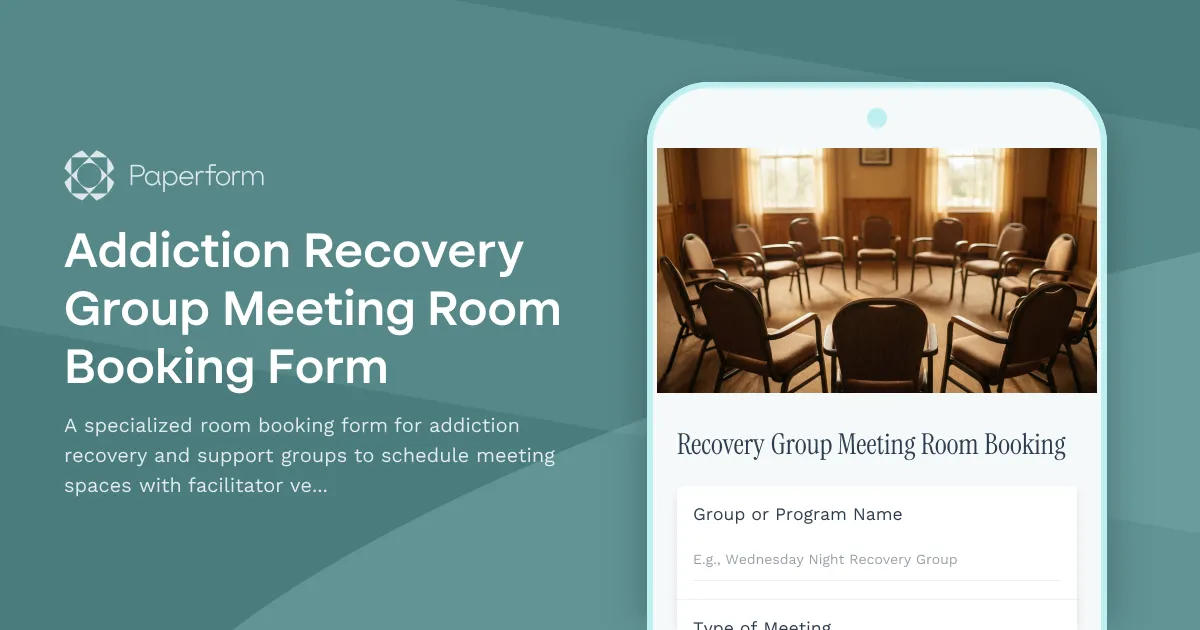
Addiction Recovery Group Meeting Room Booking Form
A specialized room booking form for addiction recovery and support groups to schedule meeting spaces with facilitator verification, anonymity protections, and essential amenities like seating arrangements and coffee service.
Homeless Shelter Staff Key & Access Request Form
A comprehensive form for overnight staff at homeless shelters to request facility keys and access badges, including background check verification, crisis intervention training confirmation, and director approval.
Homeless Shelter Visitor & Volunteer Registration Form
A compassionate registration form for homeless shelter visitors and volunteers that prioritizes trauma-informed care, resident dignity, and safe donation handling procedures.
Nonprofit Community Center Facility Maintenance Request
A comprehensive facility maintenance request form for nonprofit community centers to track repairs, assess program impact, coordinate volunteer assistance, and manage donor funding allocation for facility improvements.
Nonprofit Community Center Space Rental Application
A comprehensive space rental form for nonprofit community centers to manage venue bookings, collect event details, calculate deposits, verify insurance, and capture facility use agreements with digital signatures.
Office Move Sustainability & Recycling Coordination Form
Coordinate eco-friendly office relocations with furniture donation tracking, e-waste disposal, document shredding, and sustainable moving materials management.
Youth Mentoring Center Property Inspection Form
A comprehensive property inspection form designed for youth mentoring centers to assess meeting spaces, activity areas, security measures, accessibility compliance, and program support infrastructure.
Architecture Preservation Fieldwork Catering Request
Coordinate catering for architecture preservation teams conducting field surveys at historic sites, including remote location delivery and celebration planning for designation milestones.
Community Center Facility Rental Key Pickup Form
A comprehensive form for community center facility rentals to manage key pickup, event confirmation, damage deposits, and return deadlines efficiently.
Historic Building Preservation Workshop Access Request Form
A professional access request form for conservation workshop facilities in historic buildings, including training verification, materials handling clearance, and curator approval workflow.