Streamline Group Home Applications with Paperform
Finding the right group home placement for individuals with developmental disabilities requires gathering detailed, sensitive information in a way that's clear, organized and respectful. This Group Home Application for Developmental Disabilities template is purpose-built for residential care providers, disability services organizations, and supported living facilities that need to collect comprehensive applicant information while maintaining a compassionate, professional approach.
Why Use This Template?
Traditional paper-based group home applications can be overwhelming for families and guardians to complete, often leading to incomplete submissions, lost paperwork, and delays in placement. This Paperform template transforms the application process into a guided digital experience that families can complete at their own pace, saving progress and returning as needed.
The form captures everything you need to make informed placement decisions: applicant demographics, guardian and emergency contact details, medical history, behavioral support requirements, medication management needs, daily living skills assessments, and funding information. Conditional logic ensures families only see questions relevant to their situation, reducing confusion and completion time.
Built for Care Providers and Families
Whether you're a nonprofit disability services provider, a private group home operator, or a regional care coordination agency, this template adapts to your intake workflow. It's designed with input from the disability care community to balance thoroughness with sensitivity, asking necessary questions in a respectful, person-centered way.
Families and guardians appreciate the clear structure and the ability to gather information from multiple sources (medical records, school reports, previous care providers) before submitting. Care providers benefit from receiving complete, standardized applications that support better matching between residents and homes.
Key Features for Disability Services
Guardian and Emergency Contacts: Capture detailed information about legal guardians, conservators, and multiple emergency contacts with relationship details and contact preferences.
Medical and Health Profile: Document diagnoses, medical conditions, allergies, dietary restrictions, mobility needs, and current healthcare providers in organized sections that paint a complete health picture.
Behavioral Support Needs: Collect information about behavioral challenges, triggers, successful de-escalation strategies, and current behavior support plans to ensure staff are prepared to provide appropriate support.
Medication Management: Record all current medications, dosages, administration times, and special instructions. Document who currently manages medications and any assistance needed.
Daily Living Skills Assessment: Evaluate the applicant's current abilities across personal care, communication, social skills, and community participation to match them with the appropriate level of support.
Funding and Payment Information: Capture insurance details, Medicaid/Medicare information, regional center funding, and other payment sources to verify financial arrangements upfront.
File Uploads: Allow families to attach supporting documentation like medical records, psychological evaluations, current Individual Service Plans (ISPs), and court orders for guardianship.
Automate Your Intake Workflow with Stepper
Once an application is submitted, the real work begins. With Stepper, Paperform's AI-native workflow automation platform, you can turn each submission into a smooth multi-step process:
- Automatic routing: Send applications to different care coordinators or regional managers based on the applicant's location, diagnosis, or support level needed
- Document organization: Automatically save uploaded files to Google Drive or Dropbox in folders named by applicant
- Team notifications: Alert placement coordinators, nursing staff, and behavioral specialists when new applications arrive
- CRM updates: Push applicant information into your care management system or database
- Follow-up sequences: Trigger email templates requesting additional information or scheduling intake interviews
- Approval workflows: Route applications through clinical review teams with status tracking
This level of automation means your intake coordinator can focus on the human side of placement—talking with families, coordinating tours, and ensuring good matches—rather than manually entering data or chasing down missing information.
Compliance and Security You Can Trust
When you're handling protected health information and sensitive personal details about vulnerable populations, security isn't optional. Paperform is SOC 2 Type II compliant and GDPR ready, with enterprise-grade encryption, secure data storage, and configurable data residency controls. Set up role-based access so only authorized staff can view applications, and maintain complete audit trails of who accessed what information.
Please note: While Paperform provides robust security features, this platform is not currently HIPAA compliant. Organizations subject to HIPAA requirements should consult with their compliance officers about appropriate use cases.
Designed for People, Not Just Processing
This template uses plain language rather than clinical jargon wherever possible, making it accessible to families with varying literacy levels and those for whom English is a second language. The guided format breaks a complex application into manageable sections, and the professional but warm design reflects the person-centered values of quality disability care.
For organizations serving diverse communities, Paperform's translation features and accessible design options ensure your application process is inclusive and welcoming to all families seeking support.
Perfect for These Organizations
This group home application template is ideal for:
- Group home operators managing multiple residential facilities for adults or children with developmental disabilities
- Regional centers and disability services agencies coordinating placements across provider networks
- Nonprofit disability organizations running supported living programs
- Behavioral health providers offering residential treatment for individuals with complex needs
- County and state disability services departments managing publicly-funded placements
Get Started in Minutes
You can use this template as-is or customize it to match your organization's specific requirements, branding, and intake protocols. Add your logo, adjust colors to match your brand, modify questions to align with your state's regulations, or integrate with your existing care management systems.
With Paperform's intuitive editor, you don't need developers or IT support to create professional, functional applications that serve both families and staff effectively. Start collecting better information and making better placements today.



More templates like this
Accessible Housing Application for Adults with Muscular Dystrophy
Comprehensive housing application designed for adults with muscular dystrophy, covering accessibility needs, medical equipment requirements, progressive disease planning, and care coordination.
Accessible Housing Application for Adults with Spinal Cord Injury
A comprehensive accessible housing application designed for adults with spinal cord injuries, featuring wheelchair accessibility requirements, adaptive equipment needs, and personal care assistance coordination.
Accessible Housing Modification Application
A comprehensive application for accessible housing modifications, including occupational therapist evaluations, contractor approvals, and funding coordination.
ALS-Accessible Housing Application
A compassionate housing application designed specifically for adults living with ALS, featuring adaptive technology accommodations, caregiver space requirements, and optional support planning resources.
Cancer Survivor Housing Application - Follow-Up Care & Support Services
A compassionate housing application designed specifically for cancer survivors seeking accommodation near treatment facilities, with built-in support for fatigue management, emotional wellness, and survivorship care coordination.
Housing Application for Adults with Traumatic Brain Injury
A comprehensive, accessible housing application designed for adults with traumatic brain injury seeking supportive living environments with cognitive rehabilitation and community reintegration services.
Respite Care Housing Application
A comprehensive application form for caregivers seeking temporary respite care housing, including disability documentation, care plans, and placement duration requirements.
Supportive Housing Application for Adults with Intellectual Disabilities
A comprehensive housing application designed for adults with intellectual disabilities, including guardian consent, care coordination, medical oversight, and day program integration.
Accessible Housing Application for Adults with Autism Spectrum Disorder
A comprehensive, inclusive housing application designed specifically for adults with autism spectrum disorder, covering sensory needs, routine preferences, and communication support requirements.
Accessible Housing Application for Adults with Myasthenia Gravis
Specialized housing application for individuals with myasthenia gravis, featuring accessibility assessments, energy conservation needs, medication management support, and healthcare proximity requirements.
Accessible Housing Application for Individuals with Lupus
A specialized rental application for individuals with lupus, designed to assess accommodation needs including sun exposure protection, fatigue management, and proximity to rheumatology care.
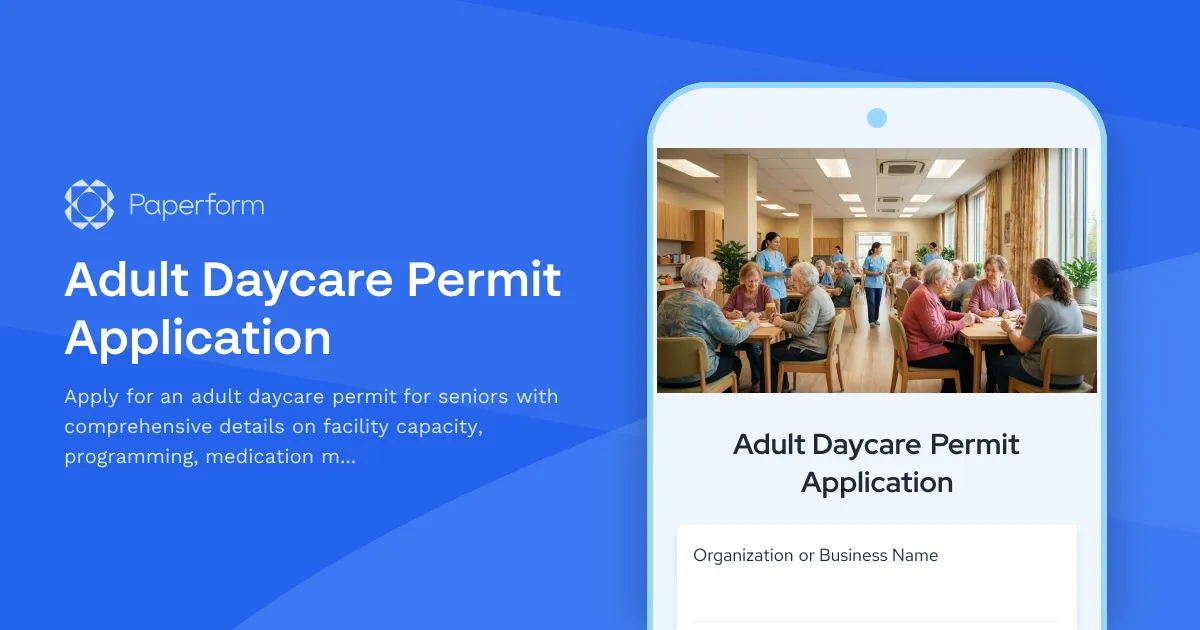
Adult Daycare Permit Application
Apply for an adult daycare permit for seniors with comprehensive details on facility capacity, programming, medication management, meal services, transportation, and staff qualifications.