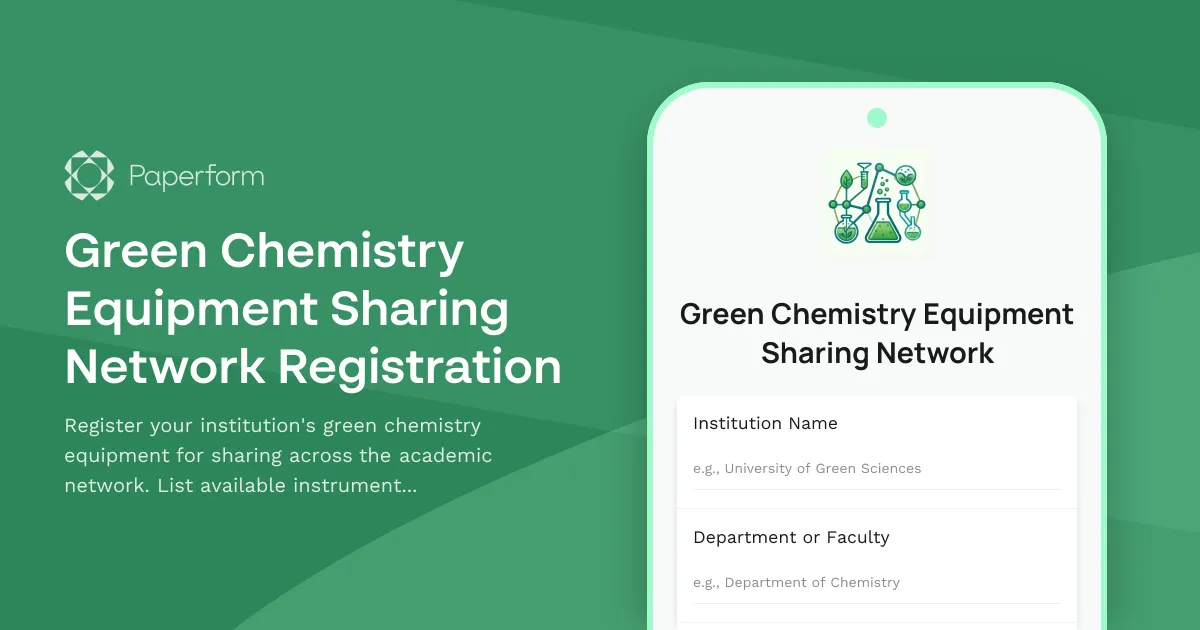
Academic institutions are increasingly embracing green chemistry principles, and equipment sharing is a cornerstone of sustainable laboratory operations. This Green Chemistry Equipment Sharing Network Registration template helps universities, colleges, and research facilities list their available instruments, coordinate access, and reduce redundant purchases—cutting costs while minimizing environmental impact.
Why equipment sharing matters for sustainable science
Green chemistry isn't just about safer solvents and reagents—it's about optimizing resource use across the entire research ecosystem. By sharing specialized analytical instruments, chromatography systems, spectroscopy tools, and sustainable synthesis equipment, institutions can:
- Reduce capital expenditure and avoid duplicate purchases of high-cost instruments
- Lower energy consumption by maximizing utilization rates of existing equipment
- Decrease waste from underused or obsolete instruments sitting idle in individual labs
- Expand research capacity for smaller departments without the budget for full equipment suites
This form template makes it simple to register instruments for the network, define usage policies, set transparent fee structures, and clarify maintenance and safety responsibilities—all essential for building trust and participation across institutions.
Built for academic collaboration and compliance
Paperform's conditional logic lets you tailor questions based on equipment type, ownership model, and fee structure. Collect detailed specifications, availability windows, and required certifications, then route submissions to the right department coordinators or network administrators. With Paperform's calculation fields, you can even build dynamic pricing models based on usage hours, consumables, or institution type.
Once your network is live, use Stepper (stepper.io) to automate the approval workflow—notify equipment custodians of new registration requests, send confirmations to participating labs, update shared calendars or databases, and trigger onboarding emails with safety protocols and booking instructions. This keeps your green initiative moving efficiently without manual back-and-forth.
Whether you're launching a regional equipment consortium, a departmental sharing program, or a university-wide sustainability initiative, this template gives you a professional, compliance-ready foundation for managing shared resources and advancing green chemistry principles across academia.

More templates like this
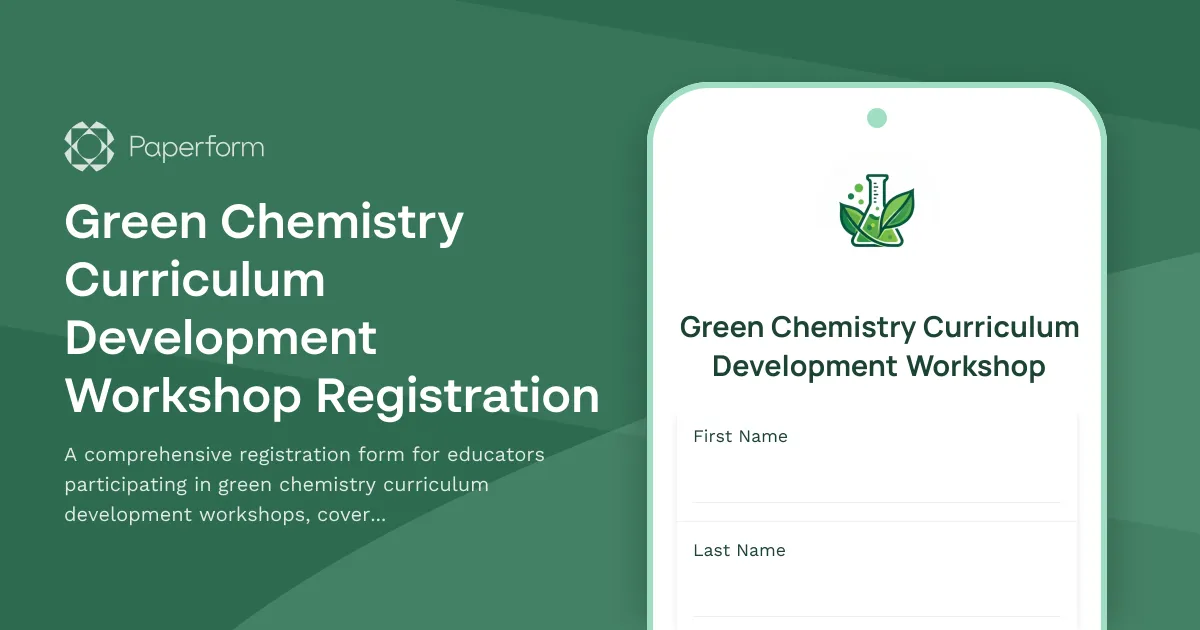
Green Chemistry Curriculum Development Workshop Registration
A comprehensive registration form for educators participating in green chemistry curriculum development workshops, covering course objectives, laboratory integration plans, and industry partnership opportunities.
Green Chemistry Initiative Sign-Up Form
A comprehensive form for laboratories to join green chemistry programs, document hazardous materials, identify safer alternatives, and set waste reduction targets for sustainable lab practices.

Microbiology Poster Presentation Submission Form
Submit your microbiology research poster for conference presentation, including organism identification, antimicrobial resistance data, genomic sequencing results, and biosafety classification.
Mycology Laboratory Sterile Culture Room Access Request
Request access to sterile culture rooms with aseptic technique certification and fungal safety protocol acknowledgment for mycology research facilities.
Observatory Control Room Access Request Form
A secure access request form for researchers seeking control room and telescope operation privileges at astronomical observatories. Includes training verification, scheduling coordination, and director authorization.
University Laboratory Equipment Scheduling Form
A comprehensive scheduling system for shared laboratory equipment at universities, featuring training verification, maintenance logging, and automated conflict prevention for research facilities.
University Research Lab Equipment Calibration Log
Track equipment calibration, maintenance schedules, and usage hours for research lab instruments including analytical balances, centrifuges, and specialized equipment.

Academic Conference Abstract Submission Form
A comprehensive abstract submission form for academic conferences featuring research topic selection, keyword tagging, author details, and blind review options to streamline the peer review process.

Academic Conference Paper Presentation Feedback Form
Collect comprehensive feedback on academic paper presentations including research quality, presentation delivery, Q&A engagement, and publication interest for conference organizers and presenters.
Academic Conference Poster Presentation Submission Form
A comprehensive form for researchers to submit poster presentation abstracts to academic conferences, including research details, author information, and supporting materials.
Academic Journal Peer Reviewer Code of Conduct
A comprehensive code of conduct form for academic journal peer reviewers covering confidentiality agreements, conflict of interest disclosure, ethical review standards, and constructive feedback commitments.

Academic Psychology Study Recruitment Form
Recruit participants for psychology research studies with demographic screening, availability scheduling, compensation preferences, and IRB-compliant consent agreements.