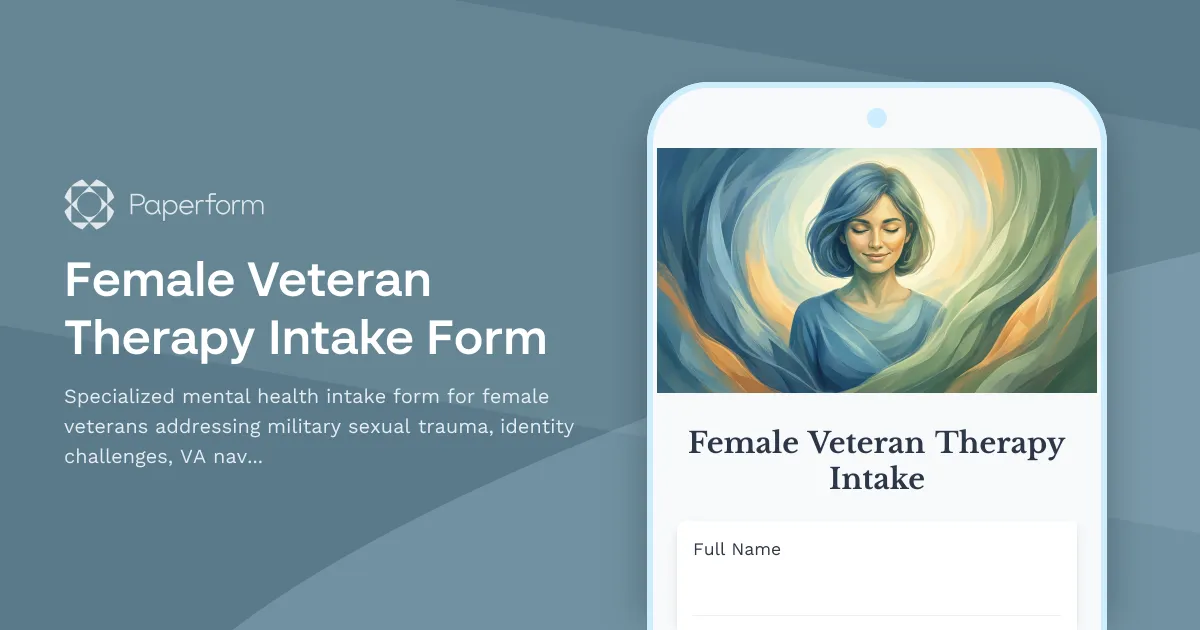
Culturally Competent Mental Health Support for Female Veterans
Female veterans face unique challenges that often go unrecognized in traditional therapeutic settings. From military sexual trauma (MST) to identity struggles as women in a male-dominated military culture, to navigating complex VA systems, female veterans deserve specialized care that understands their lived experiences.
This Female Veteran Therapy Intake Form is designed specifically for mental health professionals, counselors, and therapists who provide care to women who have served. It creates a foundation for trauma-informed, culturally competent treatment that acknowledges the specific barriers and experiences female veterans face.
Why Female Veterans Need Specialized Intake
Women represent one of the fastest-growing veteran populations, yet they often report feeling invisible both during and after service. Many face:
- Military Sexual Trauma (MST): Approximately 1 in 3 female veterans report experiencing MST during service, requiring trauma-informed care approaches
- Identity challenges: Navigating the intersection of military identity, gender identity, and civilian reintegration
- Recognition issues: Being overlooked, questioned about their service, or not being "seen" as veterans
- VA navigation barriers: Difficulty accessing benefits and healthcare designed primarily for male veterans
- Unique transition challenges: Balancing service identity with societal expectations around gender and motherhood
This intake form helps therapists gather critical information while creating immediate psychological safety and validation for female veteran clients.
What This Intake Form Covers
Service History & Military Identity The form respectfully collects information about branch of service, MOS/rate, deployment history, and how the veteran identifies in relation to their military service. This helps therapists understand the cultural context of their client's military experience.
Military Sexual Trauma & Safety Assessment With appropriate sensitivity, the form includes screening questions about MST and creates space for veterans to disclose trauma when they're ready. It assesses current safety and support systems without forcing immediate disclosure.
VA Healthcare & Benefits Navigation Understanding a client's relationship with the VA system—whether they're enrolled in VA healthcare, have filed claims, or feel supported by VA services—provides crucial context for treatment planning and potential resource connections.
Recognition & Identity Challenges The form asks about experiences of being questioned about service, feeling invisible as a veteran, and challenges around gender identity in military and civilian contexts. This validates common female veteran experiences and opens dialogue.
Current Mental Health & Support Systems Standard clinical intake elements are tailored to female veteran experiences, including questions about transition challenges, current symptoms, previous therapy experiences, and existing support networks.
Treatment Goals & Preferences Veterans can express their therapy goals, preferred approaches, and any specific concerns or preferences for their treatment journey.
For Mental Health Professionals & Counseling Centers
Whether you're a therapist in private practice, a counseling center specializing in veteran care, a nonprofit serving female veterans, or a healthcare clinic offering trauma-informed services, this intake form helps you:
- Establish immediate trust and validation with female veteran clients
- Gather comprehensive information for accurate assessment and treatment planning
- Screen for MST and trauma in a sensitive, non-retraumatizing way
- Understand VA navigation challenges that may impact treatment access
- Identify unique stressors related to gender and military identity
- Create a foundation for culturally competent, veteran-centered care
Paperform Makes Intake Simple and Secure
With Paperform, your therapy intake process becomes streamlined and professional:
- SOC 2 Type II compliant and GDPR compliant for secure handling of sensitive mental health information
- Conditional logic to show MST screening questions only when veterans indicate readiness to discuss
- Encrypted submissions to protect highly sensitive disclosures
- Custom branding to match your practice's welcoming, professional identity
- Integration with therapy practice management systems through Stepper (stepper.io) to automatically create client files
- Mobile-friendly design so veterans can complete intake on any device, at their own pace
Note: While Paperform is SOC 2 Type II and GDPR compliant, it is not HIPAA compliant. Mental health professionals subject to HIPAA should ensure compliance through their practice management systems and documentation workflows.
Supporting Those Who Served
Female veterans have served their country with courage and deserve mental health care that truly sees them. This specialized intake form is the first step in providing that recognition and support.
Whether you're offering individual therapy, group counseling, trauma recovery programs, or specialized MST treatment, this form helps you gather the information you need while demonstrating cultural competence from the very first interaction.
Customize this template in Paperform's intuitive editor to match your practice's specific approach, add your clinical assessment tools, and create an intake experience that honors the service and resilience of female veterans.

More templates like this
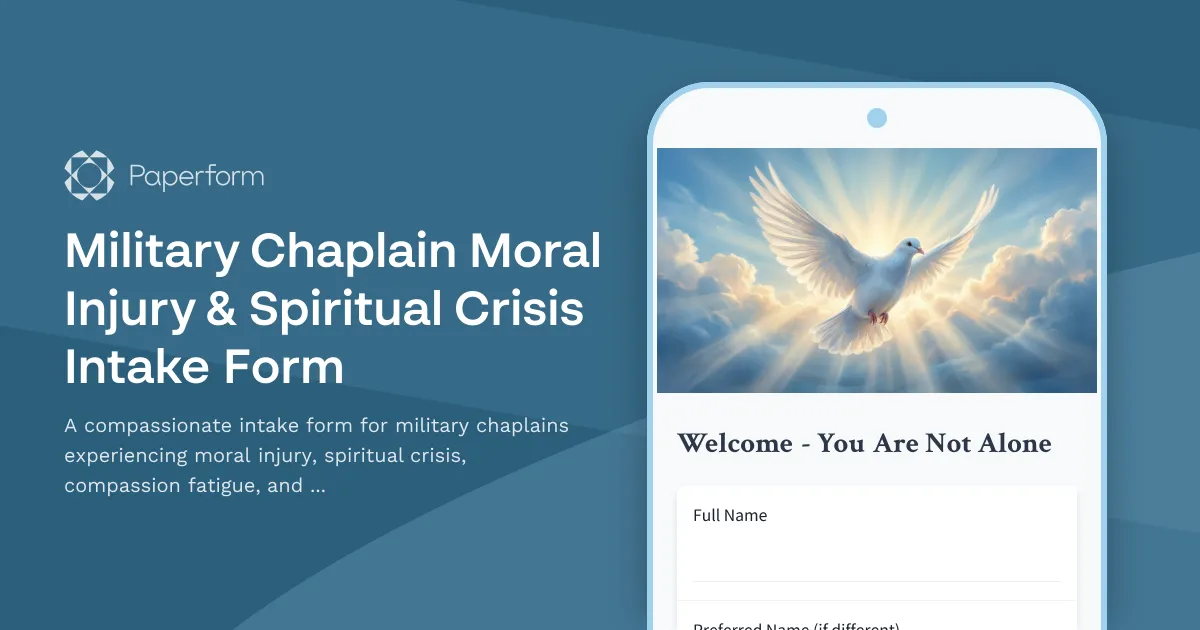
Military Chaplain Moral Injury & Spiritual Crisis Intake Form
A compassionate intake form for military chaplains experiencing moral injury, spiritual crisis, compassion fatigue, and faith struggles from bearing witness to trauma in service.
Chronic Nausea & Hyperemesis Mental Health Intake Form
A specialized mental health intake form for patients experiencing chronic nausea and hyperemesis, assessing symptom severity, nutritional status, medical history, and quality of life impact.
Trauma-Focused CBT Consent & Intake Form for Children
A comprehensive consent form for trauma-focused cognitive behavioral therapy (TF-CBT) services for children with trauma history, including caregiver authorization, treatment goals, and baseline symptom tracking.
Addiction Recovery Monitoring & Sobriety Tracker
Track sobriety milestones, identify relapse triggers, and monitor support group attendance for addiction recovery programs. A comprehensive check-in form for patients and counselors.
Addiction Recovery Program Discovery Form
A comprehensive intake form for addiction recovery programs to assess client needs, substance use history, treatment preferences, and recovery goals for personalized care planning.
Addiction Recovery Therapy Intake Form
A comprehensive intake form for addiction recovery counselors to gather essential information about new clients, including substance use history, previous sobriety attempts, support network, and recovery goals.
Addiction Treatment Counselor Burnout & Compassion Fatigue Self-Assessment
A comprehensive self-assessment tool for addiction treatment counselors to evaluate burnout levels, compassion fatigue, secondary trauma, and self-care effectiveness to support professional longevity and wellbeing.
Cognitive Behavioral Therapy Intake Form
A comprehensive CBT intake form with depression screening, anxiety assessment, and therapy goals to help mental health professionals understand new clients and establish treatment plans.
Combat Stress Reaction Therapy Intake Form
A specialized intake form for mental health professionals working with military personnel experiencing combat stress reactions. Captures deployment details, critical incidents, acute symptoms, and unit support information.
Domestic Violence Survivor Intake Form
A compassionate intake form for domestic violence survivors seeking support services, covering safety assessment, abuse history, immediate needs, and legal involvement to provide appropriate care and resources.

Emotionally Focused Therapy (EFT) Couples Intake Form
Comprehensive EFT intake form for couples therapy that assesses attachment patterns, identifies negative interaction cycles, and explores bonding moments to inform therapeutic intervention.
Existential Therapy Session Booking Form
A thoughtful intake and booking form for existential therapy sessions that explores meaning-making goals, death anxiety, freedom, responsibility, and connection themes.