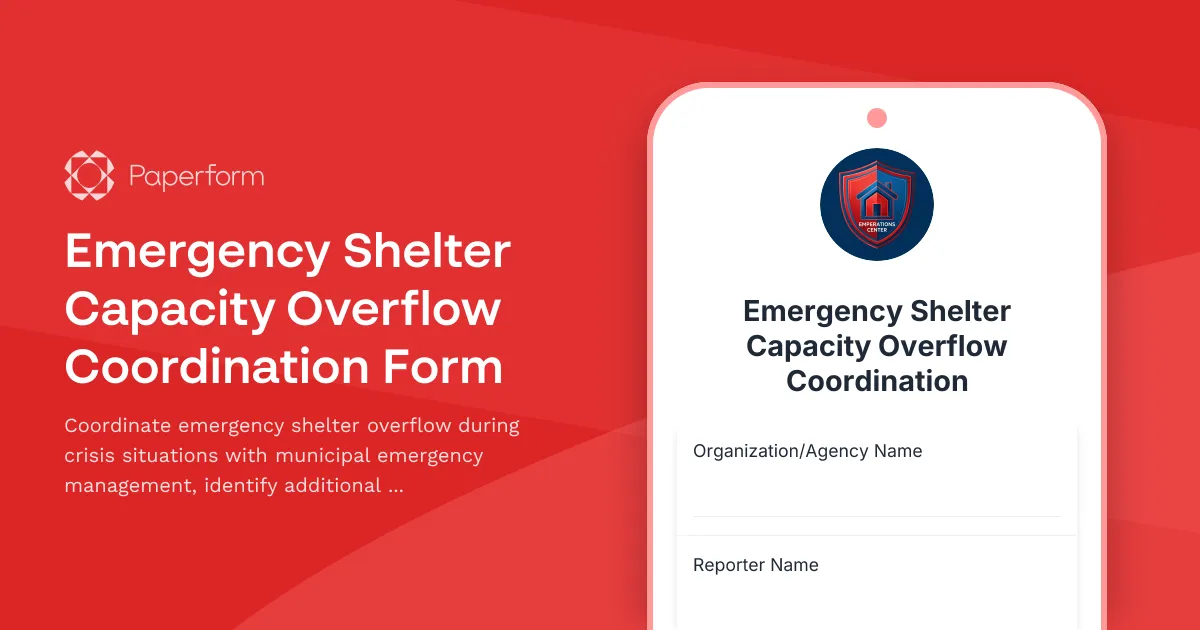
Emergency Shelter Capacity Overflow Coordination Form
When disaster strikes and primary shelters reach capacity, coordinating overflow facilities becomes a critical emergency management priority. This Emergency Shelter Capacity Overflow Coordination Form provides municipal emergency management teams, nonprofit organizations, and community partners with a structured system to report capacity issues, identify additional facilities, and ensure vulnerable populations receive priority shelter placement during crisis situations.
Streamline Crisis Response with Digital Coordination
During emergencies—whether natural disasters, extreme weather events, or other critical incidents—traditional paper-based coordination methods create dangerous delays. This Paperform template enables real-time reporting of shelter capacity status, immediate communication between emergency operations centers and shelter managers, and rapid identification of overflow facilities when primary locations reach maximum occupancy.
Emergency management coordinators can quickly assess which shelters are at capacity, what vulnerable populations need immediate placement, and which community facilities are available to serve as overflow locations. The form's conditional logic adapts based on the severity of the situation and the specific needs reported, ensuring the right information reaches the right people without unnecessary steps.
Built for Emergency Management Professionals
This template is specifically designed for:
- Municipal emergency management departments coordinating multi-shelter response operations
- Nonprofit organizations managing shelter facilities during disasters
- Community response teams identifying and activating overflow facilities
- Healthcare and social services prioritizing vulnerable population placement
- Faith-based organizations offering facilities as emergency overflow shelters
- School districts and community centers providing space during crisis events
The form captures essential data including current shelter capacity utilization, vulnerable population demographics, facility resource needs, staffing requirements, and accessibility considerations—all information critical for rapid decision-making during high-stress emergency situations.
Prioritize Vulnerable Populations
A key feature of this template is its focus on vulnerable population identification and prioritization. The form includes dedicated sections for reporting individuals with special medical needs, mobility limitations, language barriers, families with infants and young children, elderly residents, and those with service animals or medical equipment. This ensures emergency coordinators can make informed decisions about shelter placement based on the specific capabilities and resources of each overflow facility.
Automate Emergency Workflows with Stepper
Once a shelter capacity overflow report is submitted, time-sensitive coordination must happen immediately. By connecting this form to Stepper (stepper.io), you can build automated workflows that trigger instant notifications to emergency operations center staff, alert facility managers of potential overflow activations, update capacity tracking dashboards, and route specific population needs to shelters with appropriate resources.
Stepper can automatically send different alerts based on capacity thresholds—perhaps a warning notification at 85% capacity and an urgent overflow request at 95%—ensuring your team has advance notice to prepare overflow facilities before reaching critical capacity. These AI-native workflows eliminate manual handoffs and ensure no vulnerable individual falls through the cracks during a crisis response.
Collect Essential Facility and Resource Information
The template includes comprehensive fields for identifying potential overflow facilities, including location details, maximum capacity, available amenities (kitchen facilities, shower access, ADA compliance, backup power), current staffing levels, and security considerations. This information helps emergency managers quickly evaluate which facilities are suitable for different population needs and can be activated most rapidly.
The form also captures real-time resource needs—cots, blankets, medical supplies, food service equipment, and staffing support—allowing procurement and logistics teams to dispatch necessary resources to overflow locations without delay.
Professional, Accessible Design for High-Stress Situations
During emergencies, form respondents are often working under extreme stress and time pressure. This template uses clear, straightforward language, logical section organization, and a clean visual design that works seamlessly on mobile devices, tablets, and desktop computers. Shelter managers can submit capacity reports from the field, facility coordinators can volunteer overflow space from any location, and emergency management staff can review submissions from the emergency operations center or remotely.
Paperform's responsive design ensures the form displays perfectly regardless of how it's accessed, while the ability to customize fonts, colors, and branding means you can align the template with your municipality's emergency management visual standards or integrate it seamlessly into your crisis response website.
Secure, Compliant Emergency Data Management
Emergency shelter coordination involves sensitive information about vulnerable populations and critical infrastructure. Paperform is SOC 2 Type II certified and GDPR compliant, providing enterprise-grade security for your crisis response data. You can set up role-based access controls so only authorized emergency management personnel can view submissions, integrate with secure communication platforms, and maintain detailed audit trails of all capacity reports and overflow activations.
Integrate with Your Emergency Management Stack
Paperform connects seamlessly with the tools emergency management teams rely on during crisis response. Send shelter capacity reports directly to your emergency operations center dashboard, log overflow facility activations in incident management systems, update Google Sheets or Airtable capacity tracking spreadsheets in real-time, and trigger Slack or Microsoft Teams notifications to relevant response personnel.
Native integrations with platforms like Zapier and Make, plus Paperform's robust webhook capabilities, mean you can connect this form to virtually any emergency management software your municipality uses—ensuring shelter capacity data flows automatically into your broader crisis response ecosystem.
Get Started in Minutes
This template is ready to deploy immediately or can be customized to match your municipality's specific emergency management protocols, shelter network structure, and vulnerable population definitions. Add your emergency operations center contact information, customize capacity threshold levels, adjust facility requirement fields to match your community's resources, and you're ready to coordinate overflow shelter placement during the next emergency event.
Whether you're managing emergency shelters for a small community or coordinating multi-jurisdictional crisis response across a metropolitan area, this Emergency Shelter Capacity Overflow Coordination Form provides the digital infrastructure to ensure every vulnerable individual has safe shelter when disaster strikes.
Trusted by emergency management agencies worldwide, Paperform delivers the reliability, accessibility, and real-time coordination capabilities that crisis response demands—all without requiring technical expertise or custom development.

More templates like this
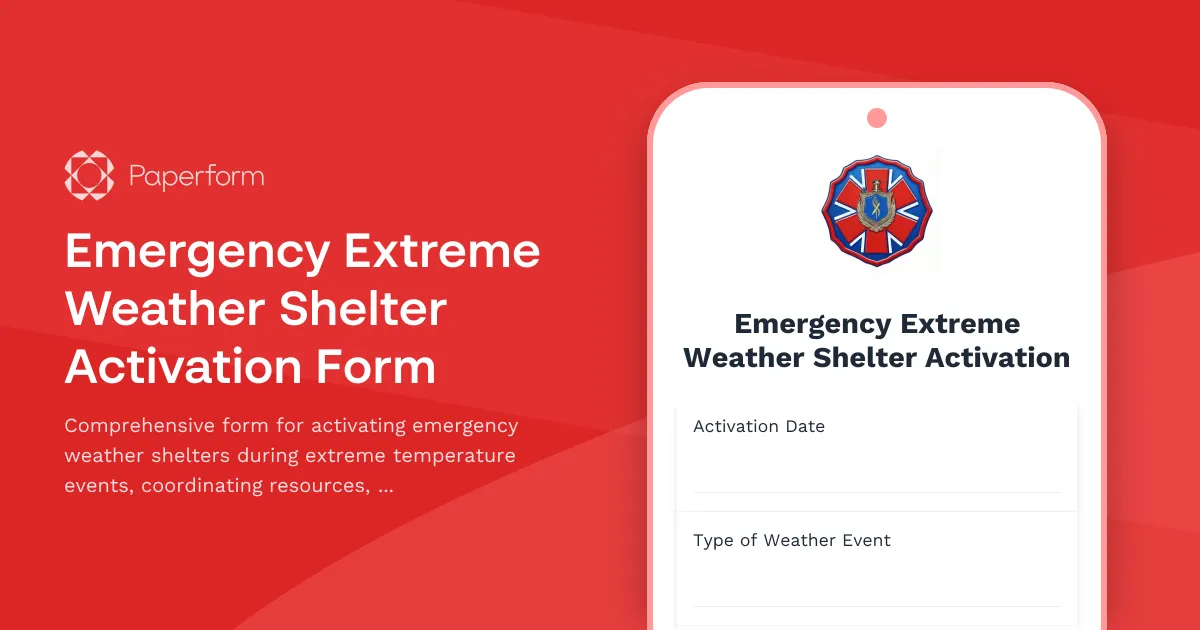
Emergency Extreme Weather Shelter Activation Form
Comprehensive form for activating emergency weather shelters during extreme temperature events, coordinating resources, tracking capacity, and ensuring vulnerable populations receive critical protection.
Homeless Shelter Infectious Disease Outbreak Report
A critical incident reporting form for homeless shelters to report infectious disease outbreaks to health departments, coordinate isolation protocols, and protect vulnerable populations.
Tribal Elder Missing Person Report
A culturally-sensitive form for reporting missing tribal elders, documenting traditional medicine needs, notifying tribal council, and mobilizing community search efforts.
Community Resilience Hub Emergency Preparedness Program Application
Register your household for emergency preparedness support, request critical resources, and volunteer to help neighbors during disasters through our community resilience hub program.
Community Violence Intervention Worker Wellness Check
A comprehensive wellness check form for community violence intervention workers, designed to assess mental health, safety concerns, and vicarious trauma from street outreach and crisis mediation work.
CPS Worker Wellness Check & Secondary Trauma Screening
A comprehensive wellness check form for child protective services workers to assess secondary trauma, case complexity stress, court appearance anxiety, and clinical supervision needs.
Disaster Relief Assistance Identity Verification Form
Verify identity and eligibility for disaster relief assistance with secure document upload, damage assessment, and insurance information collection.
Disaster Relief Missing Family Member Report
Report a missing displaced family member during disaster relief operations. Coordinate with FEMA, emergency management, and reunification services to locate loved ones separated during emergencies.
Emergency Housing Application for Wildfire Evacuees
Fast-track housing application for families displaced by wildfires, including emergency placement, pet accommodation, and temporary school enrollment assistance.
Foster Care Missing Youth Report Form
A comprehensive form for reporting missing foster youth and initiating emergency welfare protocols. Captures placement history, school information, biological family contacts, and agency details to support swift recovery efforts.
Homeless Veteran Welfare Check & Outreach Report
A comprehensive form for reporting missing chronically homeless veterans with service-connected disabilities to facilitate coordinated outreach efforts between street medicine teams, VA homeless coordinators, and community support services.
Military Family Wellness Check During Deployment
A comprehensive wellness assessment for military families during deployment, evaluating stress levels, support systems, financial concerns, and connecting families with base resources and support services.