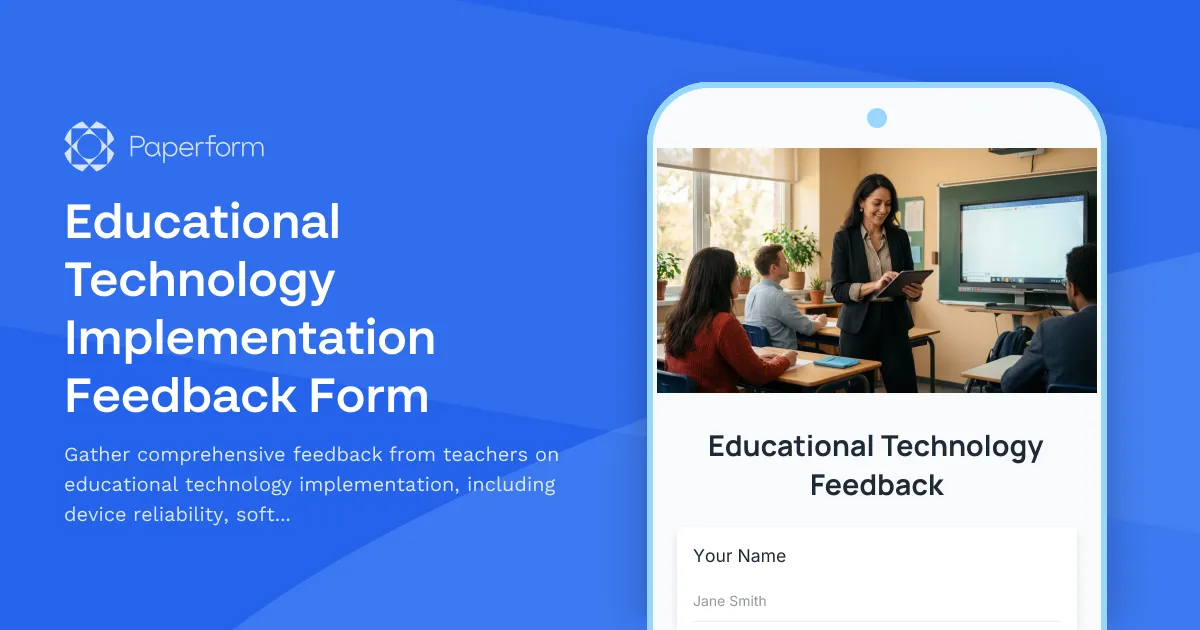
Streamline EdTech Feedback with Paperform
Rolling out new educational technology is a significant investment—but without proper feedback from teachers, it's impossible to know if your EdTech tools are truly supporting classroom learning or creating friction. This Educational Technology Implementation Feedback Form helps schools, districts, and educational administrators gather honest, actionable insights from teachers about device performance, software usability, technical support responsiveness, and training adequacy.
Built for education leaders who need real insights
Whether you're an IT director, curriculum coordinator, principal, or EdTech specialist, understanding how technology is performing in the classroom is critical. This template captures detailed feedback across the full technology experience—from hardware reliability and software ease-of-use to the quality of support tickets and professional development sessions. Use it after major rollouts, at the end of each term, or as part of ongoing improvement cycles.
Why Paperform for education surveys
Paperform makes it easy to create professional, on-brand surveys that teachers actually want to complete. The doc-style editor lets you add context, instructions, and even images or video tutorials inline, while conditional logic ensures teachers only answer questions relevant to the tools they use. Responses flow automatically into Google Sheets, Airtable, or your school's project management system, and AI Insights can summarise hundreds of responses into clear themes and recommendations—perfect for board reports or improvement plans.
For multi-school districts or education agencies managing feedback across campuses, Stepper can route responses to the right IT team, trigger follow-up workflows for urgent issues, and keep everyone aligned without manual data entry.
Trusted by educators and administrators worldwide, Paperform helps you turn feedback into meaningful improvements that support teachers and students alike.
More templates like this
Virtual Classroom Technology Feedback Form
Gather comprehensive feedback from teachers on virtual classroom platforms, technical support quality, student engagement features, and professional development needs to improve online teaching experiences.
After-School Program Evaluation Form
Gather comprehensive feedback on activity quality, staff interactions, safety measures, and parent communication to continuously improve your after-school program experience.
Classroom Seating & Learning Environment Survey
Evaluate classroom comfort, lighting, temperature, noise levels, and accessibility features to improve student learning environments and ensure optimal conditions for academic success.
Classroom Technology Integration Survey
A comprehensive survey to evaluate how students experience technology in the classroom, including interactive tools, digital platforms, online resources, and tech support effectiveness.
College Academic Probation Support Program Feedback Survey
A comprehensive feedback survey designed to evaluate academic probation support programs, including advisor effectiveness, study skills resources, mental health support, and student success outcomes.
College Accelerated Degree Program Student Survey
Gather comprehensive feedback from students enrolled in accelerated degree programs about course intensity, support services, time management, academic quality, and overall satisfaction with their experience.
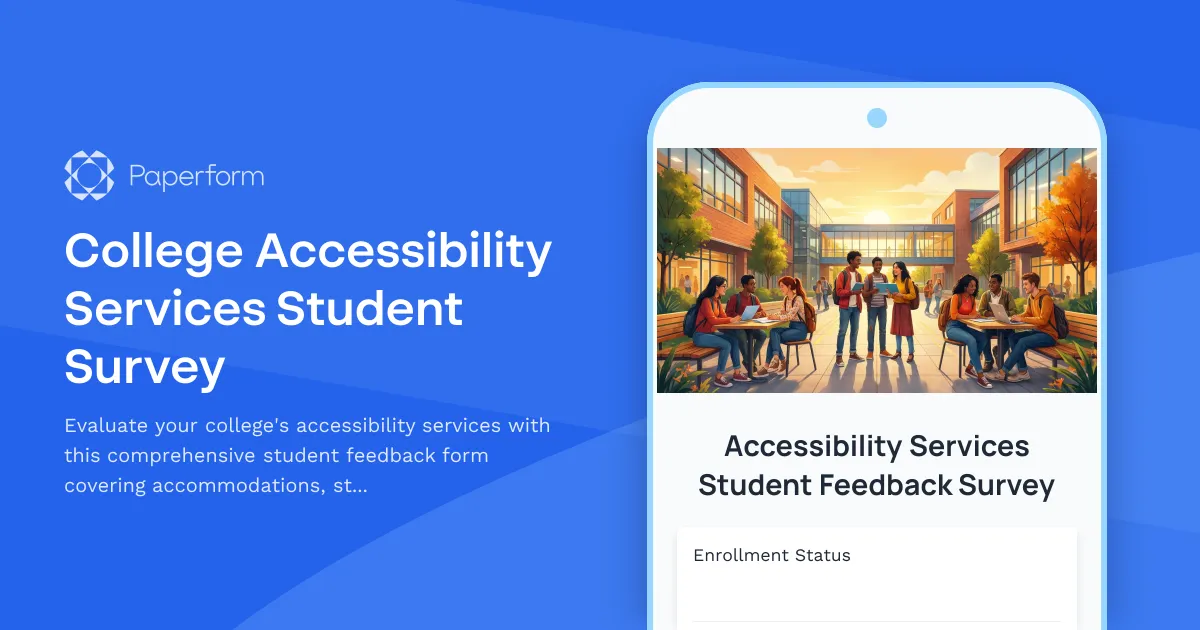
College Accessibility Services Student Survey
Evaluate your college's accessibility services with this comprehensive student feedback form covering accommodations, staff support, assistive technology, testing arrangements, and advocacy effectiveness.
College Career Services Satisfaction Survey
Evaluate your career services experience including resume assistance, interview prep, job fairs, employer connections, and alumni networking to help improve student outcomes.
College Course Evaluation Form
A comprehensive course evaluation form for students to provide feedback on professors, course content, workload, and overall learning experience.
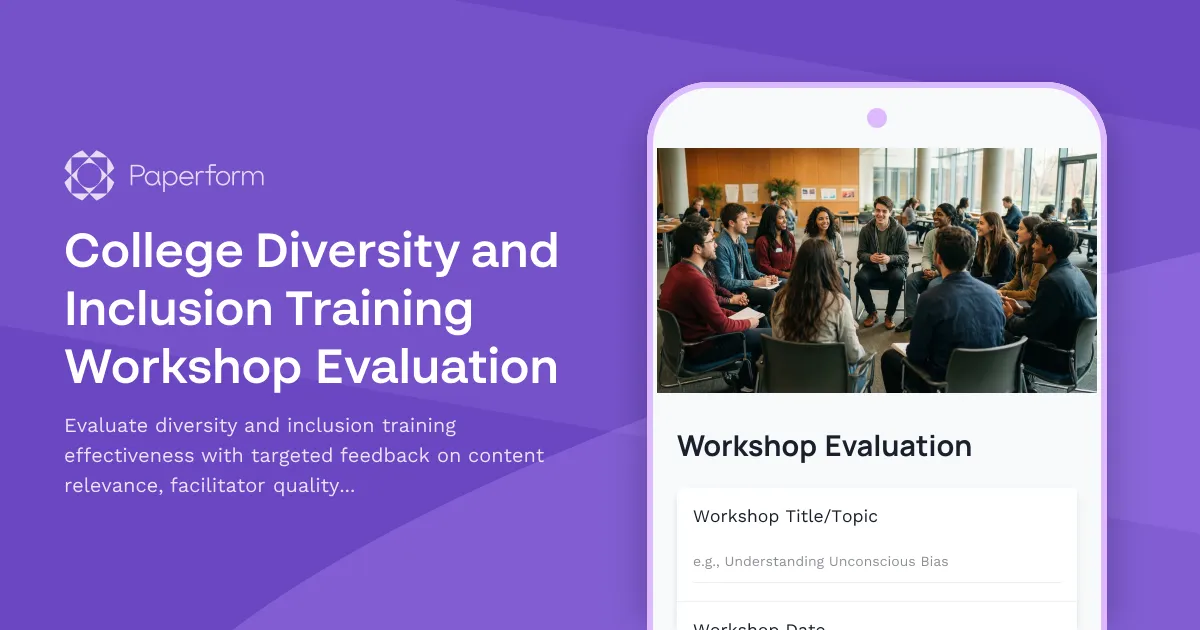
College Diversity and Inclusion Training Workshop Evaluation
Evaluate diversity and inclusion training effectiveness with targeted feedback on content relevance, facilitator quality, dialogue engagement, and campus climate commitment tracking.
College Entrepreneurship Course Evaluation
A comprehensive evaluation form for entrepreneurship course participants to assess course effectiveness, business development skills, pitch presentation capabilities, mentor engagement, and venture launch readiness.

College Peer Review Writing Workshop Evaluation
Evaluate peer review writing workshops with this comprehensive feedback form. Assess feedback quality, revision improvements, critical reading skills, collaborative learning value, and writing confidence development.