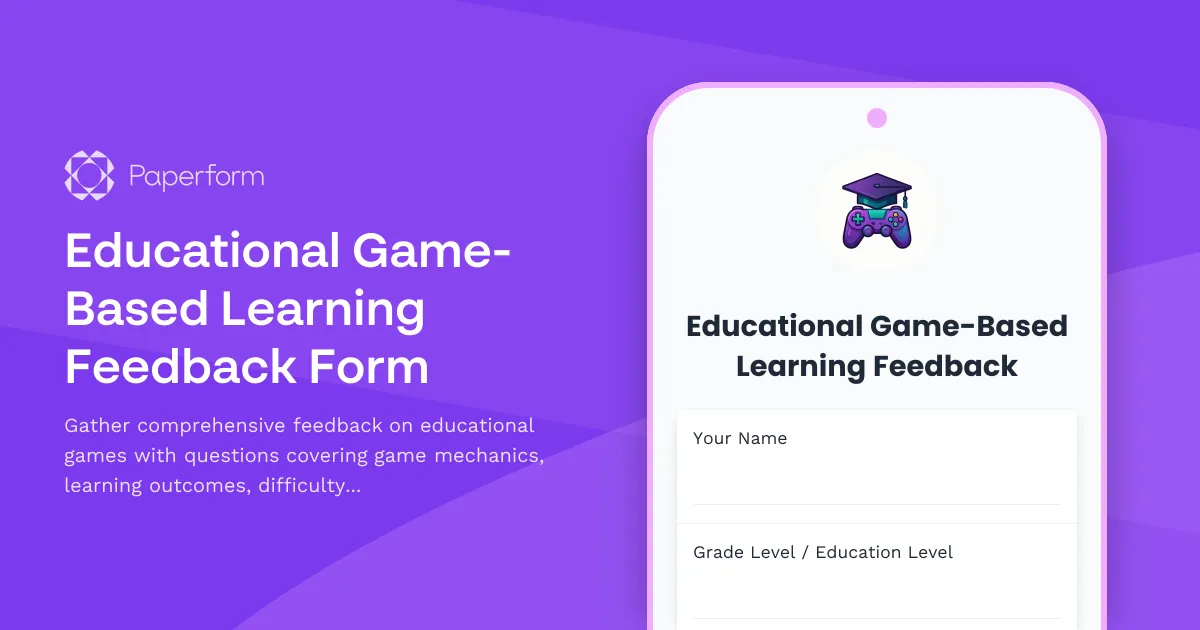
Educational Game-Based Learning Feedback Form
Game-based learning has transformed education by making learning interactive, engaging, and measurable. Whether you're an educator implementing gamified lessons, an instructional designer developing educational games, or an edtech company refining learning products, understanding how students experience and learn from educational games is essential.
This Educational Game-Based Learning Feedback Form helps educators and learning experience designers collect detailed student feedback on educational games, covering game mechanics engagement, learning objective alignment, difficulty progression, feedback systems, and knowledge retention.
Why use this template?
This form is designed specifically for K-12 schools, universities, tutoring centers, edtech companies, and training providers who use game-based learning approaches. It helps you:
- Measure engagement: Understand which game mechanics keep students motivated and which need refinement
- Assess learning outcomes: Determine whether the game successfully reinforces learning objectives
- Optimize difficulty curves: Identify whether progression feels appropriate or if students feel frustrated or bored
- Improve feedback systems: Learn whether in-game feedback helps or hinders the learning process
- Track knowledge retention: Gauge how well students retain information after playing
The form uses a mix of rating scales, multiple choice questions, and open-ended feedback to give you both quantitative metrics and qualitative insights. This balanced approach helps you identify patterns across large student groups while capturing unique perspectives that can spark innovation.
How Paperform makes educational feedback better
With Paperform, you can customize this template to match your institution's branding, embed it directly into your learning management system, or share it via link after game sessions. Conditional logic can adapt questions based on student responses, ensuring you gather the most relevant feedback without overwhelming participants.
Use Stepper to automatically route feedback to the right teams—send engagement concerns to game designers, learning objective misalignment to curriculum developers, and technical issues to your IT team. You can also set up automated summary reports that compile feedback trends weekly or monthly, helping you iterate faster on educational game design.
For educational institutions managing multiple courses or game-based learning modules, this template scales beautifully—duplicate it for different subjects, grade levels, or learning games, and track feedback centrally to inform your broader game-based learning strategy.
Whether you're piloting a new educational game, refining an existing one, or researching the effectiveness of gamification in education, this form gives you the structured feedback you need to create better learning experiences that truly resonate with students.
More templates like this
Peer Tutoring Program Evaluation Form
Comprehensive evaluation form for peer tutoring programs that measures tutor quality, scheduling flexibility, subject coverage, and academic improvement to enhance student learning outcomes.
Classroom Technology Integration Survey
A comprehensive survey to evaluate how students experience technology in the classroom, including interactive tools, digital platforms, online resources, and tech support effectiveness.
College Academic Probation Support Program Feedback Survey
A comprehensive feedback survey designed to evaluate academic probation support programs, including advisor effectiveness, study skills resources, mental health support, and student success outcomes.
College Accelerated Degree Program Student Survey
Gather comprehensive feedback from students enrolled in accelerated degree programs about course intensity, support services, time management, academic quality, and overall satisfaction with their experience.
College Accessibility Services Student Survey
Evaluate your college's accessibility services with this comprehensive student feedback form covering accommodations, staff support, assistive technology, testing arrangements, and advocacy effectiveness.
College Career Services Satisfaction Survey
Evaluate your career services experience including resume assistance, interview prep, job fairs, employer connections, and alumni networking to help improve student outcomes.
College Entrepreneurship Course Evaluation
A comprehensive evaluation form for entrepreneurship course participants to assess course effectiveness, business development skills, pitch presentation capabilities, mentor engagement, and venture launch readiness.

College Peer Review Writing Workshop Evaluation
Evaluate peer review writing workshops with this comprehensive feedback form. Assess feedback quality, revision improvements, critical reading skills, collaborative learning value, and writing confidence development.
Design Thinking Classroom Project Feedback Form
Evaluate student development in design thinking skills including empathy, ideation, prototyping, user feedback integration, and problem-solving confidence through comprehensive project assessment.
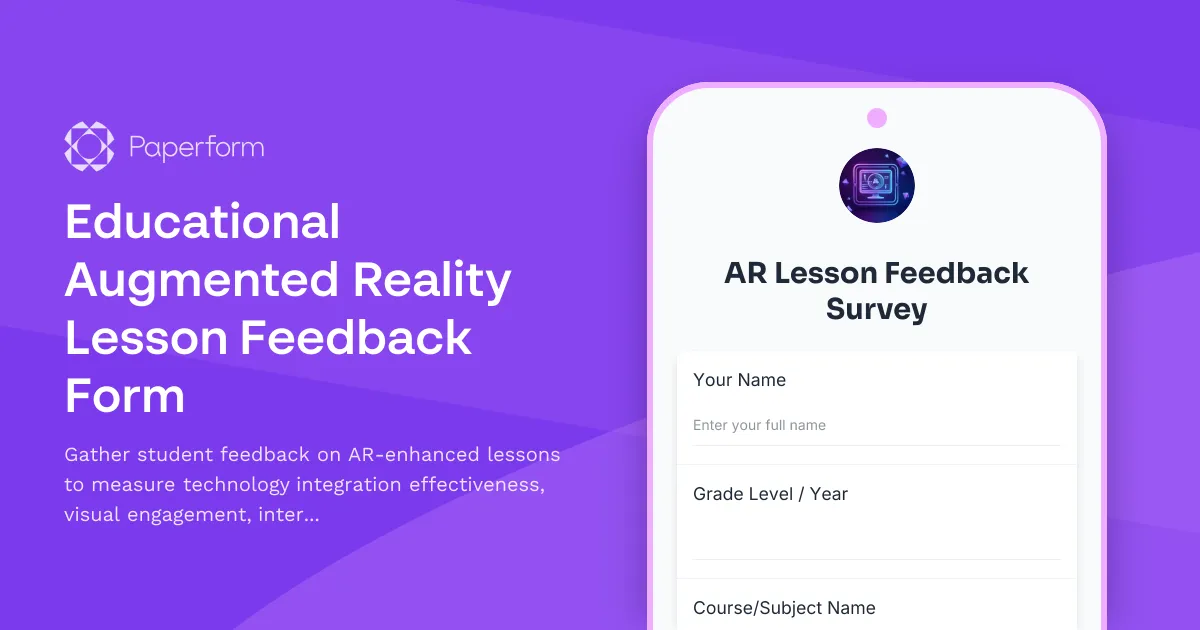
Educational Augmented Reality Lesson Feedback Form
Gather student feedback on AR-enhanced lessons to measure technology integration effectiveness, visual engagement, interactivity, technical challenges, and learning outcomes.
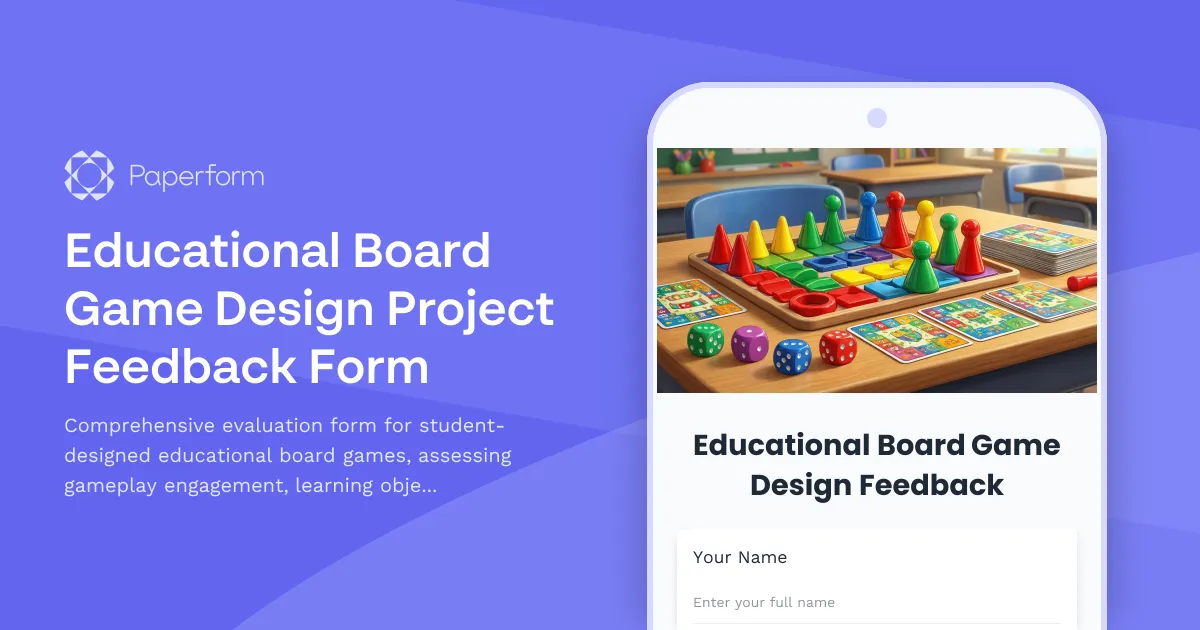
Educational Board Game Design Project Feedback Form
Comprehensive evaluation form for student-designed educational board games, assessing gameplay engagement, learning objectives, rule clarity, creativity, and peer teaching effectiveness.
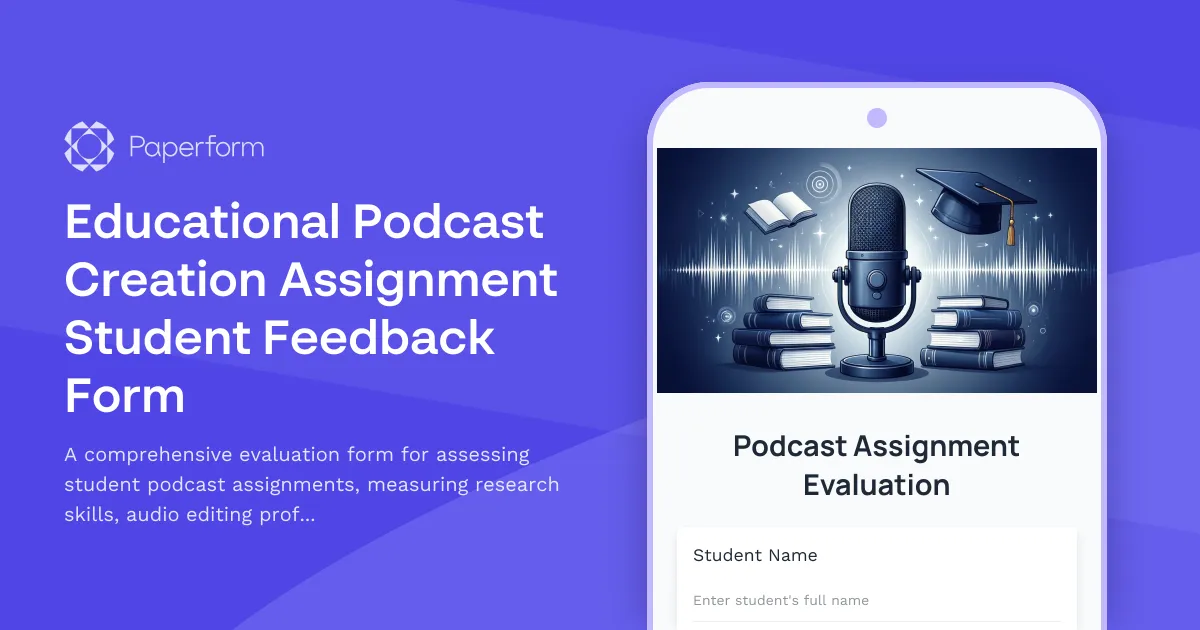
Educational Podcast Creation Assignment Student Feedback Form
A comprehensive evaluation form for assessing student podcast assignments, measuring research skills, audio editing proficiency, storytelling ability, audience awareness, and subject expertise demonstration.