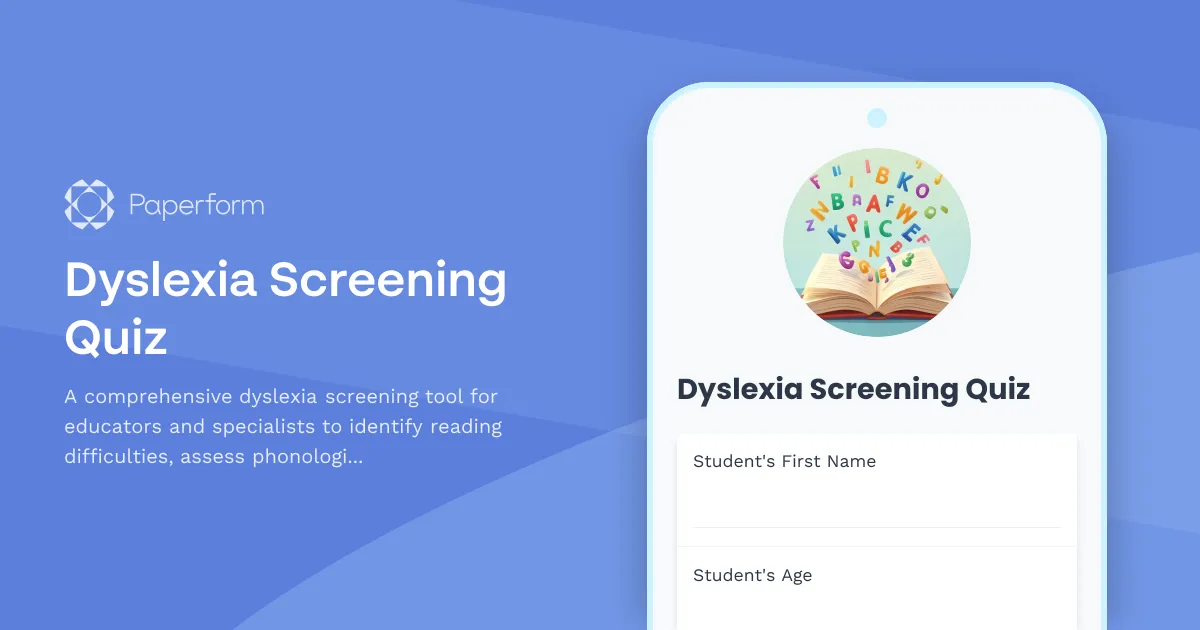
Identify Reading Challenges Early with a Dyslexia Screening Quiz
Early identification of dyslexia can transform a student's educational journey. This Dyslexia Screening Quiz template gives teachers, educational psychologists, school counselors, and literacy specialists a structured way to assess reading difficulty patterns, phonological awareness, and other key indicators that may suggest dyslexia or related learning differences.
Why Use Paperform for Dyslexia Screening?
Traditional paper-based screening forms can be time-consuming to score and analyze. With Paperform, you can:
- Guide respondents through tailored questions using conditional logic that adapts based on age group, grade level, and specific concerns
- Score responses automatically with built-in calculations that flag risk areas and generate preliminary recommendations
- Maintain secure, organized records of all screenings with GDPR and SOC 2 Type II compliance
- Generate instant referral recommendations based on screening results, helping families access appropriate support faster
What This Template Includes
This screening quiz covers essential dyslexia indicators across multiple domains:
- Background information including age, grade level, and primary concerns
- Reading difficulty patterns such as letter/word reversals, difficulty decoding unfamiliar words, and reading fluency challenges
- Phonological awareness assessment covering rhyming, sound blending, and phoneme manipulation
- Written expression and spelling indicators
- Memory and processing observations
- Family history of reading or language difficulties
- Automated scoring and referral recommendations based on the number and severity of indicators
The form uses conditional logic to show age-appropriate questions and provides clear next steps, whether that's classroom accommodations, further observation, or formal diagnostic testing referral.
Streamline Your Process with Automation
Connect this screening tool to your broader workflow using Stepper, Paperform's AI-native workflow builder. You can automatically:
- Send screening results to your student information system or CRM
- Notify school psychologists or reading specialists when high-risk screenings are submitted
- Schedule follow-up meetings with parents automatically
- Create intervention tracking records in Airtable or Google Sheets
For schools and practices that need formal documentation, pair this form with Papersign to gather parent consent for further assessment or intervention services—keeping everything connected and compliant.
Built for Educational Professionals
Whether you're a classroom teacher conducting universal screening, a special education coordinator managing RTI processes, or a private practice educational psychologist offering initial consultations, this template adapts to your needs. The friendly, accessible language helps parents and guardians complete the form confidently, while the structured format gives you the diagnostic clarity you need.
Paperform's doc-style editor makes it simple to customize questions, adjust scoring thresholds, add your school or practice branding, and embed the form directly into your website. Over 500,000 teams trust Paperform for forms that work as hard as they do.
More templates like this
Learning Disability Screening Quiz
A comprehensive screening tool for educational psychologists to assess potential learning disabilities through academic performance indicators, behavioral observations, and cognitive patterns.
Functional Behavioral Assessment Parent Questionnaire
A comprehensive parent questionnaire for functional behavioral assessments (FBA) that helps educators understand student behavior patterns, environmental triggers, reinforcement factors, and communication methods to develop effective behavioral intervention plans.
K-2 Reading Disability Early Intervention Screening Form
Comprehensive early screening tool for K-2 students to identify reading disabilities through phonemic awareness, rapid naming, and letter knowledge assessments with tiered support recommendations.
Learning Disability Assessment Form
A comprehensive pre-assessment form for identifying learning difficulties, academic challenges, processing speed concerns, and accommodation needs for students and individuals seeking evaluation.
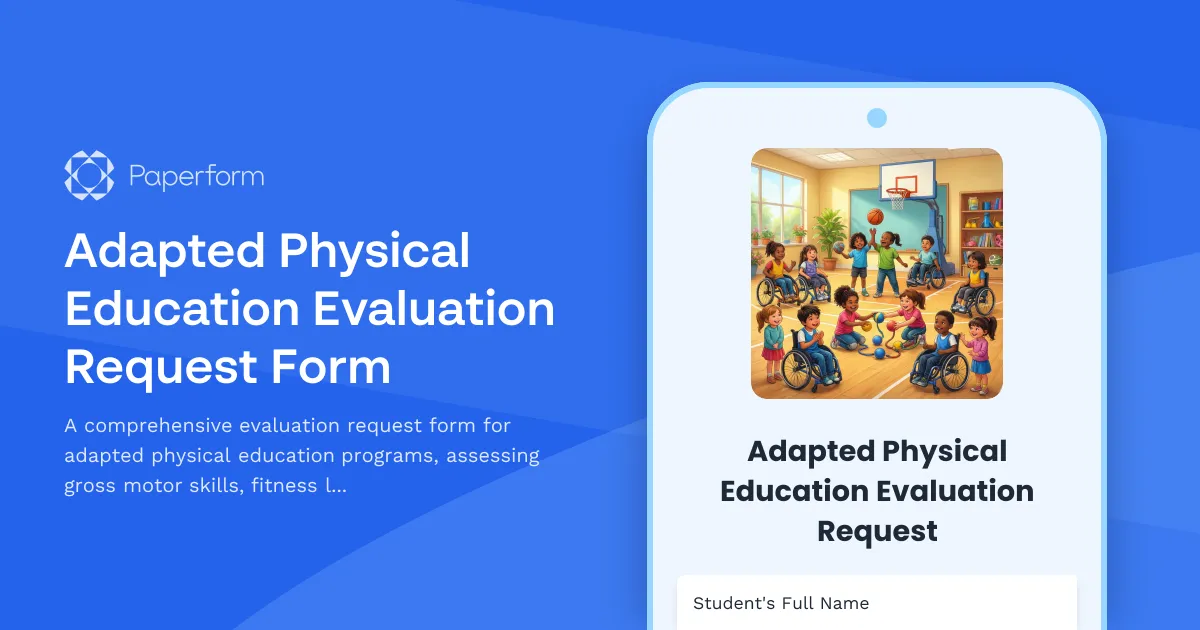
Adapted Physical Education Evaluation Request Form
A comprehensive evaluation request form for adapted physical education programs, assessing gross motor skills, fitness levels, adaptive equipment needs, and inclusive sports participation opportunities for students with diverse abilities.
Assistive Technology Evaluation Request Form
Request an assistive technology evaluation for students with learning barriers. Assess current technology use, identify needs, and connect with AT specialists for personalized support.
Autism Spectrum Disorder Diagnostic Observation Consent Form
A comprehensive consent and information form for ASD diagnostic observation including ADOS-2 assessment, parent interview, school observation, and multidisciplinary team evaluation.
Autism Spectrum Support Services Intake Form
A comprehensive intake form for autism spectrum support services that captures sensory profiles, communication preferences, social skills assessments, and behavior patterns to create personalized support plans.
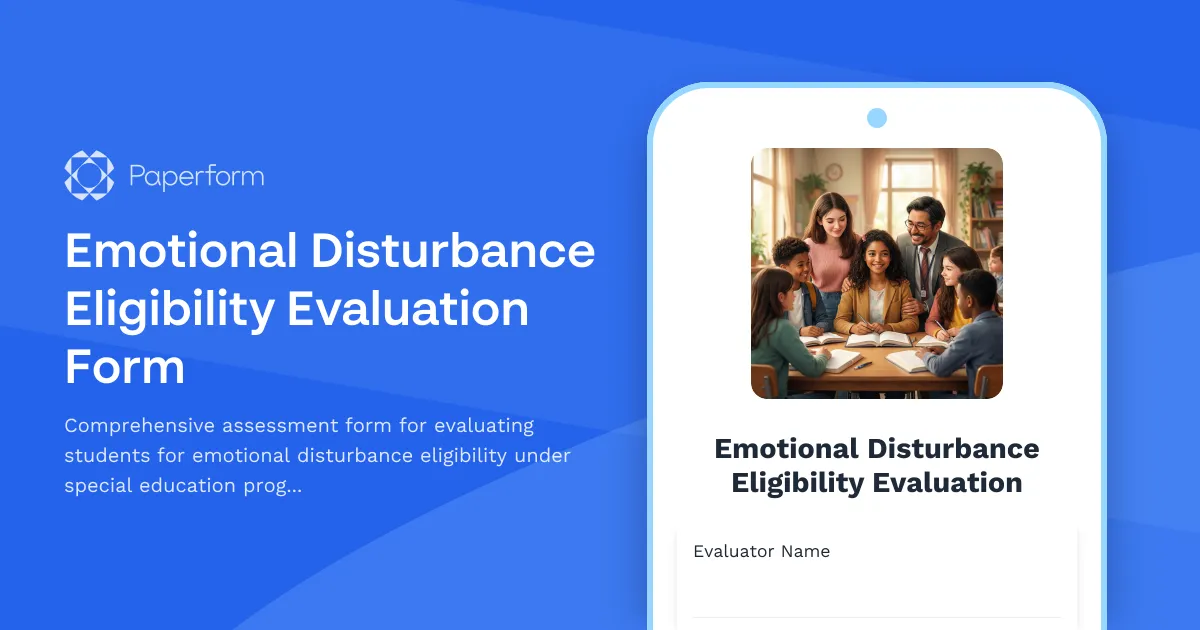
Emotional Disturbance Eligibility Evaluation Form
Comprehensive assessment form for evaluating students for emotional disturbance eligibility under special education programs, documenting behavioral incidents, mental health diagnoses, educational impact, and therapeutic recommendations.
Extended School Year (ESY) Services Eligibility Form
A comprehensive eligibility assessment form for determining student qualification for Extended School Year services, including regression/recoupment analysis, IEP goals tracking, and summer program recommendations.

Food Allergy Awareness Petition for School Policies
A petition form designed to advocate for improved food allergy policies in schools, including allergen awareness, EpiPen training, and enhanced health services support.
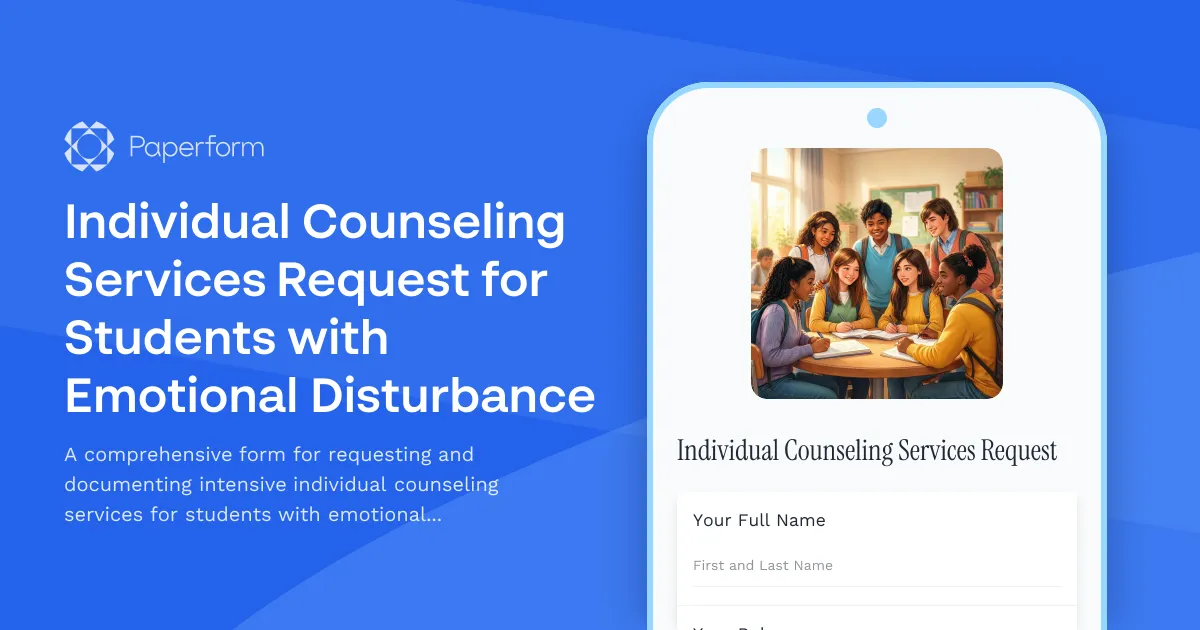
Individual Counseling Services Request for Students with Emotional Disturbance
A comprehensive form for requesting and documenting intensive individual counseling services for students with emotional disturbance, including treatment planning, evidence-based interventions, crisis prevention strategies, and outcome measurement.