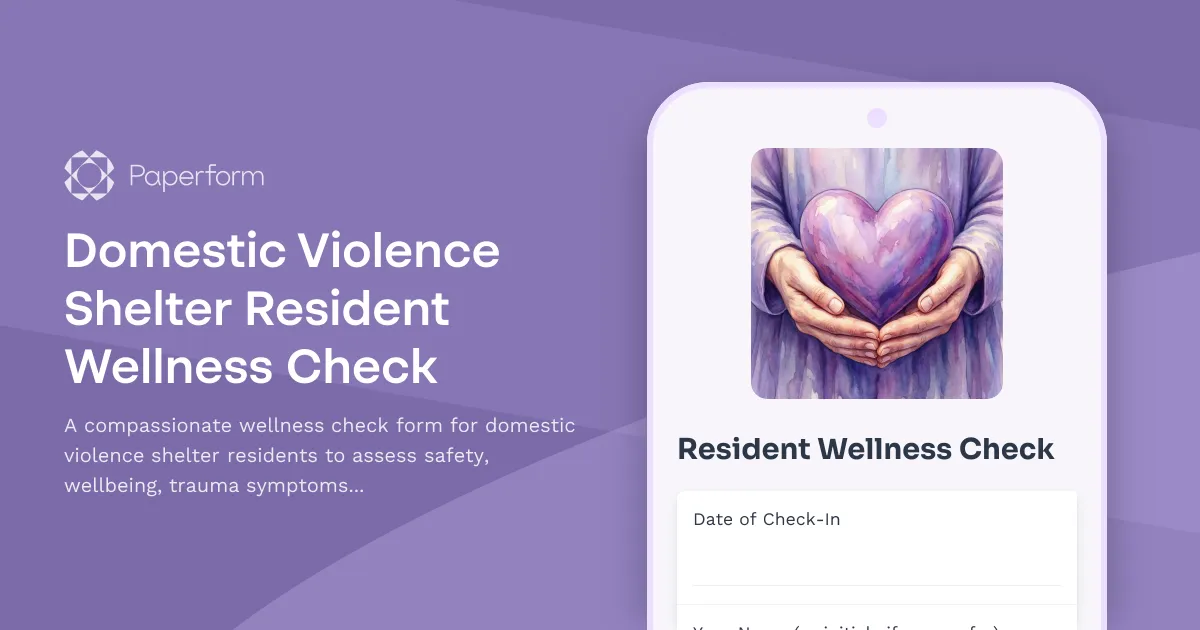
Support Your Residents with Compassionate Wellness Checks
When supporting survivors of domestic violence, regular wellness checks are essential for ensuring safety, tracking progress, and connecting residents to the services they need. Our Domestic Violence Shelter Resident Wellness Check template provides a trauma-informed, dignified approach to checking in with residents while respecting their privacy and autonomy.
Why This Template Works for Domestic Violence Shelters
Domestic violence shelters, crisis centers, and transitional housing programs need a sensitive yet comprehensive way to assess resident wellbeing without re-traumatizing survivors. This template balances thorough assessment with compassionate delivery, allowing staff to:
- Monitor safety through discreet check-ins about current threats and concerns
- Assess trauma symptoms to identify residents who may need additional mental health support
- Check on children's wellbeing to ensure young survivors are adjusting and receiving appropriate care
- Identify service gaps in legal aid, counseling, housing, employment, and other critical needs
- Document progress while maintaining confidentiality and resident dignity
The form uses trauma-informed language, optional fields for sensitive topics, and conditional logic to reveal relevant follow-up questions only when needed.
Who Benefits from This Wellness Check Form
Domestic Violence Shelters & Crisis Centers can standardize their resident check-in process while maintaining flexibility for individual circumstances. Regular wellness checks help case managers identify emerging needs before they become crises.
Social Workers & Case Managers gain a structured framework for wellness conversations that covers all essential domains—from immediate safety to long-term recovery goals—without feeling like an interrogation.
Transitional Housing Programs can track resident progress over time, demonstrating program effectiveness to funders while ensuring each survivor receives personalized support.
Nonprofit Organizations serving survivors of intimate partner violence, human trafficking, or family violence can adapt this template to their specific program model and reporting requirements.
Key Features That Make a Difference
This wellness check template includes sections for:
- Current safety assessment with discrete questions about contact with abusers and immediate threats
- Physical and mental health screening including trauma symptoms like sleep disturbances, anxiety, flashbacks, and depression
- Children's wellbeing for residents with dependents, covering behavioral changes, school adjustment, and therapeutic needs
- Legal support needs including protective orders, custody matters, immigration concerns, and court advocacy
- Essential services connection spanning counseling, support groups, employment assistance, housing search, and financial literacy
- Immediate concerns with space for residents to share what's most pressing right now
The form's tone is warm and supportive throughout, reminding residents that their responses help staff provide better support—and that they can skip any questions that feel uncomfortable.
Enhance Your Shelter Operations with Paperform + Stepper
This wellness check form is just the beginning. With Paperform's conditional logic, you can route urgent safety concerns to immediate staff notification, while routine check-ins flow into your case management system seamlessly.
Connect your form to Stepper to automate follow-up workflows when residents indicate specific needs:
- Automatically assign counseling intake appointments when residents express interest in therapy
- Create tasks for case managers when legal support needs are flagged
- Send referral information to partner organizations for employment, housing, or childcare services
- Generate progress reports for grant reporting while maintaining resident confidentiality
Paperform's integration with tools like Google Sheets, Airtable, Slack, and your CRM means every wellness check can trigger the right next steps without manual data entry.
Privacy, Security, and Trauma-Informed Design
Survivors of domestic violence deserve technology that protects their safety and privacy. Paperform is SOC 2 Type II certified and GDPR compliant, ensuring that sensitive wellness check data is encrypted and secure. You can set custom data retention policies, restrict access by staff role, and never worry about resident information falling into the wrong hands.
The form itself is designed with trauma-informed principles:
- Choice and control: Residents can skip questions and share only what feels safe
- Non-judgmental language: Questions are framed to support rather than scrutinize
- Strengths-based approach: The form acknowledges resident resilience and progress
- Confidentiality reminders: Clear messaging about how information will be used
Adapt This Template to Your Program
Every domestic violence shelter has unique protocols and philosophies. With Paperform's flexible document-style editor, you can easily modify this template to match your program model:
- Add questions about specific services your shelter offers
- Include intake date and planned departure date to track length of stay
- Customize the children's section based on age ranges you serve
- Add fields for medication management, medical appointments, or other health needs
- Include questions about financial literacy workshops, job readiness, or educational goals
The form can be completed on tablets during face-to-face check-ins, sent via secure link for residents to complete privately, or embedded in your shelter's resident portal.
Supporting the Whole Person, Not Just the Crisis
Effective wellness checks go beyond asking "Are you safe today?" They recognize that survivors are rebuilding entire lives—securing housing, finding employment, healing from trauma, parenting through crisis, and navigating complex legal systems.
This template creates space for the full scope of survivor needs, helping your team spot patterns, celebrate progress, and intervene early when residents struggle. The result is more responsive, resident-centered services that truly support healing and independence.
Built for the Nonprofits That Do This Essential Work
Paperform is trusted by over 500,000 teams worldwide, including nonprofits, social services agencies, healthcare providers, and crisis response organizations. Our platform combines professional-grade features with pricing that respects nonprofit budgets—generous free plans and discounted rates for qualifying organizations.
Whether you're a small grassroots shelter or a multi-site crisis program, Paperform scales with your mission. Create unlimited wellness check forms, collect unlimited responses, and integrate with the tools your team already uses—all while maintaining the security and compliance standards that survivor safety demands.
Start with this template and create a wellness check process that honors survivor dignity, supports staff efficiency, and ultimately helps more people rebuild lives free from violence.



More templates like this
Refugee Trauma Therapist Wellness Check
A comprehensive wellness and support form designed for therapists working with refugee trauma survivors, addressing cultural competence strain, vicarious trauma, and the unique challenges of interpreter-mediated sessions.
Forensic Interviewer Trainer Wellness Check Form
A comprehensive wellness check form designed for forensic interviewer trainers to assess stress levels, workload management, and support needs related to teaching, quality assurance, mock interviews, and field consultations.
International Refugee Missing Person Report with Trauma Support
A sensitive, trauma-informed form for reporting missing refugee individuals with histories of torture or trauma, including interpreter needs and specialized care coordination.
Mass Violence Response Counselor Wellness Check
A comprehensive wellness assessment for crisis counselors and mental health professionals responding to mass violence events, focusing on community trauma healing, media exposure, anniversary stress, and cumulative disaster fatigue.
Perinatal Loss Doula Wellness Check Form
A compassionate wellness check form for perinatal loss doulas providing stillbirth support, NICU vigil care, memory photography, and bereaved family follow-up services.
Adventure Therapy Program Emergency Contact Form
Comprehensive emergency contact and participant information form for adventure therapy programs, capturing outdoor experience, medical clearance, risk assessment, and group dynamics history for challenge-based therapeutic activities.
Community Mental Health Center Client Outcome Survey
A comprehensive mental health outcome survey designed to track symptom reduction, treatment effectiveness, housing stability, employment support, and peer recovery services for community mental health centers.
Community Violence Intervention Worker Wellness Check
A comprehensive wellness check form for community violence intervention workers, designed to assess mental health, safety concerns, and vicarious trauma from street outreach and crisis mediation work.
Corrections Mental Health Diversion Program Referral Form
Refer individuals with mental illness from the criminal justice system to community-based treatment programs as an alternative to incarceration.
CPS Worker Wellness Check & Secondary Trauma Screening
A comprehensive wellness check form for child protective services workers to assess secondary trauma, case complexity stress, court appearance anxiety, and clinical supervision needs.
Crisis Hotline Counselor Wellness Check
A comprehensive wellness assessment for crisis hotline counselors addressing call volume stress, vicarious trauma, boundary maintenance, and supervision needs to support mental health professionals in high-stress roles.
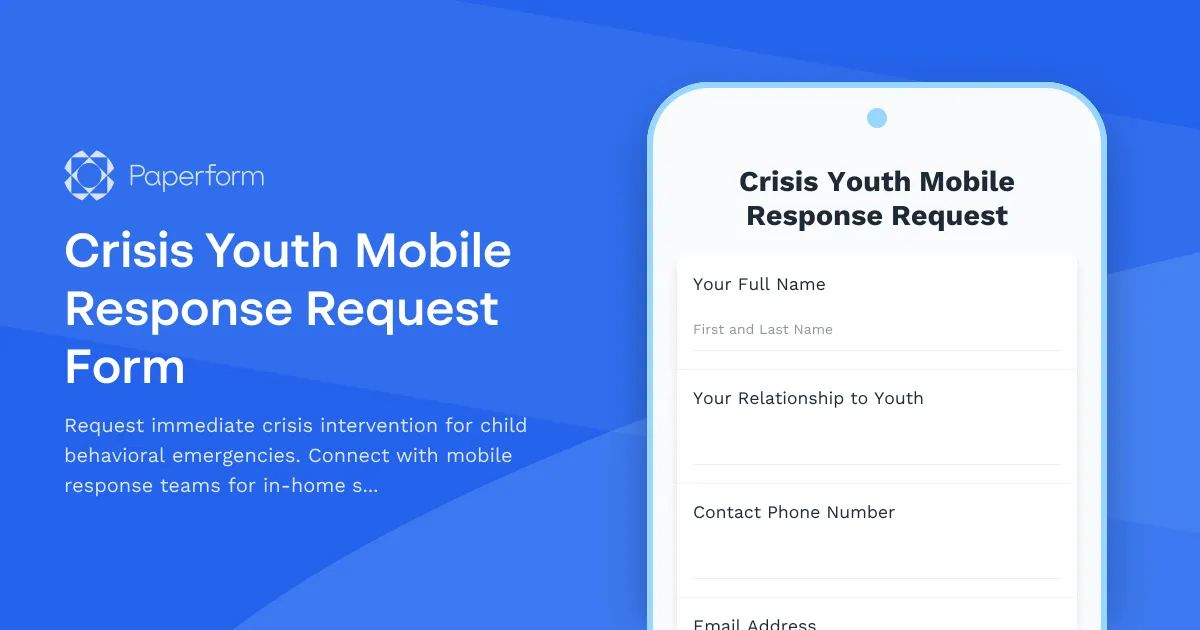
Crisis Youth Mobile Response Request Form
Request immediate crisis intervention for child behavioral emergencies. Connect with mobile response teams for in-home stabilization, safety assessment, and family support services.