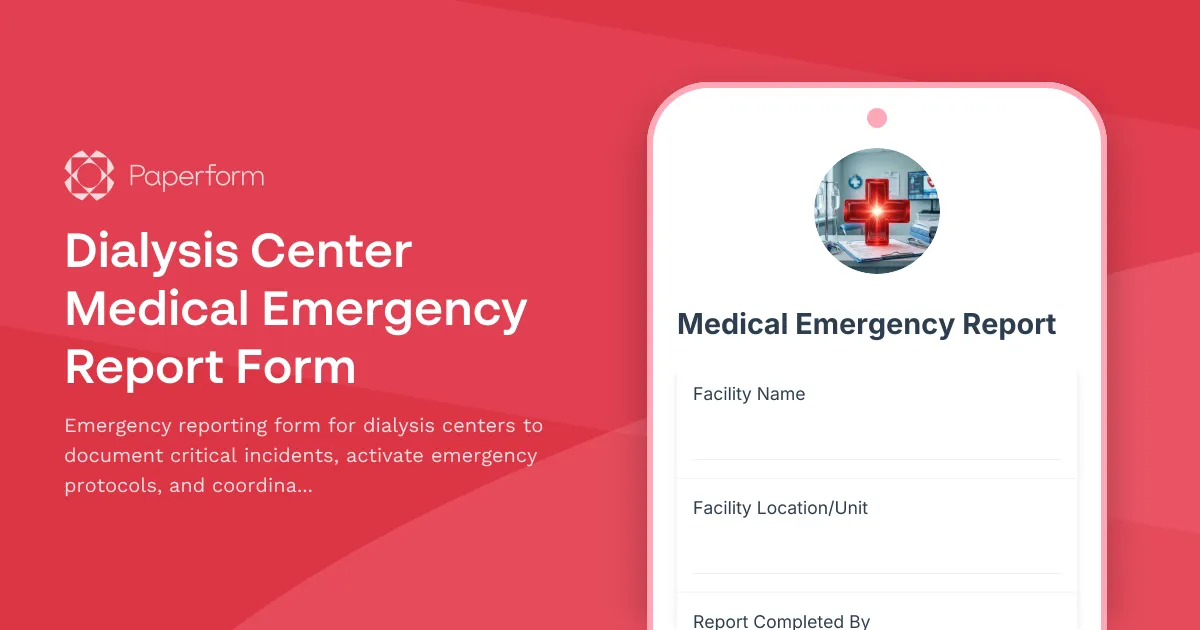
Dialysis Center Medical Emergency Report Form – Professional Crisis Response Template
When a medical emergency occurs during dialysis treatment, every second counts. Healthcare providers need a clear, structured protocol to document the incident, activate emergency services, and coordinate specialist consultation while ensuring patient safety and regulatory compliance.
This Dialysis Center Medical Emergency Report Form is specifically designed for dialysis centers, nephrology clinics, and renal care facilities that need to respond quickly and thoroughly to critical incidents during treatment. Whether you're managing acute hypotension, cardiac events, vascular access complications, or other life-threatening situations, this template provides a comprehensive framework for emergency response and documentation.
Why Dialysis Centers Need Dedicated Emergency Protocols
Dialysis patients face unique medical vulnerabilities during treatment. Rapid fluid shifts, electrolyte imbalances, cardiovascular stress, and access-related complications can escalate quickly from manageable issues to life-threatening emergencies. Having a standardized emergency reporting form ensures that your clinical team follows consistent protocols, documents every critical detail, and maintains the paper trail required for quality assurance and regulatory compliance.
This form template helps dialysis centers:
- Document critical incidents in real-time with structured fields for patient information, vital signs, and emergency interventions
- Activate emergency protocols systematically including treatment termination procedures and EMS coordination
- Facilitate immediate nephrologist consultation with comprehensive clinical data capture
- Maintain regulatory compliance with detailed incident documentation for state health departments and Medicare conditions for coverage
- Improve patient safety outcomes through standardized emergency response procedures
Built for the Realities of Dialysis Emergency Response
Unlike generic incident report forms, this template is tailored to the specific workflows and clinical scenarios dialysis centers face. It captures treatment-specific information including dialysis parameters at the time of emergency, interventions performed, and the decision-making process around treatment termination—details that are critical for both patient care and legal protection.
The form guides your clinical team through:
- Patient and treatment identification including current dialysis prescription and treatment progress
- Emergency type classification with specific categories for dialysis-related complications
- Vital signs and assessment data captured at multiple time points
- Treatment termination protocol with clear documentation of decision rationale
- EMS activation and handoff including information communicated to emergency responders
- Nephrologist consultation details documenting specialist involvement and recommendations
- Interventions and medications administered with precise timing and dosing
- Follow-up actions and patient disposition to close the loop on emergency response
Paperform: The Smart Choice for Healthcare Crisis Reporting
Paperform provides dialysis centers with a professional, HIPAA-aware platform for emergency documentation that works when you need it most. While Paperform itself is not HIPAA compliant and should not be used to collect or store protected health information (PHI) without appropriate safeguards, the platform offers the flexibility and reliability healthcare teams need during critical situations.
With Paperform's doc-style editor, you can customize this template to match your center's specific protocols, add your facility branding, and include center-specific emergency contact information. The form works seamlessly on tablets and mobile devices, meaning nursing staff can complete emergency reports right from the treatment floor without returning to a desktop workstation.
Conditional logic ensures that the form adapts to the type of emergency being reported—different fields appear based on whether the incident involves cardiac symptoms, vascular access issues, or other complications. This keeps forms concise and focused on relevant information during high-stress situations.
Automate Your Emergency Response Workflow with Stepper
Beyond collecting emergency report data, you can use Stepper (stepper.io) to automate the entire crisis response workflow. When a medical emergency form is submitted, Stepper can:
- Immediately notify the medical director and nephrologist on call via SMS, email, or phone call with critical patient information
- Alert facility leadership and compliance officers so they're aware of the incident in real-time
- Create follow-up tasks for quality assurance review, root cause analysis, and patient follow-up calls
- Log incidents automatically in your quality management system or incident tracking database
- Generate summary reports for medical director review and regulatory reporting
This automation ensures no critical notification is missed and that every emergency triggers the appropriate organizational response, even during weekends or overnight shifts.
Who Benefits from This Template
This dialysis center emergency form is ideal for:
- Dialysis centers and freestanding renal facilities providing outpatient hemodialysis and peritoneal dialysis services
- Hospital-based dialysis units integrated into larger healthcare systems
- Nephrology clinics offering specialized kidney care and acute dialysis services
- Healthcare administrators responsible for regulatory compliance and risk management in renal care
- Clinical managers and charge nurses overseeing patient safety protocols and staff training
- Medical directors and nephrologists who need comprehensive incident documentation for case review
Compliance, Safety, and Continuous Improvement
Proper documentation of medical emergencies isn't just about protecting your facility—it's about learning from critical events and continuously improving patient care. This form template provides the structured data you need for meaningful incident review, trend analysis, and staff education.
The detailed documentation captured through this form supports:
- Root cause analysis to identify system failures and process improvement opportunities
- Staff training and competency assessment using real incident data for scenario-based education
- Regulatory readiness for state surveys, Medicare certification, and Joint Commission reviews
- Risk management and liability protection with contemporaneous, detailed incident documentation
- Quality metrics tracking to monitor emergency frequency, response times, and patient outcomes
Trusted by Healthcare Teams Nationwide
Paperform is trusted by over 500,000 teams worldwide and is SOC 2 Type II compliant, providing the security and reliability healthcare organizations need for operational forms and documentation. With flexible pricing plans and no per-submission fees, dialysis centers can implement comprehensive emergency reporting without budget concerns.
Whether you're a single-center facility or a multi-site dialysis organization, this template provides the foundation for standardized, professional emergency response documentation that protects patients, supports clinical teams, and meets regulatory expectations.
Start with this template and customize it to your center's protocols, local EMS procedures, and organizational reporting requirements. Your clinical team will appreciate having a clear, structured tool during the most stressful moments of patient care.



More templates like this
Blood Donation Adverse Reaction Emergency Form
Report and manage adverse reactions during blood donation with immediate donor stabilization protocols, medical director consultation, and FDA reporting compliance.
Telehealth Platform System Outage Crisis Report
A comprehensive crisis reporting form for documenting telehealth platform system outages, assessing patient impact, verifying data integrity, and managing backup system activation during critical incidents.
Blood Bank Contamination Incident Report
A comprehensive form for reporting blood product contamination incidents, coordinating recalls, notifying hospitals, and documenting FDA adverse event reporting requirements.
Contaminated Food Supply Crisis Report
A comprehensive emergency reporting form for public health departments to document and coordinate responses to foodborne illness outbreaks and contaminated food supply incidents with CDC, retailers, and investigation teams.
Critical Medication Shortage Crisis Report
Streamline critical medication shortage reporting with FDA notification, therapeutic alternative identification, and patient prioritization protocols to ensure continuity of care during supply chain disruptions.
Cruise Ship Medical Emergency Report
A comprehensive form for reporting and managing medical emergencies aboard cruise ships, including passenger health crisis assessment, port diversion evaluation, and medical evacuation coordination.
Emergency Room Staff Post-Shift Wellness Check
A confidential wellness check for ER staff to report trauma exposure, safety incidents, and emotional well-being after shifts while connecting them with peer support and debriefing resources.
Healthcare Emergency Operations Center Activation Checklist
A comprehensive checklist form for activating healthcare emergency operations centers during critical incidents. Streamlines incident classification, resource coordination, and communication protocols.
Healthcare Ethics Emergency Consultation Request
Request urgent ethics committee consultation for end-of-life care disputes, family conflicts, and legal guardian determination in critical healthcare situations.
Healthcare Facility Active Shooter Incident Report
Comprehensive incident report form for active shooter events in healthcare facilities, designed to document casualties, coordinate law enforcement response, and deploy trauma counseling resources efficiently.
Healthcare Facility Generator Failure Emergency Report
Report generator failures during surgical procedures, assess patient safety impacts, document backup power restoration, and conduct root cause investigations for healthcare facility emergencies.
Healthcare Facility Patient Fall Incident Report
Document patient falls with comprehensive injury assessment, witness statements, and quality improvement tracking. HIPAA-compliant reporting for healthcare facilities to ensure patient safety and regulatory compliance.