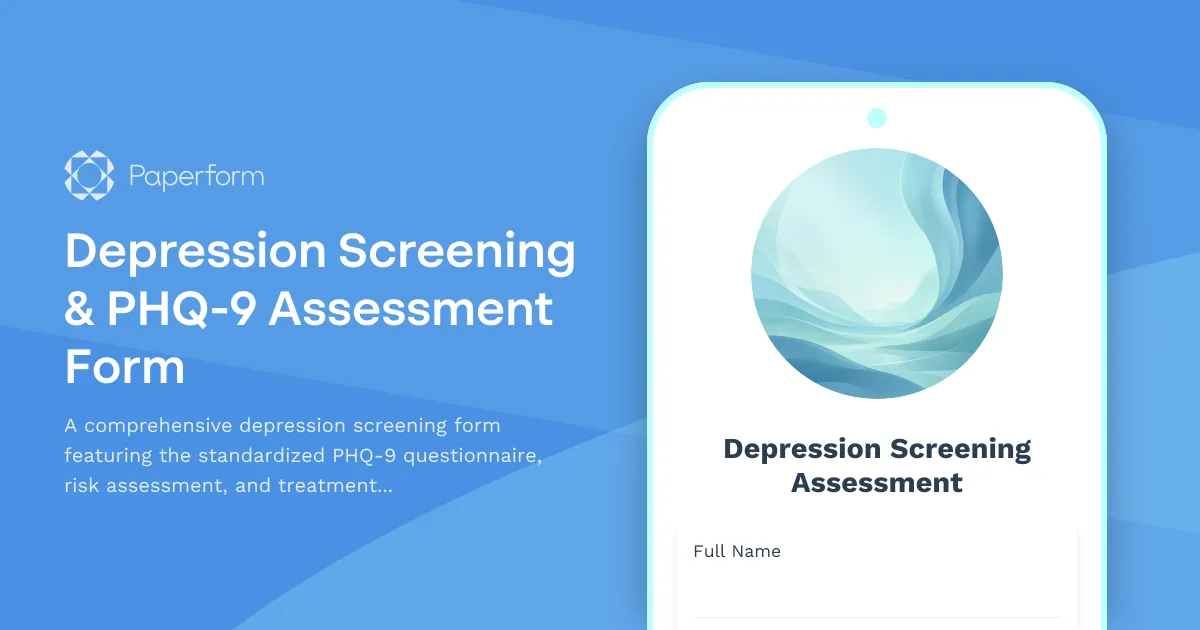
Depression Screening & PHQ-9 Assessment Form Template
Mental health screening is a critical first step in identifying depression and connecting patients with appropriate care. Our Depression Screening & PHQ-9 Assessment Form Template provides mental health professionals, primary care physicians, and counseling centers with a standardized, evidence-based tool for evaluating depressive symptoms and determining appropriate next steps.
Why Mental Health Professionals Need This Template
Depression affects millions of people worldwide, yet many cases go undiagnosed or untreated. A structured screening process ensures consistent evaluation across patients, helps clinicians identify severity levels, and provides a baseline for tracking treatment progress over time. This template incorporates the Patient Health Questionnaire-9 (PHQ-9), the most widely used depression screening tool validated by extensive research and recommended by healthcare organizations globally.
For psychiatrists, psychologists, therapists, counselors, and primary care providers, this form streamlines the intake process while ensuring you capture all essential clinical information. The form is designed to be completed by patients before or during their appointment, saving valuable consultation time while providing you with structured data that informs your clinical decision-making.
How This Template Works for Your Practice
The form begins by collecting essential patient information and consent, then guides individuals through the standardized PHQ-9 questionnaire. Each question uses the validated 4-point scale (0-3) measuring symptom frequency over the past two weeks, covering all nine DSM-5 criteria for major depressive disorder.
The template includes critical safety screening questions regarding suicidal ideation and self-harm, allowing you to immediately identify patients who may require urgent intervention. Following the PHQ-9 assessment, the form captures comprehensive treatment history, including previous diagnoses, medications, therapy experience, and current support systems.
Conditional logic ensures that follow-up questions appear only when relevant—for example, medication details are requested only if the patient indicates they've previously taken antidepressants. This creates a streamlined experience that respects the patient's time while gathering thorough clinical data.
Benefits for Mental Health Practices
Standardized Assessment: The PHQ-9 is recognized internationally as a reliable and valid measure of depression severity, providing scores that help classify depression as minimal, mild, moderate, moderately severe, or severe.
Immediate Risk Identification: Safety screening questions ensure you're alerted to patients expressing suicidal thoughts, allowing for immediate clinical response and appropriate safety planning.
Treatment Planning: Comprehensive treatment history helps you avoid repeating unsuccessful interventions and build upon what has worked for the patient previously.
Progress Tracking: Use the same form at regular intervals to track how scores change over time, demonstrating treatment effectiveness and adjusting care plans as needed.
Insurance and Documentation: The structured format provides clear documentation for insurance claims, treatment authorization requests, and continuity of care when referring patients to specialists.
Paperform Makes Mental Health Intake Seamless
With Paperform, this depression screening template becomes more than just a questionnaire—it becomes part of your practice's workflow automation. The form's professional, compassionate design helps put patients at ease during a vulnerable process, while the platform's security features ensure HIPAA-appropriate handling of sensitive mental health information.
Customize the form to match your practice's branding, add your logo, and adjust the language to reflect your therapeutic approach. Use conditional logic to tailor follow-up questions based on responses, and set up email notifications to alert clinical staff immediately when a patient indicates high-risk symptoms.
Integrate with your existing tools: Connect Paperform to your practice management software, EHR system, or CRM through native integrations or Stepper, Paperform's AI-native workflow builder. Automatically create patient records, schedule follow-up appointments, or trigger care coordination workflows based on assessment scores.
Streamline your clinical workflow: When a patient completes the screening, automatically generate a summary report that calculates the PHQ-9 total score and flags concerning responses. Route high-risk cases directly to senior clinicians for immediate review, while standard cases flow into your regular appointment scheduling process.
Who Benefits from This Template
This depression screening form is ideal for:
- Mental health clinics conducting initial patient evaluations
- Primary care practices screening for depression during routine visits
- College counseling centers supporting student mental health
- Employee assistance programs offering workplace mental health services
- Telehealth providers conducting remote mental health assessments
- Hospital emergency departments evaluating patients presenting with mental health concerns
- Community health centers providing accessible mental health screening
- Psychiatry practices standardizing intake procedures across providers
Supporting Comprehensive Mental Health Care
Mental health treatment begins with accurate assessment. This template provides the foundation for evidence-based care while respecting the sensitive nature of mental health disclosure. The professional yet approachable design helps patients feel comfortable sharing their experiences, while the standardized format ensures you capture the clinical data needed for effective treatment planning.
Beyond the initial screening, consider how Stepper can automate your entire patient journey—from screening to diagnosis, treatment planning, medication management, and follow-up care coordination. Create workflows that automatically schedule therapy sessions, send medication reminders, or trigger check-in forms based on treatment timelines.
With over 500,000 teams trusting Paperform worldwide and SOC2 Type II compliance ensuring enterprise-grade security, mental health professionals can confidently use this platform to support their patients' journey to wellness. Start with this depression screening template and build a more efficient, patient-centered practice that delivers better outcomes through structured assessment and thoughtful care coordination.



More templates like this
Telehealth Mental Health Intake Form
A comprehensive intake form for virtual mental health services that includes technology requirements, crisis protocols, and informed consent for teletherapy sessions.
Anxiety Disorder Diagnostic Assessment Form
A comprehensive clinical form for mental health professionals to assess anxiety disorder symptoms, including panic attack frequency, avoidance behaviors, and physical symptom presentation.
Autism Spectrum Screening & Age Verification Form
A comprehensive screening form for autism spectrum evaluation that includes age verification, developmental history, school records, and appointment scheduling for professional assessment.
Behavioral Health Intensive Outpatient Program Prior Authorization Form
Request insurance prior authorization for behavioral health intensive outpatient programs (IOP) including psychiatric evaluation, risk assessment, and treatment plan documentation.
Bipolar Disorder Intake Form
Comprehensive intake form for bipolar disorder assessment, capturing mood episode history, medication trials, family psychiatric history, and current symptoms to support effective treatment planning.
Borderline Personality Disorder Assessment Form
A comprehensive clinical assessment tool for screening borderline personality disorder symptoms, including emotion dysregulation, relationship patterns, and behavioral indicators.
Collaborative Care Model Enrollment Form
A comprehensive enrollment form for integrated behavioral health programs combining primary care, psychiatric consultation, and care management services into a unified treatment approach.
Eating Disorder Assessment Form
A comprehensive eating disorder screening tool that assesses nutritional history, body image concerns, and potential medical complications for mental health and specialty care providers.
Integrated Behavioral Health Screening & Coordination Form
A comprehensive behavioral health screening form for primary care settings, enabling warm handoffs to mental health specialists and coordinated treatment planning between providers.
Ketamine Therapy for Depression - Patient Intake Form
Comprehensive intake form for patients seeking ketamine therapy for treatment-resistant depression, including psychiatric history, medication trials, and safety screening.
Mental Health Counseling Office Lease Application
A specialized lease application for mental health professionals seeking office space with private therapy rooms, soundproofing, secure file storage, and crisis intervention facilities.
Mental Health Parity Insurance Treatment Denial Appeal Form
Appeal insurance treatment denials for mental health services with comprehensive medical necessity documentation, diagnosis details, and coverage analysis to support your parity claim.