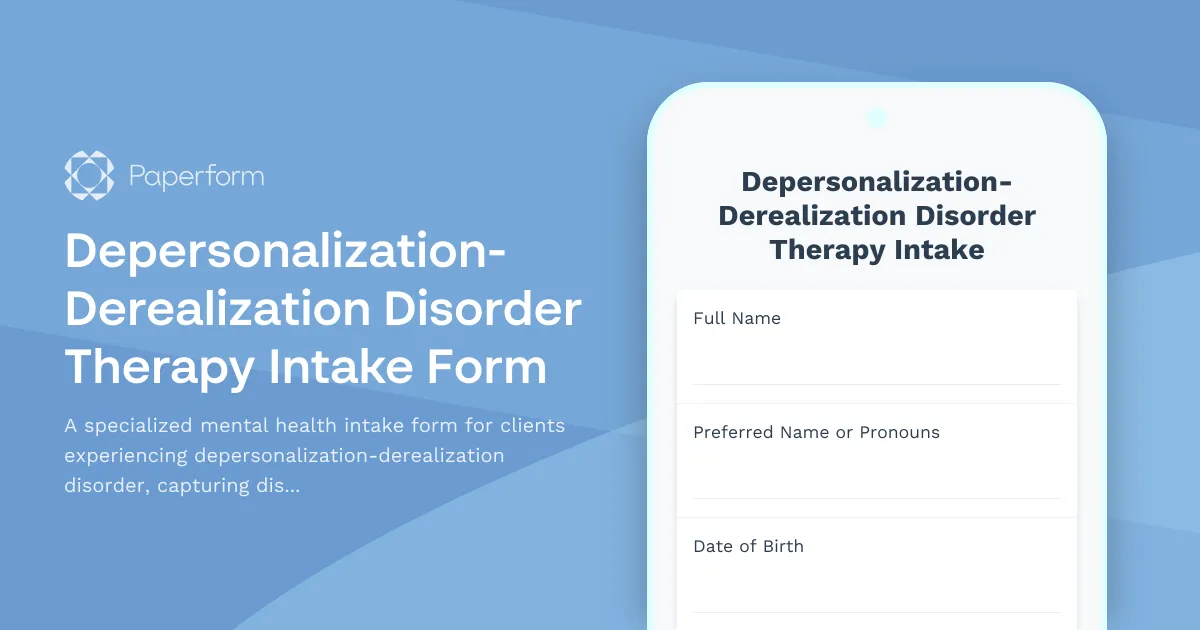
Comprehensive Intake for Depersonalization-Derealization Disorder
Depersonalization-derealization disorder (DDD) is a complex dissociative condition that can feel isolating and difficult to articulate. This specialized therapy intake form helps mental health professionals gather essential information about dissociative experiences, symptom patterns, and co-occurring conditions to provide more targeted, compassionate care from the first session.
Understanding Depersonalization-Derealization in Clinical Practice
For therapists, counselors, and psychologists working with dissociative disorders, a thorough intake process is crucial. This form guides clients through describing their experiences of feeling detached from themselves (depersonalization) or their surroundings (derealization), documenting onset patterns, identifying triggers, and assessing reality testing abilities—all critical factors in developing an effective treatment plan.
The template is designed specifically for mental health practitioners specializing in dissociative disorders, trauma therapy, and anxiety disorders, recognizing that DDD frequently co-occurs with anxiety, depression, and trauma-related conditions.
What This Therapy Intake Form Captures
This comprehensive intake form collects:
- Basic client information and contact details for secure record-keeping
- Presenting concerns and symptom description in the client's own words
- Dissociation onset and timeline to understand when symptoms first appeared and how they've evolved
- Depersonalization symptoms including feelings of detachment from body, thoughts, or emotions
- Derealization symptoms such as surroundings feeling unreal, dreamlike, or distorted
- Triggers and patterns that worsen or alleviate dissociative episodes
- Reality testing abilities to assess insight and grounding capacity
- Anxiety comorbidity screening including panic attacks, generalized anxiety, and phobias
- Previous mental health treatment and medication history
- Current coping strategies and support systems
- Safety assessment and crisis resources
- Treatment goals and expectations
Why Mental Health Professionals Choose Paperform
Paperform is trusted by therapists, counselors, and mental health clinics because it combines professional compliance with genuine ease of use. Your intake forms can match your practice's branding while collecting sensitive information securely.
Security and compliance matter: While this form helps streamline your intake process, it's important to note that Paperform is not HIPAA compliant. For practices requiring HIPAA compliance, consider using this form for initial scheduling and general information, then transitioning to your HIPAA-compliant platform for protected health information.
Seamless workflow integration: Connect intake responses to your practice management software, EHR systems, or scheduling tools using Stepper (stepper.io), Paperform's AI-native workflow builder. Automatically create client records, send welcome emails, trigger appointment reminders, and route urgent responses to the appropriate clinician—all without manual data entry.
Conditional logic for relevant questions: The form adapts based on client responses, showing follow-up questions only when relevant. If someone indicates they experience panic attacks, additional screening questions appear automatically. This creates a more conversational, less overwhelming intake experience.
Designed for Modern Mental Health Practices
Whether you're a solo practitioner, group practice, or mental health clinic, this template saves valuable clinical time while ensuring you gather the comprehensive information needed for effective treatment planning. The form can be embedded directly on your practice website, sent via email, or accessed through a client portal.
For therapists and counselors: Spend your first session building rapport and beginning therapeutic work rather than collecting basic information. Review completed intake forms before the appointment to arrive prepared with preliminary observations and questions.
For clients: Complete the intake form at your own pace, in a comfortable environment, with time to thoughtfully describe your experiences without the pressure of sitting across from someone new.
Enhance Your Practice with Papersign
For practices that require consent forms, treatment agreements, or financial policies to be signed, integrate Papersign (papersign.com) into your workflow. After a client completes their intake form, automatically send consent documents for secure eSignature, creating a complete digital onboarding experience that keeps all documentation linked and organized.
Supporting Clients with Dissociative Disorders
Depersonalization-derealization disorder can be frightening and difficult to explain. This intake form uses clear, validating language that helps clients feel understood while providing clinicians with the detailed information needed to assess symptom severity, identify comorbid conditions, and develop trauma-informed, evidence-based treatment approaches.
By using Paperform's intuitive form builder, mental health professionals can customize this template to match their therapeutic approach, add specialized assessments, or incorporate screening tools specific to their practice modality—all without any coding knowledge.
Start gathering more comprehensive intake information today and provide your clients with the thorough, compassionate care they deserve from their very first interaction with your practice.



More templates like this
Bipolar Disorder Intake Form
Comprehensive intake form for bipolar disorder assessment, capturing mood episode history, medication trials, family psychiatric history, and current symptoms to support effective treatment planning.
Medical Equipment Dependence Mental Health Intake Form
A specialized mental health intake form for clients who rely on medical equipment, addressing device dependence, lifestyle impact, body image concerns, and technology-related anxiety.
Mental Health Intake & Symptom Assessment
A comprehensive mental health intake form with PHQ-9 depression screening, GAD-7 anxiety assessment, and automated crisis intervention routing for safer, more informed care.
Paranoia and Psychosis Therapy Intake Form
Comprehensive mental health intake form for clients experiencing paranoia and psychosis, including symptom assessment, medication history, and treatment background.
Addiction Recovery Therapy Intake Form
A comprehensive intake form for addiction recovery counselors to gather essential information about new clients, including substance use history, previous sobriety attempts, support network, and recovery goals.
Biofeedback Session Emergency Contact Form
A comprehensive biofeedback therapy intake form that collects emergency contacts, stress baseline information, autonomic dysfunction assessment, sensor placement consent, and home practice expectations for new clients.
Blast Injury and TBI Therapy Intake Form
A comprehensive intake form for mental health professionals treating blast injury and traumatic brain injury (TBI) patients, capturing injury mechanisms, cognitive symptoms, personality changes, and rehabilitation history.
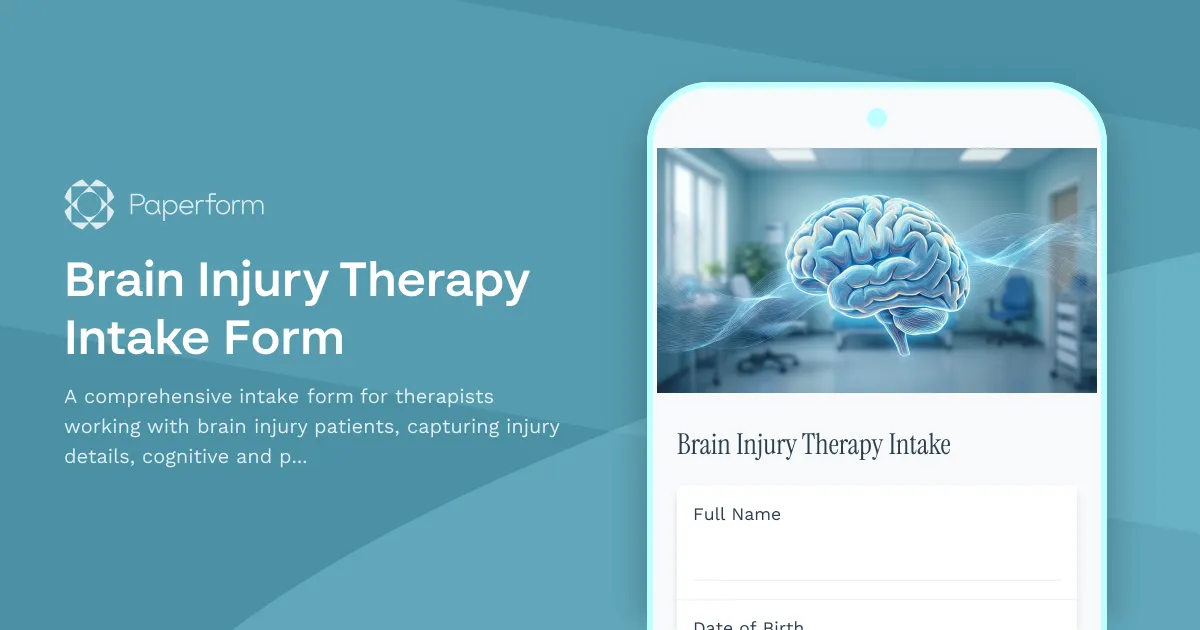
Brain Injury Therapy Intake Form
A comprehensive intake form for therapists working with brain injury patients, capturing injury details, cognitive and personality changes, current symptoms, and rehabilitation history to inform personalized treatment planning.
Chronic Nausea & Hyperemesis Mental Health Intake Form
A specialized mental health intake form for patients experiencing chronic nausea and hyperemesis, assessing symptom severity, nutritional status, medical history, and quality of life impact.
Cognitive Behavioral Therapy Intake Form
A comprehensive CBT intake form with depression screening, anxiety assessment, and therapy goals to help mental health professionals understand new clients and establish treatment plans.
Combat Stress Reaction Therapy Intake Form
A specialized intake form for mental health professionals working with military personnel experiencing combat stress reactions. Captures deployment details, critical incidents, acute symptoms, and unit support information.
Eating Disorder Therapy Intake Form
A compassionate intake form for eating disorder therapy that gathers essential information about food relationship history, body image concerns, medical complications, and nutritional habits to support effective treatment planning.