When a cybersecurity breach occurs, every minute counts. A structured incident reporting process ensures your security team can quickly assess the threat, contain the damage, and notify the right stakeholders. This Cybersecurity Breach Incident Report template provides IT teams, security operations centers, and incident response professionals with a comprehensive framework to document security incidents from detection through initial containment.
Built for organizations that need to maintain SOC 2 compliance and follow incident response best practices, this template captures critical details including breach timelines, affected systems, data exposure scope, and impact severity. The structured format ensures consistency across incident reports, making it easier to identify patterns, improve response procedures, and maintain audit trails.
Paperform makes incident reporting faster and more reliable. The intuitive form builder lets security teams create branded, mobile-responsive incident forms that work on any device—crucial when your team is responding to a breach outside business hours. Conditional logic automatically adjusts questions based on breach severity and type, ensuring responders only see relevant fields while capturing all necessary information.
For organizations managing complex security workflows, connect this form with Stepper to automate your incident response chain: automatically notify your CISO and security leadership, create tickets in your ITSM platform, log incidents in your SIEM, trigger forensics workflows, and update stakeholder communication channels—all without manual handoffs that slow down response time.
Need compliance documentation and audit trails? Use Papersign to collect digital signatures on containment acknowledgments, evidence chain-of-custody forms, and incident closure approvals, creating a complete, tamper-proof record of your security incident lifecycle.
Whether you're a security operations team, IT department, or managed security service provider, this template helps you respond faster, document thoroughly, and maintain the compliance posture your organization depends on.



More templates like this
Data Breach Incident Report Form
Document and manage data breach incidents with comprehensive system impact analysis, user assessment, response tracking, and regulatory notification timelines.
Catastrophic Data Loss Incident Report
Report critical data loss incidents, activate business continuity protocols, and manage customer notification and regulatory disclosure requirements for corporate emergencies.
Cybersecurity Incident Post-Mortem Report
Conduct thorough post-incident analysis with attack vector documentation, response timeline tracking, and security gap identification to strengthen your organization's cybersecurity posture.
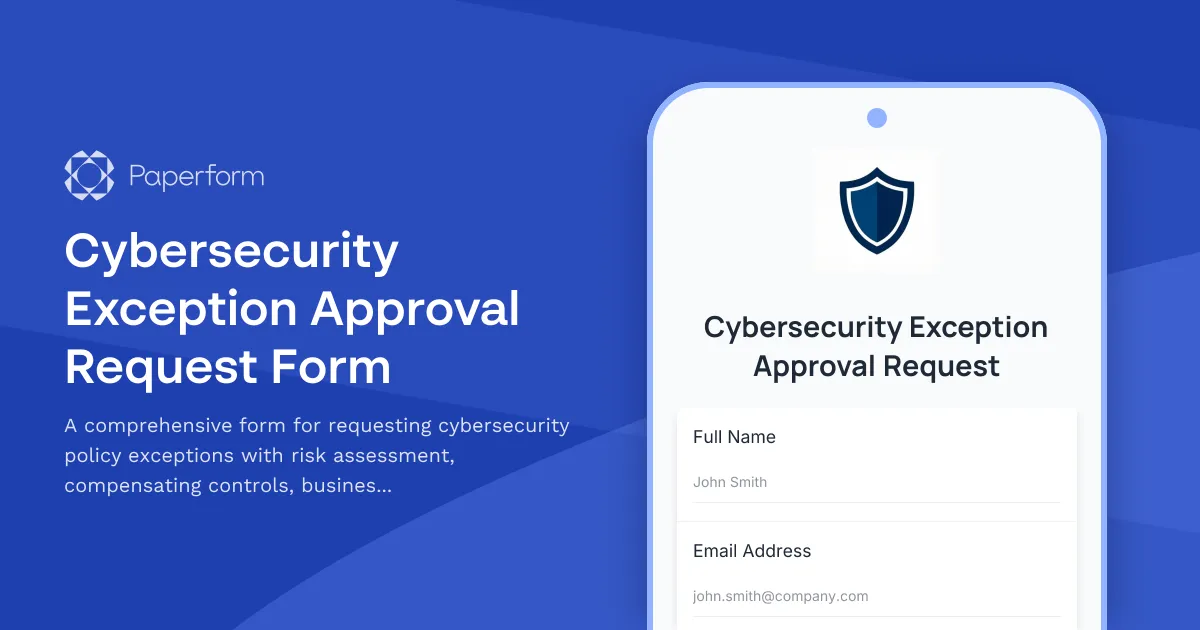
Cybersecurity Exception Approval Request Form
A comprehensive form for requesting cybersecurity policy exceptions with risk assessment, compensating controls, business justification, and remediation plans requiring CISO authorization.
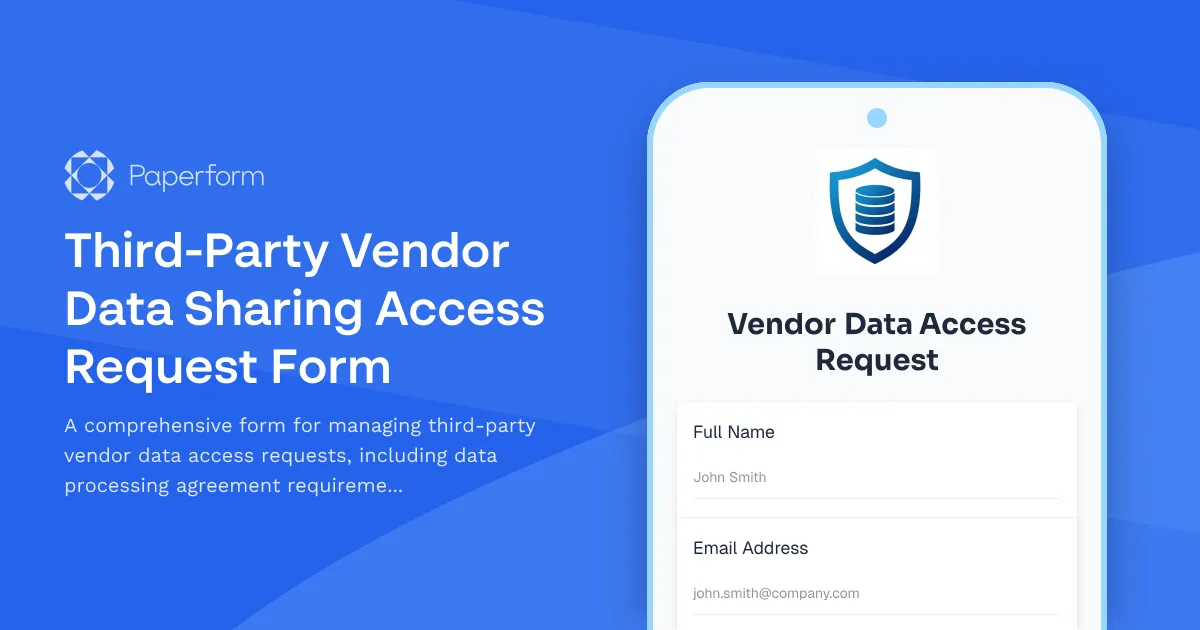
Third-Party Vendor Data Sharing Access Request Form
A comprehensive form for managing third-party vendor data access requests, including data processing agreement requirements, security assessments, and purpose limitation controls for IT and compliance teams.
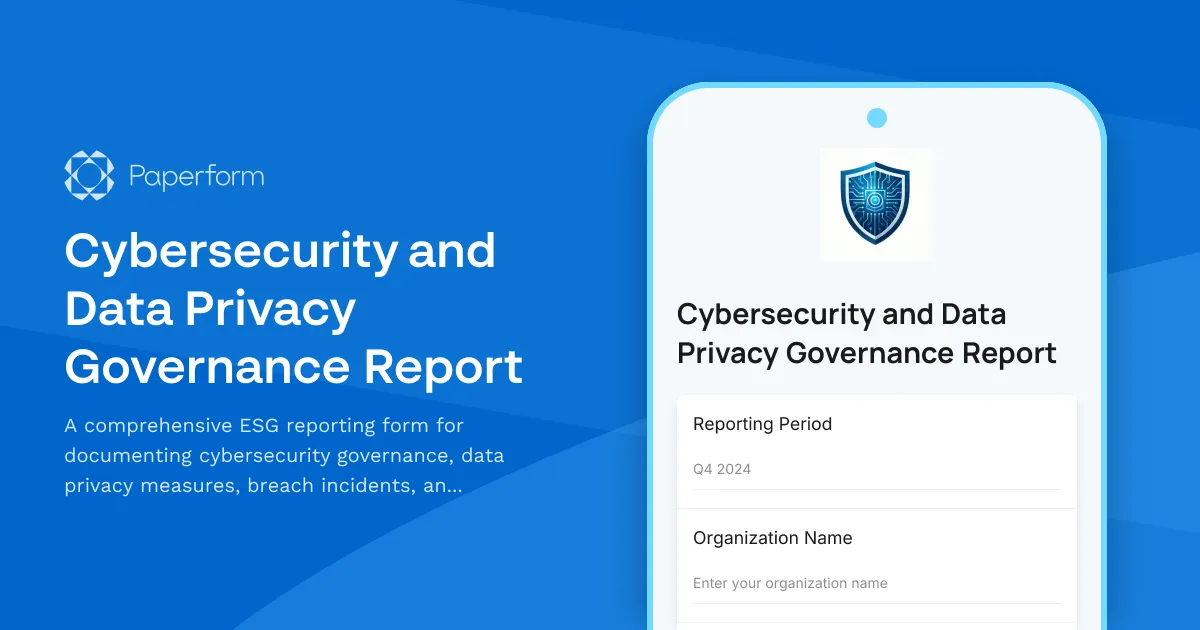
Cybersecurity and Data Privacy Governance Report
A comprehensive ESG reporting form for documenting cybersecurity governance, data privacy measures, breach incidents, and security training compliance across your organization.
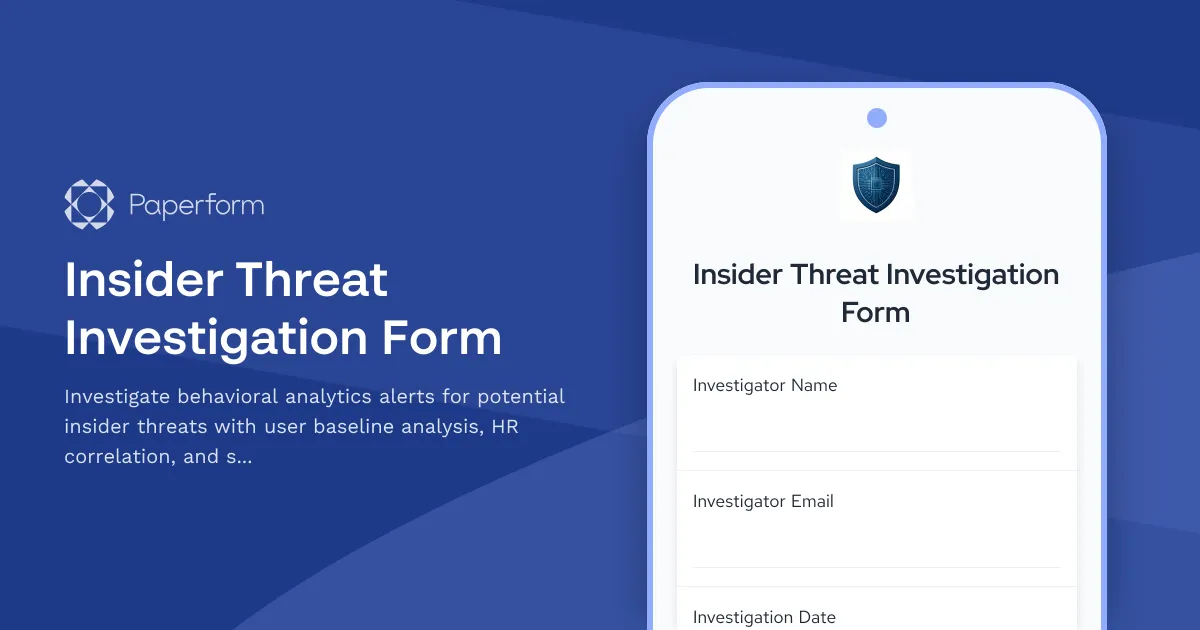
Insider Threat Investigation Form
Investigate behavioral analytics alerts for potential insider threats with user baseline analysis, HR correlation, and structured escalation workflows for security teams.
IT Security Architecture Decision Record (ADR) Change Request
Document security architecture decisions, technical choices, and rationale with structured approval workflows for IT change management and governance.
IT Security Architecture Exception Approval Form
Request and approve security architecture exceptions with technical justifications, alternative approaches, risk assessments, and time-bound permissions for IT change management.
IT Security Incident Response Communication Change Request Form
Request changes to security incident response communication protocols, including notification groups, escalation paths, and stakeholder contact information.
Phishing Incident Report Form
Report suspected or confirmed phishing attempts with email header analysis, identify affected users, and enroll staff in security awareness training to prevent future incidents.
Security Control Rationalization Review Form
Streamline your security controls by identifying redundancies, analyzing cost-effectiveness, and managing control retirement approvals through a structured review process.