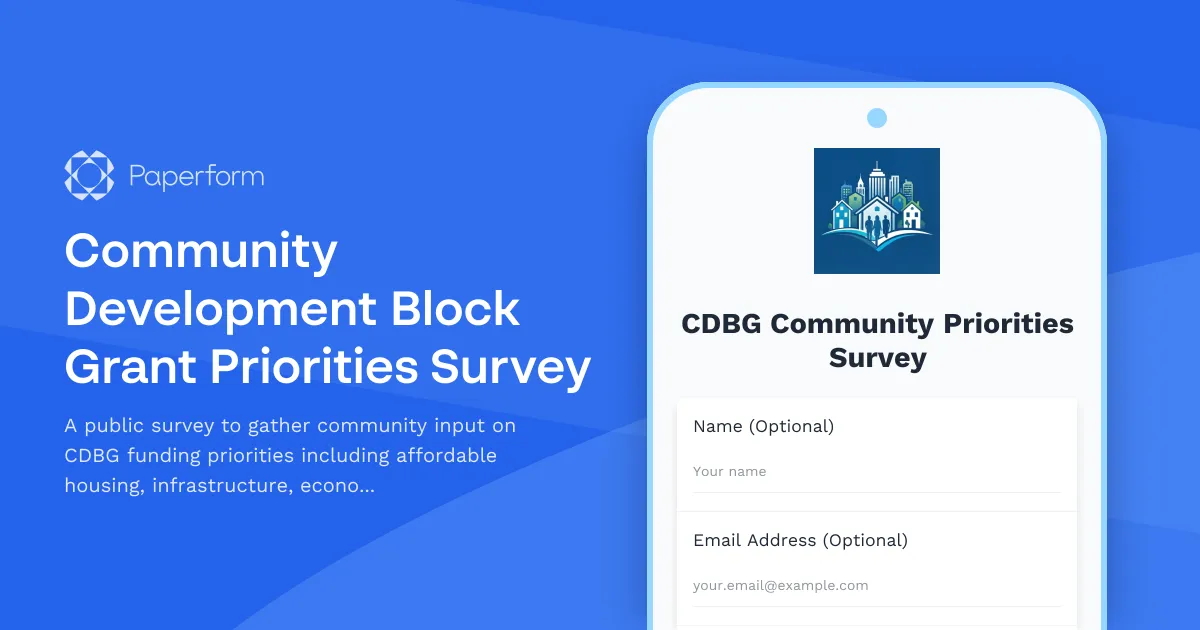
Gather Community Input on CDBG Funding Priorities
Community Development Block Grants (CDBG) are vital federal resources that local governments use to address critical community needs. This Community Development Block Grant Priorities Survey helps municipalities, counties, and planning departments collect meaningful public input on how CDBG funds should be allocated across affordable housing, infrastructure improvements, economic development programs, public services, and administrative capacity building.
Paperform makes it easy for government agencies and civic organizations to create accessible, professional surveys that engage residents and capture their priorities. With conditional logic, you can tailor questions based on respondent demographics or previous answers, ensuring you gather nuanced feedback from diverse community stakeholders.
Why Use Paperform for Civic Engagement?
Government agencies and community development departments need a platform that's both secure and easy to use. Paperform is SOC 2 Type II compliant and offers data residency controls, making it suitable for public sector data collection. The doc-style editor means your community engagement team can build and update surveys without waiting on IT or developers.
Once responses start coming in, use AI Insights to automatically summarize themes and priorities from hundreds or thousands of responses—perfect for preparing reports for city councils, community meetings, or grant applications. You can also connect submissions to Google Sheets, Airtable, or other tools via Stepper to automate reporting workflows and keep stakeholders informed in real-time.
Whether you're a city planner, community development director, or nonprofit administrator managing CDBG consultation processes, this template gives you a professional starting point to ensure every voice in your community is heard and every priority is documented for transparent, data-driven decision making.
More templates like this
Vacant Lot Transformation Program Comment Form
Submit public comments on the proposed Vacant Lot Transformation Program, including temporary use permissions, liability provisions, and community stewardship models for revitalizing unused municipal properties.
Climate Action Plan Stakeholder Interview Form
Gather input from residents, businesses, and environmental groups on climate action priorities, emission reduction strategies, adaptation plans, and implementation timelines for your community's climate action plan.
Coastal Zone Management Public Hearing Comment Form
Submit public comments on coastal zone management proposals, including shoreline access, environmental protection, and development regulations for public hearing consideration.
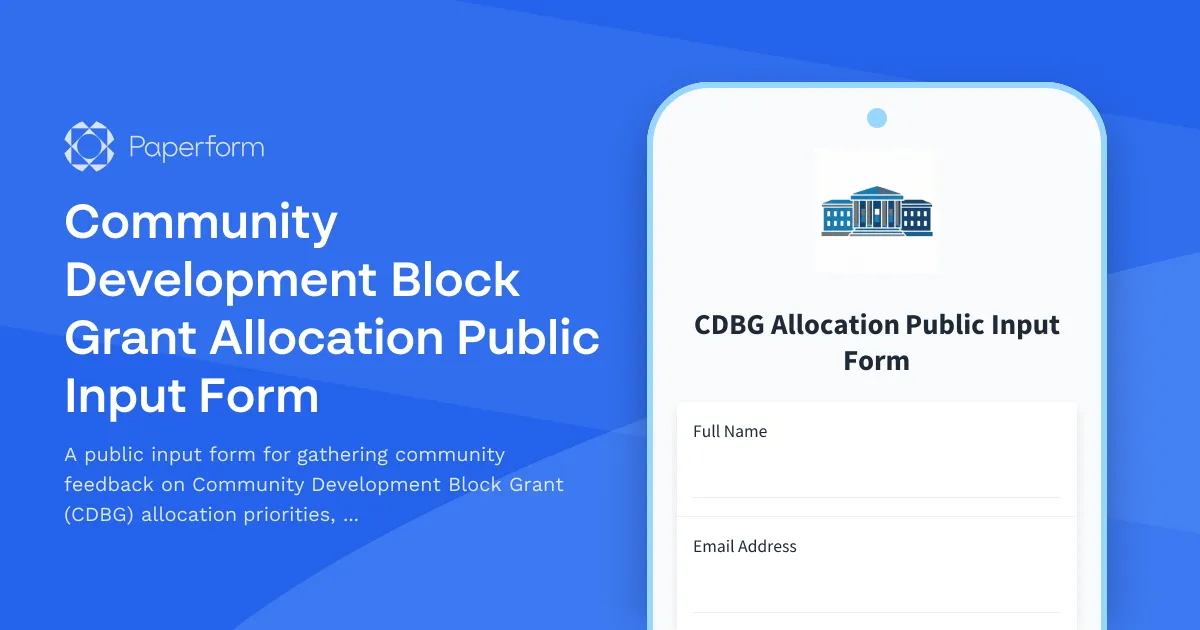
Community Development Block Grant Allocation Public Input Form
A public input form for gathering community feedback on Community Development Block Grant (CDBG) allocation priorities, eligible project categories, neighborhood needs, and equity considerations.
Local Government Budget Priorities Survey
Help shape your local government's budget by sharing your priorities for community spending. Use interactive sliders to allocate resources across key services and share what matters most to you.
Municipal Broadband Feasibility Study Comment Form
A public comment form for residents to provide input on a proposed municipal broadband feasibility study, including current internet service quality, pricing concerns, and preferences for public-private partnerships.
Town Hall Constituent Services Satisfaction Survey
Gather citizen feedback on constituent services, staff performance, response times, and issue resolution to improve municipal service delivery and communication.
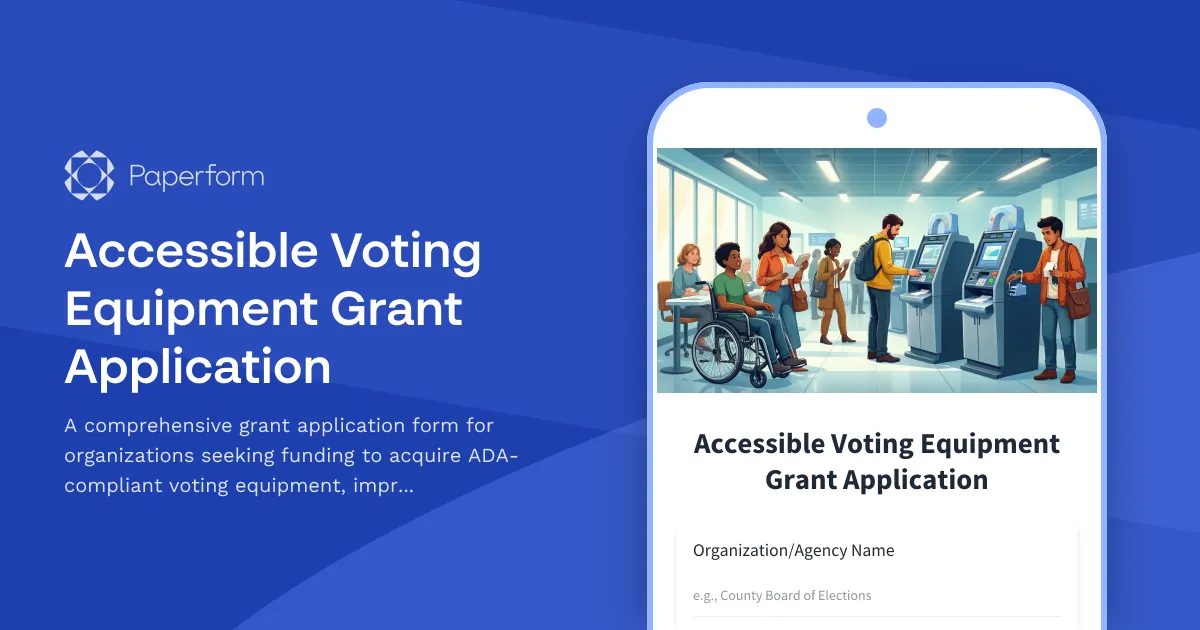
Accessible Voting Equipment Grant Application
A comprehensive grant application form for organizations seeking funding to acquire ADA-compliant voting equipment, improve polling place accessibility, and enhance voter experience for individuals with disabilities.
Animal Shelter Adoption Process Feedback Form
Gather valuable feedback on the animal adoption experience, from application to post-adoption support, helping shelters improve their processes and care.
City Council Public Hearing Comment Form
Submit your comments on proposed zoning variances to your city council. Verify your residency, state your interest in the matter, and share your position on the proposed changes.
City Planning Public Hearing Comment Form
Submit your comments, concerns, and suggestions on proposed development projects during city planning public hearings. Share feedback on environmental impact, traffic, and community character preservation.
Climate Action Plan Implementation Comment Form
A comprehensive public comment form for gathering community feedback on proposed climate action plans, including emission reduction targets, sector-specific strategies, and environmental justice considerations.