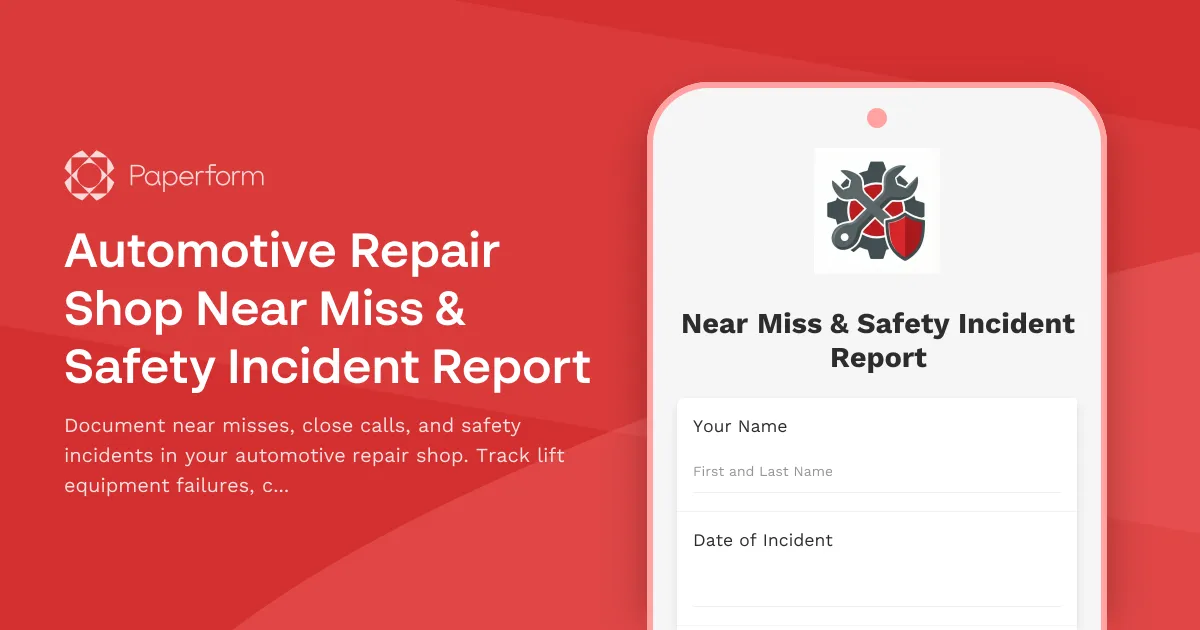
Keep Your Auto Shop Safe with Professional Near Miss Reporting
Running an automotive repair shop means managing serious safety risks every day—from lift equipment failures and compressed air incidents to chemical spills and moving vehicles. A near miss today could be a serious injury tomorrow, which is why documenting close calls is critical for any professional shop.
This Automotive Repair Shop Near Miss & Safety Incident Report template helps you capture the details that matter: what happened, where it happened, what equipment was involved, and most importantly, what corrective actions need to happen next. Whether you're running an independent garage, a dealership service center, or a fleet maintenance facility, this form gives your technicians and service advisors an easy way to report safety concerns before they become OSHA recordables.
Built for automotive repair environments
This template is designed specifically for the unique hazards of automotive repair work. It includes fields for common incident types like lift malfunctions, air hose failures, jack stand issues, battery explosions, and brake clean fires. You can document which equipment was involved, which bay or work area, and whether personal protective equipment was being used properly.
The form also helps you identify when additional safety training is needed. If a near miss reveals a knowledge gap—like improper lift operation or compressed air misuse—you can flag it immediately and route the report to your safety coordinator or shop manager.
How Paperform makes safety reporting effortless
With Paperform's conditional logic, you can show or hide follow-up questions based on incident type, so your team only sees relevant fields. For example, if someone reports a lift equipment failure, the form automatically asks for lift number, load capacity, and maintenance history. If it's a compressed air incident, you'll capture PSI levels and hose condition instead.
Use Stepper (stepper.io) to automate what happens after submission: send instant alerts to your safety manager, create tasks in your maintenance tracking system, log incidents in Google Sheets or Airtable, and even trigger mandatory retraining workflows when certain hazard types are reported. You can also set up automatic follow-ups to ensure corrective actions are actually completed, not just documented.
Stay compliant and protect your team
Near miss reporting isn't just good practice—it's often required for OSHA compliance, insurance audits, and ASE/ATRA certification standards. This template gives you a professional, organized way to maintain your safety documentation, demonstrate your commitment to workplace safety, and build a culture where technicians feel comfortable reporting hazards without fear of blame.
Get started with this template today and turn close calls into learning opportunities that keep your shop running safely.



More templates like this
Electric Utility Field Crew Near Miss Report
A comprehensive near miss reporting form designed for electric utility field crews to document powerline proximity incidents, arc flash events, and close calls to improve workplace safety.
Flooring Installer Adhesive Vapor Exposure Incident Report
Document adhesive vapor exposure incidents during flooring installation, including ventilation conditions, PPE assessment, symptoms, and medical follow-up requirements for workplace safety compliance.
Solar Panel Installation Fall Protection Incident Report
Document fall protection incidents, installer injuries, and roof access safety issues during solar panel installations. OSHA-compliant reporting for solar contractors and construction managers.
Building Maintenance Chemical Exposure Incident Report
Report workplace chemical exposure incidents with health screening, safety data review, ventilation assessment, and training updates for building maintenance teams.
Concrete Pouring Heat Illness Safety Incident Report
Document heat-related safety incidents during concrete pouring operations, track crew hydration status, environmental conditions, and medical response actions to ensure worker safety and regulatory compliance.
Construction Site Near Miss Report
A comprehensive near miss reporting form for construction sites that captures hazard details, worker information, location mapping, and corrective actions to maintain OSHA compliance and improve workplace safety.
Crane Lift Plan and Safety Inspection Form
A comprehensive crane lift plan and safety inspection form for construction sites. Includes load calculations, rigging inspection checklists, exclusion zone documentation, and safety compliance verification for crane operations.
Dust Suppression System Inspection Form
A comprehensive safety inspection form for evaluating dust suppression systems, water spray functionality, coverage adequacy, and runoff collection compliance on construction sites.
Incident Investigation & Root Cause Analysis Form
Comprehensive incident investigation form for construction sites with witness statements, photo documentation, root cause analysis, and corrective action tracking to ensure workplace safety compliance.
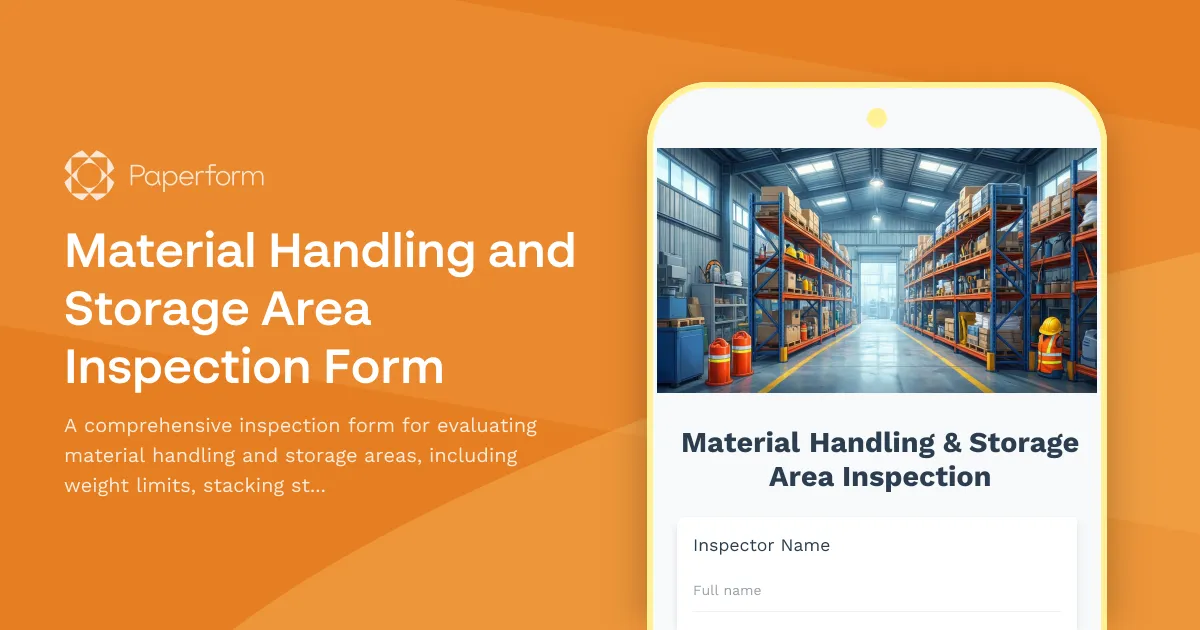
Material Handling and Storage Area Inspection Form
A comprehensive inspection form for evaluating material handling and storage areas, including weight limits, stacking stability, and aisle clearance verification to ensure workplace safety compliance.
Meat Processing Machine Guarding Violation & Amputation Risk Report
Report machine guarding violations, assess amputation risks, and document lockout-tagout protocol compliance in meat processing facilities. Ensures OSHA compliance and worker safety.
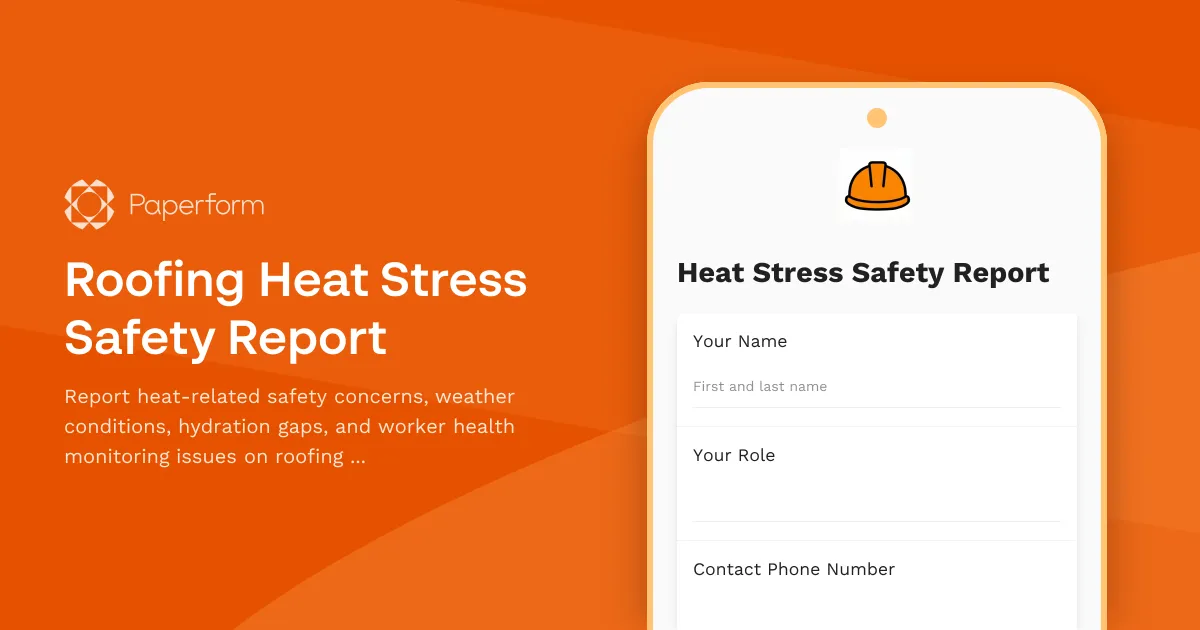
Roofing Heat Stress Safety Report
Report heat-related safety concerns, weather conditions, hydration gaps, and worker health monitoring issues on roofing job sites to prevent heat stress incidents.