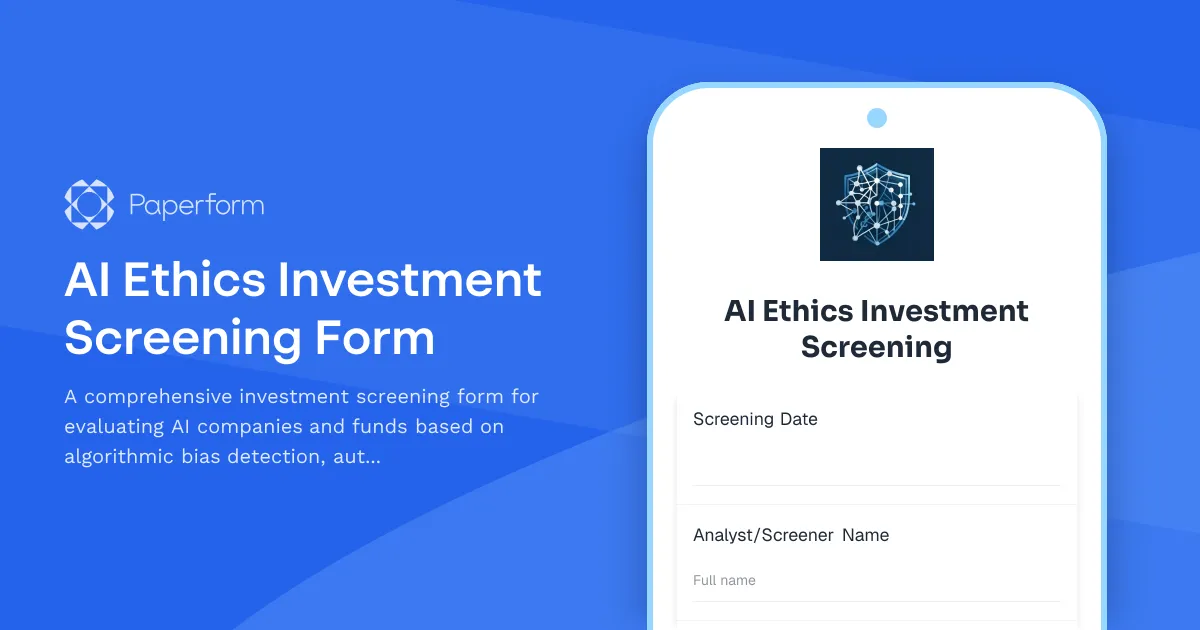
Assess AI Investment Opportunities with Confidence
Investing in artificial intelligence companies requires more than financial due diligence—it demands a thorough evaluation of ethical practices, governance frameworks, and responsible development standards. This AI Ethics Investment Screening Form helps investors, fund managers, and financial advisors systematically assess AI companies against critical ethical benchmarks before committing capital.
As AI technologies become increasingly autonomous and influential, investors face growing pressure to ensure their portfolios align with responsible innovation principles. This template addresses algorithmic bias detection capabilities, autonomous systems governance structures, data privacy practices, and compliance with emerging AI regulations.
Built for modern portfolio management, this screening form helps you identify red flags early, compare investment opportunities on standardised criteria, and demonstrate ESG commitment to stakeholders. The structured evaluation covers fairness testing protocols, explainability standards, human oversight mechanisms, and alignment with international AI ethics frameworks.
Use Paperform's conditional logic to automatically route different types of AI investments (machine learning platforms, autonomous systems, generative AI tools) through relevant screening criteria. Built-in calculations can generate weighted ethics scores based on your firm's priorities, while custom success pages provide immediate next-step guidance for investment committees.
For investment firms managing multiple screening workflows, connect this form to Stepper to automatically create due diligence tasks, notify relevant analysts, update your CRM with ethics scores, and maintain audit trails across your entire investment pipeline. Add Papersign to collect eSignatures on investment committee recommendations or client acknowledgments that ethical screening was completed.
Whether you're a venture capital firm evaluating AI startups, an institutional investor screening public AI companies, or a wealth management firm offering ESG-focused portfolios, this template provides the foundation for responsible AI investment decisions that balance innovation with accountability.

More templates like this
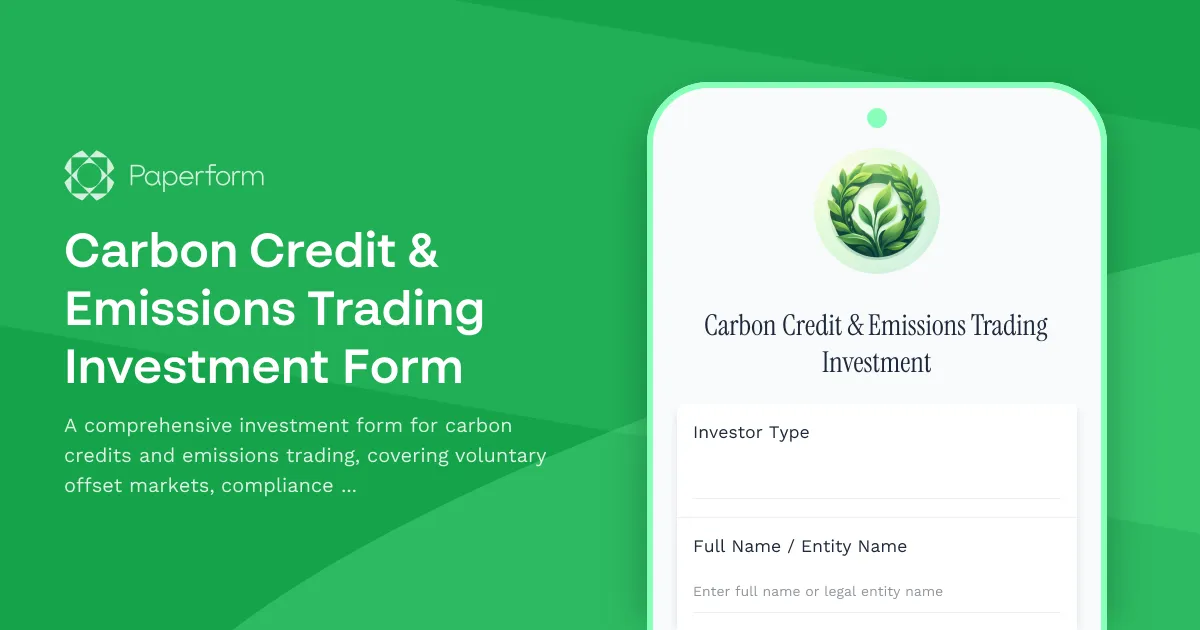
Carbon Credit & Emissions Trading Investment Form
A comprehensive investment form for carbon credits and emissions trading, covering voluntary offset markets, compliance market exposure, and climate impact verification for institutional and individual investors.
Climate-Related Financial Disclosure Form (ISSB/IFRS S2)
A comprehensive climate-related financial disclosure form aligned with ISSB standards and IFRS S2 requirements, covering governance, strategy, risk management, and metrics for ESG reporting.
Climate Transition Risk Stress Testing Form
A comprehensive ESG reporting form for banks to assess climate transition risks, analyze portfolio exposure, model scenarios, and evaluate capital adequacy implications.
Faith-Based Investment Screening Form
A comprehensive screening form to assess investment opportunities against faith-based values, ethical guidelines, and religious compliance requirements including Sharia principles.
Green Bond Portfolio Allocation Form
A comprehensive form for managing green bond investments, tracking climate finance goals, measuring environmental impact, and verifying sustainability certifications for portfolio allocation decisions.
Impact Investing Measurement Framework
A comprehensive framework for measuring impact investments with financial return expectations, social impact KPIs, and IRIS+ metric alignment to track both financial performance and social outcomes.
Qualified Opportunity Fund Certification Application
A comprehensive application form for investors seeking Qualified Opportunity Fund certification, focusing on economic development zones, community revitalization impact assessment, and tax deferral benefit eligibility.
SEC Form D Notice of Exempt Securities Offering
File your Form D with the SEC to claim exemption under Regulation D for private placement securities offerings. Streamline your fundraising compliance and regulatory reporting.
SEC Whistleblower Bounty Program Application Form
Submit confidential reports of securities violations to the SEC Whistleblower Program and document your eligibility for financial rewards while maintaining anonymity protection.
Section 1202 Qualified Small Business Stock Election Form
Election form for Section 1202 qualified small business stock (QSBS) gain exclusion, with holding period verification and rollover opportunity documentation for tax-advantaged investments.
Alternative Data Investment Strategy Authorization Form
Authorize the use of alternative data sources including satellite imagery, credit card transactions, and non-traditional alpha signals for investment analysis and portfolio management decisions.
Annual ESG Performance Report Template
Comprehensive ESG reporting template for publicly-traded companies aligned with GRI Standards, featuring materiality assessment, stakeholder engagement disclosure, and key performance indicators across environmental, social, and governance dimensions.