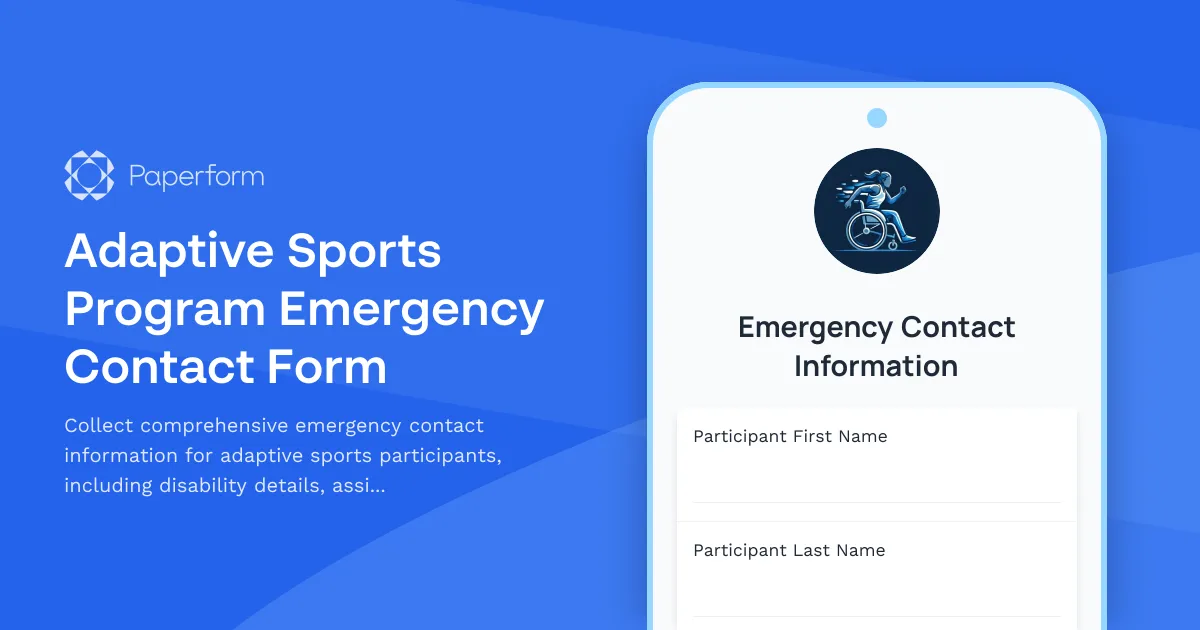
Adaptive Sports Program Emergency Contact Form
Running an adaptive sports program means ensuring every participant can compete safely while having their unique needs met. This Adaptive Sports Program Emergency Contact Form template helps coaches, program directors, and sports coordinators collect vital emergency information alongside disability-specific details that can make all the difference in a crisis.
Why adaptive sports programs need specialized emergency forms
Unlike traditional sports emergency forms, adaptive sports programs must account for mobility devices, communication needs, medical equipment, service animals, and specialized accommodations. When an emergency happens on the field, court, or track, staff need immediate access to not just who to call—but also how to safely assist an athlete who uses a wheelchair, relies on specific medication protocols, or communicates non-verbally.
This template captures everything your program needs: emergency contacts, disability type and details, assistive devices in use, Paralympic classification (if applicable), specialized equipment requirements, medical conditions, communication preferences, and authorized pickup individuals. It's designed to give coaches and emergency responders a complete picture so they can act quickly and appropriately.
Built for adaptive sports organizations and inclusive recreation programs
This form is ideal for:
- Adaptive sports leagues and clubs offering wheelchair basketball, seated volleyball, para athletics, or adaptive skiing
- Paralympic training centers managing athletes across multiple classification systems
- School-based adaptive PE programs ensuring safe participation for students with disabilities
- Community recreation departments running inclusive sports camps and clinics
- Therapeutic recreation programs blending sports, wellness, and disability services
- Youth adaptive sports organizations coordinating travel teams and tournaments
Whether you're managing a competitive Paralympic pathway program or a grassroots community adaptive sports league, having accurate, accessible emergency information is non-negotiable—and this template makes collection simple.
What makes this emergency contact form disability-inclusive
This isn't a generic emergency form with a disability checkbox tacked on. It's purpose-built around the realities of adaptive sports:
Disability and classification details: Collect specific disability type, whether the athlete has a Paralympic classification, their classification category and class, and any relevant medical diagnoses that affect sports participation.
Assistive devices and equipment: Capture what assistive devices the athlete uses daily (wheelchair, prosthetics, braces, communication device, etc.) and what specialized sports equipment they rely on (sport wheelchair, racing chair, adaptive bike, sit-ski, etc.). This ensures coaches know what to grab, protect, or assist with during an emergency.
Medical and communication needs: Document allergies, medications, conditions requiring monitoring (like autonomic dysreflexia, seizures, or blood sugar management), and communication preferences—especially critical for athletes who are non-verbal, deaf, or have cognitive disabilities.
Emergency contacts and authorized individuals: List multiple emergency contacts with relationship details, plus a section for authorized pickup or assistance personnel, ensuring only trusted individuals can intervene or transport the athlete.
The form also includes optional fields for insurance information, physician contacts, and any additional accommodations or instructions that help staff respond safely and respectfully.
Seamlessly integrate with Paperform's adaptive features
Paperform makes this template work even harder for your program:
- Conditional logic shows or hides fields based on responses—if an athlete indicates they have a Paralympic classification, additional classification fields appear; if they use assistive devices, you can ask for specific details.
- File uploads let families attach medical action plans, classification cards, or equipment specifications directly to the form, keeping everything centralized.
- Secure data handling with SOC 2 Type II compliance means sensitive health and disability information stays protected, meeting privacy standards parents and athletes expect.
- Easy updates mean families can resubmit updated forms each season without starting from scratch, and you can duplicate and tailor forms for different sports or age groups.
For programs managing data across multiple tools, connect submissions to your participant management system, Google Sheets for roster tracking, or Airtable for a custom adaptive sports database using Paperform's native integrations.
Automate your adaptive sports admin with Stepper
Once emergency contact information is submitted, Stepper (stepper.io) can help automate what comes next:
- Automatically create participant profiles in your sports management platform with all emergency and accommodation details attached
- Send confirmation emails to families with a PDF copy of their emergency contact information for their records
- Notify coaching staff when new participants join, flagging any critical medical or equipment needs
- Trigger reminders for families to update emergency contacts at the start of each season
- Route completed forms to program directors for review before an athlete's first practice
By connecting this form to Stepper, you turn one-time data collection into an ongoing, automated participant safety system that scales with your program.
Manage multiple programs with Agency+ features
Running adaptive sports programs across multiple locations, age groups, or sports? Paperform's Agency+ plan lets you create separate workspaces for each program, duplicate this template for basketball, track and field, swimming, or skiing, and manage permissions so assistant coaches can view but not edit sensitive information. It's built for organizations that need structure and scalability without complexity.
Make safety and inclusion your starting point
Emergency preparedness in adaptive sports isn't just about having a form on file—it's about understanding each athlete's needs so you can respond with competence and care. This template ensures your program collects the right information, stores it securely, and makes it accessible when seconds count.
Whether you're launching a new adaptive sports league, expanding an existing program, or working toward full inclusion in your recreation department, Paperform's Adaptive Sports Program Emergency Contact Form gives you a professional, comprehensive starting point that respects both safety and dignity.
Trusted by recreation programs, sports organizations, and youth leagues worldwide, Paperform is SOC 2 Type II and GDPR compliant, designed for organizations that take participant safety seriously. Start with this template and customize it to match your program's specific needs, branding, and protocols in minutes.

More templates like this
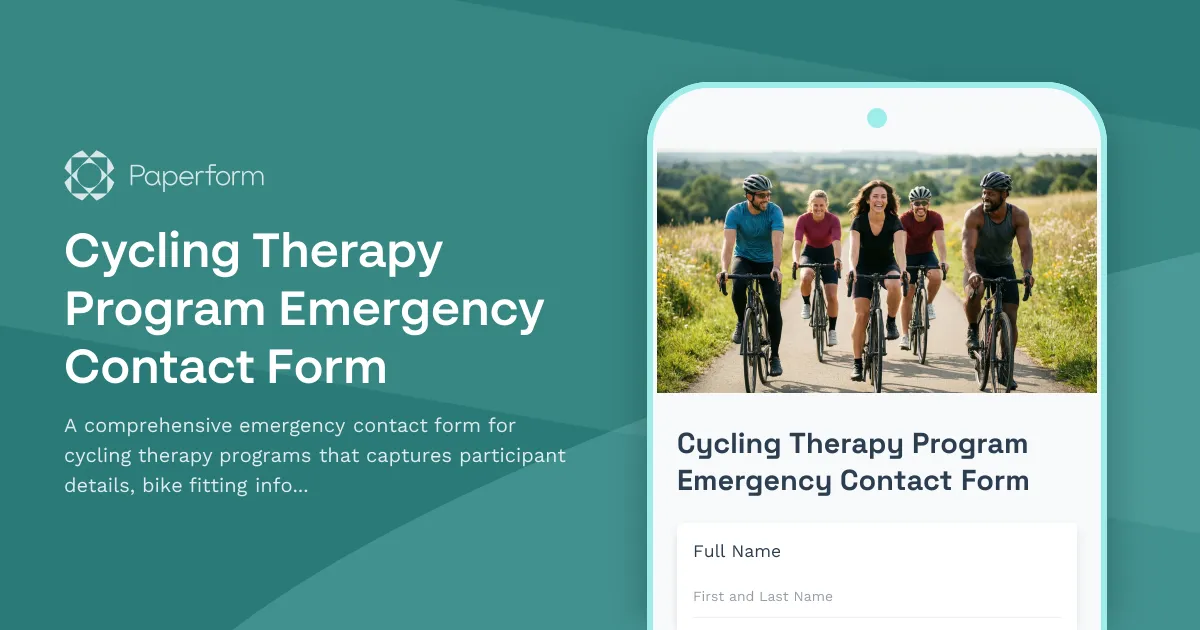
Cycling Therapy Program Emergency Contact Form
A comprehensive emergency contact form for cycling therapy programs that captures participant details, bike fitting information, road safety knowledge, group ride preferences, and emergency contacts.
Running Therapy Group Emergency Contact Form
Comprehensive emergency contact and health intake form for running therapy groups, including injury history, running shoe assessment, pace preferences, and mental health crisis protocol information.
Sports Team Emergency Contact Form
Comprehensive emergency contact form for sports teams capturing medical history, insurance details, concussion protocol acknowledgment, and emergency contacts for athlete safety.
Ashram Resident Emergency Contact Form
A comprehensive emergency contact form for ashram residents that captures vital information including yoga teaching credentials, karma yoga assignments, spiritual relationships, and health protocols for intentional community living.
Bodybuilding Gym Emergency Contact Form
Comprehensive emergency contact form for bodybuilding gym members including competition history, supplement information, training schedules, and pre-competition coordination.
Horticulture Therapy Program Emergency Contact Form
A comprehensive emergency contact form for horticulture therapy programs that captures participant information, plant allergies, outdoor tolerance levels, gardening experience, and therapeutic goals.
Martial Arts Dojo Emergency Contact Form
Comprehensive emergency contact and medical information form for martial arts students, including belt rank, injury history, concussion tracking, and sparring clearance documentation.
Missing Youth Athlete Report Form
Report a missing youth athlete at a sports tournament with team details, medical information, and emergency contacts to alert tournament staff and coordinate a rapid response.
Pediatric Fitness Program Emergency Contact Form
A comprehensive emergency contact and participant information form for pediatric fitness programs, capturing child health details, activity preferences, special accommodations, and guardian information.
Strongman Training Emergency Contact Form
A comprehensive emergency contact and medical information form designed for strongman athletes to document training history, medical conditions, and emergency contacts for gym safety protocols.
Yoga Retreat Emergency Contact Form
Comprehensive emergency contact and participant information form for yoga retreats, capturing medical history, dietary needs, experience levels, and safety acknowledgments.
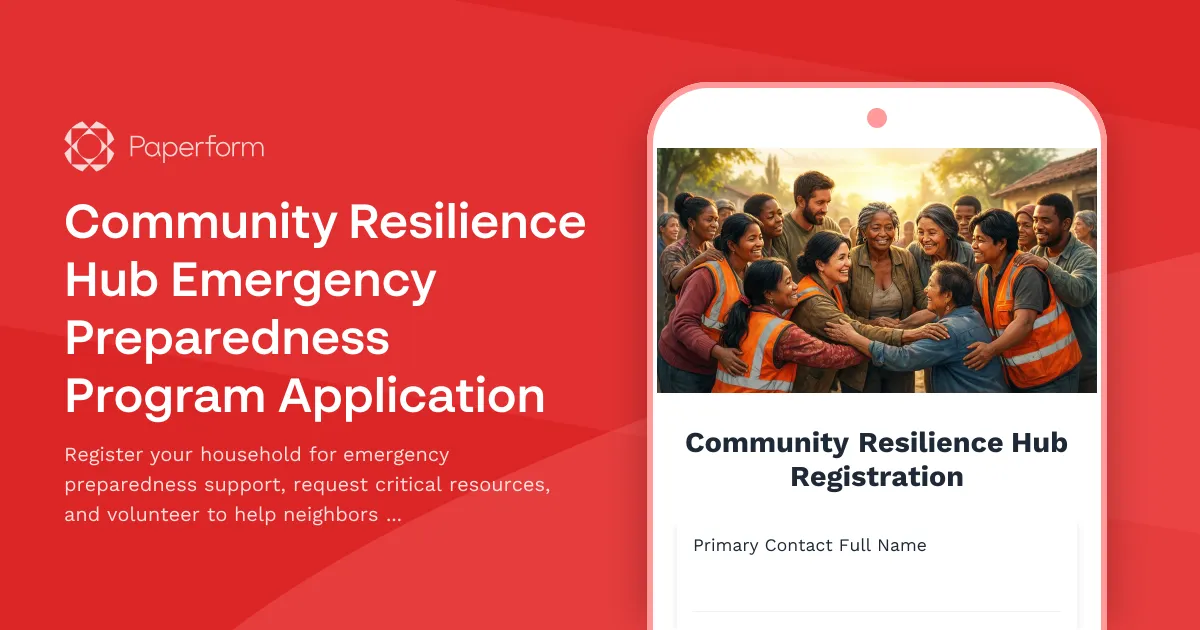
Community Resilience Hub Emergency Preparedness Program Application
Register your household for emergency preparedness support, request critical resources, and volunteer to help neighbors during disasters through our community resilience hub program.