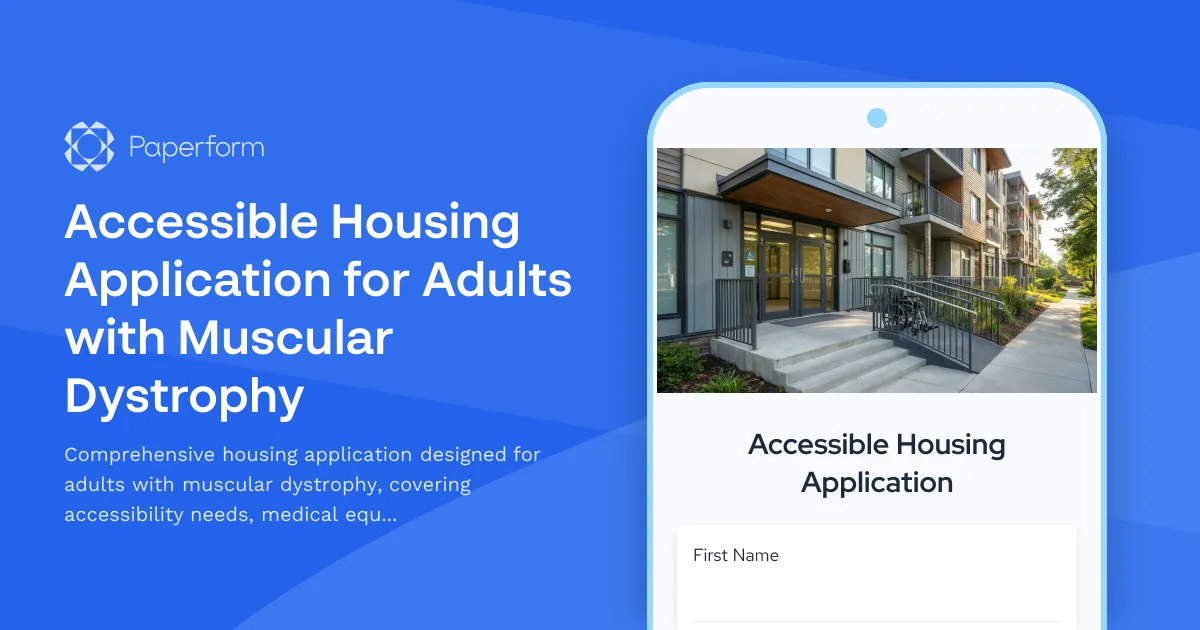
Streamline Accessible Housing Applications with Paperform
Finding suitable housing when living with muscular dystrophy presents unique challenges that go far beyond standard rental applications. Adults with progressive neuromuscular conditions need housing providers who understand their evolving accessibility needs, medical equipment requirements, and care coordination logistics. This Accessible Housing Application for Adults with Muscular Dystrophy template helps housing providers, assisted living facilities, and adaptive housing organizations gather comprehensive information while treating applicants with dignity and professionalism.
Why This Template Matters for Healthcare Housing Providers
Traditional housing applications weren't designed with progressive conditions in mind. This specialized template addresses the real-world needs of adults with muscular dystrophy by capturing:
- Current and anticipated accessibility requirements as the disease progresses
- Durable medical equipment (DME) specifications including power wheelchairs, ceiling lifts, ventilators, and adaptive technology
- Care team coordination details for seamless communication between housing staff, healthcare providers, and family caregivers
- Progressive disease planning to ensure housing remains suitable as needs evolve
- Palliative care preferences and advance care planning information when appropriate
For property managers at accessible housing facilities, rehabilitation centers, adult care communities, and nonprofit housing organizations serving people with disabilities, this template ensures you collect all necessary information upfront while demonstrating genuine understanding of your residents' needs.
How Paperform Makes Accessible Housing Applications Better
Paperform's flexible, document-style editor lets you create an application that feels professional and compassionate rather than cold and clinical. The conditional logic features are particularly valuable here—questions about progressive planning or palliative care coordination only appear when relevant, preventing applicants from answering unnecessary questions while ensuring comprehensive information gathering when needed.
The multi-page layout breaks this complex application into digestible sections: personal information, current health status, accessibility needs, equipment requirements, care coordination, progressive planning, and emergency contacts. This thoughtful structure reduces cognitive load for applicants who may be managing fatigue or other symptoms while completing the form.
For housing coordinators and intake specialists, Paperform's automation capabilities streamline what would otherwise be a paper-heavy process. Once submitted, applications can automatically route to the appropriate team members, trigger follow-up emails requesting additional documentation, update your resident management system, and create tasks for accessibility assessment teams.
Enhance Your Workflow with Stepper and Papersign
The housing application is just the beginning of your resident intake process. Stepper (stepper.io) can transform each submission into a complete onboarding workflow—automatically sending lease agreements for review, coordinating move-in inspections with maintenance teams, scheduling care coordination meetings between the resident and facility nurses, updating occupancy tracking systems, and triggering welcome sequences with facility orientation materials.
For lease agreements, accommodation addendums, medical equipment liability waivers, and resident rights documentation, Papersign (papersign.com) provides HIPAA-adjacent security features and audit trails that keep all signature requests connected to the original application. This creates a seamless paper trail from application through lease signing without residents having to re-enter information across multiple platforms.
Who Benefits Most from This Template
This form template is specifically designed for:
- Accessible housing providers and adaptive apartment complexes serving adults with physical disabilities
- Assisted living facilities with specialized neuromuscular disease programming
- Nonprofit housing organizations focused on disability accommodation and independent living
- Rehabilitation centers with long-term residential programs
- Property management companies managing accessible units under ADA or Fair Housing requirements
- Healthcare housing coordinators placing patients transitioning from hospital to community settings
The template works equally well for fully accessible new construction communities and existing facilities adding accessible units or retrofitting spaces for residents with progressive conditions.
Building Trust Through Thoughtful Design
When someone is applying for housing while managing a progressive condition like muscular dystrophy, the application itself sends a powerful message about whether your organization truly understands their needs. This template demonstrates expertise in disability services through its comprehensive yet respectful approach to gathering medical and accessibility information.
The form balances thoroughness with empathy—asking about ventilator requirements and ceiling lift specifications alongside standard rental history, collecting emergency contact information and advance directive preferences without making assumptions about disease trajectory, and requesting care team details while respecting resident autonomy and privacy.
By using Paperform's design flexibility, you can match this application to your organization's brand while maintaining the professional, accessible aesthetic that builds confidence with applicants and their families. Add your logo, adjust colors to ensure sufficient contrast for visual accessibility, and customize confirmation messages to provide clear next steps and realistic timelines.
SOC 2 Type II Security for Sensitive Health Information
While Paperform is not HIPAA compliant, it does maintain SOC 2 Type II certification and robust security practices appropriate for handling the sensitive health and disability information contained in these applications. For organizations requiring HIPAA compliance, consider this form as an initial inquiry tool, with full medical documentation collected through your certified EHR or practice management system.
Getting Started with Your Accessible Housing Application
This template comes pre-built with all the essential sections for muscular dystrophy-specific housing applications, ready to customize for your facility's specific requirements. Adjust questions about building amenities to reflect your actual features, modify care coordination sections to match your staffing model, and add region-specific fair housing or disability rights disclosures as needed.
With Paperform's intuitive editing experience, your housing team can own and update this application without waiting on IT or external developers—essential when accessibility standards evolve or your facility adds new adaptive features and services.
Whether you're operating a small group home or managing a large accessible housing community, this template provides the foundation for respectful, comprehensive resident intake that sets the stage for successful, long-term housing relationships with adults living with muscular dystrophy.

More templates like this
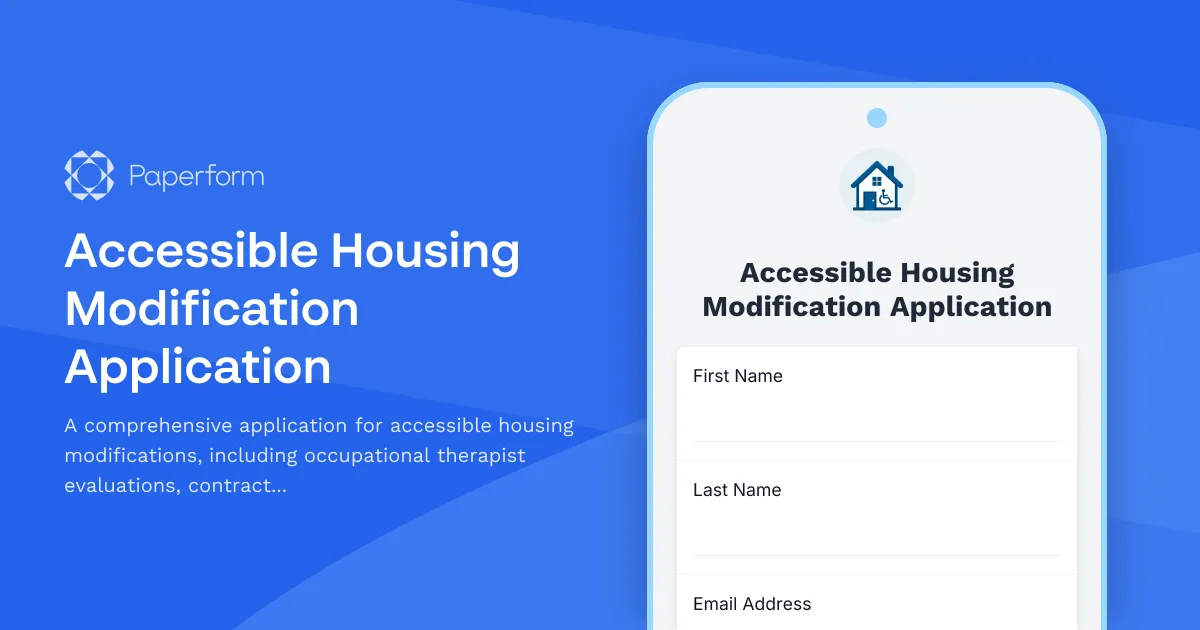
Accessible Housing Modification Application
A comprehensive application for accessible housing modifications, including occupational therapist evaluations, contractor approvals, and funding coordination.
ALS-Accessible Housing Application
A compassionate housing application designed specifically for adults living with ALS, featuring adaptive technology accommodations, caregiver space requirements, and optional support planning resources.
Cancer Survivor Housing Application - Follow-Up Care & Support Services
A compassionate housing application designed specifically for cancer survivors seeking accommodation near treatment facilities, with built-in support for fatigue management, emotional wellness, and survivorship care coordination.
Accessible Housing Application for Adults with Autism Spectrum Disorder
A comprehensive, inclusive housing application designed specifically for adults with autism spectrum disorder, covering sensory needs, routine preferences, and communication support requirements.
Accessible Housing Application for Adults with Myasthenia Gravis
Specialized housing application for individuals with myasthenia gravis, featuring accessibility assessments, energy conservation needs, medication management support, and healthcare proximity requirements.
Accessible Housing Application for Adults with Spinal Cord Injury
A comprehensive accessible housing application designed for adults with spinal cord injuries, featuring wheelchair accessibility requirements, adaptive equipment needs, and personal care assistance coordination.
Accessible Housing Application for Individuals with Lupus
A specialized rental application for individuals with lupus, designed to assess accommodation needs including sun exposure protection, fatigue management, and proximity to rheumatology care.
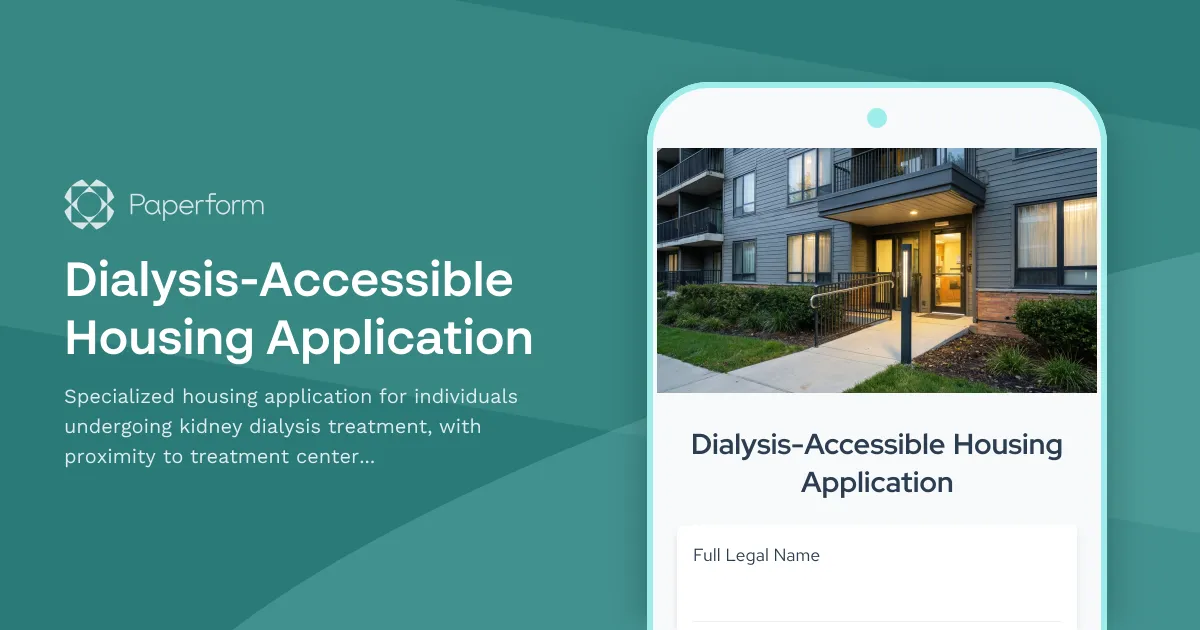
Dialysis-Accessible Housing Application
Specialized housing application for individuals undergoing kidney dialysis treatment, with proximity to treatment centers, flexible lease terms, and health-focused amenities.
Housing Application for Adults with Multiple Sclerosis
A specialized housing application designed for adults with multiple sclerosis, featuring accessibility requirements including temperature control, mobility aids storage, and medication refrigeration needs.
Accessible Housing Application for Adults with Fibromyalgia
A specialized housing application designed for adults with fibromyalgia seeking low-stimulation living environments with access to pain management and rheumatology care.
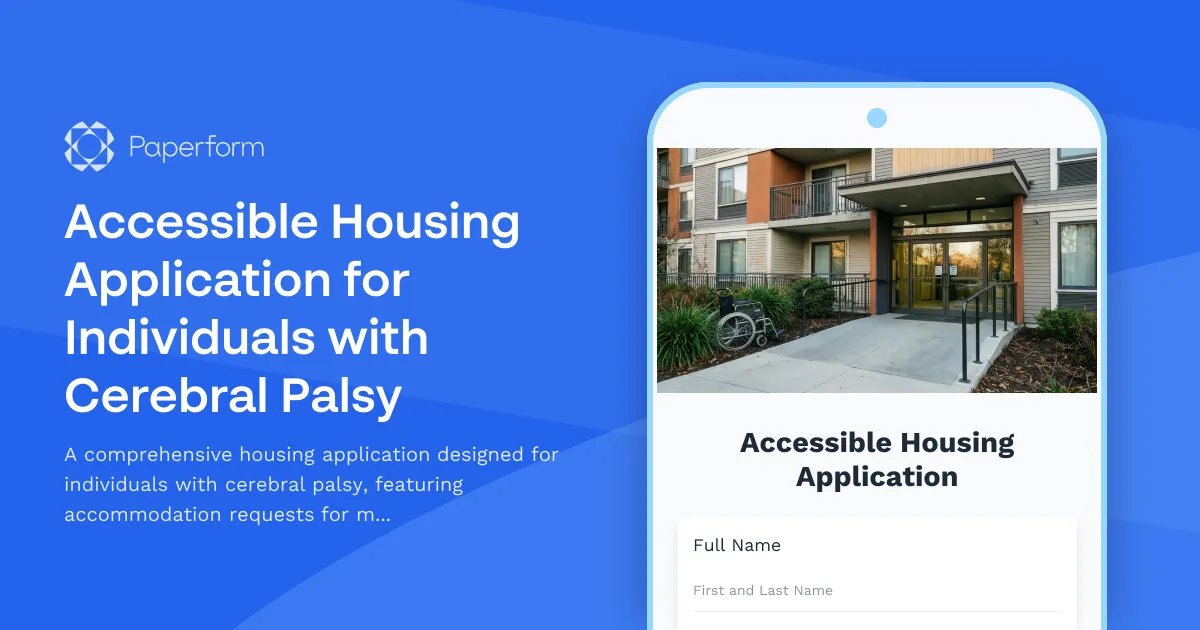
Accessible Housing Application for Individuals with Cerebral Palsy
A comprehensive housing application designed for individuals with cerebral palsy, featuring accommodation requests for mobility equipment, personal care attendant space, and accessible transportation needs.
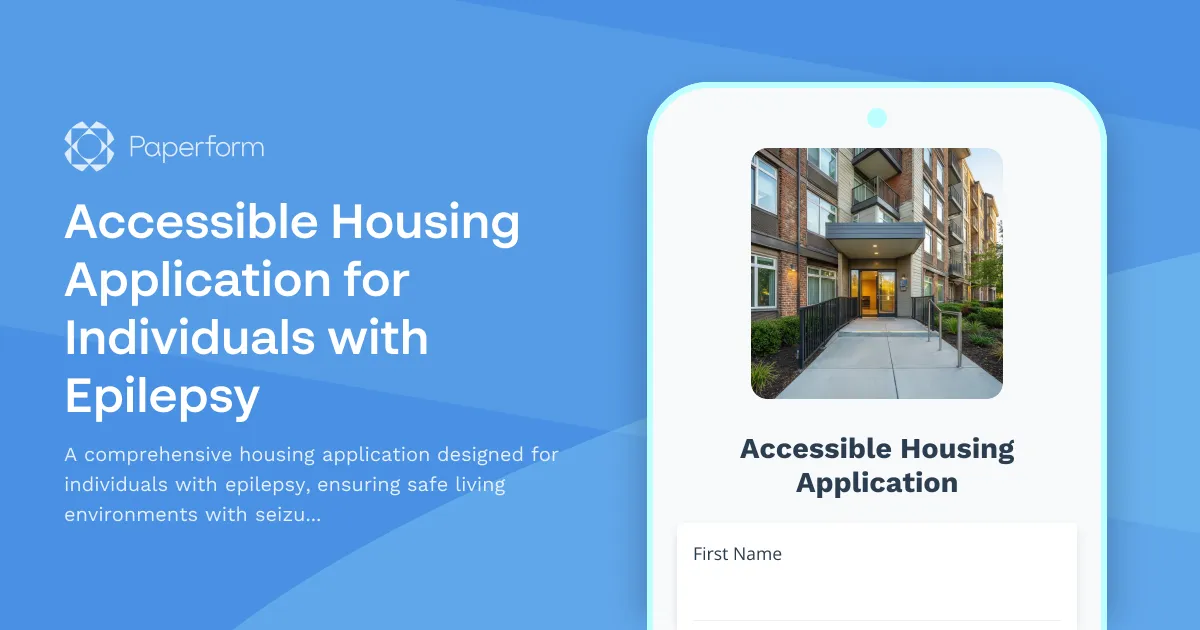
Accessible Housing Application for Individuals with Epilepsy
A comprehensive housing application designed for individuals with epilepsy, ensuring safe living environments with seizure-safety features, secure medication storage, and accessible transportation to medical appointments.