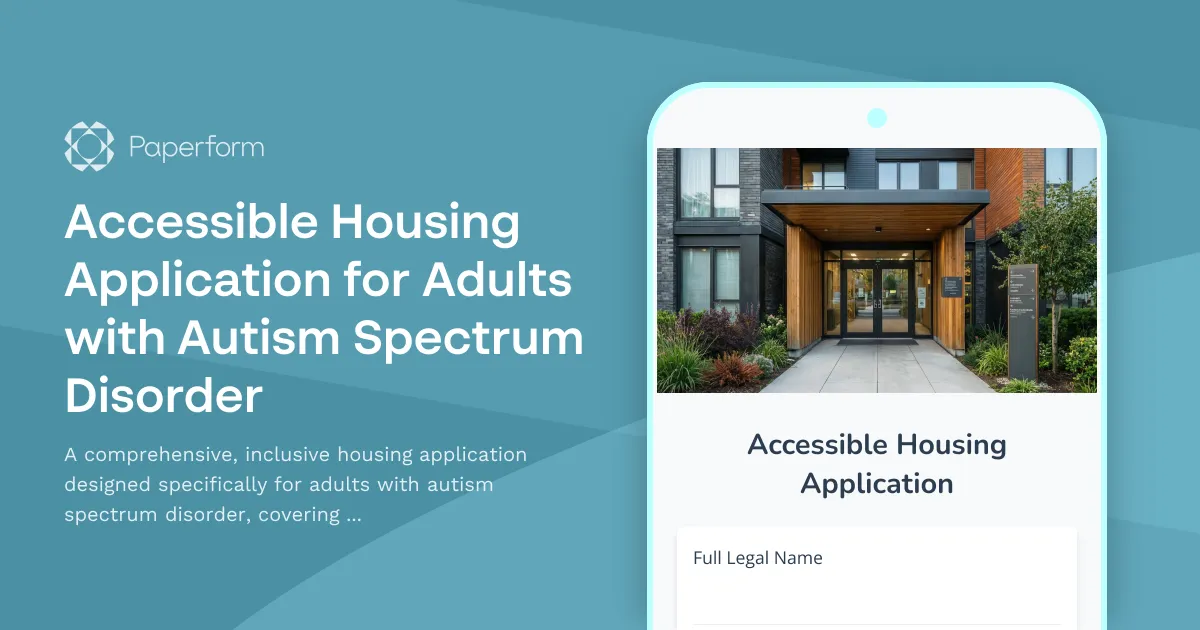
Finding the Right Home: Accessible Housing for Adults with Autism
Finding suitable housing is a critical step toward independence for adults with autism spectrum disorder (ASD). But traditional housing applications rarely account for the unique sensory, communication, and routine considerations that make a living space truly accessible and comfortable for neurodivergent individuals.
This Accessible Housing Application for Adults with Autism Spectrum Disorder is designed to bridge that gap. Purpose-built for supported housing providers, disability services organizations, nonprofit housing agencies, and property managers who specialize in accessible accommodations, this template goes beyond standard rental criteria to capture the information that truly matters for successful, sustainable tenancy.
Why This Template Works for Specialized Housing Providers
Unlike generic rental applications that focus solely on credit scores and employment history, this form recognizes that compatibility between a person and their living environment involves sensory comfort, communication preferences, daily routine structure, and the right level of support. By gathering comprehensive information upfront, housing providers can:
- Match residents with appropriate environments based on sensory sensitivities (noise, lighting, textures, smells)
- Design personalized support plans that respect communication preferences and routine needs
- Prevent tenancy breakdowns by understanding triggers and accommodation requirements from day one
- Demonstrate compliance with ADA and Fair Housing Act requirements through documented accommodation processes
What Makes This Application Different
This template includes specialized sections rarely found in standard housing applications:
Sensory Environment Preferences: Detailed questions about sensitivity to noise, light, temperature, textures, and smells help match applicants with appropriate units and floors. Understanding whether someone needs blackout curtains, sound dampening, or fragrance-free common areas can make the difference between a home and an overwhelming environment.
Routine and Structure Needs: For many adults with autism, predictable routines aren't preferences—they're essential for managing anxiety and maintaining wellbeing. This section captures daily routine patterns, needed consistency in staff schedules, and how changes should be communicated to support successful transitions.
Communication Support Requirements: Questions about preferred communication methods (verbal, written, visual, AAC devices), processing time needs, and literal interpretation tendencies help staff communicate effectively and avoid misunderstandings that could escalate unnecessarily.
Support Service Coordination: Integration with case managers, support coordinators, occupational therapists, and other service providers ensures housing doesn't exist in isolation from the broader support network.
Built for Compliance and Compassion
Organizations serving adults with disabilities operate under strict regulatory frameworks. This Paperform template helps you maintain compliance while providing person-centered care:
- Reasonable accommodation requests are documented properly for ADA compliance
- Emergency contact and medical information sections meet duty-of-care requirements
- Conditional logic shows or hides questions based on support needs, preventing form fatigue
- Digital accessibility ensures the form itself is navigable for applicants with various abilities
All submissions flow directly into your existing systems through Paperform's extensive integrations with case management software, Google Sheets, Airtair, or CRMs like Salesforce and HubSpot.
Streamline Your Intake Process with Workflow Automation
Once an application is submitted, Stepper can automatically initiate your review and approval workflow:
- Route applications to appropriate review teams based on support level needs
- Schedule intake interviews and property tours automatically
- Request additional documentation from applicants or their support coordinators
- Update your property management system with applicant information
- Trigger background check and reference verification processes
- Send status updates to applicants and their designated contacts
This automation reduces administrative burden while ensuring every application receives timely, consistent attention.
Designed for Healthcare, Nonprofit, and Social Service Providers
This template is ideal for:
- Disability housing nonprofits providing supported living environments
- Group home operators seeking compatible housemate matches
- Supportive housing programs attached to mental health or developmental services
- Property managers with accessible or subsidized units designated for individuals with disabilities
- Case managers and social workers helping clients secure appropriate housing
- Transition programs supporting young adults aging out of family homes or residential facilities
Customization Without Complexity
Every organization has different programs, support levels, and intake processes. Paperform's document-style editor makes it simple to adapt this template to your specific needs:
- Add or remove sections based on your service model (fully independent, supported independent living, group homes, etc.)
- Incorporate your organization's branding, logos, and visual identity
- Adjust questions to align with your state's regulations and funding source requirements
- Create multiple versions for different property types or support levels
- Translate into multiple languages for diverse communities
No coding required—just type, format, and publish like you would edit a document.
Integration with eSignatures for Lease Agreements
Once an application is approved, you can use Papersign to seamlessly transition to the lease signing process. Generate customized lease agreements that incorporate the accommodations and support arrangements documented in the application, then send for secure eSignature from the tenant, guarantors, and any involved agencies or support coordinators. Everything stays connected to the original application for a complete audit trail.
A Foundation for Inclusive Housing
Housing insecurity disproportionately affects adults with autism and other developmental disabilities. By using application processes that actually recognize and accommodate neurodivergent needs, housing providers can improve outcomes, reduce turnover, and create truly supportive living environments.
This template represents a commitment to person-centered practices, where applications aren't barriers to overcome but conversations about creating the right match between individual and environment. With Paperform's intuitive platform, you can deploy this accessible application in minutes and start gathering the information that leads to successful, sustainable housing placements.
Trusted by thousands of healthcare and nonprofit organizations worldwide, Paperform provides SOC 2 Type II compliance, GDPR adherence, and the security features necessary for handling sensitive applicant information with care and professionalism.



More templates like this
Accessible Housing Application for Adults with Spinal Cord Injury
A comprehensive accessible housing application designed for adults with spinal cord injuries, featuring wheelchair accessibility requirements, adaptive equipment needs, and personal care assistance coordination.
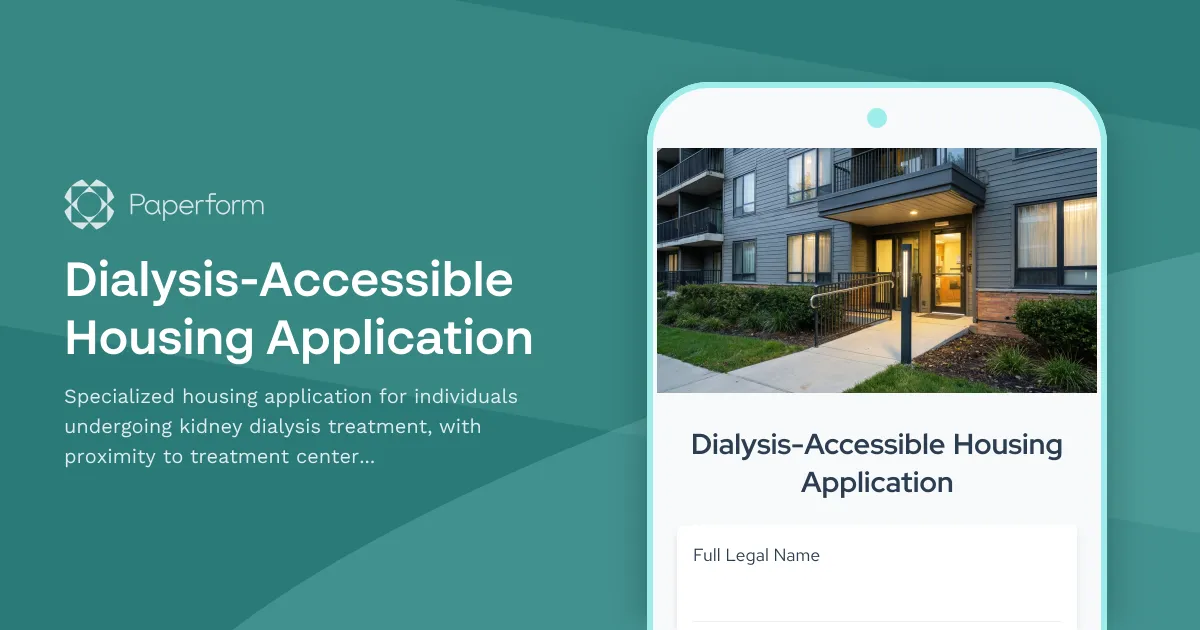
Dialysis-Accessible Housing Application
Specialized housing application for individuals undergoing kidney dialysis treatment, with proximity to treatment centers, flexible lease terms, and health-focused amenities.
Medical Housing Application for Chemotherapy Patients
A compassionate housing application for chemotherapy patients seeking temporary accommodation near treatment centers with accessible features, medical equipment storage, and caregiver support.
Accessible Housing Application for Individuals with Lupus
A specialized rental application for individuals with lupus, designed to assess accommodation needs including sun exposure protection, fatigue management, and proximity to rheumatology care.
Accessible Housing Modification Application
A comprehensive application for accessible housing modifications, including occupational therapist evaluations, contractor approvals, and funding coordination.
ALS-Accessible Housing Application
A compassionate housing application designed specifically for adults living with ALS, featuring adaptive technology accommodations, caregiver space requirements, and optional support planning resources.
Supportive Housing Application for Individuals with Disabilities
A comprehensive housing application designed for individuals with disabilities seeking supportive housing, including detailed accessibility requirements and care coordination information.
Accessible Housing Application for Adults with Fibromyalgia
A specialized housing application designed for adults with fibromyalgia seeking low-stimulation living environments with access to pain management and rheumatology care.
Accessible Housing Application for Adults with Muscular Dystrophy
Comprehensive housing application designed for adults with muscular dystrophy, covering accessibility needs, medical equipment requirements, progressive disease planning, and care coordination.
Accessible Housing Application for Adults with Myasthenia Gravis
Specialized housing application for individuals with myasthenia gravis, featuring accessibility assessments, energy conservation needs, medication management support, and healthcare proximity requirements.
Accessible Housing Application for Individuals with Epilepsy
A comprehensive housing application designed for individuals with epilepsy, ensuring safe living environments with seizure-safety features, secure medication storage, and accessible transportation to medical appointments.
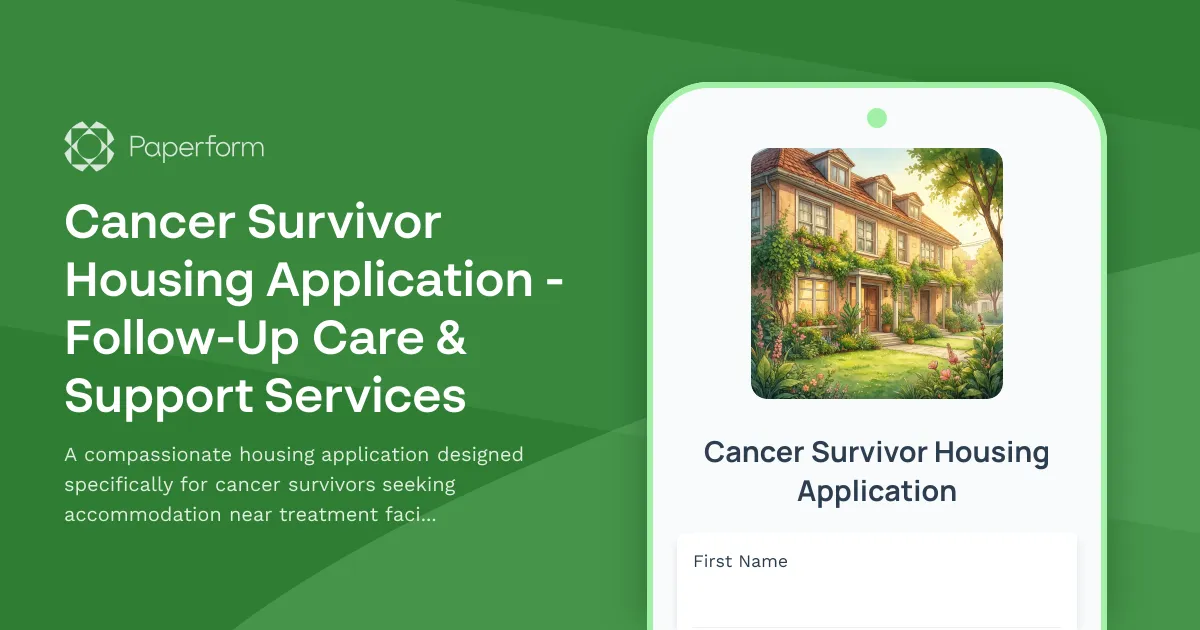
Cancer Survivor Housing Application - Follow-Up Care & Support Services
A compassionate housing application designed specifically for cancer survivors seeking accommodation near treatment facilities, with built-in support for fatigue management, emotional wellness, and survivorship care coordination.