Welding flash burns—also known as arc eye or welder's flash—are serious occupational hazards that require immediate documentation and follow-up. This Welding Flash Burn Incident Report template helps construction firms, manufacturing facilities, fabrication shops and industrial contractors capture every critical detail when a flash burn occurs, from PPE compliance to equipment inspection.
Built for safety managers, supervisors and HSE teams, this template streamlines the incident reporting process while ensuring you meet OSHA recordkeeping requirements and internal safety protocols. It walks you through the essential sections: incident details, injured worker information, PPE verification, eye injury assessment, witness statements, equipment inspection findings and corrective actions.
Why Paperform for incident reporting?
Paperform's conditional logic ensures that follow-up questions appear only when relevant—if PPE wasn't worn, you'll be prompted to explain why; if equipment failed, inspection fields open automatically. That means faster, more accurate reports with less back-and-forth. Plus, with Stepper (stepper.io), you can automate the entire post-incident workflow: notify the safety team, create a case in your incident management system, schedule follow-up inspections and route reports to HR or legal—all triggered the moment someone hits Submit.
For organisations managing multiple sites or clients, Paperform's Agency+ tier lets you deploy branded incident forms across locations while maintaining centralised oversight and SOC 2 Type II compliance. Because welding incidents can involve regulatory scrutiny, having a secure, auditable trail is essential—and Paperform delivers that foundation without requiring IT support.
Whether you're a contractor, facilities manager or safety officer, this template helps you act fast, document thoroughly and keep your team safe.



More templates like this
Dust Suppression System Inspection Form
A comprehensive safety inspection form for evaluating dust suppression systems, water spray functionality, coverage adequacy, and runoff collection compliance on construction sites.

Industrial Grinding Booth Installation Request Form
A comprehensive installation form for industrial grinding booths including dust collection systems, explosion-proof fixtures, spark containment measures, and airflow specifications for safe metalworking operations.
Rigging and Lifting Equipment Annual Certification Form
Comprehensive annual certification form for rigging and lifting equipment with load testing results, visual inspection checklists, and maintenance history documentation to ensure workplace safety compliance.
Silica Dust Air Sampling & Exposure Assessment Form
Comprehensive respirable crystalline silica exposure monitoring form for construction and industrial worksites. Document personal air sampling, monitor placement, sampling duration, and lab analysis results to ensure OSHA compliance.
Solar Panel Installation Fall Protection Incident Report
Document fall protection incidents, installer injuries, and roof access safety issues during solar panel installations. OSHA-compliant reporting for solar contractors and construction managers.

Weekly Crane Inspection Checklist
Comprehensive weekly crane safety inspection form covering wire rope condition, hook latch function, load moment indicators, fluid levels, and critical safety components to ensure compliance and prevent equipment failure.
Aircraft Maintenance Hangar Evacuation Form
A comprehensive emergency evacuation and headcount form for aircraft maintenance facilities that tracks personnel, equipment status, and safety protocols during evacuations.
Angle Grinder and Abrasive Wheel Inspection Form
A comprehensive safety inspection form for angle grinders and abrasive wheels, ensuring compliance with workplace safety standards through systematic checks of equipment condition, guard positioning, and wheel expiration dates.
Asbestos Abatement Near Miss Report
Document near miss incidents during asbestos abatement projects, including containment breaches, exposure monitoring, and EPA notification triggers to ensure safety compliance.
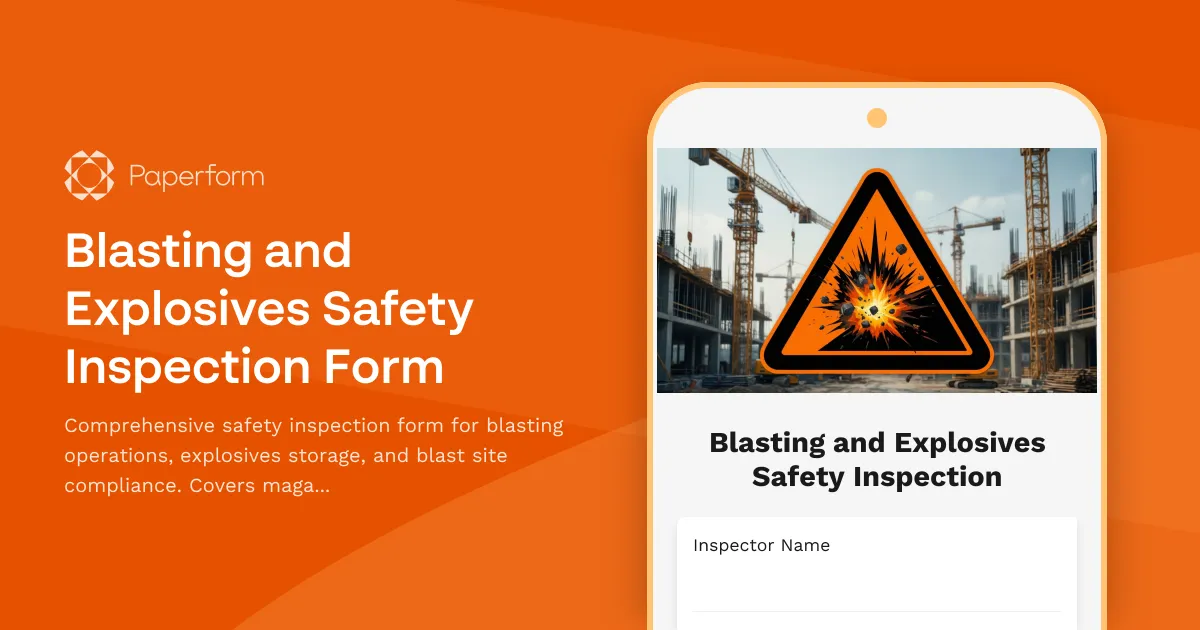
Blasting and Explosives Safety Inspection Form
Comprehensive safety inspection form for blasting operations, explosives storage, and blast site compliance. Covers magazine security, lightning protection, blast area clearance, and regulatory compliance requirements.
Chemical Plant Process Safety Near Miss Report
A comprehensive near miss reporting form designed for chemical plants with PSM compliance checklists, incident severity assessment, and investigation workflow management.
Commercial HVAC Installation Fall Accident Report
Document accidents and injuries during commercial HVAC installations, including fall incidents, roof access safety details, technician injuries, and contractor insurance claim information.