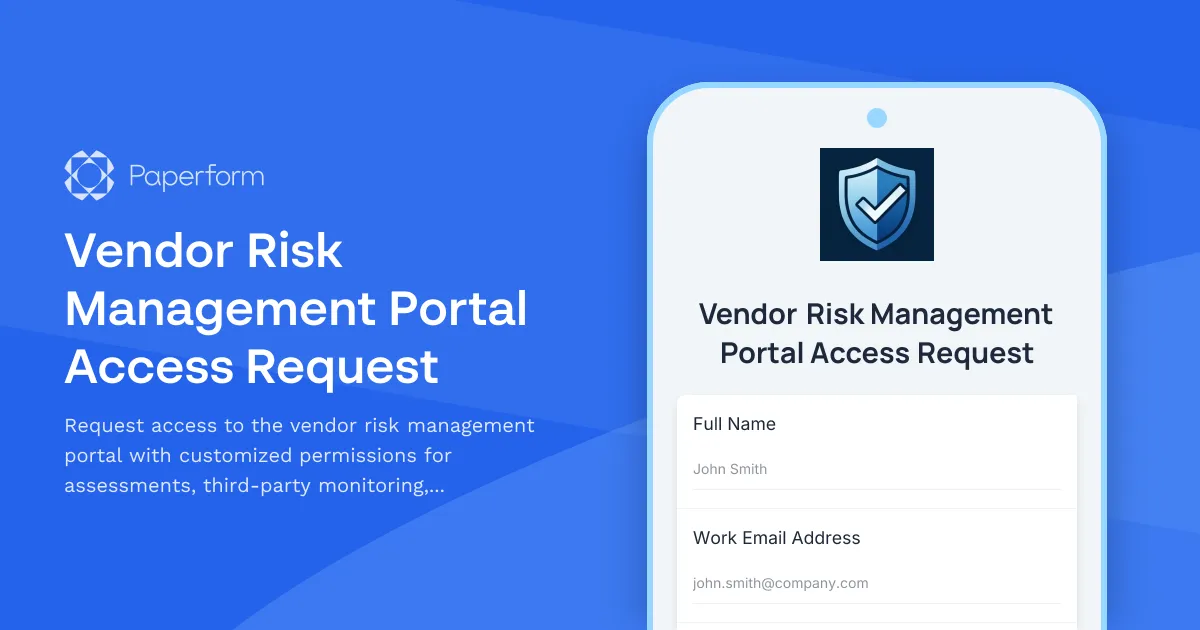
Streamline Vendor Risk Management Access with Paperform
Managing third-party vendor risk requires careful coordination between procurement, compliance, security, and operations teams. This Vendor Risk Management Portal Access Request template helps IT and security teams efficiently onboard internal users and external stakeholders to your vendor risk platform while maintaining appropriate access controls.
Whether you're granting assessment assignment permissions to risk analysts, monitoring capabilities to compliance officers, or remediation tracking access to vendor managers, this form captures all the necessary details to provision the right level of access quickly and securely.
Perfect for IT professionals, compliance officers, and security teams
This template is designed for organizations that manage vendor relationships at scale and need a structured process for granting portal access. IT administrators, security operations teams, risk management professionals, and compliance officers can use this form to standardize access requests, reduce manual provisioning errors, and maintain a clear audit trail of who has access to sensitive vendor data.
The form captures essential information including the requestor's role, their specific access needs (assessment assignment, third-party monitoring, or remediation tracking), vendor scope, and business justification. Conditional logic ensures that only relevant follow-up questions appear based on the selected permission type, creating a streamlined experience.
Automate access workflows with Stepper
Once submitted, you can connect this form to Stepper to automate your entire access provisioning workflow. Route requests to the appropriate approvers based on permission level, automatically create tickets in your IT service management system, send provisioning instructions to your identity management platform, and trigger onboarding emails—all without manual intervention.
Stepper can also help you maintain compliance by logging all access grants, scheduling periodic access reviews, and sending renewal reminders before permissions expire. This ensures your vendor risk management portal maintains the principle of least privilege while keeping your third-party oversight running smoothly.
Built for security-conscious organizations
Paperform is SOC 2 Type II compliant and offers enterprise-grade security features including SSO, role-based permissions, and detailed audit logs—exactly what IT and security teams need when managing access to sensitive vendor risk data. With over 500,000 teams trusting Paperform worldwide, you can confidently digitize your access management processes while maintaining the security standards your organization demands.


More templates like this
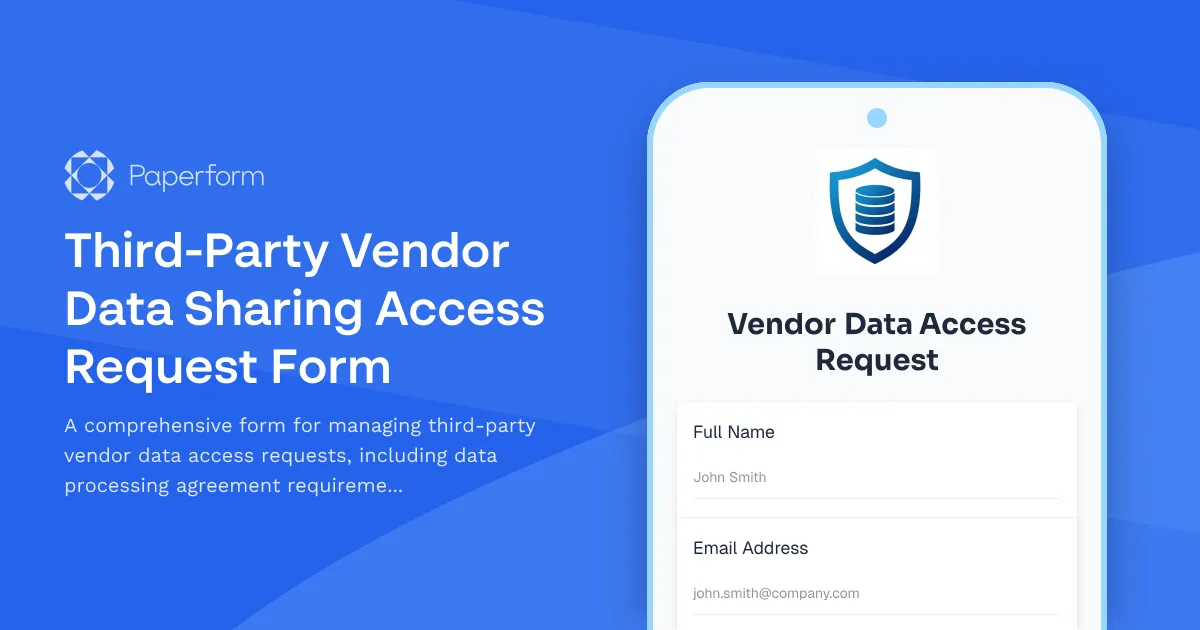
Third-Party Vendor Data Sharing Access Request Form
A comprehensive form for managing third-party vendor data access requests, including data processing agreement requirements, security assessments, and purpose limitation controls for IT and compliance teams.
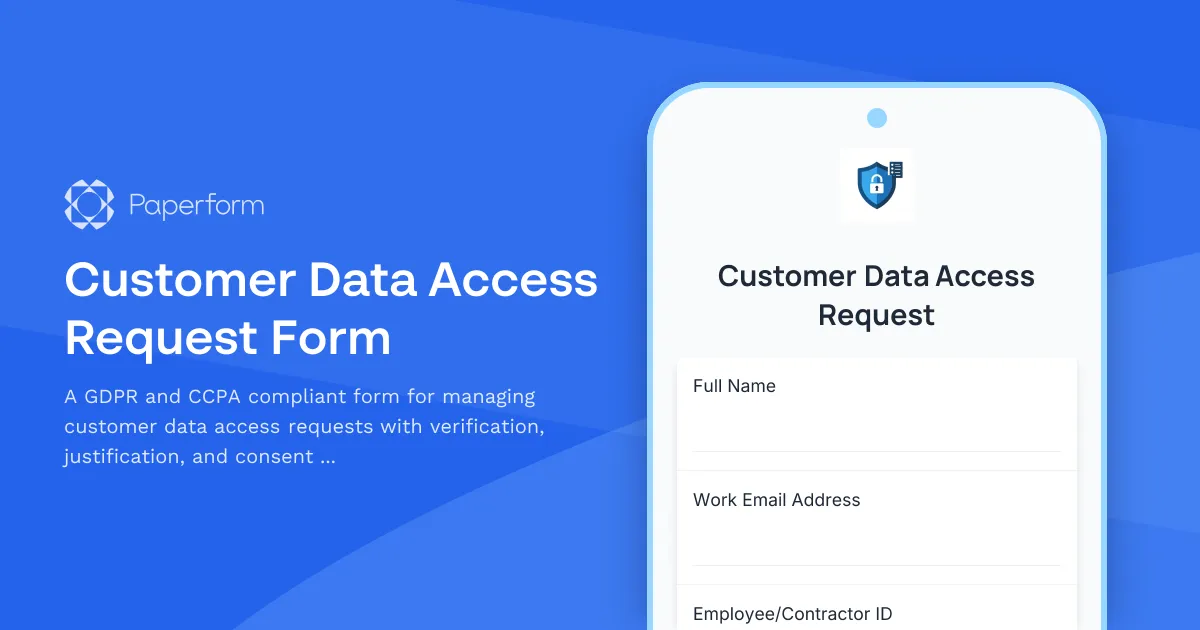
Customer Data Access Request Form
A GDPR and CCPA compliant form for managing customer data access requests with verification, justification, and consent tracking.
Mobile Device Security Compliance Form
A comprehensive mobile device security compliance form for BYOD programs, featuring policy acknowledgment, encryption verification, and remote wipe authorization to protect company data.
Privileged Access Request Form
Request temporary or permanent admin rights with business justification and security approval. Streamline privileged access management for IT teams.
Corporate VPN Access Request Form
Streamline remote access requests with this corporate VPN access form. Collect employee details, device information, security clearance levels, and route for manager approval—all in one secure workflow.
Cybersecurity Awareness Training Quiz
Test employee knowledge on phishing detection, password security, and data protection with this comprehensive cybersecurity awareness quiz designed for workplace training programs.
Cybersecurity Exception Approval Request Form
A comprehensive form for requesting cybersecurity policy exceptions with risk assessment, compensating controls, business justification, and remediation plans requiring CISO authorization.
Identity and Access Management Quarterly Review Form
Conduct comprehensive IAM quarterly reviews with user provisioning audits, role-based access validation, and orphaned account identification to maintain security compliance and minimize access risks.
IT Security Architecture Review Board Submission Form
Submit security architecture proposals to the review board for evaluation, approval, and decision documentation with comprehensive risk assessments and compliance considerations.
IT Security Architecture Roadmap Update Change Request
Submit and track IT security architecture roadmap changes, strategic initiatives, technology adoption plans, and investment requests for approval.
IT Security Data Classification Change Request Form
Submit and track IT security data classification automation change requests, including labeling rules, handling procedures, and enforcement mechanisms for organizational data governance.
Security Incident Escalation Criteria Definition Form
Define clear escalation criteria for security incidents with severity matrices, notification thresholds, and communication protocols to ensure rapid and appropriate response.