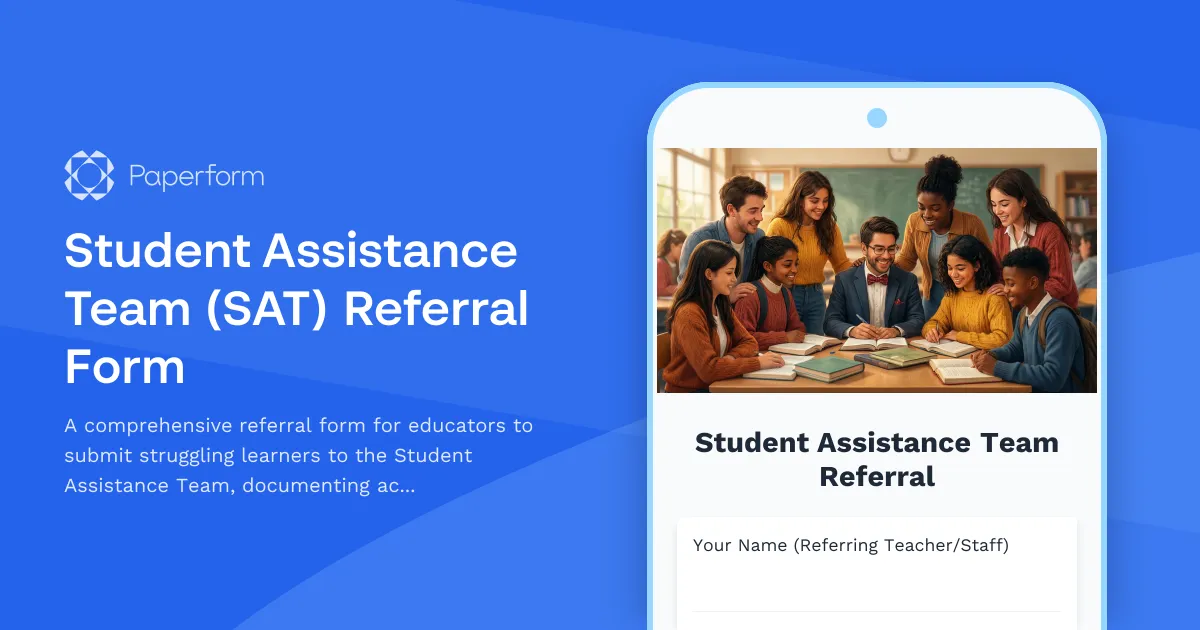
When a student is struggling academically or behaviorally, early intervention can make all the difference. A Student Assistance Team (SAT) referral form helps educators systematically document concerns, track interventions already attempted, and recommend appropriate next steps—all within a structured, collaborative process.
This Student Assistance Team referral template is designed for K-12 schools, special education coordinators, classroom teachers, and intervention specialists who need a clear, consistent way to bring struggling learners to the attention of support teams. Whether you're referring a student for academic difficulties, behavioral challenges, social-emotional needs, or a combination of concerns, this form captures the detail your SAT needs to make informed recommendations.
Paperform makes SAT referrals faster and more actionable. Instead of passing around PDFs or email threads, educators can complete referrals online from any device, with conditional logic that adapts questions based on the type of concern. Submissions automatically notify the SAT coordinator, populate a shared database, and trigger follow-up workflows—like scheduling team meetings, notifying parents, or assigning case managers—through Stepper (stepper.io), Paperform's AI-native workflow builder.
Built for compliance and collaboration, this template includes fields for parent contact and involvement history, previous interventions and their outcomes, academic and behavioral data, and recommended tier-level supports under RTI or MTSS frameworks. Use Paperform's calculation and reporting features to track referral trends, monitor intervention effectiveness, and ensure every student gets the support they need, when they need it.
Trusted by schools and districts that prioritize student success, this SAT referral form template helps you move from concern to action with clarity, consistency, and care.



More templates like this
Community-Based Vocational Training Placement Form
A comprehensive placement form for community-based vocational training programs serving students aged 18-21, covering job coach support, work site agreements, transportation arrangements, and skill development goals.
Functional Life Skills Program Enrollment Form
Enroll students with intellectual disabilities in comprehensive life skills training programs focused on community-based instruction, vocational skills, and independent living competencies.
MTSS Problem-Solving Team Referral Form
A comprehensive multi-tiered system of supports (MTSS) referral form for educators to document student concerns, baseline data, intervention attempts, fidelity checks, and escalation criteria for problem-solving team review.
Postsecondary Transition Assessment for Special Education Students
A comprehensive transition assessment for students age 16+ with disabilities to explore postsecondary goals, career interests, work preferences, and community resources to support successful transition planning.
Related Services Coordination Form
Coordinate speech therapy, OT, PT, and counseling schedules with academic instruction to minimize student pull-out time and maximize learning continuity.
Strengths-Based IEP Development Form
A comprehensive form for developing individualized education plans that focus on student strengths, interests, talents, and learning preferences while incorporating positive behavioral supports.
Transition Plan for Students Aging Out of Special Education
A comprehensive transition planning form for students with disabilities aging out of special education at 21, covering vocational placement, adult services, guardianship, and benefits coordination.
Adapted Curriculum Modification Form
A comprehensive form for documenting curriculum modifications and alternate achievement standards for students with significant cognitive disabilities, focusing on functional skill development and individualized learning goals.
Auditory Processing Disorder Support Plan
A comprehensive support plan form for students with auditory processing disorder, documenting classroom accommodations, sensory needs, and therapy collaboration for optimal learning.
Autism Spectrum Disorder Diagnostic Observation Consent Form
A comprehensive consent and information form for ASD diagnostic observation including ADOS-2 assessment, parent interview, school observation, and multidisciplinary team evaluation.
Autism Spectrum Support Services Intake Form
A comprehensive intake form for autism spectrum support services that captures sensory profiles, communication preferences, social skills assessments, and behavior patterns to create personalized support plans.
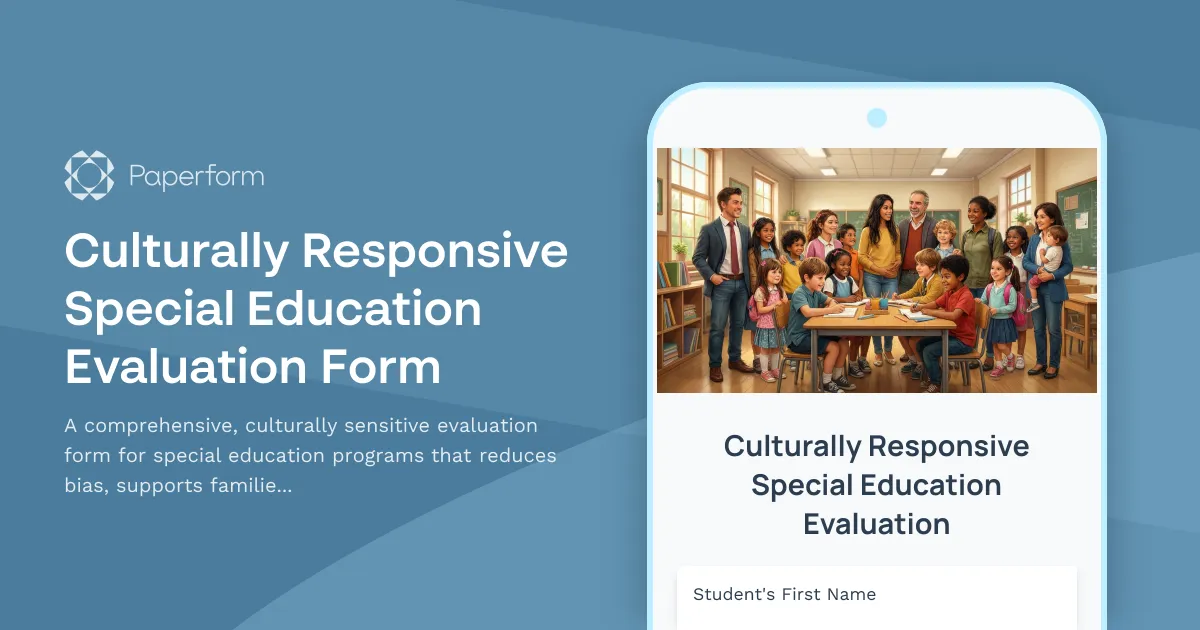
Culturally Responsive Special Education Evaluation Form
A comprehensive, culturally sensitive evaluation form for special education programs that reduces bias, supports families from diverse backgrounds, and ensures equitable assessment practices.