Sterile Processing Technician Training Needs Evaluation
Maintaining excellence in sterile processing is critical to patient safety and surgical outcomes. This Sterile Processing Technician Training Needs Evaluation template helps healthcare facilities, surgical centers, and medical device reprocessing departments identify skill gaps and training opportunities for their sterile processing teams.
Whether you're onboarding new technicians, conducting annual competency assessments, or preparing for regulatory inspections, this form provides a structured approach to evaluating proficiency across all essential sterile processing domains—from decontamination procedures and sterilization techniques to instrument identification, quality assurance protocols, and documentation standards.
Who this form is for
This template is designed for:
- Healthcare facilities conducting competency assessments for central sterile supply departments (CSSD)
- Surgical centers and hospitals evaluating technician skills and certification requirements
- Training coordinators identifying gaps in sterile processing education programs
- Quality assurance managers ensuring compliance with infection control standards
- Department supervisors planning continuing education and professional development
What makes this template effective
Built with Paperform's conditional logic and calculation capabilities, this evaluation adapts to individual technician experience levels and automatically identifies priority training areas. The form covers all critical competency domains required by regulatory bodies and professional certification organizations.
After submission, you can use Stepper to automatically route evaluation results to training coordinators, generate personalized development plans, schedule remedial training sessions, and track competency improvements over time—keeping your team current with best practices and regulatory requirements.
With Paperform's SOC 2 Type II compliance and robust security features, you can confidently collect sensitive performance data while maintaining HIPAA-adjacent best practices for healthcare workforce information.
Streamline competency management
Replace spreadsheets and paper checklists with a professional digital evaluation that provides clear insights into training needs, helps maintain certification standards, and supports your commitment to patient safety through excellence in sterile processing.



More templates like this
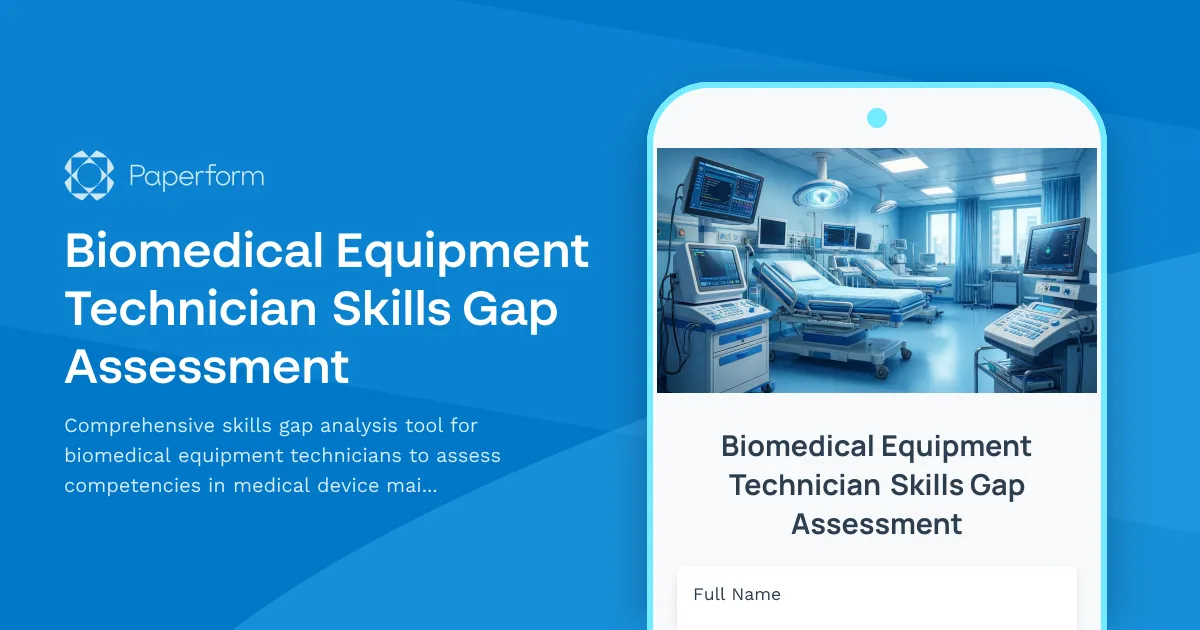
Biomedical Equipment Technician Skills Gap Assessment
Comprehensive skills gap analysis tool for biomedical equipment technicians to assess competencies in medical device maintenance, safety testing, troubleshooting, documentation, and regulatory compliance.
Medical Laboratory Technician Skills Gap Analysis
Assess competency levels across specimen processing, equipment operation, quality control, documentation, and safety protocols to identify training needs for medical laboratory technicians.
Nuclear Medicine Technologist Competency Evaluation
Comprehensive skills assessment for nuclear medicine technologists covering radiopharmaceuticals, imaging equipment, safety protocols, quality control, and patient preparation competencies.
Optometric Technician Skills Gap Analysis & Training Needs Evaluation
Identify training needs and skill gaps for optometric technicians across pretesting procedures, equipment operation, insurance verification, patient education, and practice management systems.
Radiation Safety Officer Training Needs Analysis
A comprehensive skills gap analysis form for radiation safety officers to assess training requirements in regulatory compliance, dosimetry, safety protocols, equipment calibration, and emergency response.
Radiologic Technologist Training Needs Evaluation
Evaluate radiology staff training needs across imaging equipment, positioning techniques, radiation safety, quality assurance, and patient communication to identify skill gaps and development opportunities.
Biomedical Equipment Technician Certification Course Request Form
A comprehensive form for healthcare professionals to request enrollment in biomedical equipment technician certification courses covering medical device repair, preventive maintenance, and safety testing protocols.
Biotechnology Lab Technician Training Needs Assessment
Comprehensive skills gap analysis for biotech lab technicians covering laboratory equipment, research protocols, data management, safety compliance, and analytical techniques.
Cardiac Catheterization Lab Technologist Competency Evaluation
A comprehensive skills assessment form for evaluating cardiac cath lab technologists across sterile technique, hemodynamic monitoring, emergency protocols, and procedure documentation.
Cardiovascular Technology Leadership Track Enrollment Form
Enroll in our specialized cardiovascular technology leadership track designed for experienced CV techs pursuing department management and healthcare administration roles.

Cath Lab Technologist Mentorship Application
A professional mentorship application for cath lab technologists seeking guidance in interventional cardiology procedures, radiation safety, emergency protocols, and career development.
Chiropractic Practice Team Training Needs Assessment
A comprehensive skills gap analysis tool designed to identify training needs across your chiropractic practice team, covering adjustment techniques, patient documentation, insurance verification, treatment planning, and outcome tracking.