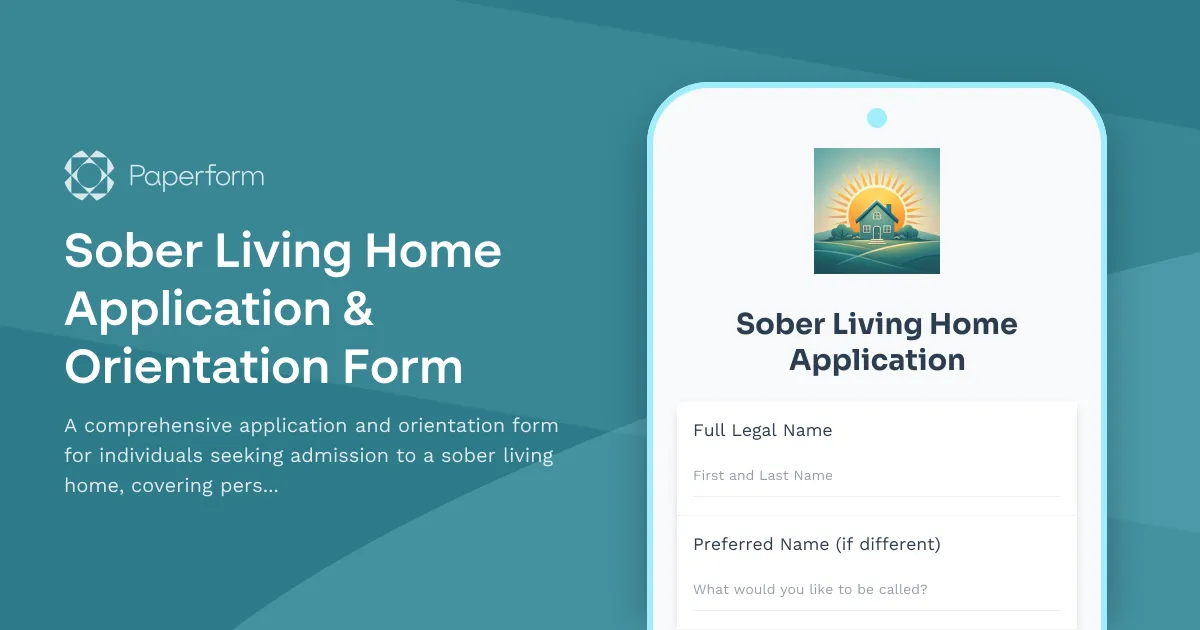
Welcome to Your Recovery Journey
Finding the right sober living environment is a crucial step in maintaining long-term sobriety. This Sober Living Home Application & Orientation Form is designed to help recovery communities efficiently onboard new residents while ensuring everyone understands the commitments, house rules, and support systems that make sober living successful.
Why Sober Living Homes Need Structured Applications
Sober living homes serve as transitional spaces where individuals in recovery can practice sobriety in a supportive, structured environment. A comprehensive intake form helps house managers:
- Screen applicants appropriately to ensure a good fit with the community
- Set clear expectations from day one about house rules and accountability measures
- Coordinate peer support and connect new residents with sponsors and support groups
- Document recovery histories for emergency preparedness and personalized support
- Establish accountability partnerships that strengthen the entire community
How This Template Supports Recovery Communities
This template is specifically designed for sober living home operators, recovery program coordinators, and nonprofit addiction services organizations. It covers:
- Personal information and emergency contacts
- Detailed recovery history and current sobriety status
- Treatment program completion and ongoing support commitments
- House rules acknowledgment and community agreements
- Peer support preferences and accountability partnerships
- Financial responsibility and payment arrangements
Automate Your Sober Living Operations
Paperform makes it easy to manage sober living applications with conditional logic that adapts based on responses, payment processing for deposits and rent, and eSignature capabilities through Papersign for lease agreements and house rule acknowledgments.
You can also connect this form to Stepper to automate your entire intake workflow—automatically send welcome emails, create resident files in Google Drive or Airtarget, notify house managers of new applications, schedule orientation meetings, and trigger background check processes.
Built for Compassionate, Professional Care
This template strikes a balance between gathering necessary information for safety and compliance while maintaining the dignity and privacy of applicants. All data collected through Paperform is protected with SOC 2 Type II compliance and can be configured to meet your organization's specific privacy requirements.
Whether you're running a single sober living home or managing a network of recovery residences, this template provides a professional, welcoming first step that sets residents up for success from day one.
More templates like this
Addiction Recovery Focus Group – Family Member Recruitment
Screen and recruit family members of individuals in addiction recovery for a focus group exploring relationship dynamics, boundary setting, support systems, and Al-Anon participation.
Addiction Recovery Sponsor Readiness Self-Assessment
Evaluate your readiness to become a recovery sponsor with this comprehensive self-assessment covering program knowledge, boundary setting, and crisis intervention skills.
Caregiver Support Group Emergency Contact Form
A comprehensive form for caregiver support groups to collect emergency contact information, assess caregiver burnout, document care recipient conditions, and coordinate respite care and social work referrals.
Crisis Intervention Team Advocacy Registration Form
Register your support for mental health crisis response teams and advocate for improved co-responder programs and de-escalation training in your community.

Discord Mental Health Support Community Application
A comprehensive application form for joining a private Discord mental health support community, with therapist verification for moderator roles, crisis protocol acceptance, and confidentiality agreements.
Grief Support Group Waitlist Form
A compassionate waitlist form for grief support groups that collects information about loss type, timeline, counseling history, and group preferences to match participants with the right support resources.
Neurodiversity-Affirming Autism Support Pledge
A commitment form for individuals and organizations to pledge support for neurodiversity-affirming autism practices, including identity-first language, self-advocacy teaching, and stimming acceptance.
Addiction Recovery Housing Application Form
A comprehensive application form for individuals seeking admission to addiction recovery housing programs. Captures personal information, recovery history, sobriety commitment, treatment completion, employment status, and house rules acknowledgment.
Black Friday Shopping Addiction Support Group Virtual Meeting Signup
A confidential signup form for individuals seeking support for compulsive shopping behaviors during Black Friday. Join our virtual support group with anonymity protection, trigger identification, and sponsor matching.
Chronic Illness Support Group Emergency Contact Form
A comprehensive emergency contact form for chronic illness support groups that captures critical medical information, treatment status, disability accommodations, and specialist coordination details to ensure proper care during emergencies.
Crisis Pregnancy Center Visitor Intake Form
A compassionate, confidential intake form for crisis pregnancy centers to register visitors, schedule appointments, assess resource needs, and ensure informed consent for counseling services.
Demand Avoidance Support Affiliate Application
A neurodivergent-affirming affiliate application for professionals supporting individuals with Pathological Demand Avoidance (PDA) profile of autism, emphasizing collaborative approaches and autonomy preservation.