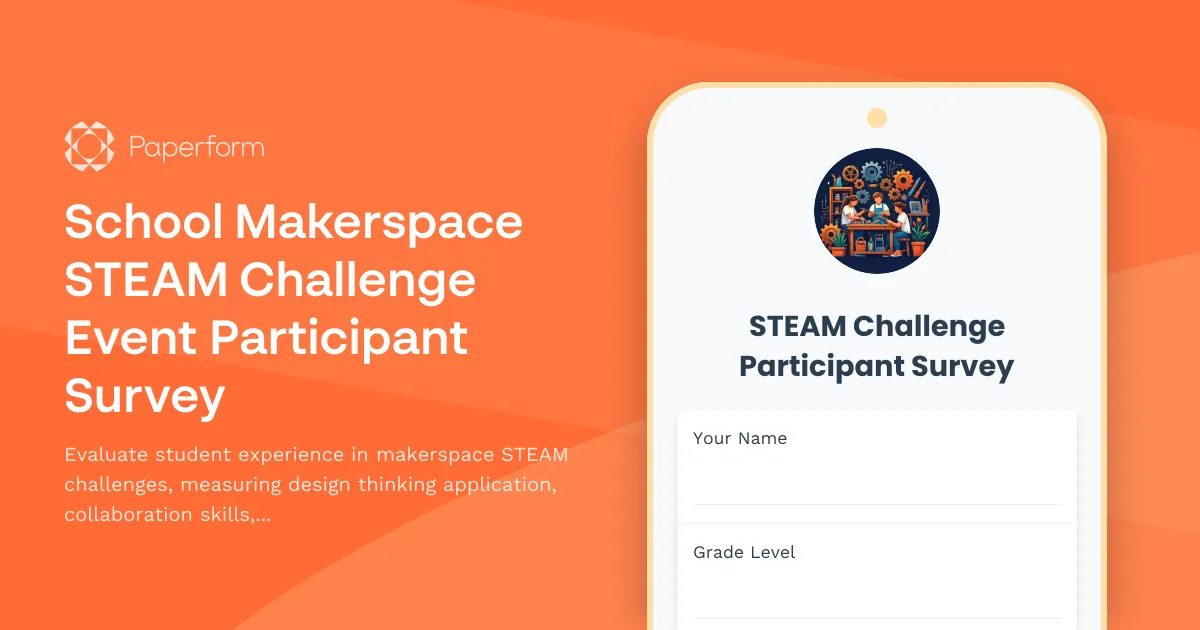
Transform Your Makerspace STEAM Events with Actionable Student Feedback
Running a successful makerspace STEAM challenge means more than just providing materials and time—it's about fostering design thinking, building technical skills, and creating confident young innovators. Our School Makerspace STEAM Challenge Event Participant Survey template helps educators capture meaningful feedback from students about their hands-on learning experience.
This comprehensive survey template is designed specifically for K-12 educators, STEAM coordinators, makerspace managers, and program directors who want to measure the real impact of their challenge events. The form evaluates five critical dimensions: design thinking application, collaboration experience, creativity expression, technical skill development, and confidence building—giving you a complete picture of student growth.
Built for Educators Who Value Student Voice
With Paperform's intuitive interface, you can customize this template to match your school's branding and specific challenge focus—whether you're running robotics competitions, engineering design challenges, or multi-disciplinary maker projects. The doc-style editor makes it easy to add your own questions, adjust rating scales, or include images from the event itself.
The survey uses research-backed question formats including Likert scales, matrix questions for efficient data collection, and open-ended responses that capture authentic student reflections. Conditional logic ensures students only see relevant questions based on their experience level and project type.
From Responses to Actionable Insights
Once students complete the survey, Paperform's AI Insights can automatically analyze open-ended responses to identify common themes about what worked well and what could improve. Export responses to Google Sheets or Airtable for deeper analysis, or use Stepper (stepper.io) to automatically compile results into reports for stakeholders, trigger follow-up communications with participants, or update your student information system.
For schools running regular makerspace events, this template becomes part of your continuous improvement cycle—helping you refine challenges, adjust facilitation approaches, and demonstrate program impact to administrators and funders. Whether you're a classroom teacher experimenting with maker education or a district-wide STEAM coordinator managing multiple sites, this template scales to meet your needs while keeping student feedback at the center of your decision-making.
More templates like this
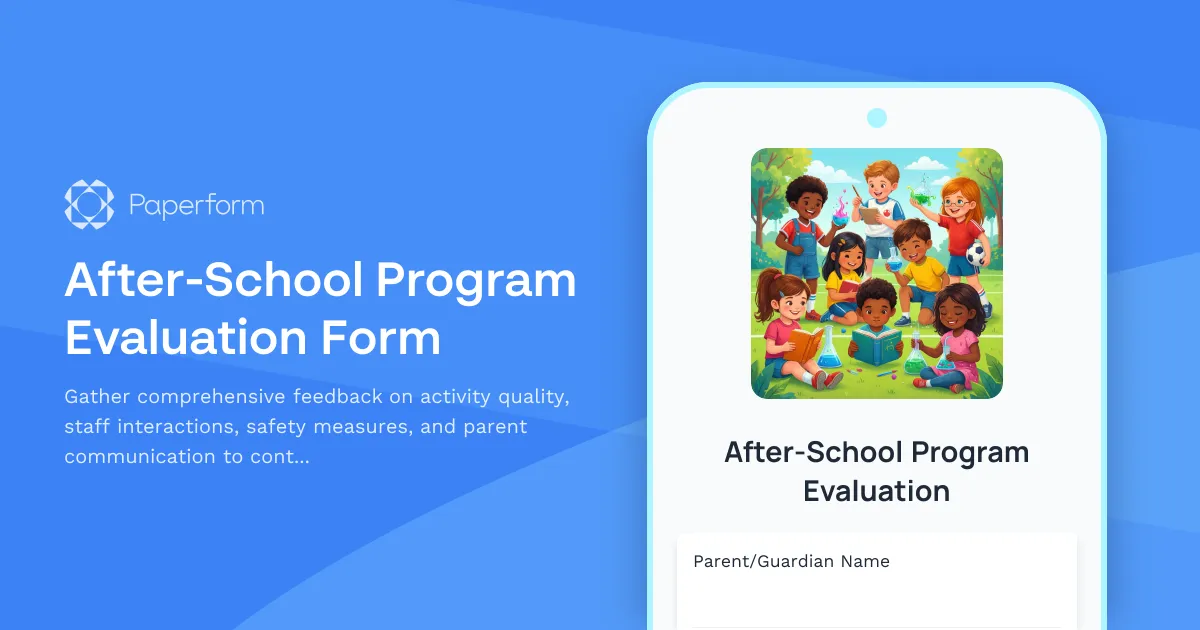
After-School Program Evaluation Form
Gather comprehensive feedback on activity quality, staff interactions, safety measures, and parent communication to continuously improve your after-school program experience.
Classroom Technology Integration Survey
A comprehensive survey to evaluate how students experience technology in the classroom, including interactive tools, digital platforms, online resources, and tech support effectiveness.
College Academic Probation Support Program Feedback Survey
A comprehensive feedback survey designed to evaluate academic probation support programs, including advisor effectiveness, study skills resources, mental health support, and student success outcomes.
College Accelerated Degree Program Student Survey
Gather comprehensive feedback from students enrolled in accelerated degree programs about course intensity, support services, time management, academic quality, and overall satisfaction with their experience.
College Accessibility Services Student Survey
Evaluate your college's accessibility services with this comprehensive student feedback form covering accommodations, staff support, assistive technology, testing arrangements, and advocacy effectiveness.
College Career Services Satisfaction Survey
Evaluate your career services experience including resume assistance, interview prep, job fairs, employer connections, and alumni networking to help improve student outcomes.
College Entrepreneurship Course Evaluation
A comprehensive evaluation form for entrepreneurship course participants to assess course effectiveness, business development skills, pitch presentation capabilities, mentor engagement, and venture launch readiness.

College Peer Review Writing Workshop Evaluation
Evaluate peer review writing workshops with this comprehensive feedback form. Assess feedback quality, revision improvements, critical reading skills, collaborative learning value, and writing confidence development.
Design Thinking Classroom Project Feedback Form
Evaluate student development in design thinking skills including empathy, ideation, prototyping, user feedback integration, and problem-solving confidence through comprehensive project assessment.
Dual Language Immersion Program Parent Survey
Gather comprehensive feedback from parents about their child's dual language immersion experience, including language development, cultural growth, academic progress, and program satisfaction.
Educational Augmented Reality Lesson Feedback Form
Gather student feedback on AR-enhanced lessons to measure technology integration effectiveness, visual engagement, interactivity, technical challenges, and learning outcomes.
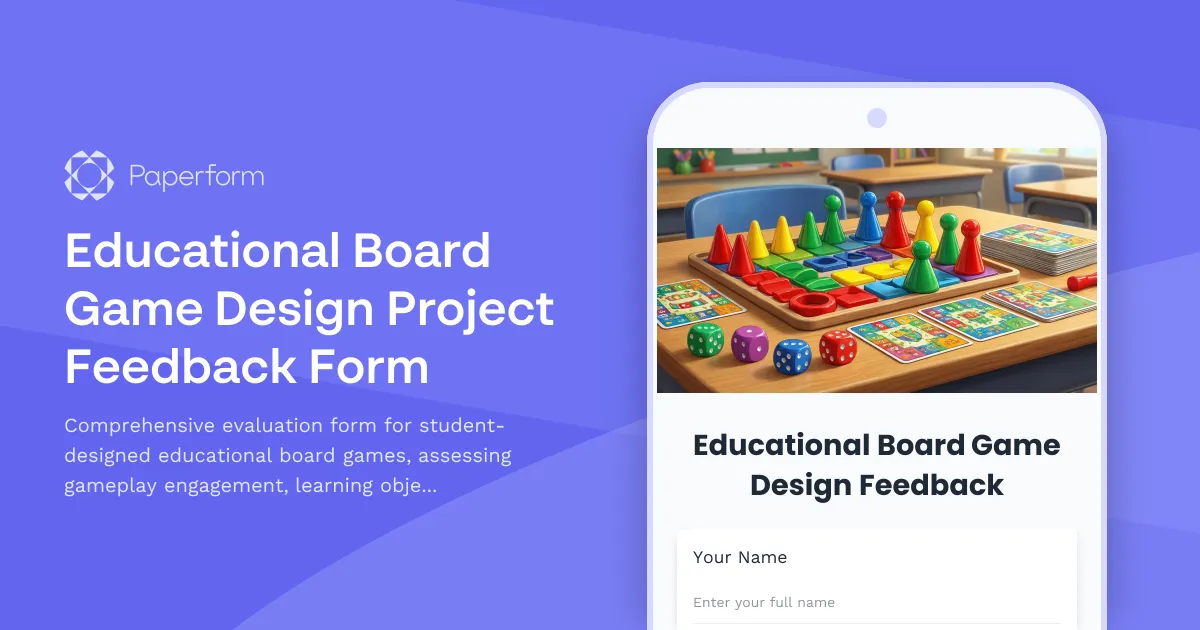
Educational Board Game Design Project Feedback Form
Comprehensive evaluation form for student-designed educational board games, assessing gameplay engagement, learning objectives, rule clarity, creativity, and peer teaching effectiveness.