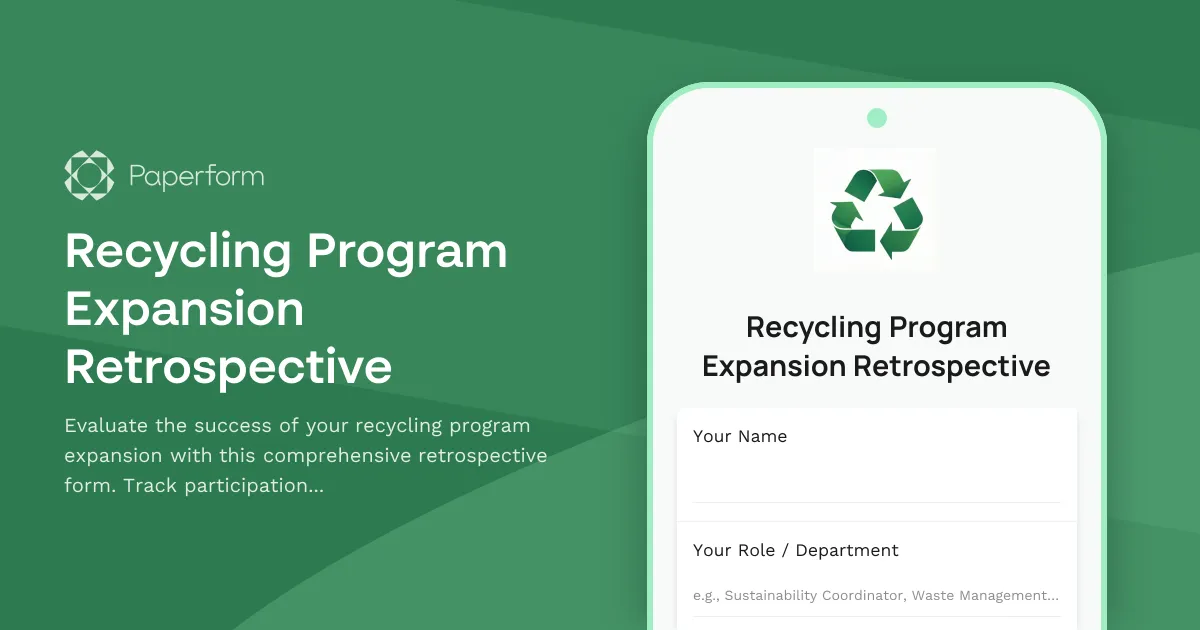
Expanding a recycling program requires careful planning, execution, and reflection. This recycling program expansion retrospective form helps sustainability coordinators, waste management teams, municipal administrators, and environmental program managers conduct thorough post-implementation reviews.
Whether you're working in local government, corporate sustainability, property management, or waste management services, this template captures the metrics that matter: participation rate changes, contamination reduction percentages, revenue per ton improvements, and qualitative feedback from stakeholders.
The form guides teams through a structured reflection on what worked well, what challenges emerged, and what should be improved for future program iterations. It covers operational logistics, community engagement effectiveness, educational campaign results, and financial performance—all the key dimensions of a successful recycling expansion.
Paperform makes it easy to customize this retrospective to match your specific program goals and reporting requirements. The conditional logic adapts questions based on your program type, and built-in calculations help you analyze metrics on the fly. You can embed charts and images to visualize progress, then export results to share with stakeholders or feed into your sustainability reporting.
For teams managing multiple recycling initiatives, Stepper can automate your follow-up workflows—routing improvement suggestions to the right department, creating action items in your project management tool, or triggering review meetings when certain thresholds are met. This ensures insights don't just sit in a form—they drive continuous improvement across your environmental programs.

More templates like this
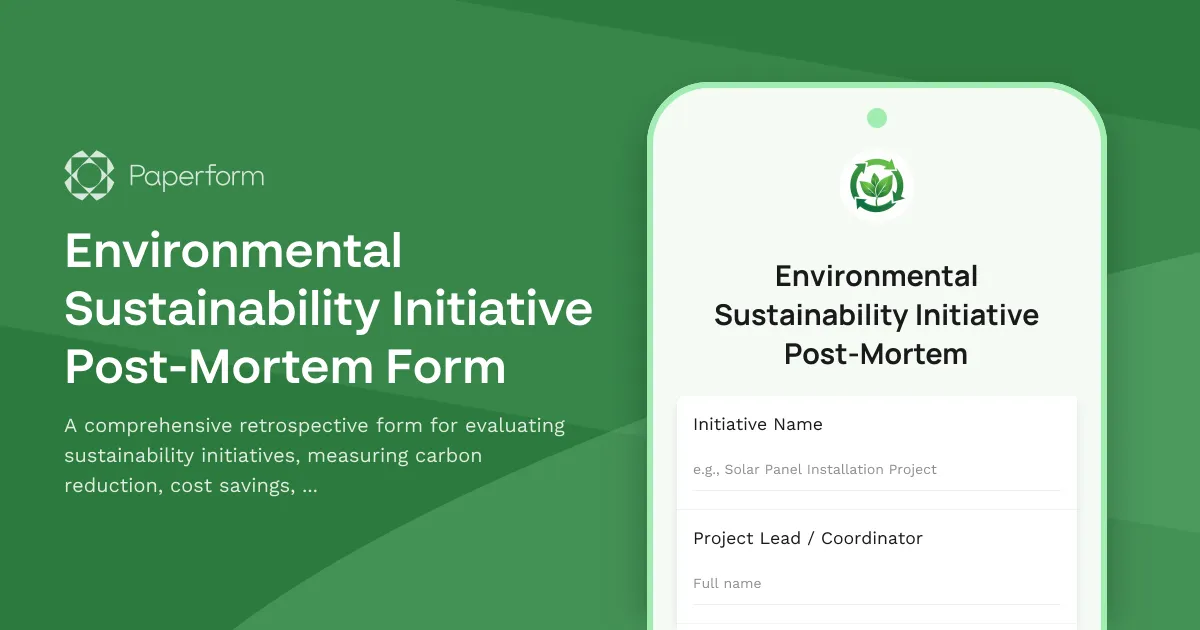
Environmental Sustainability Initiative Post-Mortem Form
A comprehensive retrospective form for evaluating sustainability initiatives, measuring carbon reduction, cost savings, stakeholder engagement, and capturing lessons learned for future green projects.
Carbon Footprint Reduction Challenge Team Registration Form
Register your team for the carbon footprint reduction challenge. Set baseline measurements, commit to reduction targets, and track your progress with monthly reporting.
Climate Resilience Infrastructure Stakeholder Report
A comprehensive stakeholder report template for climate resilience infrastructure projects, including vulnerability assessments, adaptation measures, community preparedness, funding analysis, and impact projections.
Community Renewable Energy Investment Form
Join your local renewable energy project. Choose your investment level, select project types, and start earning energy credits while supporting sustainable community power.
Office Move Environmental & Sustainability Impact Assessment
Evaluate and minimize the environmental impact of your office relocation with carbon footprint calculations, waste diversion planning, and sustainable vendor selection to support green moving practices.
Office Move Sustainability & Recycling Coordination Form
Coordinate eco-friendly office relocations with furniture donation tracking, e-waste disposal, document shredding, and sustainable moving materials management.
Office Water Bottle Refill Station Sponsorship Form
Sponsor sustainable water refill stations in your office and promote eco-friendly hydration while reducing plastic waste.
Recycling Service Complaint Escalation Form
Escalate recycling service issues including contamination concerns, missed pickups, contract violations, and environmental compliance problems to management for urgent review and resolution.
Regenerative Agriculture Program Stakeholder Report
A comprehensive stakeholder report form for tracking regenerative agriculture program progress, including soil health metrics, carbon sequestration data, farmer participation, crop yields, and certification milestones.
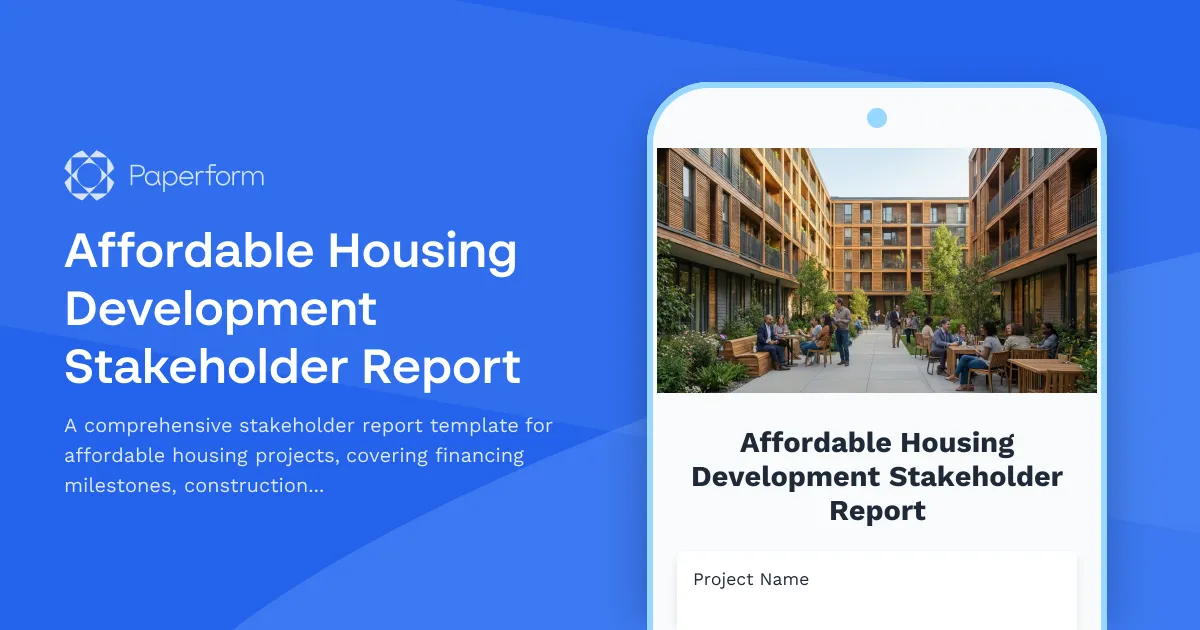
Affordable Housing Development Stakeholder Report
A comprehensive stakeholder report template for affordable housing projects, covering financing milestones, construction progress, tenant selection criteria, property management planning, and community integration initiatives.
Aquarium Conservation Initiative Retrospective
A comprehensive retrospective form for aquarium conservation programs to evaluate species recovery outcomes, public engagement impact, and fundraising effectiveness.
Aquarium Sustainable Ocean Pledge
A comprehensive ocean sustainability pledge form for aquariums to commit to renewable energy, conservation education, and plastic-free operations while protecting marine ecosystems.