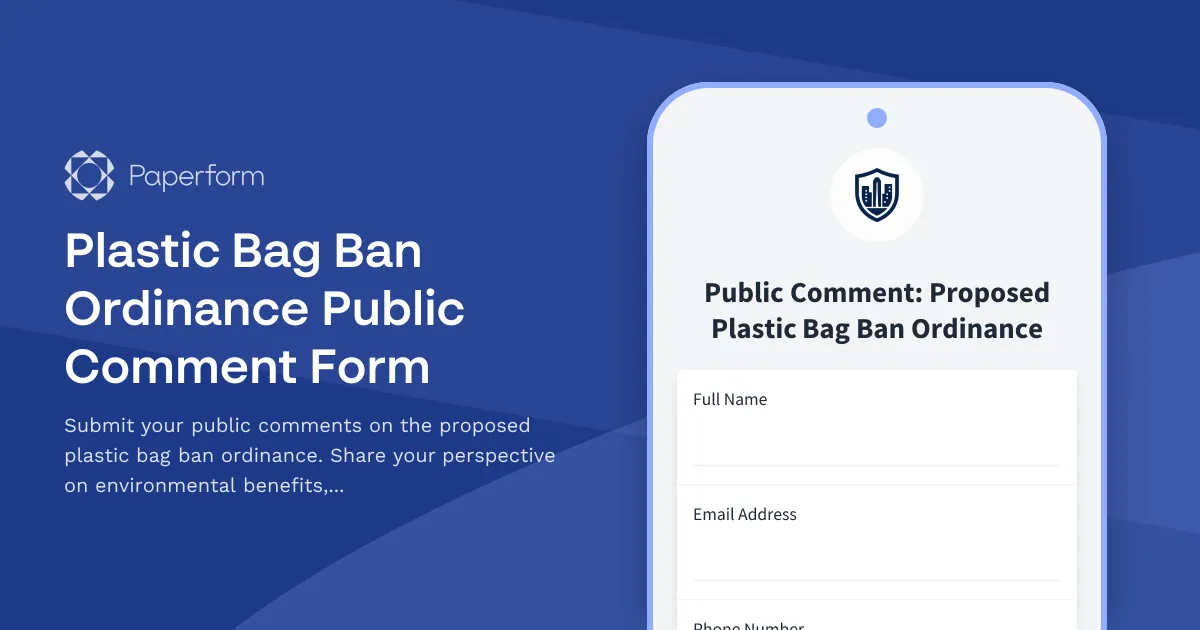
Make Your Voice Heard on the Proposed Plastic Bag Ban
Public comment periods are a crucial part of the democratic process, giving community members the opportunity to weigh in on proposed regulations that affect their daily lives. This Plastic Bag Ban Ordinance Public Comment Form template makes it easy for municipal governments and civic organizations to collect structured, meaningful feedback from residents, business owners, and stakeholders.
Why This Template Works for Government & Civic Organizations
Whether you're a city council, environmental commission, or planning department, gathering public input on environmental regulations requires a clear, accessible process. This template helps you:
- Organize diverse perspectives from residents, business owners, environmental advocates, and other stakeholders
- Capture structured feedback on specific aspects of the ordinance including environmental impact, economic considerations, and implementation details
- Create an inclusive process that welcomes input from all community members
- Generate comprehensive records of public sentiment for decision-makers and public record requirements
Streamline Civic Engagement with Paperform
Traditional public comment processes often rely on in-person hearings, email submissions, or paper forms that are difficult to organize and analyze. Paperform transforms this process into something modern, accessible, and efficient. The doc-style editor lets you present ordinance details clearly, embed relevant documents or videos, and create a professional submission experience that builds public trust.
With conditional logic, you can tailor follow-up questions based on whether someone is commenting as a resident, business owner, or organization representative—ensuring you gather the most relevant information from each stakeholder group.
Automate Your Public Comment Workflow
Once comments are submitted, Stepper can help you automate what happens next. Set up workflows to:
- Route comments to the appropriate department or committee members
- Generate acknowledgment emails confirming receipt of public input
- Flag comments that request follow-up or raise specific concerns
- Compile comments into organized reports for public hearings
- Update your project management tools or Airtable databases with submission tracking
This automation ensures no public comment gets lost in the shuffle, while giving staff more time to focus on substantive review rather than administrative tasks.
Built for Transparency and Compliance
Government work demands accountability. Paperform's SOC 2 Type II compliance, detailed submission records, and data export capabilities ensure you maintain proper documentation of the public comment process. All submissions are timestamped, securely stored, and easily exportable for public records requests or inclusion in official meeting minutes.
Whether you're managing a single ordinance comment period or ongoing civic engagement initiatives, this template gives you a professional, accessible foundation that serves both your community and your administrative needs.
More templates like this
E-Scooter & Bike Share Program Public Comment Form
Submit your feedback on proposed e-scooter and bike share regulations, including safety requirements, sidewalk restrictions, and designated parking locations.
Local Emergency Services Consolidation Public Hearing Form
Submit your feedback on the proposed emergency services consolidation plan. Share concerns about service areas, response times, and cost impacts for public hearing consideration.
Local Government Budget Priorities Survey
Help shape your local government's budget by sharing your priorities for community spending. Use interactive sliders to allocate resources across key services and share what matters most to you.
Municipal Budget Allocation Public Comment Form
Submit your feedback on the proposed municipal budget and share your priorities for community funding. Help shape how local resources are allocated across departments and services.
Solid Waste Management Contract Public Hearing Form
Submit public comments on proposed solid waste management contracts, including service quality feedback, rate structure concerns, and recycling program priorities for municipal decision-makers.
Vacant Lot Transformation Program Comment Form
Submit public comments on the proposed Vacant Lot Transformation Program, including temporary use permissions, liability provisions, and community stewardship models for revitalizing unused municipal properties.
Affordable Housing Development Proposal Comment Form
Submit your comments on proposed affordable housing developments. Share your perspectives on project location, density, parking, traffic impact, and community benefits.
Animal Shelter Adoption Process Feedback Form
Gather valuable feedback on the animal adoption experience, from application to post-adoption support, helping shelters improve their processes and care.
Childcare Subsidy Program Feedback Form
A government form for parents and guardians to provide feedback on childcare subsidy program services, including eligibility processes, payment timeliness, provider availability, and reauthorization experiences.
City Planning Public Hearing Comment Form
Submit your comments, concerns, and suggestions on proposed development projects during city planning public hearings. Share feedback on environmental impact, traffic, and community character preservation.
Community Development Block Grant Allocation Public Input Form
A public input form for gathering community feedback on Community Development Block Grant (CDBG) allocation priorities, eligible project categories, neighborhood needs, and equity considerations.
Community Health Needs Assessment Input Form
Gather community input on priority health conditions, social determinant barriers, prevention program gaps, and culturally responsive intervention design to inform public health planning.