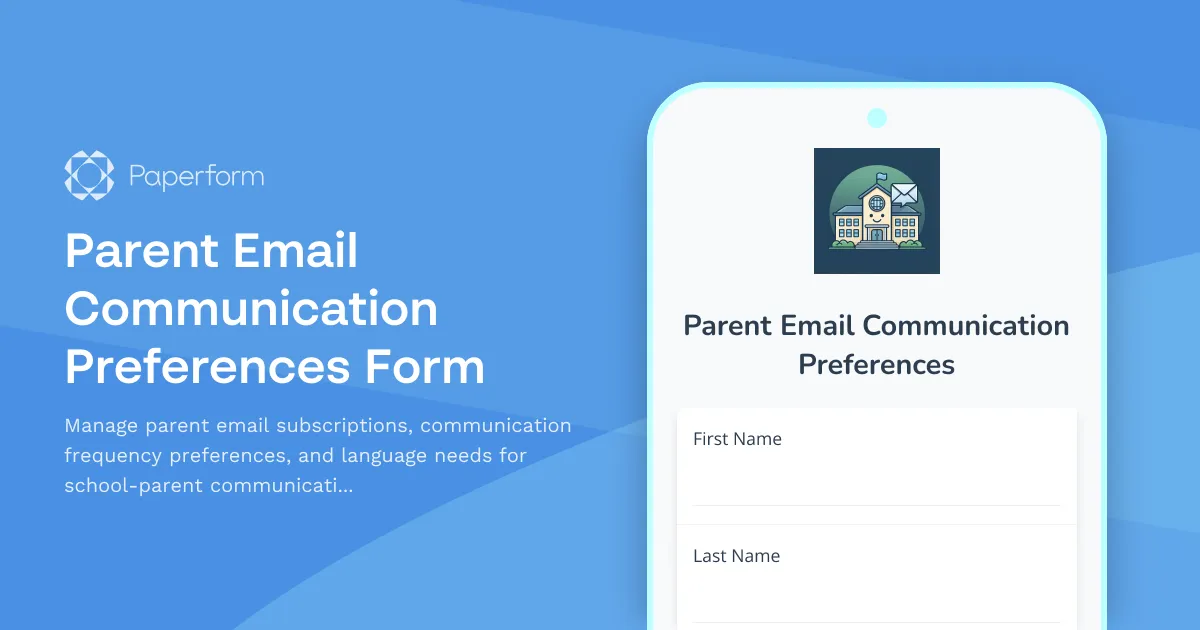
Streamline School-Parent Communication with a Professional Email Preference Form
Effective communication between schools and parents is the foundation of student success. But managing parent communication preferences across a diverse school community can be challenging—especially when families have different needs for frequency, language support, and the types of updates they want to receive.
This Parent Email Communication Preferences Form template from Paperform helps schools, teachers, and administrators create a centralised system for managing how parents want to be contacted. Whether you're a K-12 school, preschool, after-school program, or educational institution, this form ensures every family receives the right information at the right time, in the right language.
Why schools and educators choose this template
Parents today are juggling work, family, and countless digital notifications. Some want to stay informed about every classroom activity, while others prefer emergency-only alerts. This form lets parents take control of their inbox while ensuring your school stays compliant with communication preferences and builds stronger parent-teacher relationships.
Key features include:
- Communication frequency options – Let parents choose daily digests, weekly summaries, or emergency-only notifications
- Topic-based subscriptions – Allow opt-ins for specific categories like academics, events, sports, or volunteer opportunities
- Language preference collection – Identify translation needs to ensure all families can access important information
- Emergency contact verification – Confirm parents want to receive urgent alerts via email
- Multiple child management – Collect preferences for families with multiple students
- GDPR and privacy compliance – Built-in consent and data protection considerations
Perfect for education professionals
This template is designed for:
- School administrators managing district or school-wide communication strategies
- Teachers setting up classroom newsletters and parent updates
- PTAs and parent organisations coordinating volunteer and fundraising communications
- Principals and counselors ensuring critical information reaches families
- Childcare and daycare providers maintaining clear communication with parents
- Tutoring centers managing client communication preferences
How Paperform makes parent communication effortless
Unlike generic survey tools or clunky school portals, Paperform gives you a professional, on-brand form that parents can complete in under two minutes on any device. The doc-style editor lets you add your school logo, adjust colours to match your branding, and write in a warm, welcoming tone that reflects your school community.
Conditional logic ensures parents only see relevant questions—for example, if they select "emergency-only," they won't be asked about weekly newsletter preferences. This keeps the form short and respects their time.
Once submitted, responses flow automatically into Google Sheets, your school CRM, or your email platform via native integrations or Stepper workflows. That means your communication lists stay up-to-date without manual data entry, and you can segment families based on their preferences for targeted, relevant outreach.
Automate follow-up and updates with Stepper
Connect this form to Stepper (stepper.io), Paperform's AI-native workflow builder, to automate what happens after parents submit their preferences:
- Automatically add or update contacts in your email marketing platform (Mailchimp, Constant Contact, etc.)
- Create separate lists for different communication frequencies or topics
- Send a personalised confirmation email thanking parents for updating their preferences
- Flag families requesting translation support so staff can follow up
- Sync preferences to your student information system (SIS)
- Set reminders to refresh preferences at the start of each school year
These automations save your admin team hours every week and ensure no family falls through the cracks.
Build trust through transparency and choice
When parents have control over how they hear from your school, they're more likely to engage with the communications they do receive. This form demonstrates respect for families' time and preferences, which builds trust and strengthens your school community.
By collecting language needs upfront, you can also ensure equity in communication—making sure that non-English speaking families receive translations or interpretation support when needed. This is especially important for legal notices, emergency alerts, and parent-teacher conference invitations.
Secure, compliant, and ready for any school
Paperform is SOC 2 Type II compliant and offers features like data residency controls and secure data handling, giving your school confidence that parent information is protected. The platform also helps you stay compliant with GDPR and other data protection regulations by making it easy to include consent language and manage data retention.
Whether you're a public school district, private institution, or independent educator, this template is flexible enough to adapt to your specific communication policies and parent community.
Get started in minutes
This template is ready to use right out of the box. Simply customise the communication topics to match your school's newsletters and alerts, adjust the language options to reflect your community, and share the form via email, your school website, or a QR code at back-to-school night.
Parents appreciate the simplicity, your staff saves time, and your school builds a foundation for clear, inclusive communication all year long. Trusted by educators worldwide, Paperform makes school-parent communication feel effortless.
Start with this template today and transform how your school connects with families.
More templates like this
Parent Liaison Volunteer Application Form
A comprehensive application form for parents interested in becoming school liaison volunteers, capturing multilingual skills, cultural background, availability, and training progress to help bridge communication between families and educators.
Parent-Teacher Conference Scheduling Form
Schedule parent-teacher conferences with available time slots, student concerns, and meeting format preferences for effective school-home communication.
Special Education Evaluation Request Form
Request a formal special education evaluation for your child with documented learning concerns, intervention history, and assessment consent.
Student Attendance Recovery Plan
A comprehensive form to address chronic absenteeism, identify barriers to attendance, develop intervention strategies, and create a personalized recovery plan to help students get back on track.
Student Health & Emergency Contact Update Form
A comprehensive form for parents to update student health information, emergency contacts, medical conditions, allergies, and authorized pickup persons for school records.
504 Plan Accommodation Request Form
A comprehensive form for parents and guardians to request Section 504 accommodations for students with disabilities, including documentation uploads and professional recommendations.
Chronic Absence Intervention Form
A comprehensive attendance intervention form that helps schools identify barriers to attendance, create truancy prevention plans, and connect families with support resources to improve student outcomes.
Classroom Pet Care Volunteer Form
A volunteer signup form for parents and students to help care for classroom pets during weekends, school breaks, and holidays. Includes scheduling, allergy disclosure, and training requirements.
College Prep Course Selection Consultation Form
A comprehensive form for high school students and parents to prepare for course selection consultations, capturing academic goals, AP readiness, college admissions strategy, and career aspirations to guide informed scheduling decisions.
Dual Enrollment College Course Parent Information & Consent Form
A comprehensive form for parents to review dual enrollment program details, understand credit transfer policies, acknowledge workload expectations, and provide consent for their student's college course participation.
Early College High School Parent Commitment Form
A comprehensive commitment form for parents of early college high school students, covering rigorous coursework expectations, college campus conduct, degree timeline, and transfer planning requirements.
Extracurricular Activity Permission & Enrollment Form
A comprehensive permission form for enrolling students in extracurricular activities including sports, clubs, and performing arts. Collect consent, emergency contacts, schedule acknowledgment, transportation preferences, and activity fees.