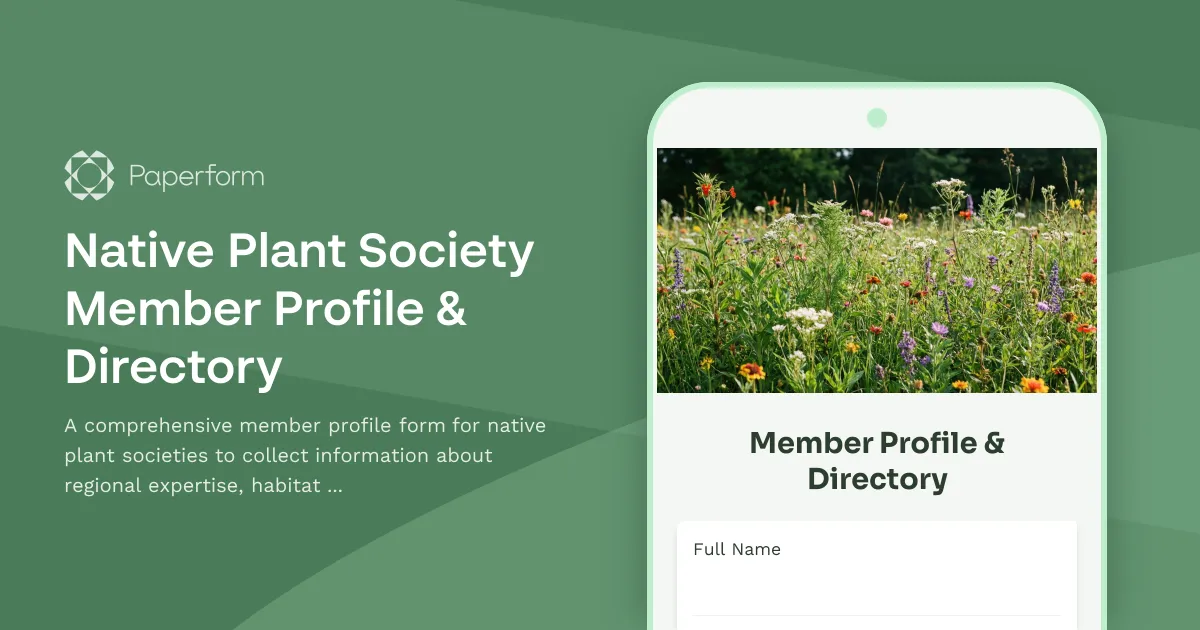
Build Your Native Plant Society Member Directory with Paperform
Managing a thriving native plant society means connecting members with shared regional interests, restoration projects, and conservation goals. This Native Plant Society Member Profile & Directory template gives your organization a beautifully branded, comprehensive way to collect member information that goes far beyond basic contact details.
Whether you're coordinating seed swaps, matching volunteers with habitat restoration projects, or building a searchable directory of ethnobotanical knowledge, this template captures the specialized information that makes native plant communities so valuable.
Why Native Plant Societies Need Smart Member Profiles
Traditional membership forms often miss the nuance that makes botanical communities special. This template is designed specifically for native plant societies, botanic gardens, conservation organizations, and regional flora networks. It helps you:
- Map regional expertise across your membership to connect people working in the same ecoregions, plant communities, or watersheds
- Match volunteers with projects by tracking which habitat restoration initiatives, seed collection efforts, or conservation campaigns members want to support
- Build searchable knowledge bases of ethnobotanical expertise, rare plant monitoring, and specialized propagation skills
- Strengthen advocacy networks by identifying members interested in policy work, land protection, or public education
Instead of scattered spreadsheets and email chains, you get a single, always-up-to-date source of truth about who's in your community and how they want to contribute.
What Makes This Template Work for Botanical Communities
This form captures the information that matters most to native plant societies:
Regional & Habitat Focus: Members specify their primary geographic regions, native plant communities of interest, and specific ecosystems they work with—from coastal dunes to alpine meadows, prairie grasslands to riparian corridors.
Restoration & Conservation Involvement: Track participation in habitat restoration projects, invasive species removal, rare plant monitoring, and land stewardship efforts so you can mobilize the right people for the right projects.
Seed Collection & Propagation: Document seed collection activities, propagation skills, and nursery participation to support seed exchange programs and native plant sales.
Ethnobotanical Knowledge: Respectfully capture traditional plant knowledge, cultural uses, and indigenous plant relationships for educational programming and cultural preservation.
Advocacy & Education: Identify members interested in conservation policy, public speaking, school programs, or community outreach to build your advocacy capacity.
The form includes conditional logic to ask follow-up questions based on member interests, so botanical enthusiasts don't see questions about policy advocacy they're not interested in, and conservation activists can dive deep into their advocacy priorities.
How Paperform Elevates Your Member Directory
For nonprofit organizations like native plant societies—often run by dedicated volunteers—Paperform delivers professional results without requiring technical skills:
Doc-style editing means your membership coordinator can update questions, add new project options, or refresh content in minutes, no developer required.
On-brand design ensures your form matches your organization's visual identity, from your native wildflower photography to your earth-tone color palette and naturalist-friendly fonts.
Conditional logic creates a personalized experience that respects each member's time by only asking relevant follow-up questions about their specific interests.
Automatic workflows with Stepper (stepper.io) can route new member profiles to your directory database, trigger welcome email sequences, add members to regional chapter mailing lists, and notify project coordinators when someone expresses interest in their restoration work.
Secure data collection with SOC 2 Type II compliance means sensitive information like personal contact details and home garden locations are protected to your members' privacy standards.
Who This Template Serves
This template is perfect for:
- Native plant societies and wildflower associations managing regional or statewide memberships
- Botanical gardens and arboreta building volunteer networks and donor communities
- Conservation organizations coordinating habitat restoration and rare plant monitoring efforts
- Watershed groups and land trusts organizing native landscaping and ecological restoration programs
- Master gardener programs and university extension services focused on native plants
- Seed libraries and exchange networks connecting collectors and propagators
- Indigenous plant knowledge projects documenting traditional ecological knowledge with community consent
Extend Your Member Engagement with Automation
Once you've collected rich member profiles, Paperform's integration ecosystem helps you put that data to work:
Connect to your CRM (like HubSpot or Pipedrive) to segment members by interest area for targeted communications about seed swaps, field trips, or volunteer opportunities.
Push profiles to Airtable or Google Sheets to build searchable, filterable member directories that chapter coordinators and project leaders can access.
Sync with email marketing tools like Mailchimp to create segmented lists—send prairie restoration updates only to members who care about grasslands, or coastal stewardship news to members in maritime regions.
Use Stepper workflows to automate onboarding: send a welcome packet, add members to your forum or Slack community, assign them to regional chapters, and notify volunteer coordinators about new helpers.
Build Community Through Better Data
Native plant conservation depends on connecting passionate people with place-based knowledge. When your member directory captures regional expertise, restoration experience, and advocacy interests, you can:
- Quickly assemble work parties for time-sensitive seed collection or restoration projects
- Match mentors with beginners learning propagation or plant identification
- Build coalitions for conservation campaigns targeting specific threats or opportunities
- Organize field trips and workshops that align with member interests and skill levels
- Create referral networks for native landscaping, ecological consulting, or plant sales
This template helps transform your membership list from a static roster into a dynamic community resource that grows more valuable with every profile added.
Start Growing Your Native Plant Community Today
Whether you're a grassroots volunteer group or an established botanical organization, Paperform gives you the tools to build a professional member directory that serves your conservation mission. No coding required, no per-submission fees, and design flexibility that lets your organization's unique character shine through.
Join the 500,000+ teams worldwide using Paperform to build better forms, strengthen communities, and focus more time on what matters—like getting people outdoors, restoring native ecosystems, and protecting botanical heritage for future generations.
Ready to grow your membership? Start with this template and customize it to reflect your region's unique flora, your organization's priorities, and your community's conservation vision.



More templates like this
Fern Society Member Directory Profile
A comprehensive directory form for fern society members to showcase their collections, expertise in spore propagation, shade garden design skills, and participation in educational programs and botanical surveys.
Historic Preservation Society Member Profile
Update your member profile with your restoration skills, architectural expertise, and volunteer availability to help preserve our community's historic treasures.
Marine Conservation Volunteer Dive Team Application
A comprehensive application form for marine conservation volunteers with scuba diving experience who want to join underwater research and survey teams.
Paleontology Society Member Profile & Directory
A comprehensive member profile form for paleontology societies to collect information on fossil collecting experience, specimen preparation skills, field trip leadership, educational availability, and research collaboration interests.
Wildlife Rehabilitator Peer Recognition Form
Recognize outstanding wildlife rehabilitators who demonstrate excellence in animal recovery, release success, public education, and conservation advocacy through peer nominations.
Aquarium Sustainable Ocean Pledge
A comprehensive ocean sustainability pledge form for aquariums to commit to renewable energy, conservation education, and plastic-free operations while protecting marine ecosystems.
Archaeology Society Member Directory Profile
A comprehensive directory form for archaeology society members to showcase their excavation experience, artifact identification skills, field school participation, and laboratory expertise for collaboration and networking.
Beekeeping Protective Gear Donation Form
Accept donations of beekeeping protective equipment and gear for apiary education programs. Collect details on gear type, sizing, condition, and donor information to support safe beekeeping training initiatives.
Bike Library Volunteer Pledge Form
A volunteer pledge form for bike library programs to coordinate bicycle sharing, teach maintenance skills, and support car-free transportation initiatives in the community.
Biochar Production Workshop Volunteer Scheduler
A specialized volunteer registration form for biochar production workshops that assesses skills in pyrolysis safety, kiln operation, soil amendment knowledge, and regenerative agriculture advocacy.
Biodiversity Enhancement Project Volunteer Form
Register volunteers for habitat restoration and biodiversity enhancement projects. Assess native species knowledge, landscaping skills, and availability for conservation work.
Clean Water Advocacy Registration Form
Register as a clean water advocate, report contamination issues, sign up for watershed protection volunteering, and help track infrastructure investment needs in your community.