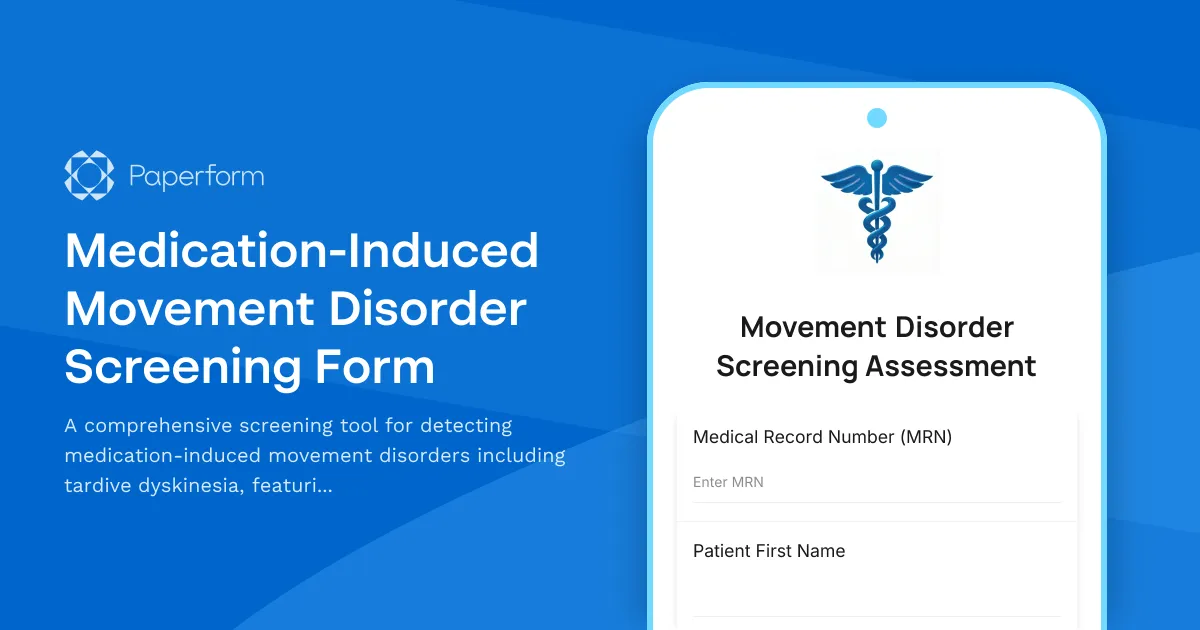
Professional Movement Disorder Screening for Healthcare Providers
Medication-induced movement disorders, particularly tardive dyskinesia (TD), represent a significant clinical concern for patients on long-term antipsychotic medications and other dopamine-blocking agents. Early detection and intervention are crucial for patient outcomes, yet many healthcare settings lack a streamlined system for regular screening and documentation.
This Medication-Induced Movement Disorder Screening Form provides psychiatrists, neurologists, nurses, and clinical coordinators with a structured, professional assessment tool that combines the gold-standard Abnormal Involuntary Movement Scale (AIMS) with comprehensive medication review and automated referral workflows.
Built for Clinical Accuracy and Workflow Efficiency
The form guides clinicians through a systematic evaluation process, capturing patient demographics, current medication regimens (including dose, duration, and indication), and detailed AIMS scoring across facial, extremity, and trunk movements. Automated calculations instantly compute total AIMS scores and flag cases requiring immediate clinical attention or specialist referral.
For healthcare organizations managing large patient populations on psychotropic medications, this template eliminates the burden of paper-based assessments and manual follow-up tracking. Submissions can integrate directly with your EHR system via Stepper workflows, automatically routing high-risk assessments to psychiatry or neurology for review, creating follow-up tasks, and maintaining compliance documentation.
Supporting Evidence-Based Practice
The form includes validated AIMS assessment criteria, risk factor documentation, and space for clinical observations that support diagnostic decision-making. Conditional logic tailors the assessment pathway based on movement severity, ensuring appropriate urgency and referral recommendations without overwhelming clinicians with unnecessary fields.
Whether you're conducting routine screening in an outpatient psychiatry clinic, monitoring patients in long-term care facilities, or managing movement disorder clinics, this Paperform template streamlines documentation, improves screening consistency, and ensures no patient falls through the cracks. With Papersign, you can even obtain patient consent for specialist referrals or treatment modifications directly within the workflow.
Trusted by healthcare teams managing complex medication regimens, this template brings clinical rigor and operational efficiency to movement disorder screening programs.



More templates like this
Ketamine Therapy for Depression - Patient Intake Form
Comprehensive intake form for patients seeking ketamine therapy for treatment-resistant depression, including psychiatric history, medication trials, and safety screening.
Inpatient Psychiatric Hospitalization Prior Authorization Form
Streamline insurance prior authorization requests for inpatient psychiatric hospitalization with comprehensive crisis assessment, safety planning, and psychiatrist evaluation documentation.

Maternal Mental Health Screening Form
A comprehensive maternal mental health screening tool featuring the Edinburgh Postnatal Depression Scale (EPDS), infant bonding assessment, and breastfeeding support evaluation for new mothers.
POTS Screening & Orthostatic Assessment Form
Comprehensive postural orthostatic tachycardia syndrome (POTS) screening form with orthostatic vital signs tracking, symptom questionnaire, autonomic testing criteria, and cardiology referral protocol.

Raynaud's Phenomenon Screening Questionnaire
A comprehensive screening tool for Raynaud's phenomenon that documents color changes, identifies triggers, assesses underlying conditions, and determines the need for rheumatology consultation.
Sleep Disorder Screening Questionnaire
Comprehensive sleep disorder screening form featuring the Epworth Sleepiness Scale, sleep apnea risk assessment, and automated sleep study referral recommendations.
Addiction Treatment Center Patient Safety Incident Report
A comprehensive safety incident reporting form for addiction treatment facilities to document medication errors, elopement risks, patient safety concerns, and ensure proper state licensing notifications and regulatory compliance.

Allergy & Immunology Symptom Diary
Track allergy symptoms, reaction severity, allergen exposures, and medication use with this comprehensive symptom diary designed for patients and healthcare providers.
Ambulatory Surgery Center Pre-Operative Intake Form
Complete pre-operative assessment for ambulatory surgery patients including anesthesia history, NPO compliance verification, medication management, and same-day discharge planning.
Atrial Fibrillation Screening & Stroke Risk Assessment
Comprehensive AFib screening form for high-risk patients including pulse assessment, ECG ordering, CHA₂DS₂-VASc stroke risk calculation, and cardiology consultation scheduling.
Autoimmune Disease Symptom Tracker
A comprehensive pre-visit symptom assessment form for tracking autoimmune disease symptoms, identifying flare patterns, and monitoring medication side effects across multiple organ systems.
Benign Paroxysmal Positional Vertigo (BPPV) Screening Form
A comprehensive BPPV screening form with Dix-Hallpike test documentation, symptom trigger assessment, fall risk evaluation, and vestibular rehabilitation referral recommendations for healthcare providers.